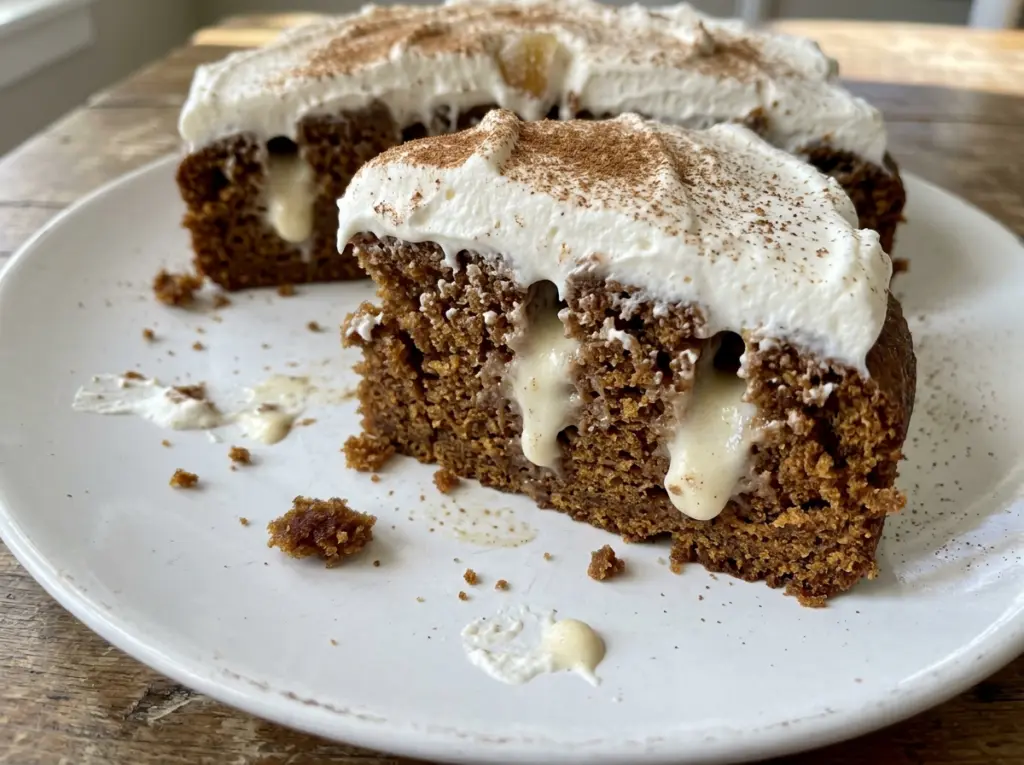
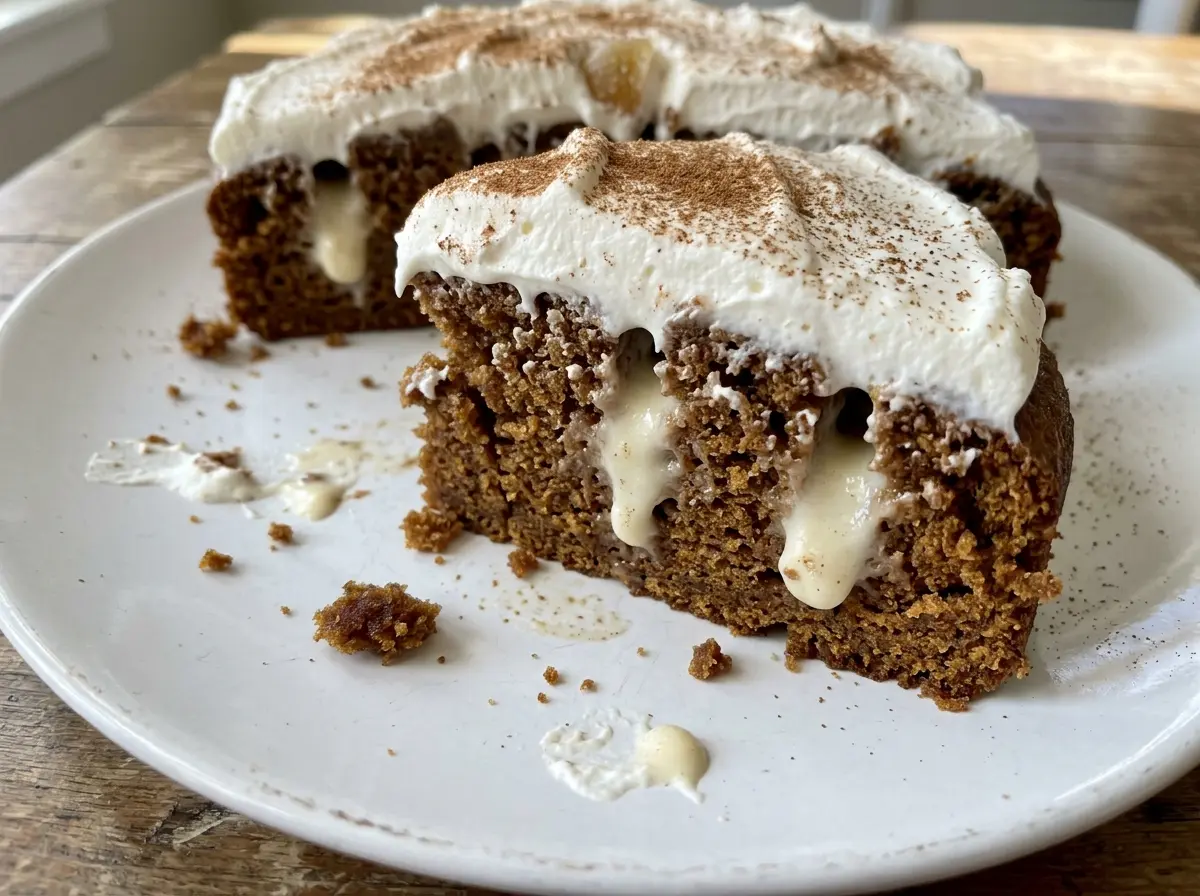
The caramel filling should disappear into the cake, not sit in a puddle on top. I learned that the warm cake and a slow pour make all the difference: the holes take in the sweet filling while the gingerbread is still soft. That’s what makes this gingerbread poke cake taste moist all the way through instead of simply topped with caramel.
The batter gets its tenderness from buttermilk, molasses, and a light hand once the flour goes in. I alternate the dry ingredients with the buttermilk and stop mixing as soon as the batter comes together. The ginger, cinnamon, and cloves stay clear and warm without turning the cake heavy.
After a good chill, a soft cream cheese and whipped cream topping brings a cool, tangy finish to each square. It’s a generous 9×13-inch cake, and the slices are rich with caramel and spice.
Kitchen Note
Stop whipping as soon as the topping holds stiff peaks. Keep an eye on it once the cream thickens; going past that point can make the topping lose its smooth, spreadable texture.
Save this gingerbread poke cake for its spiced crumb, caramel-soaked center, and cool cream cheese topping.
Why the Buttermilk Goes In Between the Flour Additions
Gingerbread batter is thick, and it’s easy to keep mixing while you try to work out every last lump. That extra mixing is what can make a tender cake turn tight and chewy. Adding the flour mixture in three parts, with the buttermilk between them, gives the batter a chance to come together without a long beating session.
Start and finish with the flour mixture, and mix just until it’s incorporated. The batter doesn’t need to look perfectly satiny; a few small, harmless uneven spots are better than overmixing. The buttermilk also brings a gentle tang that balances the molasses and caramel, while helping the crumb stay soft enough to take in the filling.
This matters especially in a poke cake. The gingerbread needs enough structure to hold its shape after the filling goes in, but it shouldn’t bake up dry or firm. A brief mix and the measured alternation give you a cake that cuts cleanly after chilling and still feels tender on the fork.
The Ingredients That Keep This Gingerbread Tender, Not Bitter

- Unsulphured molasses — It gives the cake its deep, rounded gingerbread flavor and keeps the crumb moist. Use the unsulphured kind named here; blackstrap molasses has a much more bitter, assertive taste and would push the cake in a different direction.
- Buttermilk — Its tang balances the brown sugar and molasses, and its acidity works alongside the baking soda. Keep it in the batter rather than swapping in plain milk; the cake depends on that particular balance.
- Ground ginger, cinnamon, and cloves — Ginger leads, cinnamon adds warmth, and the smaller amount of cloves gives the spice blend depth. Fresh, fragrant spices make a noticeable difference here; stale spices leave the molasses doing all the work.
- Sweetened condensed milk and caramel sauce — Together they make a rich, pourable filling that settles into the cake. Stir them together before warming so the caramel is distributed throughout instead of pooling in one spot.
- Cream cheese and cold heavy cream — Softened cream cheese beats smooth with the powdered sugar and vanilla, while cold heavy cream whips the mixture into a fluffy topping. Let the cream cheese soften before mixing, but keep the cream cold for whipping.
Building a Cake That Holds the Caramel Without Turning Soggy
Mix the spiced batter gently
Heat the oven to 350°F and grease a 9×13-inch baking dish. Whisk the flour, baking soda, baking powder, ginger, cinnamon, cloves, and salt in a medium bowl. In a large bowl, beat the softened butter and brown sugar until fluffy, then beat in the eggs one at a time and mix in the molasses. Add the flour mixture in three additions, alternating with the buttermilk in two additions, beginning and ending with flour; stop as soon as the batter is combined.
Bake for a moist, set crumb
Spread the batter evenly in the prepared dish and bake for 30 to 35 minutes. A toothpick inserted in the center should come out with a few moist crumbs, not wet batter. If the toothpick comes out coated in raw batter, give the cake more time and check again. Let the cake stay warm for the filling stage rather than cooling it completely first.
Warm, poke, and pour the filling
Stir the sweetened condensed milk and caramel sauce together in a microwave-safe bowl. Microwave in 15-second bursts, stirring between each, just until the mixture is fluid; it should pour easily, not bubble or scorch. While the cake is warm, poke holes about 1 inch apart across the surface with the handle of a wooden spoon, reaching about two-thirds of the way through. Pour the filling slowly over the cake and guide it toward the holes so it has time to sink in rather than running across the surface.
Chill before adding the topping
Cool the filled cake at room temperature, then cover it and refrigerate for at least 3 hours. This gives the filling time to settle through the crumb and the cake time to firm up for topping. Beat the softened cream cheese, powdered sugar, and vanilla until smooth, then gradually beat in the cold heavy cream. Whip on medium-high speed until stiff peaks form, spread the topping over the chilled cake, and refrigerate for at least 1 hour before serving.
Two Ways to Change the Shape of This Gingerbread Poke Cake
Turn it into gingerbread dessert cups
Once the filled cake has chilled, cut or break it into bite-size pieces and layer those pieces with the cream cheese topping in small cups. You’ll get the same gingerbread, caramel, and tangy cream combination in individual portions, though the cake won’t have the neat square slices of the pan version.
Leave off the cream cheese topping
For a less rich finish, serve the chilled caramel-filled cake without the whipped topping. The ginger, molasses, and caramel come through more directly, but you’ll miss the cool tang and creamy contrast that the topping brings.
Storage and Reheating
- Refrigerator: Cover and refrigerate leftovers for 3 to 4 days. The cake will become more thoroughly saturated as it sits, so the crumb softens further.
- Freezer: I don’t recommend freezing the assembled cake; the cream cheese and whipped cream topping can lose its smooth texture when thawed.
- Reheating: Serve it cold from the refrigerator rather than reheating it. Heat will soften the topping and filling, making the slices messy.
Questions That Come Up Once the Cake Is Chilling
Gingerbread Poke Cake
Ingredients
Equipment
Method
- Heat the oven to 350°F.
- Grease a 9x13-inch baking dish.
- Whisk the flour, baking soda, baking powder, ginger, cinnamon, cloves, and salt in a medium bowl.
- Beat the butter and brown sugar in a large bowl until fluffy.
- Beat in the eggs one at a time.
- Mix in the molasses.
- Add the flour mixture in three additions, alternating with the buttermilk in two additions, beginning and ending with the flour mixture; mix just until combined.
- Spread the batter in the prepared dish.
- Bake for 30 to 35 minutes, until a toothpick inserted in the center comes out with a few moist crumbs.
- Stir the condensed milk and caramel sauce together in a microwave-safe bowl.
- Microwave in 15-second bursts, stirring between bursts, just until fluid.
- While the cake is warm, poke holes about 1 inch apart across the surface using the handle of a wooden spoon, reaching about two-thirds of the way through the cake.
- Slowly pour the filling over the cake, guiding it into the holes.
- Cool at room temperature.
- Cover and refrigerate for at least 3 hours.
- Beat the cream cheese, powdered sugar, and vanilla in a large bowl until smooth.
- Gradually beat in the cold heavy cream.
- Whip on medium-high speed until stiff peaks form.
- Spread the topping over the chilled cake.
- Refrigerate for at least 1 hour before serving.