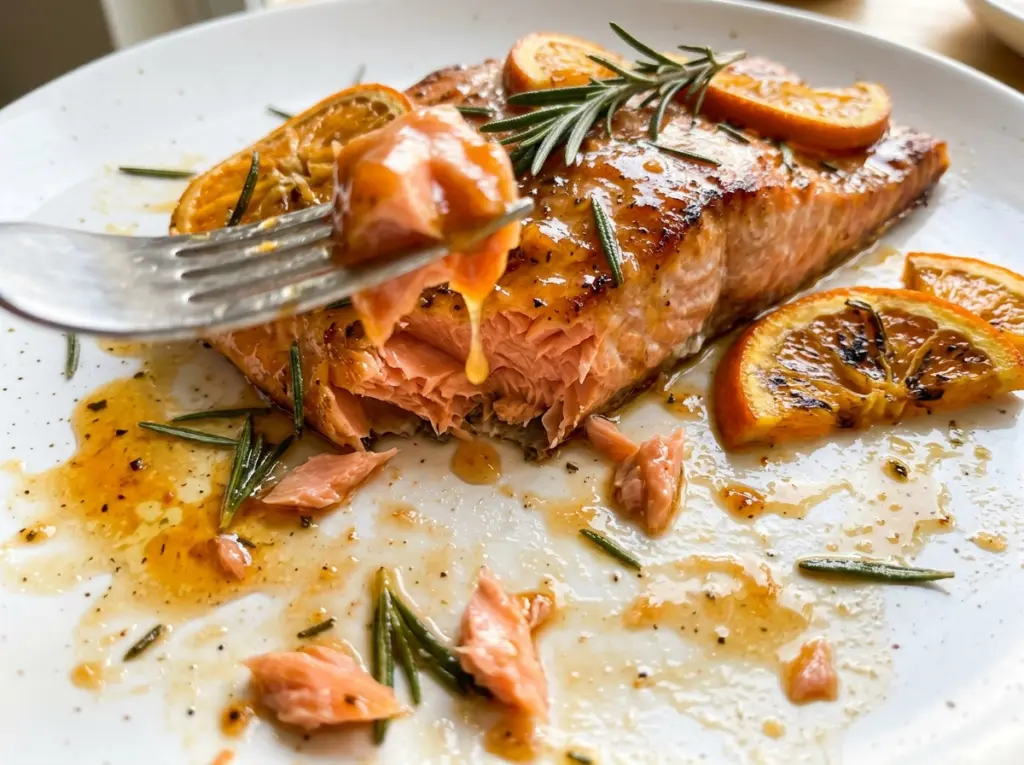
As orange juice simmers, it goes from thin and sharp to lightly syrupy, and that small change is what lets it cling to the salmon instead of running straight across the pan. I learned not to rush that part when making this Orange Rosemary Glazed Salmon: a watery glaze leaves the fish with a faint citrus note, while a reduced one gives each fillet a bright, savory-sweet coating.
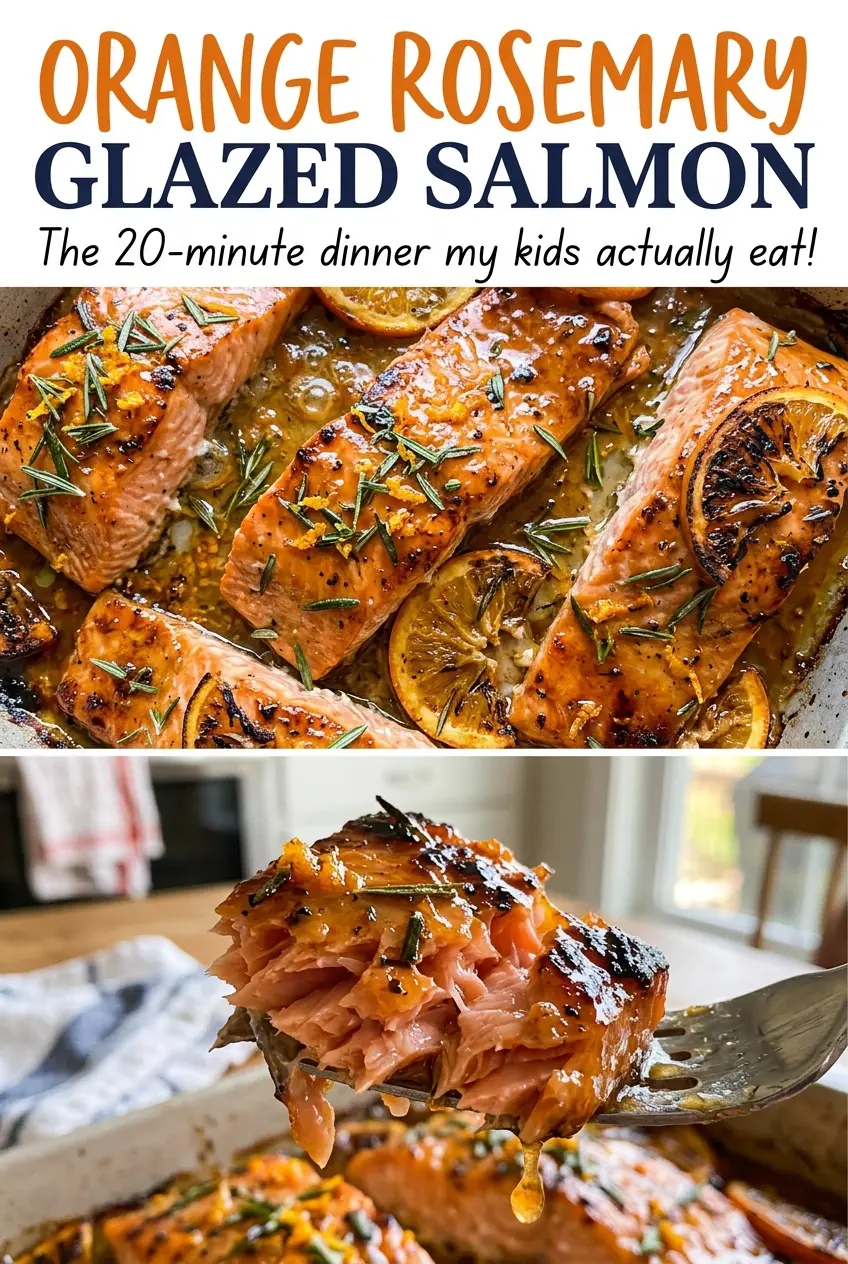
The rosemary and Dijon keep the orange from tasting like candy, and the garlic gives the glaze a little depth. I bake the salmon skin-side down, then brush it with a little clean, reserved glaze after it comes out of the oven. The finish is glossy and aromatic, with tender salmon underneath and just enough orange to brighten every bite.
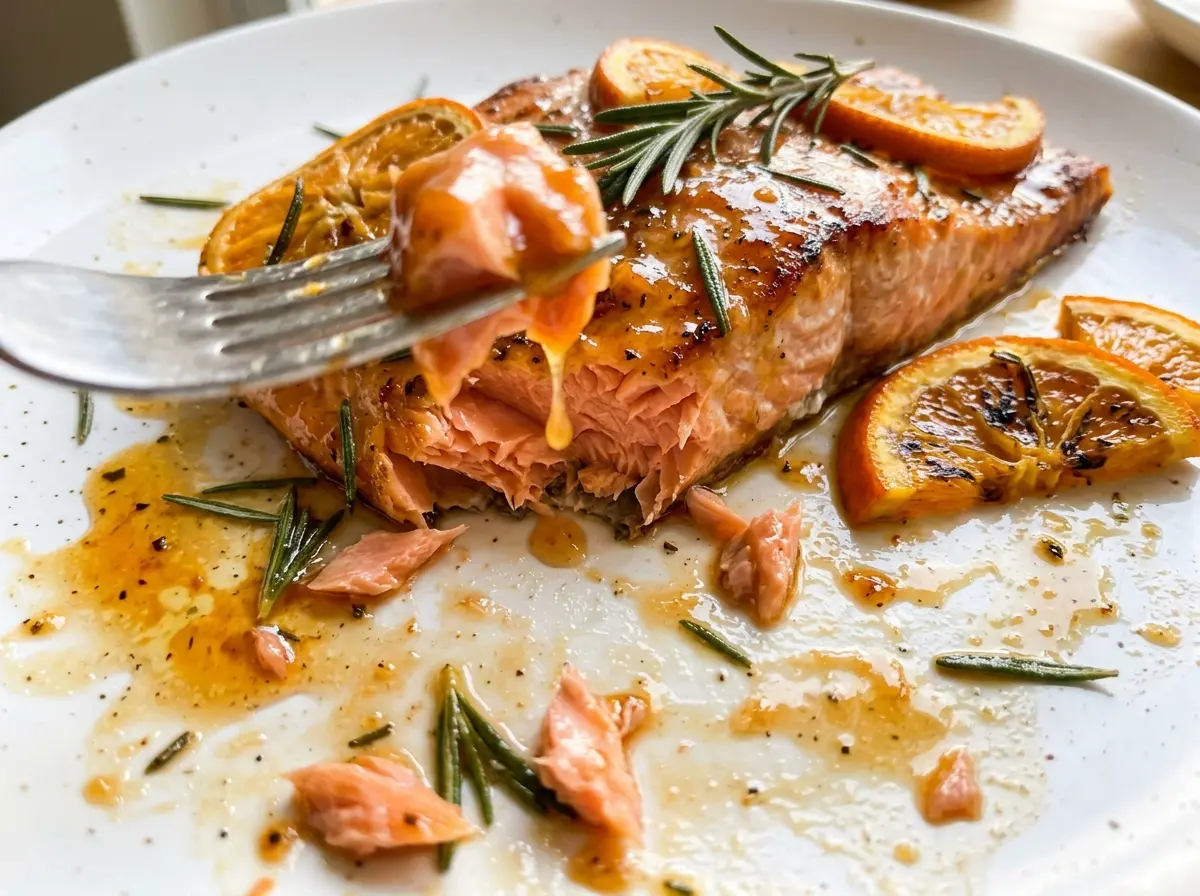
Kitchen Note
Keep the fillets skin-side down on the foil for the entire bake. The skin acts as a buffer between the salmon and the hot pan, so there’s no need to turn the fish over.
Save this Orange Rosemary Glazed Salmon for a bright, easy dinner: tender baked fillets with a glossy orange-honey finish.
Why This Glaze Needs Two Turns on the Salmon
Orange juice starts out too thin to coat a fillet well. Simmering it with honey, Dijon, rosemary, garlic, and zest concentrates the liquid until it’s lightly syrupy. That reduction helps the glaze stay on the fish during baking instead of pooling around it, and it brings the sweet, sharp, herbal notes into balance.
I also keep a small portion of glaze clean and separate for the finish. The glaze brushed on before baking has touched raw salmon, so it isn’t the portion I use at the table. Brushing the reserved glaze onto the cooked fillets gives them a fresh, fragrant sheen without bringing the raw-fish brush or glaze back into contact with the finished meal. It’s a small distinction, but it makes the last brush of orange and rosemary taste bright rather than baked down.
That final coat also makes the salmon look finished without needing a long cook or a sticky, over-reduced coating. Let the glaze reduce until it lightly clings to a spoon, not until it turns thick and candy-like. It should still be easy to brush across the fillets.
Orange, Honey, and Rosemary: What Each Brings to the Glaze
- Fresh orange juice and zest — The juice forms the glaze’s citrus base, while the zest brings fragrant orange oils that juice alone can’t provide. Fresh zest matters most here; grate only the orange-colored peel and leave the bitter white pith behind. Bottled juice on its own won’t give the same aromatic finish.
- Honey and Dijon mustard — Honey rounds out the juice’s sharpness and helps the reduced glaze coat the fish. Dijon adds tang and keeps the sweetness in check. Use a smooth Dijon you enjoy eating; a particularly sharp mustard will come through more clearly in the finished glaze.
- Fresh rosemary and garlic — Finely chopped fresh rosemary distributes its piney aroma through the glaze, while minced garlic adds savory depth. Chop the rosemary finely so you don’t get large, woody pieces in the coating, and mince the garlic evenly so it cooks into the juice rather than leaving a big raw-tasting bite.
- Skin-on salmon fillets — The skin helps protect the underside of the fish during baking and keeps the fillets easy to handle. Choose evenly sized pieces when you can; similar thickness makes it easier for all four portions to finish at about the same time. The olive oil on the foil keeps the skin from sticking, and black pepper adds a simple savory counterpoint to the glaze.
Reduce the Glaze First, Then Bake the Salmon Gently
Simmer Until Lightly Syrupy
Whisk the orange juice, orange zest, honey, Dijon mustard, chopped rosemary, minced garlic, and kosher salt in a small saucepan. Bring the mixture to a simmer over medium heat, then cook for 5 to 8 minutes, stirring often. Look for the liquid to reduce by about half and turn lightly syrupy; it shouldn’t be thick like candy. Take the pan off the heat and transfer 2 tablespoons of glaze to a small, clean bowl for brushing on the cooked salmon.
Set Up the Pan and Fillets
Heat the oven to 400°F and line a rimmed baking sheet with foil. Brush the foil with the olive oil so the salmon skin doesn’t cling to it as the fish bakes. Arrange the four fillets skin-side down, leaving a little space between them, and sprinkle with the black pepper. If the fillets are crowded or touching, the glaze is more likely to run together on the pan instead of coating each piece neatly.
Brush and Bake
Brush the fillets with the remaining glaze, spreading it across the tops rather than pouring it all in one spot. Bake for 10 to 15 minutes, checking the thickest part of each piece with an instant-read thermometer. The salmon is ready when each fillet reaches 145°F at its thickest point. Thickness varies between pieces, so use the temperature cue rather than relying on the shortest bake time alone.
Finish with the Reserved Glaze
As soon as the salmon is cooked, brush the tops with the glaze you set aside in the clean bowl. The warm fish will take on that final coat without needing to go back in the oven. Let the fillets rest for 3 minutes before serving. This short pause gives the surface time to settle, so the glaze stays on the salmon when you move it to plates.
Simple Ways to Change the Orange Rosemary Salmon
Leave Out the Rosemary for a Brighter Citrus Finish
Omit the chopped rosemary and keep the orange, honey, Dijon, and garlic together. The glaze will taste cleaner and more citrus-forward, without the woodsy herbal note. The texture of the glaze stays the same.
Use Skinless Salmon Fillets
Skinless fillets work with the same orange-rosemary glaze, but their exposed underside won’t have the skin’s buffer against the pan. Keep the foil oiled and check the thickest part early in the 10-to-15-minute baking window, since thinner pieces can reach the target temperature sooner.
Keep It Gluten-Free and Dairy-Free
There’s no flour, butter, or other dairy ingredient in this salmon, so no recipe change is needed for a dairy-free meal. The listed ingredients also contain no wheat-based component, making this a naturally gluten-free combination for cooks who use a suitable Dijon mustard.
Storage and Reheating
- Refrigerator: Store leftover salmon in an airtight container for 3 to 4 days. The glaze will lose some of its fresh sheen as it chills, but the salmon will remain flavorful.
- Freezer: Cooked salmon freezes for up to 3 months when wrapped tightly or packed in a freezer-safe airtight container. Thaw it in the refrigerator before reheating; the texture may be a little softer after freezing.
- Reheating: Warm gently in a low oven or in short microwave bursts, just until heated through. Reheating salmon too long dries it out, so stop as soon as it’s hot; reheat leftovers to 165°F.
Questions That Come Up While Making This Salmon
Orange Rosemary Glazed Salmon
Ingredients
Equipment
Method
- Whisk the orange juice, orange zest, honey, Dijon mustard, rosemary, garlic, and salt in a small saucepan.
- Bring the glaze to a simmer over medium heat.
- Cook for 5 to 8 minutes, stirring often, until reduced by about half and lightly syrupy.
- Remove the glaze from the heat and transfer 2 tablespoons to a small, clean bowl to brush on the cooked salmon.
- Heat the oven to 400°F and line a rimmed baking sheet with foil.
- Brush the foil with the olive oil.
- Arrange the salmon skin-side down on the baking sheet and sprinkle with the black pepper.
- Brush the fillets with the remaining glaze.
- Bake for 10 to 15 minutes, until the thickest part of each fillet reaches 145°F on an instant-read thermometer.
- Brush with the reserved glaze and rest for 3 minutes before serving.