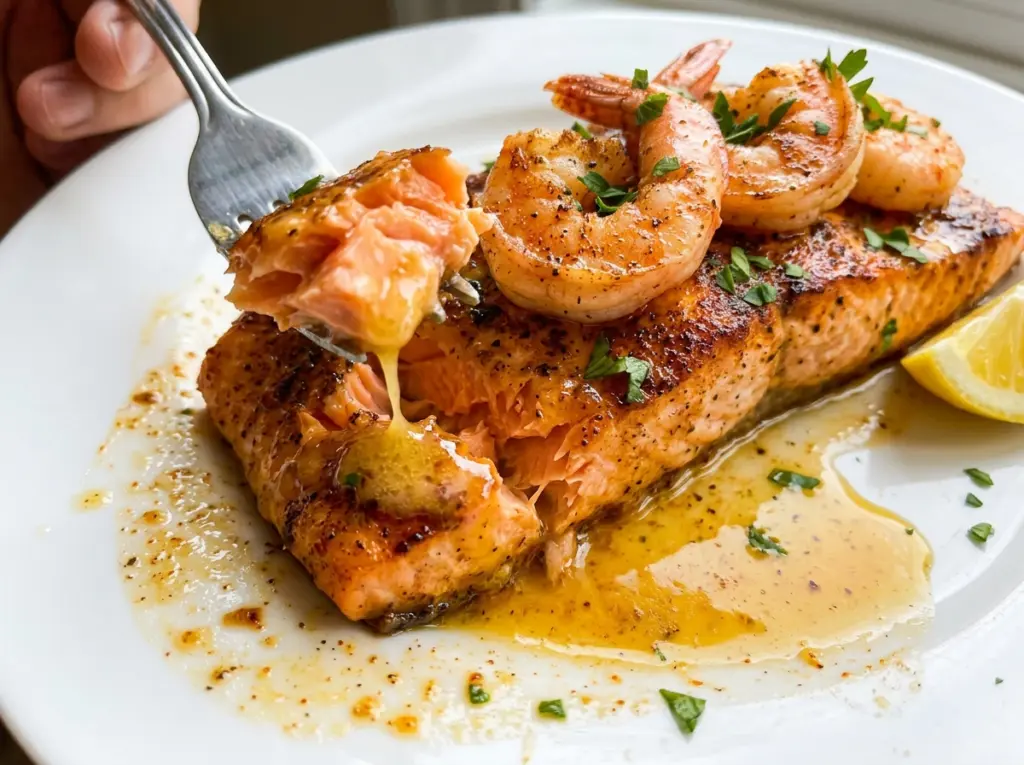
The oil should shimmer before the salmon goes in; if it doesn’t, the fillets won’t get the same golden contact with the pan. I cook them in two batches in a 12-inch skillet, then use that same pan for the creamy mushroom and shrimp sauce. That’s the appeal of Salmon New Orleans: the salmon gets its own sear, while the sauce picks up the savory bits left behind.
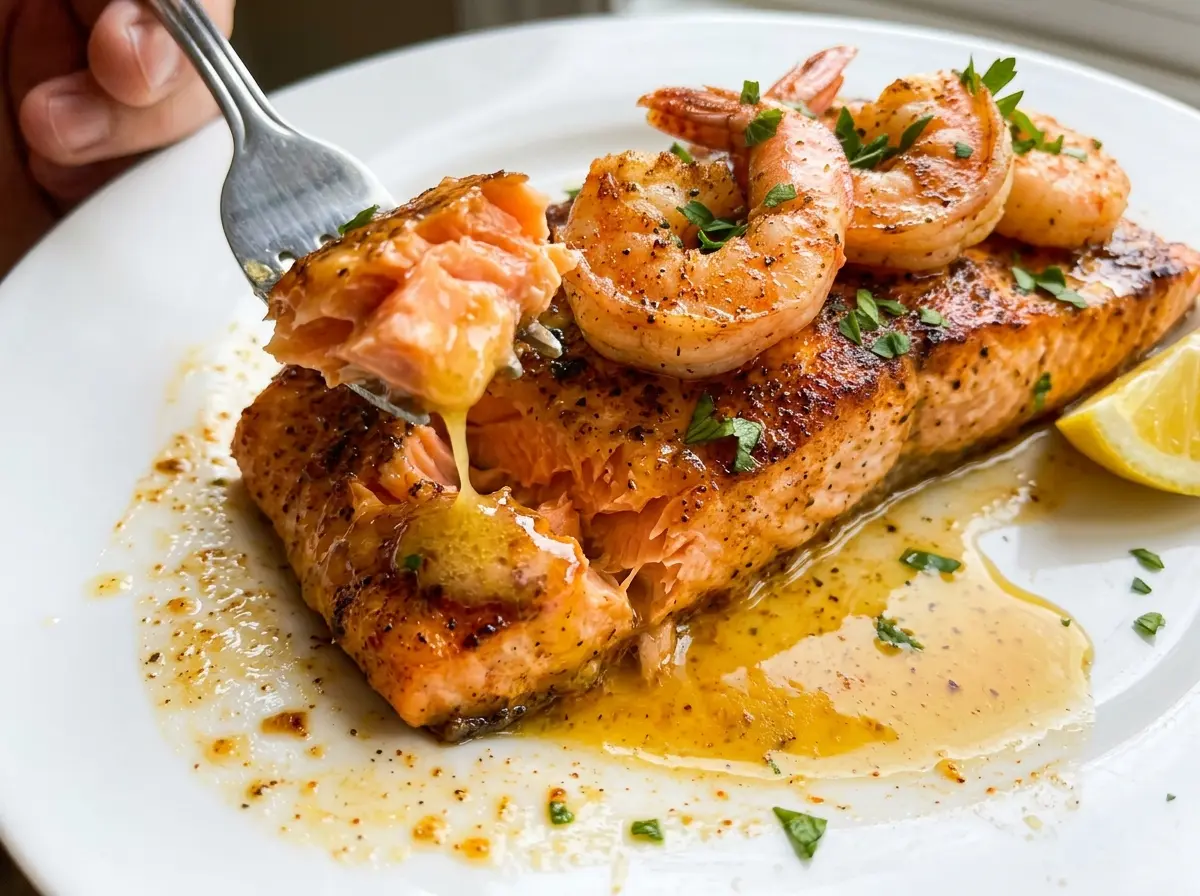
The order matters once the sauce is underway. I let the cream simmer until it lightly coats a spoon before adding the shrimp, so the shrimp cooks just until opaque instead of sitting in the pan while the sauce reduces. A little lemon juice and green onion at the end cut through the richness. Each fillet gets a generous spoonful of warm, creamy sauce with tender mushrooms and shrimp.
Kitchen Note
Cook the salmon in two batches, then transfer both batches to a plate and cover them loosely with foil. That gives the fish a little breathing room in the skillet and keeps the first batch warm while you make the sauce.
Save Salmon New Orleans for a skillet dinner with seared salmon, creamy mushrooms, and Cajun-seasoned shrimp.
Why the Shrimp Goes Into the Sauce at the Very End
The sauce needs a little time to become creamy and spoon-coating, but shrimp doesn’t. If the shrimp goes in while the broth and cream are still reducing, it keeps cooking through every minute the sauce needs to thicken. That’s how shrimp can turn firm and rubbery before the sauce is ready.
Instead, build the sauce first: brown the mushrooms, soften the garlic, simmer the broth, then let the cream and spices reduce until the sauce clings lightly to a spoon. Only then add the shrimp. Medium shrimp turn opaque in a few minutes, and the sauce is already at the right consistency when they’re done. Lemon juice and green onions go in after the heat has done its work, keeping their fresh, bright taste distinct from the rich cream.
This order also gives you a useful visual checkpoint. When the spoon-coating sauce is ready, the pan is ready for shrimp; when the shrimp is opaque, you can finish and serve without waiting for the sauce to catch up.
What the Salmon, Cream, and Cajun Seasoning Each Bring
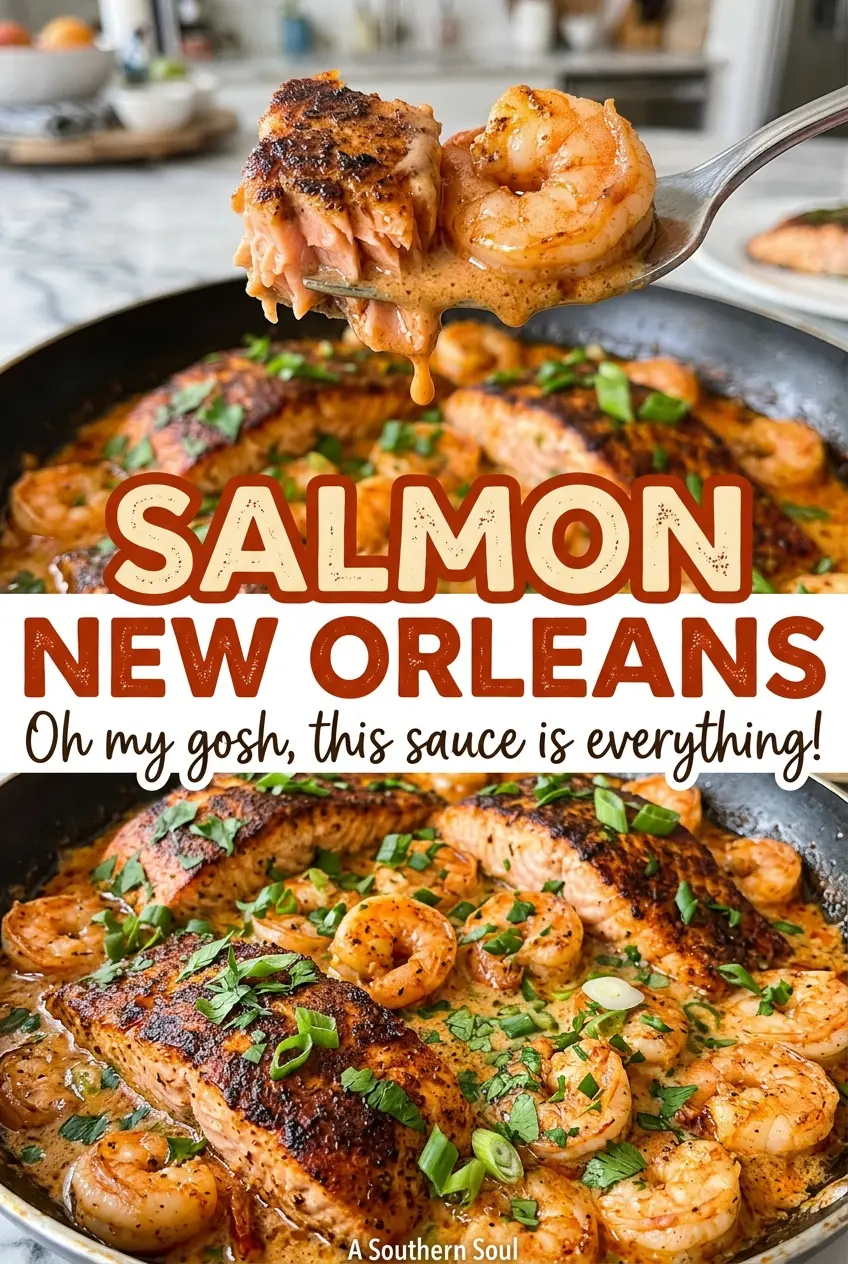
- Skinless salmon fillets — Six-ounce fillets give you a substantial serving and cook reliably in the two-batch method. Patting them dry before seasoning helps the outside sear instead of steaming. Salmon is the centerpiece here; a much thinner piece would cook on a different schedule.
- Cajun seasoning — This brings the savory, spiced character to the fish before it meets the cream sauce. Season both sides so each bite tastes seasoned, not just the surface facing up. The paprika and cayenne in the sauce add their own warmth, but they aren’t a direct stand-in for the seasoning blend.
- Cremini mushrooms — These give the sauce browned, earthy depth and hold their shape as they cook. Sliced mushrooms need enough skillet time to turn tender and brown; adding garlic at the start would risk burning it while the mushrooms release their moisture.
- Chicken broth and heavy cream — Broth loosens the browned pan fond, while heavy cream reduces into the sauce that coats the spoon. Broth alone won’t give you the same creamy body, and a lighter liquid won’t reduce in quite the same way. Use heavy cream for the intended texture.
- Medium shrimp — Peeled and deveined shrimp are ready to go straight into the sauce, and their medium size fits the short cooking time. If shrimp are not peeled and deveined, that prep needs to be done before they reach the skillet.
- Lemon juice and green onions — These finish the creamy sauce with brightness and a fresh onion note. Add them after the shrimp is cooked so they don’t lose their lift during the simmer.
Building the Mushroom Cream Sauce Around the Sear
Sear the salmon in two batches
Pat the fillets dry and season both sides with Cajun seasoning. Heat a tablespoon of neutral oil in a 12-inch skillet over medium-high until it shimmers, then cook two fillets for 4 minutes on the first side and 3 to 5 minutes on the second. The fish should release from the pan more easily once a seared surface has formed; don’t pry it up early. Check the thickest part and cook until it reaches 145°F, then transfer the fish to a plate and loosely cover with foil while you repeat with the remaining oil and salmon.
Brown the mushrooms before adding garlic
Reduce the heat to medium and melt the butter in the same skillet, keeping the browned bits from the salmon in the pan. Add the sliced mushrooms and cook for 5 to 7 minutes, stirring occasionally, until they’re browned and tender. If they still look pale and wet, give them the full cooking time rather than rushing on to the next step. Stir in the minced garlic and cook for 30 seconds, just until fragrant.
Reduce the broth and cream to a spoon-coating sauce
Pour in the chicken broth and let it simmer for 2 to 3 minutes, scraping the bottom of the skillet as you stir. Add the heavy cream, paprika, and cayenne, then simmer for 3 to 5 minutes. The sauce should lightly coat a spoon rather than look watery. Keep the heat at a steady simmer; a hard boil can reduce the sauce too quickly before its texture settles.
Cook the shrimp, then finish the sauce
Add the peeled and deveined shrimp and cook for 3 to 4 minutes, stirring occasionally. Look for shrimp that have turned opaque throughout; translucent centers need a little more time. Stir in the lemon juice and thinly sliced green onions once the shrimp is cooked. Spoon the sauce over the salmon and serve while everything is warm.
Two Simple Ways to Adjust the Cajun Salmon Skillet
Make the sauce gentler
Leave out the cayenne pepper for a milder sauce while keeping the Cajun-seasoned salmon and paprika. You’ll lose the distinct cayenne heat, but the mushrooms, cream, and shrimp still make a full-bodied topping.
Turn it into a mushroom cream salmon
Leave out the shrimp and finish the mushroom cream sauce with lemon juice and green onions, then spoon it over the salmon. The result has the same seared fish and creamy, savory sauce without the extra seafood texture.
Storage and Reheating
- Refrigerator: Refrigerate leftovers within 2 hours and eat them within 3 to 4 days. The sauce will thicken, and the mushrooms soften as they sit.
- Freezer: Freezing isn’t the best choice for this dish. Cream sauce can separate after thawing, and the salmon and shrimp may lose their pleasant texture.
- Reheating: Warm the salmon and sauce gently in a covered skillet over low heat, stirring the sauce carefully, until the leftovers reach 165°F. Avoid boiling the sauce; high heat can make it separate and overcook the seafood.
Questions That Come Up When Cooking Salmon New Orleans
Salmon New Orleans
Ingredients
Equipment
Method
- Pat the salmon dry.
- Season both sides with the Cajun seasoning.
- Heat 1 tablespoon of the oil in a 12-inch skillet over medium-high heat until shimmering.
- Cook 2 salmon fillets for 4 minutes on the first side and 3 to 5 minutes on the second side, until the thickest part reaches 145°F.
- Transfer the salmon to a plate and loosely cover with foil.
- Add the remaining 1 tablespoon oil to the skillet.
- Cook the remaining salmon the same way.
- Transfer it to the plate.
- Reduce the heat to medium and melt the butter in the same skillet.
- Add the mushrooms and cook for 5 to 7 minutes, stirring occasionally, until browned and tender.
- Stir in the garlic and cook for 30 seconds.
- Pour in the chicken broth and simmer for 2 to 3 minutes.
- Stir in the heavy cream, paprika, and cayenne.
- Simmer for 3 to 5 minutes, until the sauce lightly coats a spoon.
- Add the shrimp and cook for 3 to 4 minutes, stirring occasionally, until opaque and cooked through.
- Stir in the lemon juice and green onions.
- Spoon the sauce over the salmon and serve.