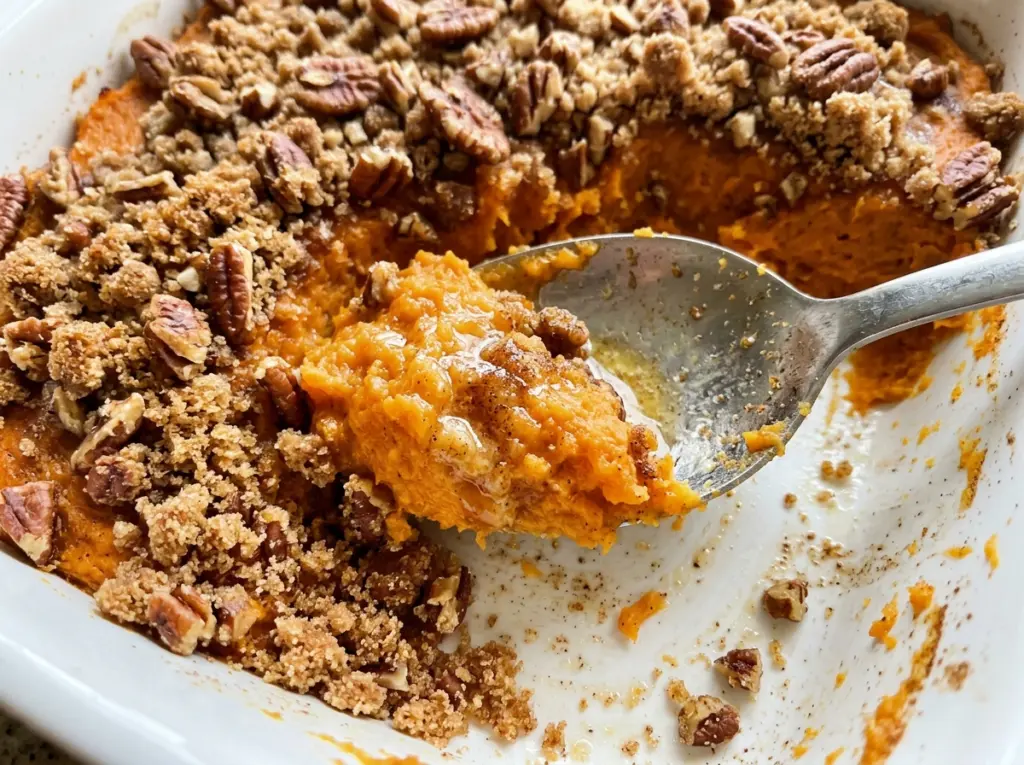
When the potatoes come out of the pot, they look sturdy enough to mash, but a little water left behind can turn the filling loose. I learned to give them a thorough drain before they go back into the pot. That small pause helps this Spiced Sweet Potato Casserole bake up smooth instead of watery under its pecan topping.
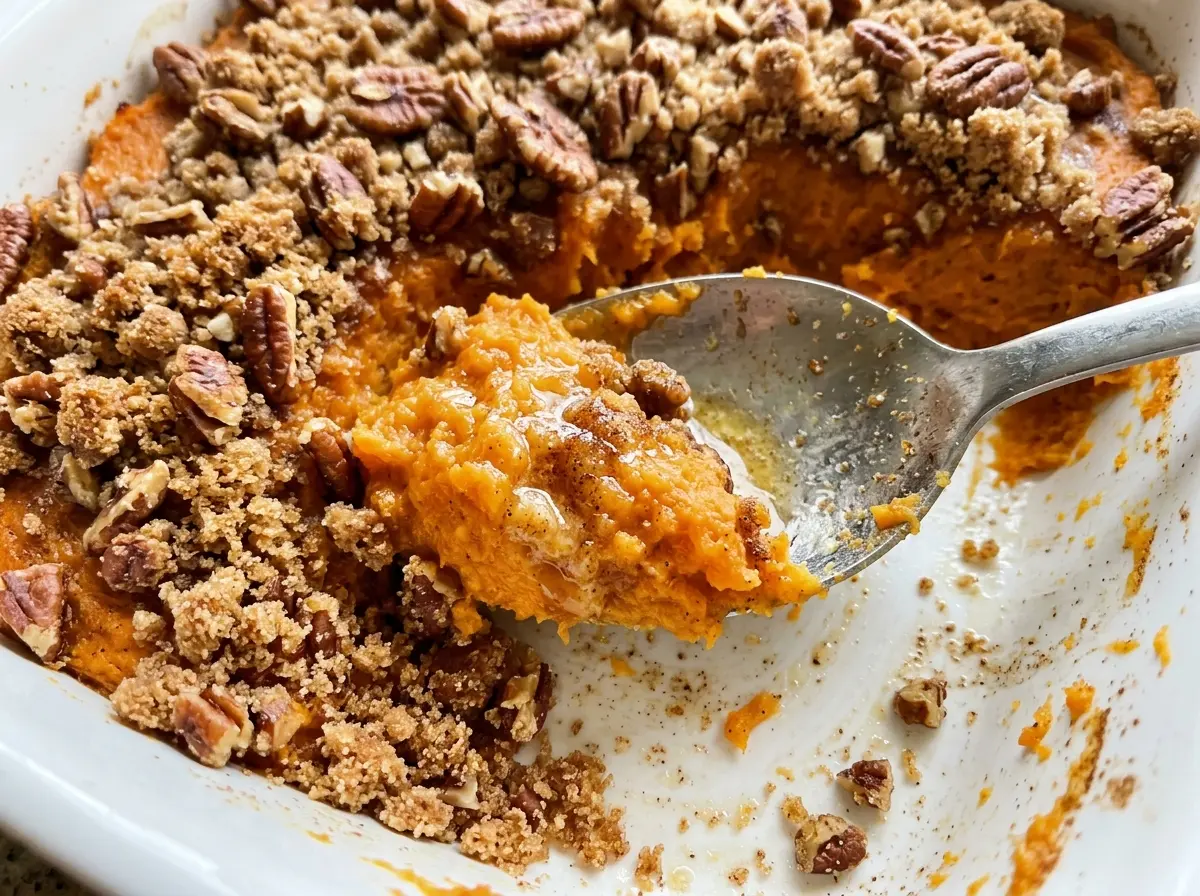
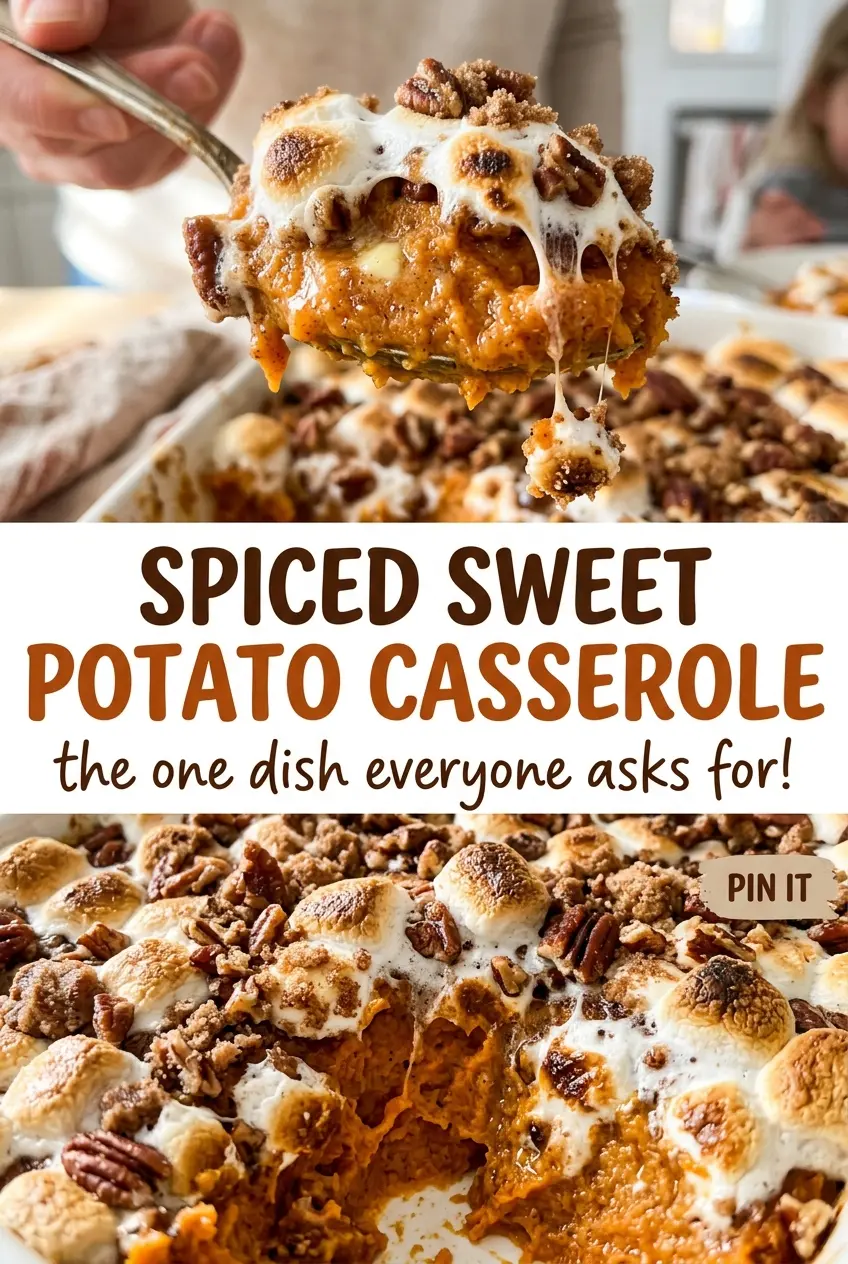
The filling starts with sweet potatoes simmered until fork-tender, then mashed with melted butter, milk, eggs, sugar, and warm spices. The eggs give it structure as it bakes, while cinnamon and nutmeg keep the sweetness from tasting one-note. A quick brown sugar and pecan crumble adds a crisp, buttery top to the soft center. It’s the kind of casserole that cuts cleanly after a short rest, with a golden lid and a gently spiced filling.
Kitchen Note
Drain the potatoes well before mashing, and let the steam escape for a moment in the warm pot. Water clinging to the chunks is the easiest way to end up with a softer filling than you wanted.
Save this Spiced Sweet Potato Casserole for its smooth, cinnamon-and-nutmeg filling and golden pecan crumble.
Why This Casserole Needs a Crumble, Not Just Pecans on Top
Scattering chopped pecans over the filling by themselves would give you nuts, but not the even, crisp layer that makes each serving feel finished. The flour and brown sugar turn the melted butter into a crumbly coating that clings to the pecans. In the oven, that mixture browns while the sweet potato underneath sets. You get a clear contrast: soft, smooth filling below and a crisp, nutty top above.
That contrast depends on the topping being crumbly rather than paste-like. Stir the butter into the flour, sugar, and pecans until the mixture looks like damp crumbs, then spread it over the casserole instead of pressing it down. Pressing can compact the topping and make it less craggy. Distribute it across the surface so the edges and center both get some pecans and brown sugar; a thick pile in one spot browns unevenly. The filling doesn’t need a complicated finish. Its spices are mixed right in, and the topping supplies the toasted, caramel-like notes that balance them.
What the Sweet Potatoes, Eggs, and Pecans Each Bring
- Sweet potatoes — Fresh sweet potatoes are the base, so choose firm ones without soft spots. Garnet or jewel sweet potatoes both work; their natural sweetness and texture are a better fit here than canned potatoes packed in syrup, which can make the filling too wet or sweet. Peeling and cutting them into similar-sized chunks helps them soften evenly.
- Butter and whole milk — Butter gives the mash richness, while milk loosens it enough to mix smoothly. Unsalted butter lets the salt stay in balance, and a standard store-brand butter works well because it’s melted into the filling and topping. Two-percent milk can stand in for whole milk, though the filling will be a little less rich.
- Eggs — Lightly beaten eggs help the filling hold together after baking; they’re doing more than adding richness. Keep them in for the cleanest slices. Mix them into the warm mash rather than dropping them in whole, so they distribute throughout the filling.
- Cinnamon, nutmeg, and vanilla — Cinnamon and nutmeg give the filling its familiar warm spice, while vanilla rounds out the sweetness. Fresh, aromatic spices make the difference here; if the jars have been open for years, their flavor will be muted. Use ground spices as listed rather than trying to replace one with more of the other, since nutmeg has a sharper, earthier note.
- Flour, brown sugar, and pecans — Flour gives the topping body, packed light brown sugar brings a mellow molasses note, and pecans add crunch. Fresh pecans taste sweeter and less bitter than stale ones, but there’s no need for a specialty brand. A cup-for-cup gluten-free flour blend can replace the all-purpose flour in the topping; the crumbs may be a little more delicate.
From Fork-Tender Potatoes to a Golden Pecan Top
Simmer the Sweet Potatoes Until They Give Easily
Heat the oven to 350°F and grease a 9×13-inch baking dish. Put the peeled, 1-inch sweet potato chunks in a large pot, cover them with cold water by 1 inch, and bring the pot to a boil. Lower the heat and simmer for 15 to 20 minutes, until a fork slides into a chunk without resistance. Don’t stop while the centers are still firm; they’ll be harder to mash smooth later.
Mash Smooth, Then Mix the Filling
Drain the potatoes well, return them to the pot, and mash until smooth. Stir in 1/2 cup of the melted butter, the granulated sugar, whole milk, lightly beaten eggs, vanilla, cinnamon, nutmeg, and kosher salt. Keep mixing until you don’t see streaks of egg or pockets of spice. A few small soft pieces are fine, but large lumps won’t disappear during baking.
Make Crumbs with the Remaining Butter
In a separate bowl, stir together the flour, packed light brown sugar, and chopped pecans. Add the remaining 1/4 cup melted butter and stir until crumbly. If you see dry flour collecting at the bottom, scrape and stir it into the butter instead of leaving it behind. The mixture should stay in loose crumbs rather than turning into a smooth dough.
Layer and Bake Until the Center Sets
Spread the sweet potato mixture evenly in the prepared dish, then scatter the topping over it. Bake for 30 to 35 minutes, until the pecan mixture is golden and the center reaches 160°F. Check the center with an instant-read thermometer rather than judging only by the color of the topping. Let the casserole rest for 10 minutes before serving so the filling has time to settle.
Three Easy Swaps Without Losing the Casserole’s Character
Make It Dairy-Free with Plant-Based Butter and Milk
Use plant-based butter in place of the butter and plain, unsweetened oat or soy milk instead of whole milk. Keep the same amounts, splitting the butter between filling and topping as written. The casserole will still bake and slice, though the filling may taste a little less rich; skip sweetened or vanilla-flavored milk so the sugar and spice stay balanced.
Use Walnuts for a Less-Sweet, Earthier Crunch
Replace the chopped pecans with the same amount of chopped walnuts in the topping. Walnuts have a slightly more bitter, earthy edge and a firmer bite, so the finished top tastes less buttery-sweet, but the flour-and-brown-sugar crumble still comes together the same way.
Keep the Topping Gluten-Free
Swap the all-purpose flour for a cup-for-cup gluten-free flour blend in the topping, leaving the other ingredients unchanged. The pecans and brown sugar still give it crunch and sweetness, but some blends make a more fragile crumble, so scatter it gently rather than pressing it onto the filling.
Storage and Reheating
- Refrigerator: Refrigerate leftovers within 2 hours and keep them covered for 3 to 4 days. The topping softens in the fridge, while the filling stays moist.
- Freezer: Freeze baked portions or the whole cooled casserole, tightly wrapped, for up to 2 to 3 months for best quality. Thaw overnight in the refrigerator before reheating.
- Reheating: Warm a covered casserole in a 325°F oven until the center reaches 165°F; uncover near the end if you want to crisp the topping again. Individual portions can be microwaved, but the pecan layer will stay softer. Avoid reheating the whole dish uncovered from the start, since the top can dry out before the middle is hot.
The Questions That Come Up Before the First Slice
Spiced Sweet Potato Casserole
Ingredients
Equipment
Method
- Heat the oven to 350°F.
- Grease a 9x13-inch baking dish.
- Put the sweet potatoes in a large pot and cover with cold water by 1 inch; bring to a boil, then simmer for 15 to 20 minutes, until fork-tender.
- Drain the potatoes well, return them to the pot, and mash until smooth.
- Mix in 1/2 cup of the melted butter, the granulated sugar, milk, eggs, vanilla, cinnamon, nutmeg, and salt.
- Stir together the flour, brown sugar, and pecans.
- Add the remaining 1/4 cup melted butter and stir until crumbly.
- Spread the sweet potato mixture in the prepared baking dish.
- Scatter the topping evenly over it.
- Bake for 30 to 35 minutes, until the topping is golden and the center reaches 160°F.
- Rest the casserole for 10 minutes before serving.