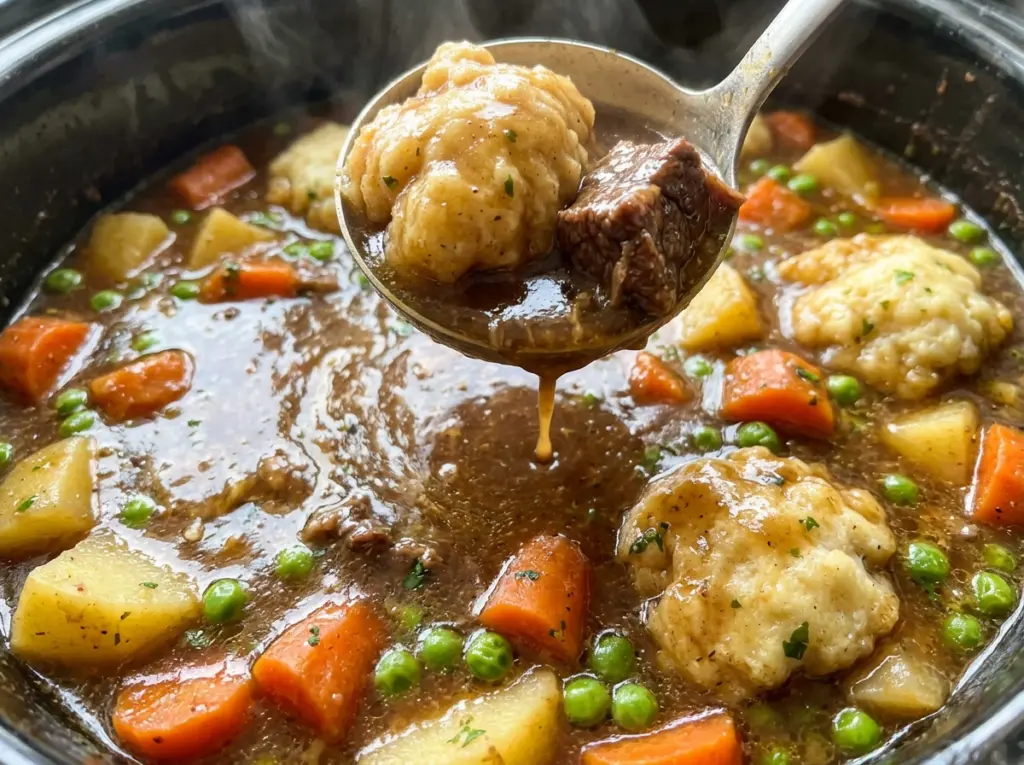
The beef gets a quick sear in a hot skillet, and the kitchen starts smelling like stew long before the slow cooker is ready. I used to think that step was optional when dinner was already going to cook for hours, but browned beef gives this Slow Cooker Beef Stew and Dumplings a deeper, rounder taste than beef that goes straight into the cooker.
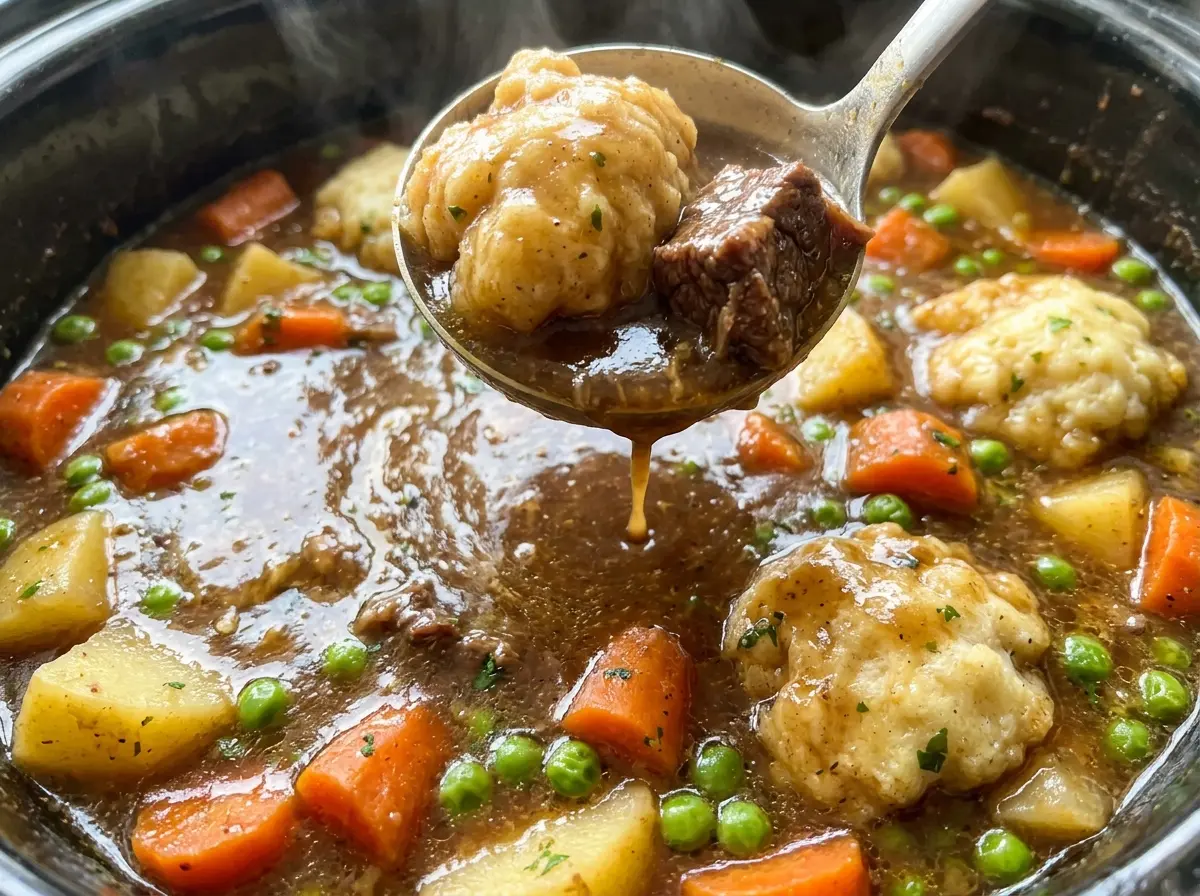
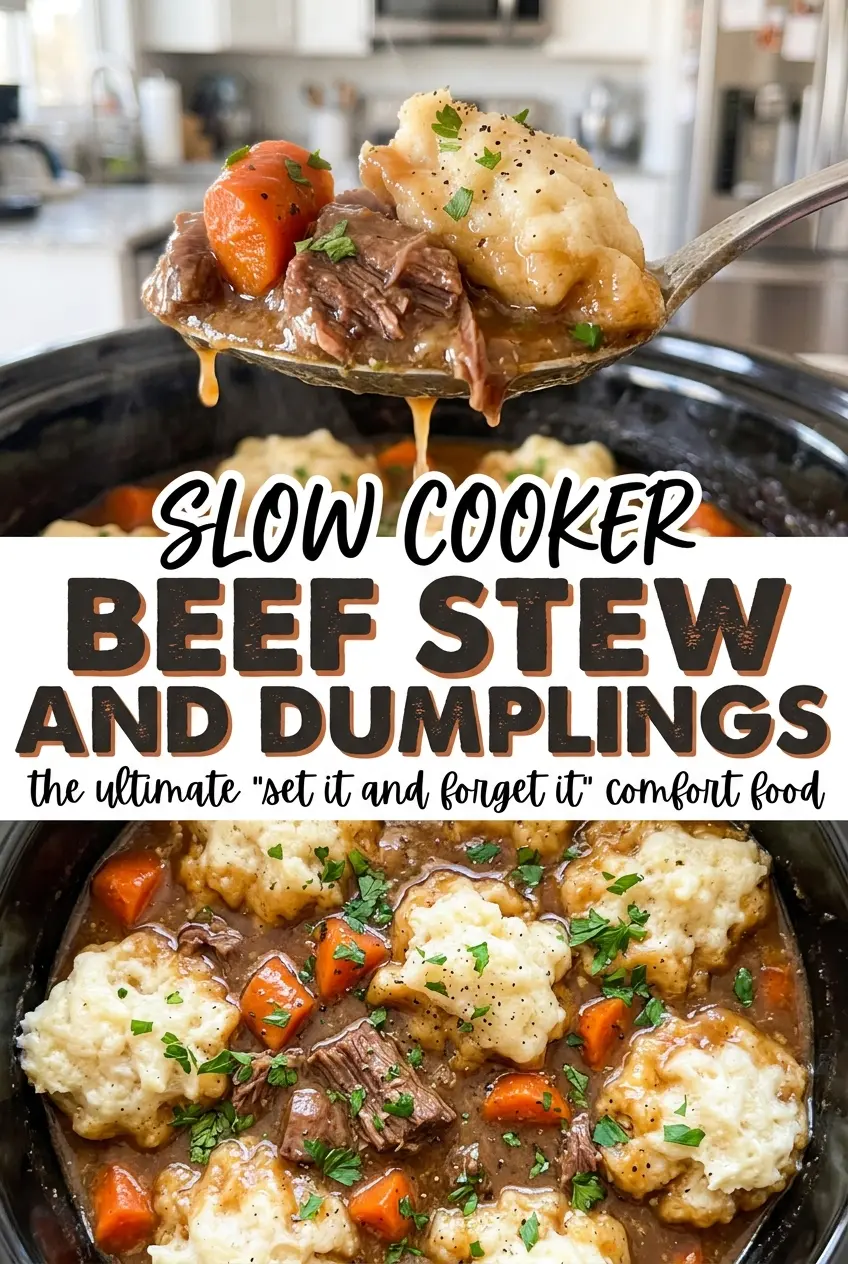
The dumplings go in only after the beef is tender and the stew has thickened. Their dough is stirred just until it looks shaggy, then dropped in soft mounds over the vegetables and beef. They steam on top of the stew, soaking up its savory broth underneath while the tops puff. You end up with a full, comforting meal from one slow cooker, with tender beef and dumplings that are soft without being dense.
Kitchen Note
Once the dumplings go in, keep the lid shut for the whole cooking stretch. Each peek lets out the steam they need to puff, so I wait until the cooking time is nearly up before checking one.
Save this Slow Cooker Beef Stew and Dumplings for a hands-off supper with fork-tender beef and fluffy dumplings cooked right on top.
Why the Cornstarch Goes In After the Beef Is Tender
It’s tempting to thicken a slow-cooker stew at the beginning, but cornstarch works best here as a finishing step. The beef and vegetables need hours in the broth to become tender, and the stew is easier to judge once that cooking is done. Adding the slurry then lets you thicken the liquid to a stew-like consistency without guessing how much it will reduce.
Mixing cornstarch with cold water first matters, too. Dry cornstarch stirred directly into hot liquid can clump, leaving little pasty bits instead of a smooth gravy. A smooth slurry disperses through the broth, and a short stretch on HIGH gives it time to thicken. If the stew looks a little loose just after you stir it in, give it the full heating time before deciding it needs more.
This timing also keeps the vegetables and beef from getting knocked around by extra stirring during their long cook. The potato pieces stay more intact, and the broth turns glossy enough to cling to a spoon and the dumplings.
What the Beef, Potatoes, and Dumpling Dough Each Bring
- Beef chuck — Chuck has enough connective tissue and marbling to turn tender during a long, gentle cook. A chuck roast is a good buy; trim it and cut it into even cubes yourself. Beef brisket cut into the same size pieces can work, though its texture is more pronounced and stringy.
- Yukon Gold potatoes — Their creamy texture and ability to hold their shape suit a stew that cooks for hours. Red potatoes are the closest swap; cut them into similarly sized pieces. Russets tend to break down more, which makes the broth cloudier.
- Beef broth, tomato paste, and Worcestershire — Together they give the cooking liquid its savory, beefy base, with tomato paste adding concentrated depth and Worcestershire a tangy, fermented edge. Use broth you like the taste of, since it makes up most of the stew liquid. Ketchup isn’t a good stand-in for tomato paste because its sweetness and seasoning change the balance.
- All-purpose flour and baking powder — Flour gives the dumplings structure, while baking powder provides the lift that makes them puff. The baking powder needs to be fresh; old leavener can leave the dumplings heavy. There isn’t a simple flour swap that keeps the same texture, so use all-purpose flour for this version.
- Cold butter and milk — Cutting cold butter into the flour leaves small pieces that help the dumplings bake up tender rather than bready. Keep the butter cold while you work. For a dairy-free batch, use dairy-free stick butter and unsweetened plain soy milk in the dumplings; they’ll be a little less buttery but still soft.
How to Brown the Beef, Thicken the Stew, and Steam the Dumplings
Brown the Beef in Batches
Pat the beef dry before seasoning it with kosher salt and black pepper; wet surfaces steam instead of browning. Heat the vegetable oil in a 12-inch skillet over medium-high heat, then brown the beef in batches, turning as needed, for 6–8 minutes total. Give the pieces room so the skillet stays hot and you get browned patches rather than gray meat. Transfer the beef to the slow cooker as each batch is ready.
Build the Slow-Cooker Base
Add the chopped onion, carrot rounds, potato pieces, and minced garlic to a 6-quart slow cooker, then add the browned beef. Stir the beef broth, tomato paste, Worcestershire sauce, and dried thyme together until the tomato paste is loosened, pour it over the beef and vegetables, and tuck in the bay leaf. Cover and cook on LOW for 7–8 hours or HIGH for 4–5 hours. The beef should give easily when pressed with a fork, and the potatoes should be easy to pierce.
Thicken the Broth
Whisk the cornstarch and cold water in a small bowl until no dry pockets remain. Stir the smooth mixture into the cooked stew, taking care to reach the bottom and sides of the cooker so it distributes evenly. Cover and cook on HIGH for 10–15 minutes. The broth should look thicker and lightly coat the vegetables instead of running like a thin soup.
Mix and Steam the Dumplings
Whisk the flour and baking powder in a medium bowl, then cut in the cold butter until you see pea-size pieces throughout. Stir in the milk only until a soft, shaggy dough forms; a few rough edges are fine, but a smooth, heavily worked dough makes tougher dumplings. Remove the bay leaf, then drop the dough in 8 mounds over the stew. Cover and cook on HIGH for 45–60 minutes, until the dumplings are puffed and a toothpick inserted into the center of one comes out clean.
Simple Ways to Change the Stew Without Losing Its Comfort
Make the dumplings dairy-free
Replace the butter in the dumpling dough with dairy-free stick butter and use unsweetened plain soy milk in place of the milk. Keep both substitutions cold where appropriate and mix the dough just until shaggy. The dumplings will have a slightly less buttery taste, while the stew itself stays the same.
Use red potatoes for a firmer bite
Swap the Yukon Gold potatoes for the same amount of red potatoes, cut into the same size pieces. Red potatoes keep a firmer, waxier bite after slow cooking, while Yukon Golds are creamier.
Add mushrooms for a deeper savory note
Add 8 ounces of sliced cremini mushrooms to the slow cooker with the onion, carrots, potatoes, and garlic. They’ll soften into the broth and add an earthy taste without changing the dumpling method.
Storage and Reheating
- Refrigerator: Refrigerate leftovers within 2 hours and keep them in a covered container for 3–4 days. The dumplings will absorb some broth and soften as they sit.
- Freezer: The stew freezes, but cooked dumplings soften and can break apart after thawing. For the best texture, freeze the stew before adding dumplings; thaw it in the refrigerator, then make and cook fresh dumplings on top.
- Reheating: Warm leftovers gently in a covered saucepan over low heat, moving the stew around the dumplings instead of stirring through them. Heat until the center reaches 165°F; a hard boil can break up the dumplings.
Questions That Come Up With Slow Cooker Stew and Dumplings
Slow Cooker Beef Stew and Dumplings
Ingredients
Equipment
Method
- Pat the beef dry.
- Season the beef with the salt and pepper.
- Heat the oil in a 12-inch skillet over medium-high heat.
- Brown the beef in batches, turning as needed, for 6-8 minutes total.
- Put the onion, carrots, potatoes, and garlic in a 6-quart slow cooker, then add the browned beef.
- Stir together the broth, tomato paste, Worcestershire sauce, and thyme.
- Pour the broth mixture over the beef and vegetables, and add the bay leaf.
- Cover and cook on LOW for 7-8 hours or HIGH for 4-5 hours, until the beef is fork-tender and the potatoes are easily pierced with a fork.
- Whisk the cornstarch and cold water until smooth.
- Stir the cornstarch mixture into the stew.
- Cover and cook on HIGH for 10-15 minutes.
- Whisk the flour and baking powder in a medium bowl.
- Cut in the butter until the mixture has pea-size pieces.
- Stir in the milk just until a soft, shaggy dough forms.
- Remove the bay leaf.
- Drop the dough in 8 mounds over the stew.
- Cover and cook on HIGH for 45-60 minutes without lifting the lid, until the dumplings are puffed and a toothpick inserted into the center of one comes out clean.