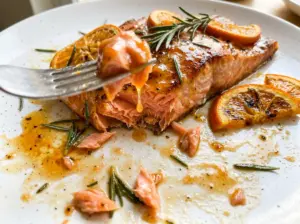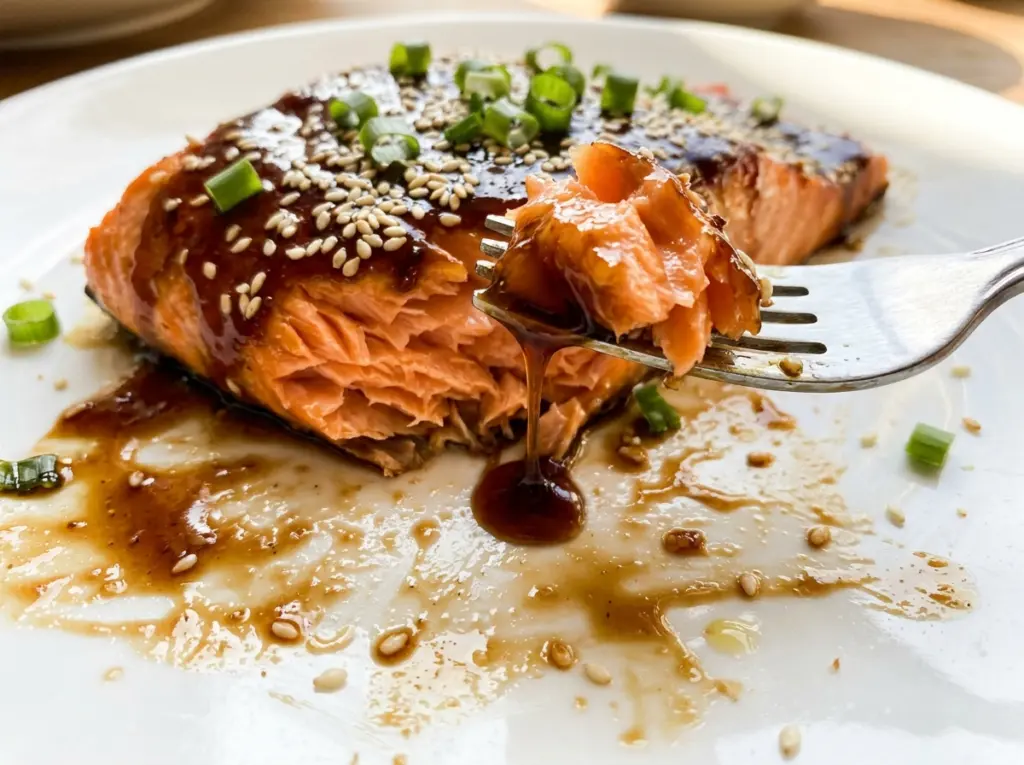
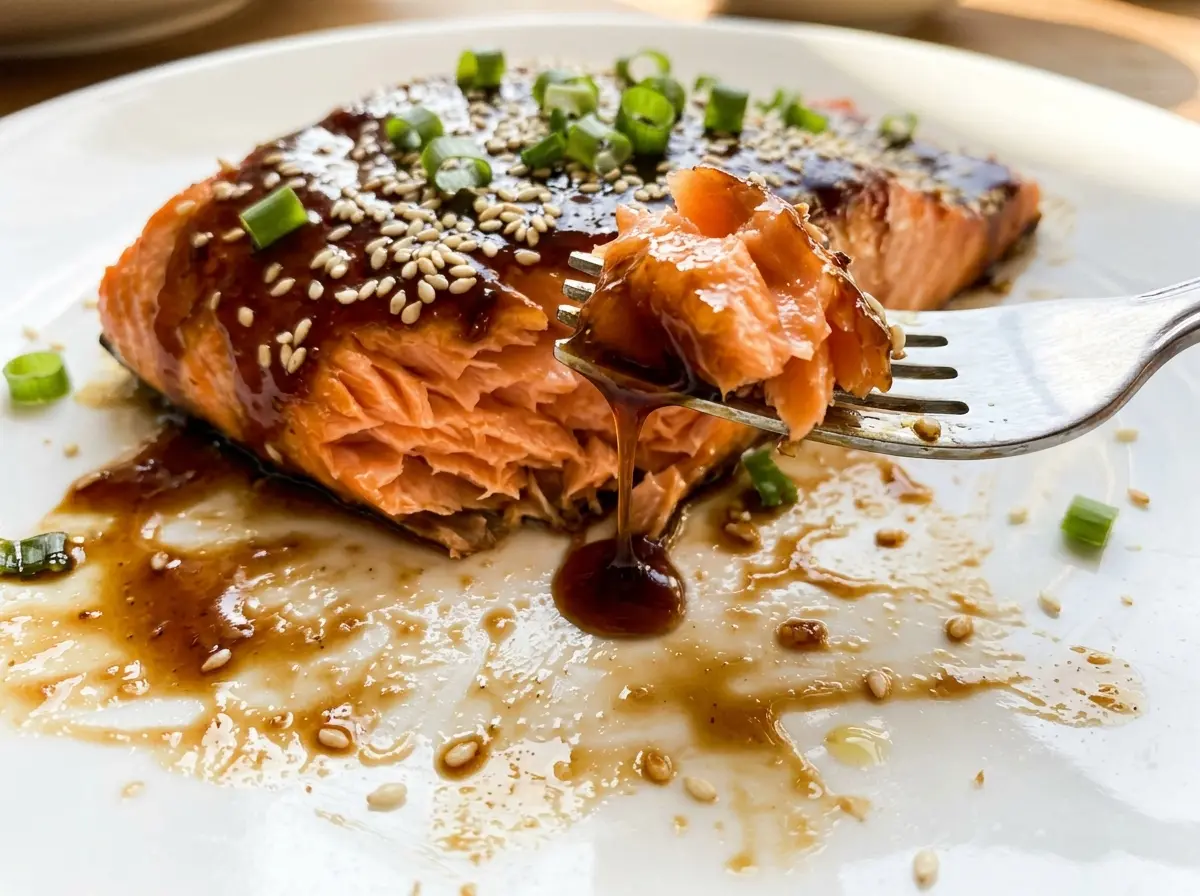
The glaze goes into the saucepan looking thin and dark, then turns shiny as it simmers. That small change makes a difference when you brush it over the salmon: it clings to the surface instead of running straight off. I make this Asian salmon when I want a baked fish dinner with a sweet-savory ginger and garlic glaze, without having to stand over a skillet.
The glaze has a gentle sweetness from honey, a little brightness from rice vinegar, and the toasty scent of sesame oil. Skin-on fillets bake in one dish, which keeps the hands-on work short. The fish comes out tender and flaky under a glossy coating, with enough sauce left in the dish to spoon over each piece.
Kitchen Note
Cornstarch settles quickly, so give the glaze mixture one last whisk just before it goes into the saucepan. A smooth mixture from the start gives you a glossy glaze without little starchy lumps.
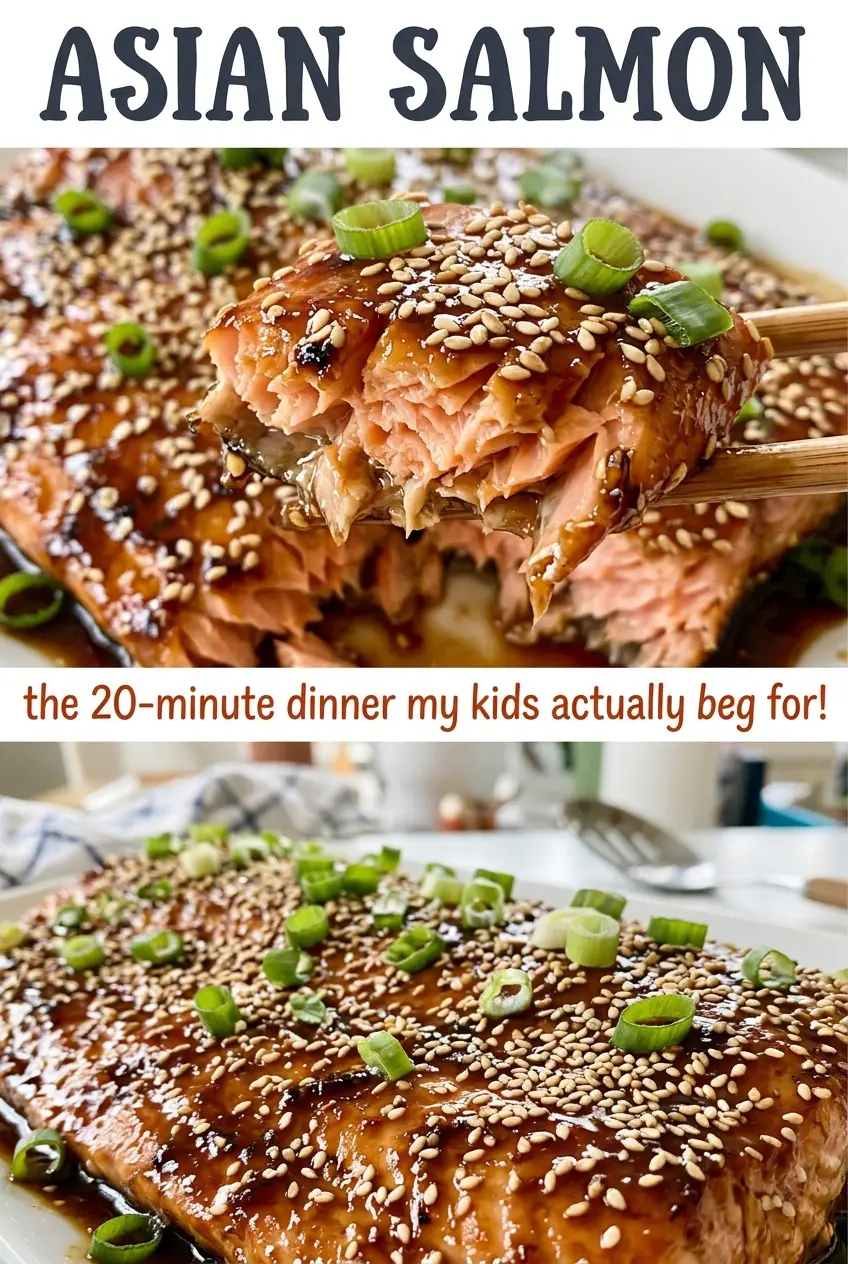
Save this Asian salmon for a night when you want tender baked fish under a glossy honey, ginger, and sesame glaze.
Why the Skin Goes Down in the Baking Dish
With skin-on salmon, it’s easy to think the skin belongs facing up so it can crisp. That isn’t what this oven method is built to do. The fillets sit skin side down, while the exposed flesh takes the glaze and cooks gently in the covered-by-glaze environment of the baking dish. The skin acts as a buffer between the fish and the hot dish, and it also gives you a little more support when lifting the cooked fillets.
Turning the salmon over would put the flesh against the dish and the skin between the fish and the glaze. You’d lose the glossy coating on top, and the delicate pieces would be harder to lift in one piece. Keep the skin in place and brush the glaze over the flesh side. If crisp skin is what you’re after, this isn’t a crisp-skin preparation; it’s a straightforward way to bake moist salmon with the glaze right where you want it.
What Gives the Ginger-Soy Glaze Its Balance
- Low-sodium soy sauce — It brings the deep savory base and keeps the glaze from tasting too salty once it reduces slightly in the saucepan. Use a good everyday brand; the fresh ginger and garlic bring plenty of character, so there’s no need for a specialty bottle.
- Honey — Honey rounds out the salt and helps the glaze cling to the fish. A standard squeeze or pour of honey works well here; maple syrup is the closest useful swap and gives the coating a more earthy sweetness.
- Rice vinegar — Its mild acidity lifts the soy and honey without taking over. Unseasoned rice vinegar is a good choice; seasoned rice vinegar has added salt and sugar, so it can shift the balance of the glaze.
- Fresh ginger and garlic — These bring the sharp, aromatic notes that keep a sweet soy glaze from tasting flat. Freshly grated ginger and freshly minced garlic give the clearest flavor; the ginger should be fine enough to spread through the glaze rather than leave large fibrous pieces.
- Toasted sesame oil — A small amount provides the nutty aroma that defines this glaze. Check that it’s toasted sesame oil, not plain sesame oil; its fragrance is stronger, so it contributes more without needing a larger pour.
- Cornstarch — This is what turns the liquid glaze glossy and lightly thickened before it reaches the salmon. It needs to be dispersed in cold water first; adding dry starch straight to a hot pan is likely to leave lumps.
- Skin-on salmon — Choose fillets that are similar in thickness so they cook at a similar pace. Skin-on pieces are the best fit for this method, and the flesh should look moist and firm rather than dry at the edges.
From Smooth Glaze to Flaky Salmon
Whisk the Glaze Before Heating
In a small bowl, whisk together the soy sauce, honey, rice vinegar, grated ginger, minced garlic, toasted sesame oil, cornstarch, and cold water until the mixture looks smooth. Pour it into a small saucepan and set the pan over medium heat. Stir as it comes to a simmer, then keep stirring for 1 to 2 minutes. The glaze is ready when it looks glossy and has thickened slightly; don’t wait for it to become paste-like.
Arrange the Fillets Skin Side Down
Heat the oven to 400°F and lightly grease a 9×13-inch baking dish with the canola oil. Set the salmon in the dish with the skin against the bottom, leaving the flesh side facing up. Brush the glaze over the tops of the fillets so the coating reaches across the surface. If glaze gathers around the fish, that’s fine; the dish keeps it close while the salmon bakes.
Bake Until the Center Turns Flaky
Bake for 12 to 15 minutes, checking the thickest part of a fillet rather than judging only by the edges. The salmon should flake easily, and the thickest part should reach 145°F. Thicker pieces and differences between ovens can affect where they land in that window. Rest the fillets for 3 minutes before serving so they settle after baking.
Two Easy Swaps for the Ginger-Soy Glaze
Make It Gluten-Free with Tamari
Replace the soy sauce with the same amount of low-sodium gluten-free tamari. The glaze keeps its savory depth, though tamari can taste a little fuller and less sharp than soy sauce. Choose low-sodium tamari to keep the overall balance close.
Use Maple Syrup Instead of Honey
Swap the honey for an equal amount of pure maple syrup. The result is a little more woodsy and less floral, while the cornstarch still gives the glaze body. Stir the mixture well before it goes into the saucepan.
Storage and Reheating
- Refrigerator: Refrigerate leftovers within 2 hours and eat them within 3 to 4 days. The salmon will be firmer after chilling, and the glaze will thicken.
- Freezer: Freeze cooled portions in an airtight container for up to 2 to 3 months. Thaw overnight in the refrigerator; the fish may be a little less tender after freezing.
- Reheating: Cover a portion and warm it gently in the microwave in short bursts, checking that leftovers reach 165°F. Long, high-power heating dries salmon quickly, so stop as soon as it’s hot through.
Questions That Come Up When Baking Asian Salmon
Asian Salmon
Ingredients
Equipment
Method
- In a small bowl, whisk together the soy sauce, honey, rice vinegar, ginger, garlic, sesame oil, cornstarch, and cold water until smooth.
- Pour the mixture into a small saucepan and bring to a simmer over medium heat, stirring, for 1 to 2 minutes, until glossy and slightly thickened.
- Heat the oven to 400°F.
- Lightly grease a 9x13-inch baking dish with the canola oil.
- Place the salmon skin side down in the dish.
- Brush the glaze over the fillets.
- Bake for 12 to 15 minutes, until the salmon flakes easily and the thickest part reaches 145°F.
- Rest for 3 minutes before serving.