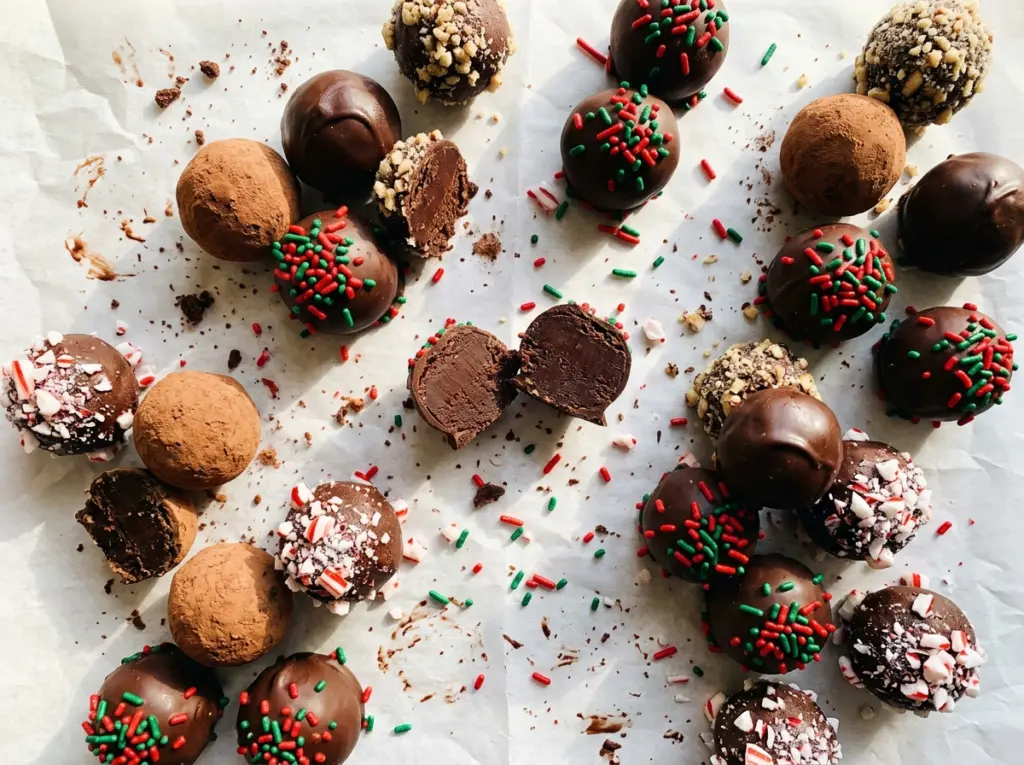
The cream should be steaming, not boiling, when it goes over the chopped chocolate. That little moment sets the tone for these Christmas truffles: the chocolate melts gently, the ganache turns smooth, and there’s no need to chase it with more heat. I like this approach because the ingredient list stays short and the finished centers taste unmistakably like chocolate.
Once the ganache has set, the work is hands-on but simple. Each portion gets rolled into a ball and finished in unsweetened cocoa, which gives the outside a dry, pleasantly bitter contrast to the soft center. Finely chopping the chocolate and letting the cream sit over it before stirring are small choices that make a big difference in texture. The truffles come out tender inside, with a clean cocoa coating and enough firmness to pick up without losing their shape.
Kitchen Note
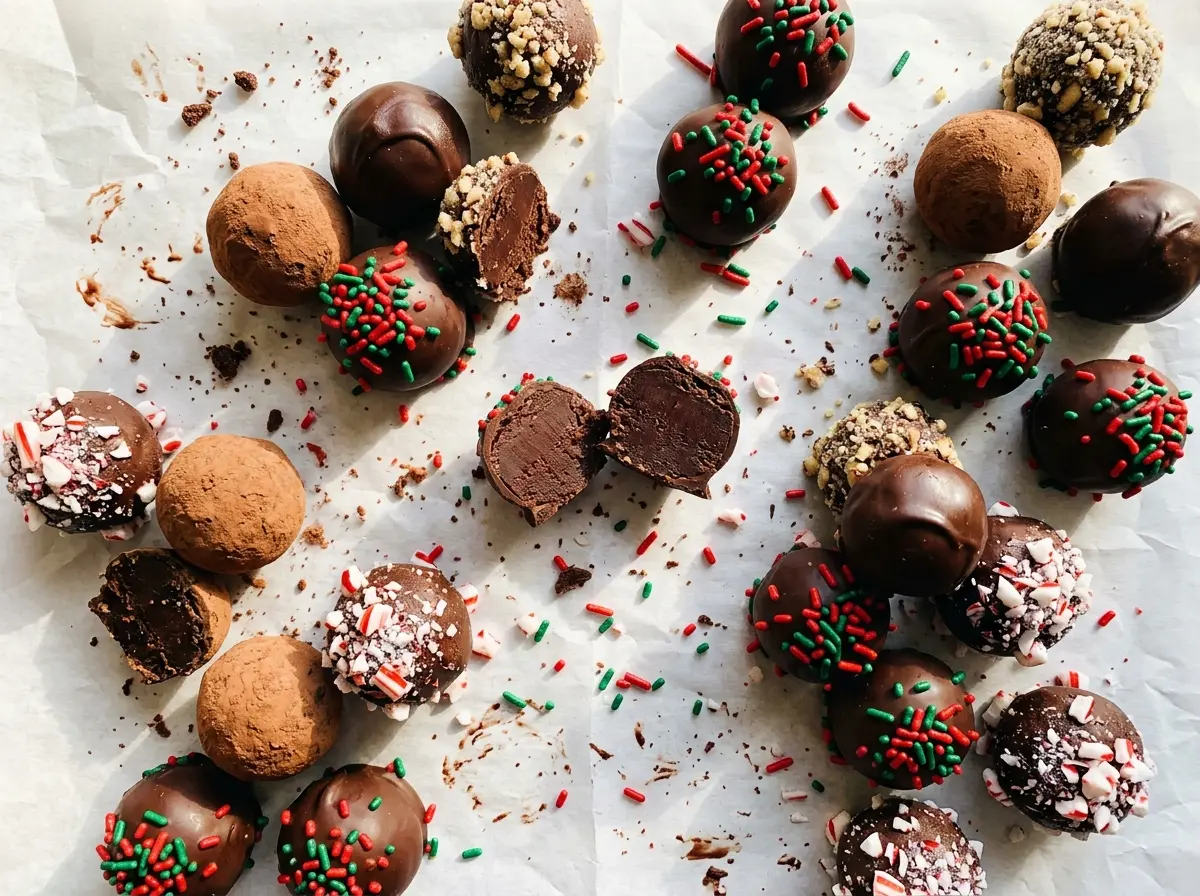
Roll each portion between your palms only until it’s round. If you handle the ganache for too long, the warmth of your hands softens it and makes the cocoa coating harder to keep neat.
Save these Christmas truffles for a make-ahead chocolate treat with soft ganache centers and a simple cocoa finish.
Why the Chocolate Needs a Quiet Five Minutes Before You Stir
Ganache comes together from two things that behave differently: hot cream and solid chocolate. Pouring the cream over the chocolate gives the pieces time to soften evenly, while the five-minute rest lets that heat move through the bowl. Stirring right away can leave you working against firm bits of chocolate; turning up the heat is more likely to make the mixture uneven than to help it along.
Use a heatproof bowl and finely chopped chocolate so the warm cream can reach plenty of surface area. When you begin stirring, start gently and keep going until the mixture looks glossy and no visible pieces remain. A smooth, cohesive ganache is what chills into truffles with a tender bite, rather than a center with hard flecks or a greasy look. The cream only needs to reach the steaming stage, with small bubbles around the edges; it doesn’t need a full boil.
That gentle approach also leaves room for the vanilla and salt to blend in after the chocolate is smooth. They’re stirred into the finished ganache, not heated in the saucepan, so their flavor stays balanced against the semisweet chocolate. The aim is a mixture that looks uniform before it goes into the pan, since chilling won’t fix lumps that were left behind.
What the Chocolate, Cream, and Cocoa Each Bring

- Semisweet chocolate — This is the backbone of both the flavor and the set, so use chocolate you enjoy eating on its own. Finely chop it for a smooth melt; large chunks are more likely to stay firm after the cream has been poured over them. A bittersweet bar can work in the same role if you prefer a darker, less sweet center, though its flavor will be more intense.
- Heavy cream — The fat in heavy cream gives the ganache its soft, truffle-like texture. Lower-fat milk or half-and-half won’t provide the same richness or set, so they aren’t a direct swap here. Use fresh cream and heat it just until steaming, with small bubbles at the pan’s edges.
- Vanilla extract — Vanilla rounds out the chocolate rather than taking over. A good-quality extract is nice here, but the small amount means an everyday bottle works well. If you don’t have it, leave it out; the truffles will have a more direct chocolate flavor.
- Unsweetened cocoa powder — Cocoa gives the outside its dry finish and balances the sweet ganache with a gentle bitterness. Use unsweetened cocoa, not a sweetened drink mix, and break up any packed lumps before coating. Dutch-process or natural unsweetened cocoa both work; the taste and color will vary slightly.
- Fine salt — Salt keeps the chocolate flavor from tasting flat. Fine grains disappear readily into the warm ganache, so there’s no need to switch to coarse salt, which can leave isolated crunchy spots.
From Smooth Ganache to Cocoa-Dusted Truffles
Warm the Cream and Soften the Chocolate
Line an 8-inch square baking pan with parchment, leaving overhang so the chilled ganache is easy to lift out if needed. Put the finely chopped chocolate in a heatproof medium bowl. Heat the cream in a small saucepan over medium heat until it’s steaming and small bubbles form around the edges. Pour it over the chocolate and let it stand undisturbed for five minutes.
Stir Until the Ganache Looks Glossy
After the rest, stir the chocolate and cream until the mixture is smooth and no pieces remain. Keep the stirring steady rather than vigorous; a smooth, glossy look is the cue to move on. Stir in the vanilla and fine salt once the chocolate has melted. If you still see pieces, give the mixture another moment of gentle stirring instead of raising the heat.
Chill Until It Holds Its Shape
Scrape the ganache into the lined pan and spread it into an even layer. Cover the pan and refrigerate it for two to three hours, until the ganache is firm enough to scoop. The surface should feel set rather than soft and flowing. If it still yields too easily under the scoop, give it more time in the refrigerator; a soft center is difficult to roll neatly.
Scoop, Roll, and Coat
Scoop the chilled ganache into 24 portions, about one tablespoon each. Roll each portion between your palms into a ball, then put the cocoa powder in a shallow bowl and roll each truffle to coat. A shallow bowl makes it easier to turn each ball without pressing it down. Refrigerate the finished truffles in an airtight container for 30 minutes before serving.
Three Ways to Change the Shape or Finish
Use bittersweet chocolate for a darker center
Replace the semisweet chocolate with the same amount of finely chopped bittersweet chocolate. The truffles will taste more intense and less sweet, while the other ingredients and method stay the same. Choose a chocolate you like plain, since its flavor carries through the ganache.
Cut cocoa-dusted ganache into squares
For a tidy, no-rolling format, chill the ganache in its lined pan until firm, lift it out by the parchment overhang, and cut it into small squares. Coat the cut sides in unsweetened cocoa. The pieces look more like little ganache bites and won’t have the rounded shape of rolled truffles.
Give the coating a stronger cocoa edge
Roll the truffles once in cocoa, let the coating settle, then roll them again for a more pronounced, less sweet exterior. This keeps the ingredient list unchanged while making the contrast between the cocoa and the creamy center more noticeable.
Storage and Serving
- Refrigerator: Keep the truffles in an airtight container for up to 4 days. The cocoa coating may darken slightly as it sits, but the centers stay soft.
- Freezer: Freeze the finished truffles in a single layer until firm, then transfer them to an airtight container for up to 2 months. Thaw them in the refrigerator; the cocoa may look damp after thawing, so dust or roll them in a little more unsweetened cocoa if needed.
- Serving: Serve them chilled for a firm, creamy center. Keep the remaining truffles refrigerated between servings rather than leaving the container out.
Questions That Come Up When Making Christmas Truffles
Christmas Truffles
Ingredients
Equipment
Method
- Line an 8-inch square baking pan with parchment paper, leaving some overhang.
- Place the finely chopped semisweet chocolate in a heatproof medium bowl.
- Heat the heavy cream in a small saucepan over medium heat until steaming and small bubbles form around the edges.
- Pour the hot cream over the chocolate and let stand for 5 minutes.
- Stir the chocolate and cream until smooth.
- Stir in the vanilla extract and fine salt.
- Scrape the ganache into the prepared pan and spread it evenly.
- Cover the pan and refrigerate for 2 to 3 hours, until firm enough to scoop.
- Scoop the ganache into 24 portions, about 1 tablespoon each.
- Roll each portion between your palms into a ball.
- Put the unsweetened cocoa powder in a shallow bowl and roll the truffles in it to coat.
- Refrigerate the truffles in an airtight container for 30 minutes before serving.