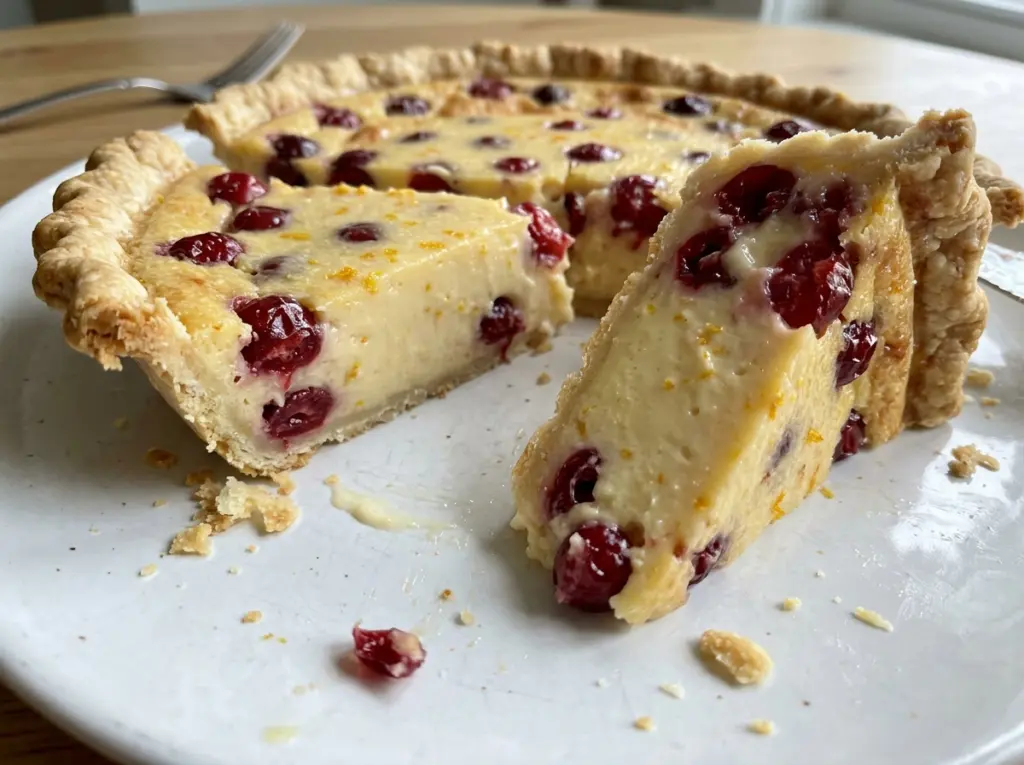
The cranberries start popping in the saucepan before the mixture looks thick enough to sit neatly beneath a custard. That’s the moment I watch most closely when I make this Cranberry Orange Custard Pie: the berries need to soften, then the cornstarch gives their tart juices enough body to stay in a distinct layer. The result is a smooth, gently sweet custard with bright cranberry underneath, all tucked into a flaky pie crust.
Orange zest gives the berry layer a fragrant lift, while the custard stays simple with eggs, half-and-half, and vanilla. I blind-bake the crust first so it has a head start before the moist filling goes in. Once baked, the pie needs time to cool and chill; that’s what changes the center from softly wobbly to sliceable, creamy custard.
Kitchen Note
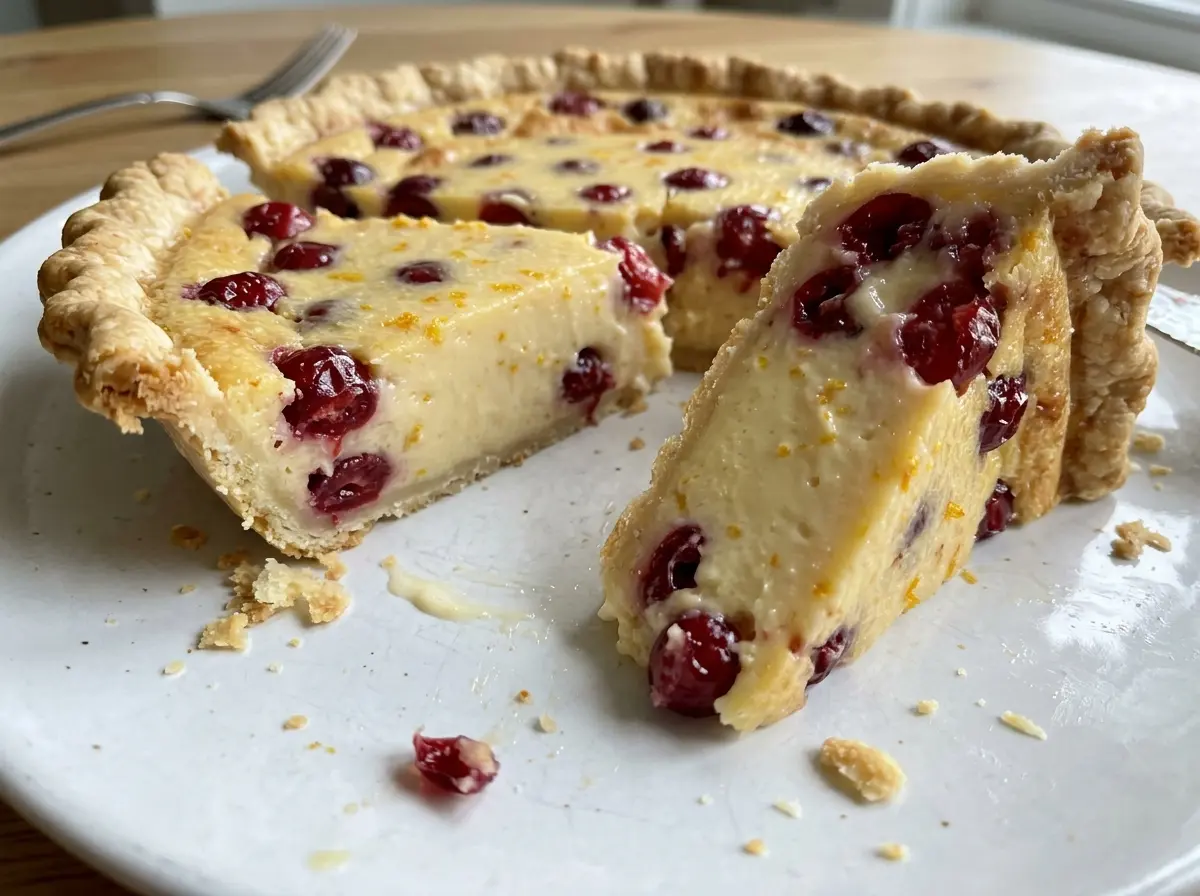
I don’t slice this pie as soon as it comes off the cooling rack. The refrigerator rest gives the custard time to firm up, so the first wedge holds together instead of smearing across the plate.
Save this Cranberry Orange Custard Pie for its tart cranberry layer and silky vanilla custard in a flaky crust.
Why the Cranberries Need to Thicken Before the Custard Goes In
Cranberries release plenty of juice as they cook, and that liquid needs a little help to become a proper layer instead of running through the custard. The cornstarch slurry does that job. Stirring it with cold water first helps it blend smoothly into the hot berries, where a minute of cooking turns the mixture glossy and thick. You’re looking for a berry sauce that gathers together when stirred, not a thin pool of juice.
There’s a useful balance here: cook until several berries pop, but don’t wait for every berry to collapse. Some whole berries give the finished layer little bursts of tartness, while the thickened juices keep the filling contained. Letting the cranberry mixture cool before spreading it also helps it stay put when the custard is poured on top. That contrast is what gives each slice a clear red layer beneath the pale filling, rather than a marbled mixture.
What Gives Each Layer Its Texture and Flavor

- Refrigerated pie crust — A ready-to-roll refrigerated crust keeps this pie straightforward and fits a standard 9-inch pie plate. The crust doesn’t need to be a specialty brand; what matters is fitting it into the plate and blind-baking until the surface looks dry before adding either layer.
- Cranberries — Fresh or frozen berries both work, and their natural tartness keeps the sweet custard from tasting flat. Choose firm-looking fresh berries when buying them; frozen berries are a practical option when fresh ones aren’t available.
- Orange juice and zest — Juice brings a gentle citrus note to the berries, while finely grated zest carries the more fragrant orange aroma. Use a fine grater so the zest disperses through the mixture instead of leaving long strips.
- Cornstarch — This is what thickens the cranberry juices into a layer that won’t spread through the custard. Whisking it with cold water before adding it to the saucepan is worth the small extra step; dry starch added straight to the hot fruit is more likely to clump.
- Eggs — Eggs set the custard as it bakes, giving it a tender sliceable texture rather than a pourable one. Use large eggs for the proportions here.
- Half-and-half — It gives the filling a creamy body without making it as heavy as a richer cream-based custard. A fresh carton is a good choice, but there’s no need to seek out a premium brand.
- Vanilla, sugar, and salt — Vanilla rounds out the custard, and the sugar sweetens both layers separately. Salt keeps the custard’s sweetness balanced; measure it carefully rather than leaving it out.
Build the Layers Without a Soggy Bottom
Blind-Bake Until the Crust Looks Dry
Heat the oven to 400°F and fit the refrigerated crust into a 9-inch pie plate, crimping the edge. Line it with parchment and fill it with pie weights so the base stays in place as it bakes. After 15 minutes, remove the weights and parchment, then bake for another 5 to 7 minutes. The surface should look dry and pale golden, not glossy or raw; cool the crust for 10 minutes before reducing the oven to 350°F.
Cook the Cranberries Until Several Pop
Put the cranberries, sugar, orange juice, and finely grated zest in a small saucepan over medium heat. Stir occasionally as the berries soften and begin to burst; this takes 6 to 8 minutes. You don’t need every cranberry to pop. If the mixture looks mostly like separate berries with no released juice, give it a little more time within that cooking window and keep an eye on the pan.
Thicken and Cool the Berry Layer
Stir the cornstarch and cold water together until smooth, then add the slurry to the saucepan. Cook for 1 minute, stirring, until the juices look glossy and thickened. Take the pan off the heat and let the mixture cool for 15 minutes before spreading it over the crust. If you spread it while it’s still very hot, it’s harder to keep the layer neat when the custard goes on.
Pour, Bake, and Let the Custard Set
Whisk the eggs, sugar, and salt in a bowl until combined, then whisk in the half-and-half and vanilla. Pour the custard carefully over the cranberry layer, then set the pie on a baking sheet and bake at 350°F for 40 to 50 minutes. Look for set edges and a center that still has a slight wobble; the center should reach 160°F. Cool the pie on a rack for 2 hours, then refrigerate it for at least 2 hours before slicing.
Simple Swaps for a Different Citrus Note or Dietary Need
Make the Citrus More Tart
Replace the orange juice and orange zest with the same amounts of lemon juice and finely grated lemon zest. The cranberry layer will taste sharper and less floral, while the custard stays unchanged.
Use a Gluten-Free Crust
Swap in a refrigerated gluten-free crust sized for a 9-inch pie plate. Blind-bake it according to its package directions, since gluten-free crusts can brown and hold their shape differently; the cranberry and custard layers stay the same.
Make the Custard Dairy-Free
Use unsweetened full-fat canned coconut milk in place of the half-and-half, one for one. The eggs will still set the filling, but the custard will have a light coconut note and a slightly different richness.
Storage and Reheating
- Refrigerator: Cover and refrigerate leftovers for up to 3 to 4 days. The crust softens a little as it sits beneath the custard.
- Freezer: Freezing isn’t recommended; custard pies can turn watery or grainy after thawing.
- Reheating: Serve this pie chilled rather than reheating it. Warming it can soften the custard and make the slices lose their shape.
Questions That Come Up When Baking This Custard Pie
Cranberry Orange Custard Pie
Ingredients
Equipment
Method
- Heat the oven to 400°F.
- Fit the pie crust into a 9-inch pie plate and crimp the edge.
- Line the crust with parchment paper and fill with pie weights.
- Bake for 15 minutes.
- Remove the pie weights and parchment paper.
- Bake for 5 to 7 minutes, until the surface looks dry and pale golden.
- Cool for 10 minutes.
- Reduce the oven temperature to 350°F.
- Combine the cranberries, 1/4 cup sugar, orange juice, and orange zest in a small saucepan over medium heat.
- Cook for 6 to 8 minutes, stirring occasionally, until several berries pop.
- Stir the cornstarch and cold water together.
- Add the cornstarch mixture to the cranberries and cook for 1 minute, stirring, until glossy and thickened.
- Cool for 15 minutes.
- Spread the cranberry mixture in the crust.
- Whisk the eggs, 1/2 cup sugar, and salt in a bowl until combined.
- Whisk in the half-and-half and vanilla.
- Pour the custard over the cranberry layer.
- Set the pie on a baking sheet.
- Bake at 350°F for 40 to 50 minutes, until the edges are set, the center still has a slight wobble, and the center reaches 160°F.
- Cool the pie on a rack for 2 hours.
- Refrigerate for at least 2 hours before slicing.