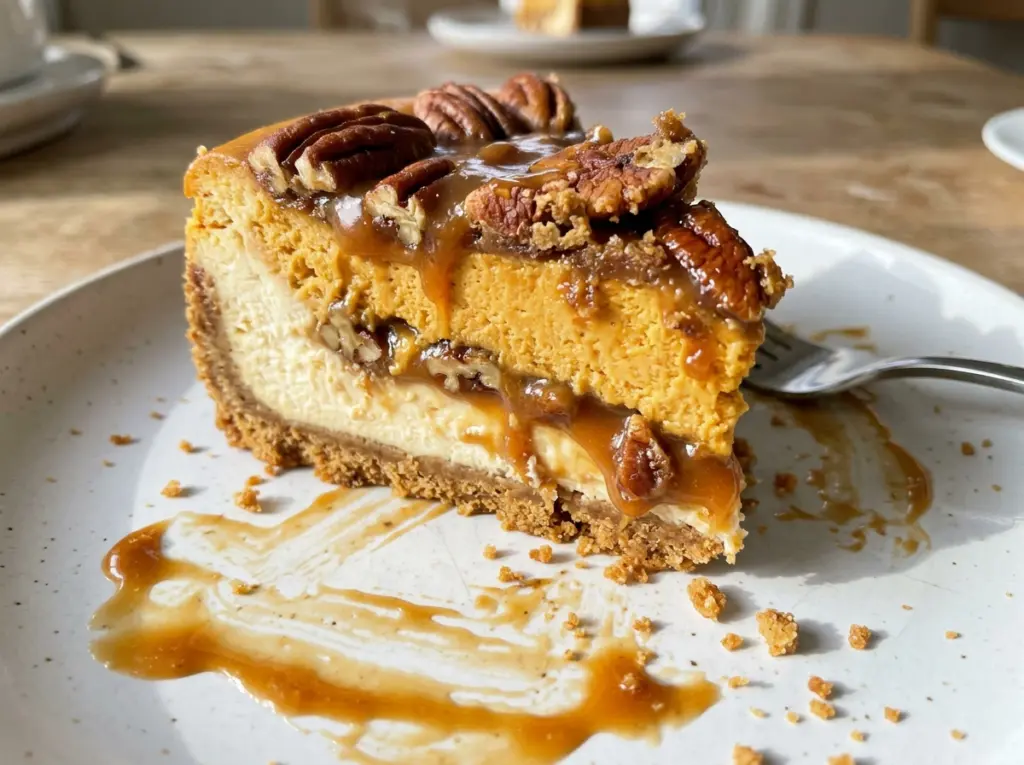
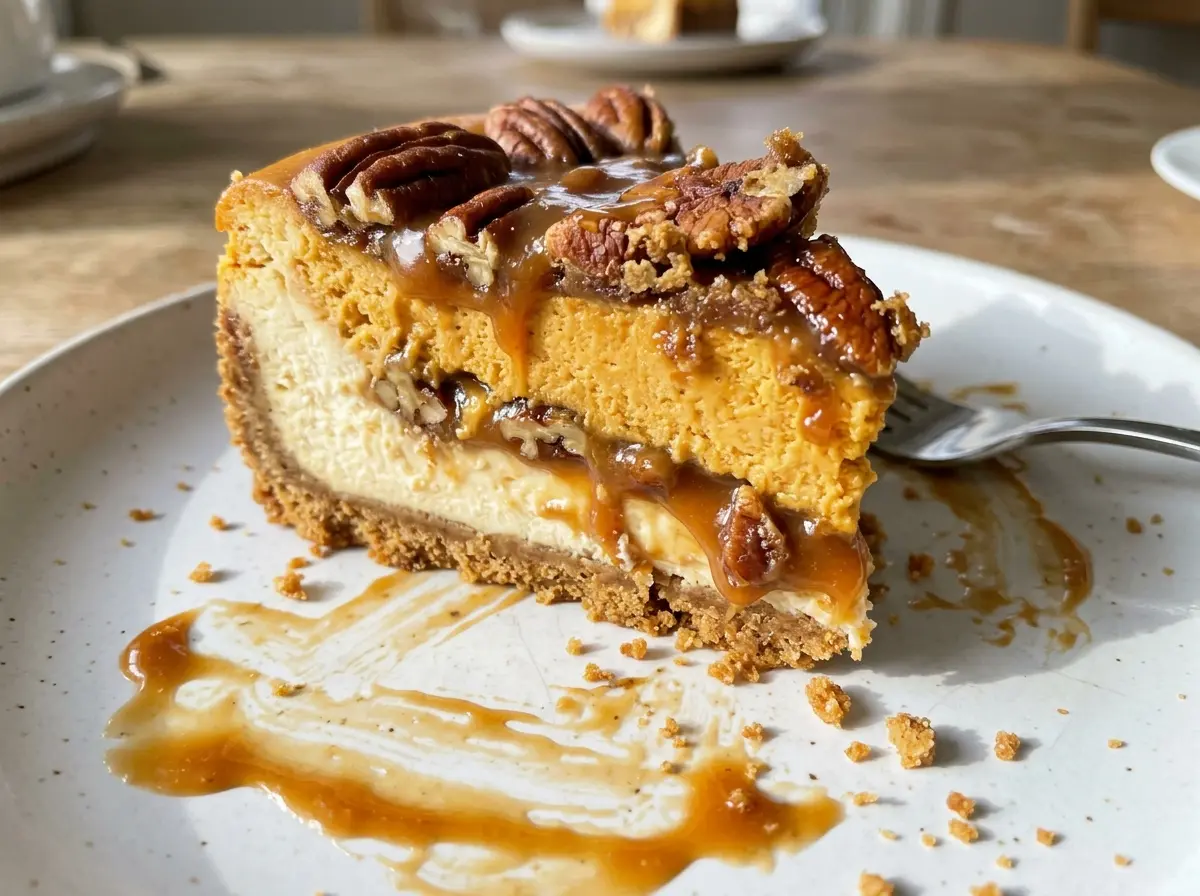
The first cut shows exactly why this cheesecake has two distinct layers: pumpkin filling on top, with a glossy pecan pie layer waiting underneath. The pecan mixture starts right against the graham cracker crust, so every slice gets a little buttery crunch along with the creamy pumpkin. I like that the pie and cheesecake stay recognizable instead of blending into one soft, overly sweet filling.
For this Pecan Pie Pumpkin Cheesecake, the layers go into the pan one at a time, and the pumpkin batter needs a gentle pour so it doesn’t disturb the pecans below. A water bath and a slow cool help the tall cheesecake bake evenly, while plenty of refrigerator time lets the center firm up before slicing. The finished dessert is rich, warmly spiced, and built for 12 generous slices.
Kitchen Note
Pour the pumpkin batter slowly over the pecan layer, then spread it gently to the edges. A quick, heavy pour can push the pecans around and blur the clean line between the two fillings.
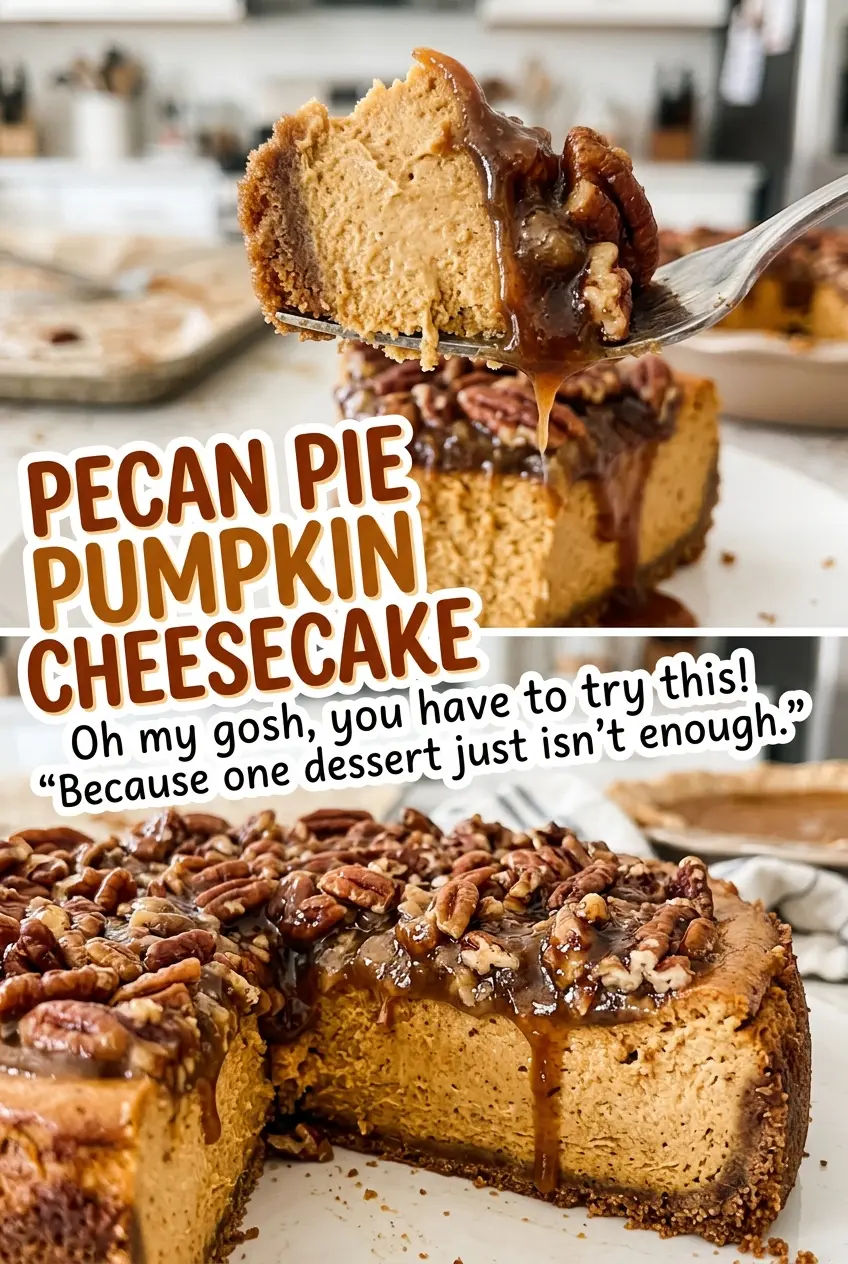
Save this Pecan Pie Pumpkin Cheesecake for a dessert with two distinct layers, spiced pumpkin on top, and a buttery pecan pie filling underneath.
Why the Pecan Pie Layer Goes Under the Pumpkin Cheesecake
These fillings don’t bake at quite the same pace. The pecan layer is a thin egg-and-syrup custard, and it sits directly on the crust; the cream cheese mixture is thicker and forms the taller top layer. Keeping them separate gives the pecan filling room to set beneath the cheesecake instead of disappearing into it. It also means the crust supports the syrupy layer while the pumpkin filling bakes above.
A tall cheesecake can set around the edges before the center is ready. The water bath surrounds the pan with gentle heat, helping the middle catch up without pushing the outside too far. The slow cool matters for the same reason: a sudden change in temperature can make the center contract and crack. This dessert asks for a longer bake and a longer rest than a simple pie, but those gradual transitions are what give both layers time to settle into clean, sliceable bands.
Why Pumpkin Puree and Sour Cream Matter in This Filling
- Canned pumpkin puree brings pumpkin flavor and moisture without adding extra sweetener or spice. Use plain puree, not pumpkin pie filling, which is already sweetened and seasoned. Stir the puree in well so there aren’t dense pockets in the cream cheese mixture.
- Block cream cheese gives the top layer its dense, smooth structure. Let it soften before beating; cold cream cheese tends to leave lumps that are hard to smooth out later. Whipped cream cheese spread isn’t a good stand-in because its lighter texture changes the filling.
- Sour cream adds a gentle tang that balances the sweet pumpkin and pecan layers. Full-fat plain Greek yogurt can replace it measure for measure, though the filling will taste a little tangier and set slightly more firmly.
- Light corn syrup and light brown sugar create the sticky, familiar pecan pie texture. The syrup helps keep the filling smooth, while the packed brown sugar contributes a mellow molasses note. Swapping in a thinner liquid sweetener changes how that layer sets.
- Room-temperature eggs are divided between the pecan filling and cheesecake batter, where they help each layer set. Bring them to room temperature before mixing so they blend more evenly, and add the cheesecake eggs one at a time to avoid beating extra air into the batter.
- Chopped pecans and pumpkin pie spice bring the defining flavors and texture. Fresh pecans have a cleaner, toastier taste than nuts that have been sitting open for months; regular pumpkin pie spice is fine here, since the cream cheese and pumpkin carry the main flavor.
- Graham cracker crumbs and melted butter make a compact base for the pecan layer. Fine, evenly sized crumbs press together better than coarse pieces, which can leave a crust that breaks apart when you slice it.
How to Keep the Pecan Pie Layer Under the Pumpkin Filling
Bake the Crust Until It Holds Together
Heat the oven to 350°F and lightly grease a 9-inch springform pan, then wrap the outside in two layers of heavy-duty foil. Stir the graham cracker crumbs with 5 tablespoons of the melted butter until the crumbs are evenly moistened. Press them over the bottom of the pan in a level layer, then bake for 10 minutes. Let the crust cool for 10 minutes before adding the pecan filling so it has a chance to firm up.
Mix and Pour the Pecan Filling
Whisk 2 eggs with the light corn syrup, packed light brown sugar, remaining 2 tablespoons melted butter, 1 teaspoon vanilla, and 1/4 teaspoon fine salt. Stir in the chopped pecans so they’re spread throughout the mixture, then pour it over the cooled crust. Keep the pecan mixture in an even layer rather than piling the nuts in the center. The crust should be covered from edge to edge.
Blend the Pumpkin Batter Without Overbeating
Beat the softened cream cheese with the granulated sugar until the mixture looks smooth. Mix in the pumpkin puree, sour cream, flour, pumpkin pie spice, remaining vanilla, and remaining salt. Beat in the remaining 3 eggs one at a time, stopping as soon as each disappears into the batter. Carefully pour the cheesecake mixture over the pecans and spread it gently to the edges.
Bake in a Water Bath, Then Cool Gradually
Reduce the oven to 325°F and set the foil-wrapped springform pan in a large roasting pan. Pour hot water into the roasting pan until it reaches halfway up the springform pan, then bake for 70 to 85 minutes. The edges should look set while the center still wobbles slightly when the pan is nudged. Turn off the oven, prop the door open, and leave the cheesecake inside for 1 hour; then remove the pan from the water bath, take off the foil, and cool on a wire rack for 1 hour before refrigerating for at least 6 hours.
Three Changes That Keep the Layers Intact
Make It Gluten-Free
Use gluten-free graham-style crumbs for the crust and replace the all-purpose flour with a measure-for-measure gluten-free baking flour. Keep the same volume of each replacement; the crust may be a touch more delicate, but the two fillings still set in the same layers.
Give the Crust a Gingersnap Twist
Replace the graham cracker crumbs with an equal volume of finely crushed gingersnaps and keep the butter amount the same. The base will taste more warmly spiced and sweeter, so the pumpkin layer’s tang from the sour cream becomes especially welcome.
Use Walnuts in the Pie Layer
Chopped walnuts work in place of the pecans in the same volume. They give the bottom layer a slightly earthier taste and a softer bite, while the corn syrup and brown sugar still create the familiar pie-like filling.
Storage and Reheating
- Refrigerator: Cover leftovers and refrigerate for up to 4 days. The crust softens a little as it sits, but the chilled layers remain sliceable.
- Freezer: Freeze individual slices until firm, then wrap them well and store in an airtight container for up to 2 months. Thaw overnight in the refrigerator; the pecan layer may be slightly softer.
- Reheating: This cheesecake is served chilled, so don’t microwave it. Warming can soften the filling and make the pecan layer loose.
Questions That Come Up Before Slicing This Layered Cheesecake
Pecan Pie Pumpkin Cheesecake
Ingredients
Equipment
Method
- Heat the oven to 350°F.
- Lightly grease a 9-inch springform pan.
- Wrap the outside of the pan in two layers of heavy-duty foil.
- Stir the graham cracker crumbs with 5 tablespoons of the melted butter.
- Press the crumb mixture evenly over the bottom of the pan.
- Bake for 10 minutes.
- Cool for 10 minutes.
- Whisk 2 eggs with the corn syrup, brown sugar, remaining 2 tablespoons melted butter, 1 teaspoon vanilla, and 1/4 teaspoon salt.
- Stir in the pecans.
- Pour the pecan mixture over the cooled crust.
- Beat the cream cheese and granulated sugar in a large bowl until smooth.
- Mix in the pumpkin, sour cream, flour, pumpkin pie spice, remaining 1 teaspoon vanilla, and remaining 1/4 teaspoon salt.
- Beat in the remaining 3 eggs one at a time just until combined.
- Carefully pour the cheesecake mixture over the pecan layer.
- Spread the cheesecake mixture gently to the edges.
- Reduce the oven to 325°F.
- Set the springform pan in a large roasting pan.
- Pour hot water into the roasting pan until it reaches halfway up the springform pan.
- Bake for 70 to 85 minutes, until the edges are set and the center still wobbles slightly.
- Turn off the oven and prop the door open.
- Leave the cheesecake inside for 1 hour.
- Remove the springform pan from the water bath.
- Remove the foil.
- Cool on a wire rack for 1 hour.
- Refrigerate for at least 6 hours before serving.