
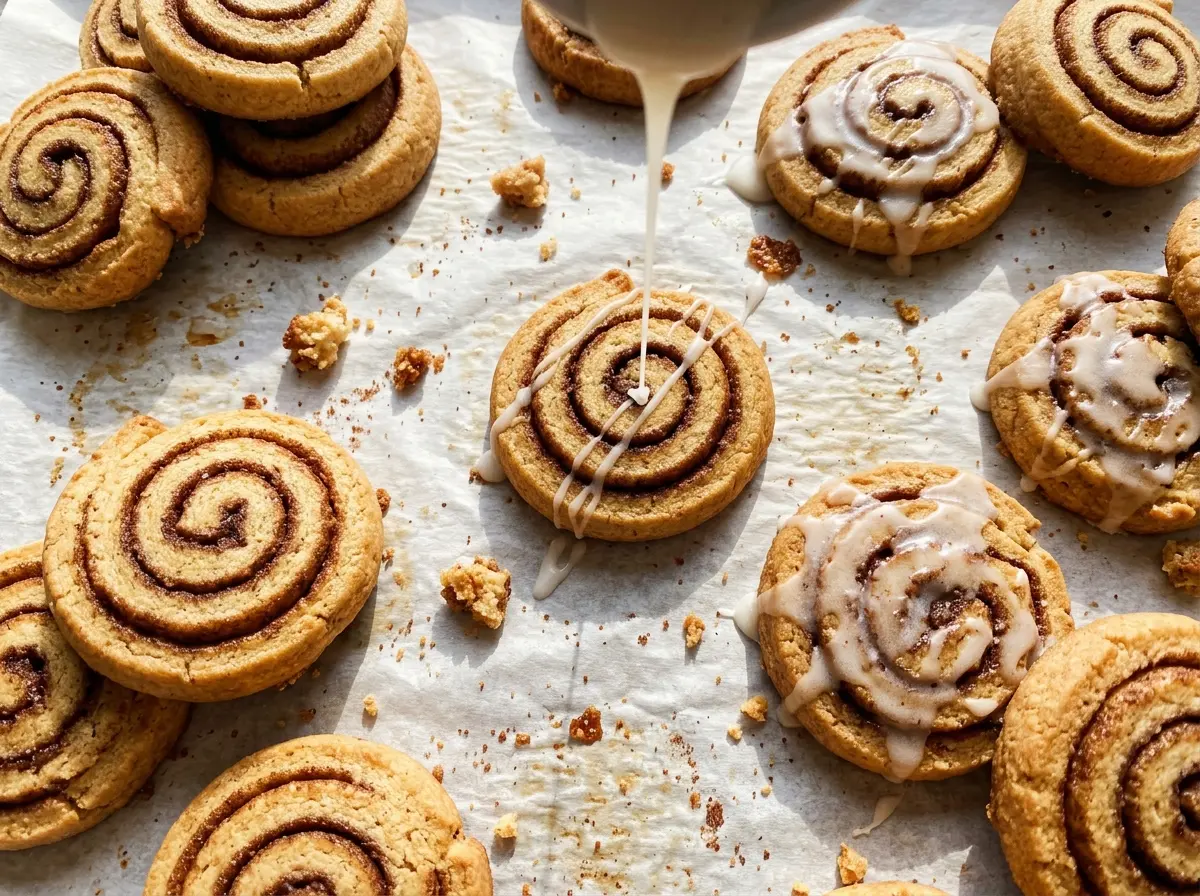
As the first tray bakes, the cinnamon filling shows through each spiral and the edges begin to turn golden. These cinnamon roll cookies bring the buttery, cinnamon-swirled shape of a cinnamon roll into a tender slice-and-bake cookie, with a thin cream cheese icing on top.
The dough is soft enough to roll between parchment, but it needs a short chill first. That gives the butter time to firm up so the rectangle is easier to handle and the filling stays in place instead of smearing into the dough.
I like that the log can be chilled until firm before slicing, which makes it easier to get neat rounds. Once baked, the cookies have lightly golden edges and a soft center, with cinnamon in every bite and a drizzle that sets on top.
Kitchen Note
Don’t slice the log until it’s firm all the way through. If the center still feels soft, the rounds can squash as the knife passes through, so give it more time in the refrigerator before cutting.
Save these Cinnamon Roll Cookies for a batch of buttery spirals with cinnamon filling and cream cheese icing.
Why the Bare Edge Keeps the Cinnamon Spiral Tidy
That narrow strip of uncovered dough along one long edge gives the roll a place to seal. As you roll the dough toward it, the filling gets enclosed rather than pushed all the way to the edge. Pinching the seam closed helps the log hold its shape when you move it to the refrigerator.
Spread the filling in an even layer, but don’t cover the bare border. A heavy patch of filling in one spot can make that part of the log thicker, so the finished cookies won’t have consistent spirals. If a little filling reaches the border, wipe it away before rolling; a clean edge gives the seam dough a better chance to stick to itself. Rolling from the opposite long edge toward the bare edge also keeps the seam on the outside of the finished log, where it’s easy to pinch closed.
The rectangle doesn’t need to be perfectly exact at every corner, but keeping it close to the specified size gives you a consistent thickness to roll. If one side is much wider than the other, the log can taper and yield uneven rounds. Take a moment to square the edges with your hands before spreading the cinnamon mixture.
What Butter, Brown Sugar, and Cinnamon Each Bring to the Swirl

- Unsalted butter — Softened butter creams smoothly with the granulated sugar and gives the dough its tender, rich texture. Use butter that’s soft enough to press but not shiny or melted; inexpensive unsalted butter works well here. If salted butter is what you have, omit the added fine salt. For a dairy-free version, use stick-style plant butter rather than a soft tub spread, which can make the dough harder to handle.
- All-purpose flour — It gives the dough enough structure to roll around the filling and slice into rounds. A 1-to-1 gluten-free baking blend may work, but the dough and baked texture can vary by blend; choose one intended for baking rather than swapping in a single alternative flour. Keep the flour mixture until the dry patches disappear instead of mixing longer, which helps avoid tough cookies.
- Light brown sugar and cinnamon — Brown sugar brings a moist, caramel-like sweetness to the stripe, while ground cinnamon gives it the familiar warm flavor. Fresh, fragrant cinnamon makes a noticeable difference; the standard jar is fine if it still smells strong when you open it. Dark brown sugar can replace light brown sugar for a deeper molasses note, though the filling will taste richer.
- Cream cheese — It gives the icing a slight tang that keeps the powdered sugar from tasting one-dimensionally sweet. Soften it before beating so the icing turns smooth instead of lumpy. For a dairy-free drizzle, use dairy-free cream cheese and unsweetened non-dairy milk; the finish may taste a little different from the original.
- Egg and vanilla — The egg helps bind the dough, and vanilla rounds out its buttery sweetness. Use a large egg, as written, so the dough’s moisture stays in balance. Pure or imitation vanilla both work; there’s no need to use an expensive bottle in a baked cookie.
From Soft Dough to Clean, Iced Spirals
Cream the Butter and Build the Dough
Beat the dough butter and granulated sugar on medium speed until the mixture looks light and fluffy, about 2 minutes. Beat in the egg and vanilla, scraping down the bowl so the mixture is even. Whisk the flour, baking powder, and salt separately, then mix them into the butter mixture in two additions on low. Stop as soon as no dry flour remains; overmixing can make the cookies firm rather than tender.
Chill Before Rolling
Cover the dough and refrigerate it for 30 minutes. This first chill firms the butter and makes the dough easier to roll without sticking or tearing. While it chills, stir the remaining butter with the brown sugar and cinnamon until the filling is evenly combined. If the dough still feels sticky when you begin rolling, work steadily between the parchment sheets rather than adding extra flour.
Fill, Roll, and Seal the Log
Roll the chilled dough between two sheets of parchment into a 10-by-14-inch rectangle, then peel away the top sheet. Spread the filling evenly, leaving a 1/2-inch border along one 14-inch edge. Starting at the opposite 14-inch edge, roll tightly toward the bare edge, then pinch the seam closed. Wrap the log and refrigerate it until firm, at least 1 hour.
Slice and Bake Until the Edges Set
Heat the oven to 350°F and line two 18-by-13-inch baking sheets with parchment. Slice the log into 1/2-inch rounds and arrange them about 2 inches apart so they have room to bake. Bake for 10 to 12 minutes, switching the sheets between racks and rotating them halfway through. Look for edges that are set and just beginning to turn golden; the cookies shouldn’t be deeply browned.
Cool Completely Before Drizzling
Leave the cookies on the baking sheets for 5 minutes, then transfer them to a wire rack to cool completely. Beat the softened cream cheese with the powdered sugar until smooth, then beat in 1 tablespoon milk. Add more milk a teaspoon at a time until the icing is easy to drizzle, rather than pouring in extra milk all at once. Drizzle over the cooled cookies and let the icing set for about 15 minutes before serving.
Simple Ways to Change the Finish or Make Them Dairy-Free
Leave Off the Cream Cheese Icing
For a less-sweet cookie, skip the icing and serve the cinnamon spirals plain once they’ve cooled. You’ll lose the tangy finish, but the brown sugar and cinnamon filling still gives each cookie its defining swirl.
Make a Dairy-Free Batch
Use stick-style plant butter in place of the butter, dairy-free cream cheese for the icing, and unsweetened non-dairy milk to thin it. The dough may feel softer than the butter version, so keep the chilling stages in place; the icing will have a slightly different tang and texture.
Storage and Reheating
- Refrigerator: Store iced cookies in an airtight container for up to 4 days. The cookies will firm up when chilled, and the icing will stay set.
- Freezer: Freeze the cookies without icing in an airtight container for up to 2 months, with parchment between layers. Thaw them before adding freshly made icing.
- Reheating: These are best at room temperature, not reheated. Don’t microwave iced cookies; the cream cheese drizzle will melt. Let chilled cookies sit out briefly before serving.
Questions That Come Up While Making Cinnamon Roll Cookies
Cinnamon Roll Cookies
Ingredients
Equipment
Method
- In a large bowl, beat 1 cup of the butter and the granulated sugar with an electric mixer on medium speed until light and fluffy, about 2 minutes.
- Beat in the egg and vanilla until combined, scraping down the bowl as needed.
- In a separate bowl, whisk together the flour, baking powder, and salt.
- Add the flour mixture to the butter mixture in two additions and mix on low just until no dry flour remains.
- Cover the dough and refrigerate for 30 minutes.
- In a small bowl, stir together the remaining 2 tablespoons butter, brown sugar, and cinnamon until evenly combined.
- Roll the chilled dough between two sheets of parchment paper into a 10x14-inch rectangle.
- Remove the top sheet of parchment paper.
- Spread the filling evenly over the dough, leaving a 1/2-inch border along one 14-inch edge.
- Starting at the opposite 14-inch edge, roll the dough tightly toward the bare edge.
- Pinch the seam closed and wrap the log.
- Refrigerate the log until firm, at least 1 hour.
- Heat the oven to 350°F.
- Line two 18x13-inch baking sheets with parchment paper.
- Slice the log into 1/2-inch rounds.
- Arrange the rounds about 2 inches apart on the baking sheets.
- Bake for 10 to 12 minutes, switching the sheets between racks and rotating them halfway through, until the edges are set and just beginning to turn golden.
- Cool the cookies on the baking sheets for 5 minutes.
- Transfer the cookies to a wire rack and cool completely.
- Beat the cream cheese and powdered sugar in a small bowl until smooth.
- Beat in 1 tablespoon milk; add more milk a teaspoon at a time until the icing is easy to drizzle.
- Drizzle the icing over the cooled cookies.
- Let the icing set for about 15 minutes before serving.