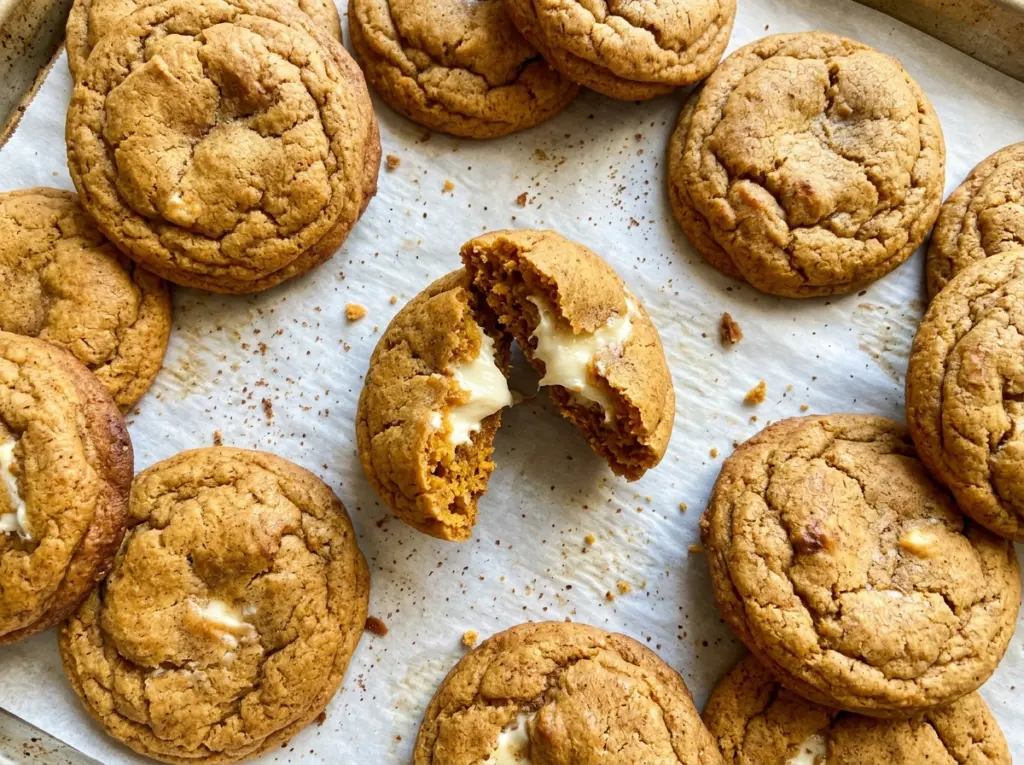
The pumpkin dough starts out softer than a typical cookie dough, and that’s where these cookies can go sideways: too much moisture makes them spread and bake up cakey. Blotting the pumpkin until only about half of it remains gives the dough a better chance to hold its shape around the cheesecake center. In these pumpkin cheesecake cookies, that little prep step makes the difference between a tender cookie and a damp one.
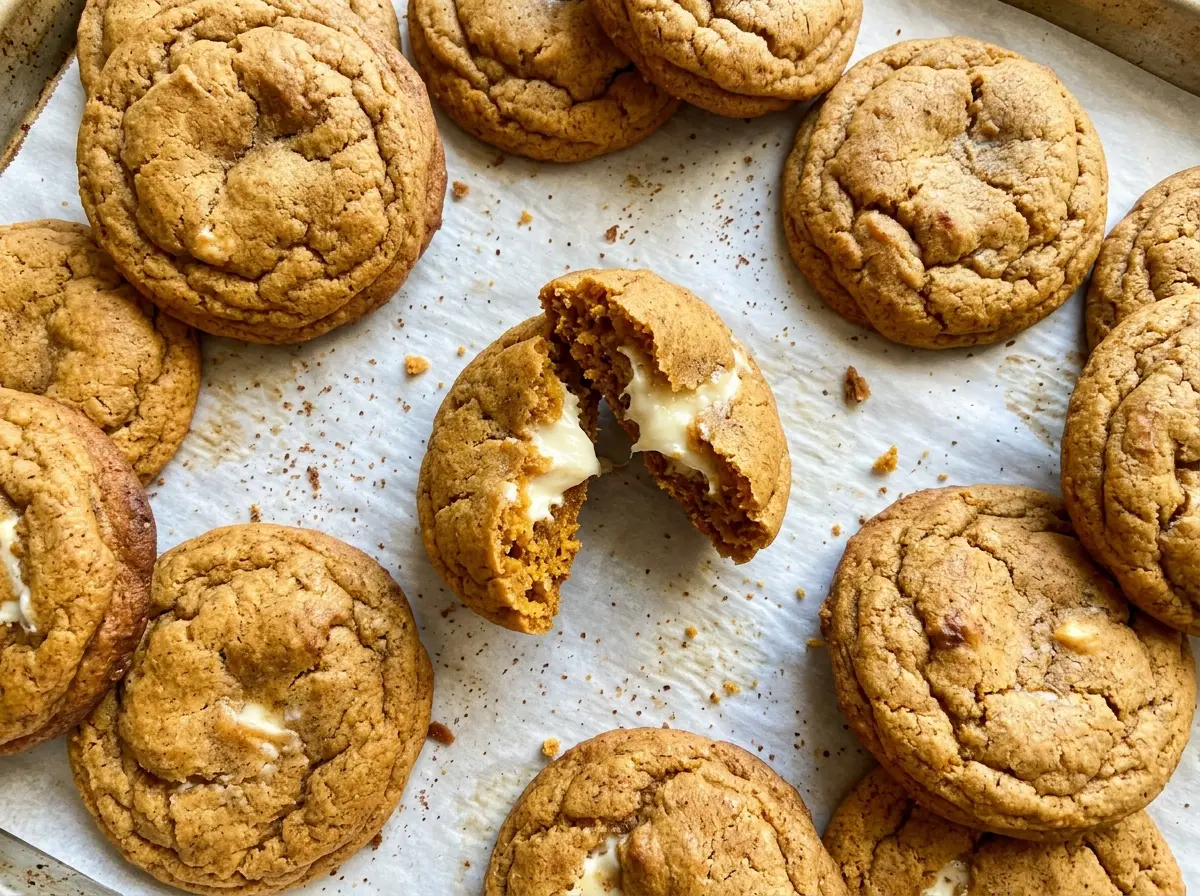
I like that the filling is portioned separately before the dough comes together. Once the cream cheese portions are firm, they’re much easier to wrap without smearing them into the pumpkin dough. The cookies bake until the edges are set and lightly golden, while the middle stays soft around the creamy center. You get pumpkin spice in every bite, then a mild tang from the cheesecake filling.
Kitchen Note
Freeze the cheesecake portions until they’re firm enough to lift cleanly, at least 30 minutes. If the centers are still soft when you wrap them, they’ll smear into the dough instead of staying tucked inside.
Save these pumpkin cheesecake cookies for a bake when you want pumpkin-spiced dough with a creamy center in every cookie.
Why Blotting the Pumpkin Changes the Whole Cookie
Canned pumpkin puree brings a lot of water along with its pumpkin flavor. That moisture is useful in plenty of baked goods, but here it can leave the cookie dough too loose to wrap neatly around a soft filling. The puree gets spread over several layers of paper towels and blotted gently until about 1/4 cup remains. You’re concentrating the pumpkin rather than trying to press it completely dry.
That smaller amount gives the dough enough pumpkin flavor without asking the flour to absorb excess liquid. It also helps the cookies keep a rounded shape as they bake, so the cheesecake stays enclosed instead of pushing through a thin spot. Use plain canned pumpkin puree, not pumpkin pie filling; the latter already contains sweeteners and spices, which would throw off the balance here. Stop blotting when the puree is reduced to the right amount. Pressing aggressively until it’s nearly dry would take away more of the ingredient the dough needs.
The Ingredients That Keep the Cheesecake Center and Cookie Dough in Balance

- Canned pumpkin puree — Plain puree is the right starting point; pumpkin pie filling is already sweetened and seasoned. Blotting it to about half its starting volume gives the cookie dough a thicker consistency without losing its pumpkin character.
- All-purpose flour — Spoon it into the measuring cup and level the top rather than scooping straight from the bag. A packed cup can leave the dough dry and harder to seal around the filling.
- Cream cheese — Let it soften before beating so the filling turns smooth instead of lumpy. Plain cream cheese gives the center its mild tang; flavored varieties would change the filling’s sweetness and taste.
- Unsalted butter and light brown sugar — Softened butter creams evenly with the sugar, while packed brown sugar helps keep the cookie tender. Unsalted butter also lets the measured salt do its job without an unexpected salty edge.
- Egg yolk — The yolk brings richness and helps bind the dough without the extra moisture a whole egg would add. Keep it to the yolk for the intended dough texture.
- Pumpkin pie spice and leaveners — The spice gives the dough its familiar warm flavor, and the baking soda and baking powder work together to lift it. There isn’t a direct one-for-one substitute for the combined leaveners, so use both for the best result.
How to Wrap the Cheesecake So It Stays Inside
Beat and Portion the Cream Cheese Filling
Beat the softened cream cheese with the granulated sugar and vanilla until the mixture looks smooth, with no visible lumps. Divide it into 18 equal portions on a parchment-lined plate. Freeze them until firm, for at least 30 minutes. Even portions help each cookie get a similar amount of filling.
Blot the Pumpkin and Mix the Dough
Spread the puree over several layers of paper towels and blot gently until about 1/4 cup remains. In a medium bowl, whisk together the flour, baking soda, baking powder, pumpkin pie spice, and salt. In a large bowl, beat the softened butter and packed light brown sugar until creamy, about 2 minutes, then beat in the egg yolk and pumpkin. Add the flour mixture and mix only until the dry streaks disappear; overmixing at this point can make the cookies tougher.
Chill Before Shaping
Cover the dough and refrigerate it for 30 minutes. Chilled dough is less sticky and easier to flatten around the filling than dough straight from the mixing bowl. While it chills, heat the oven to 350°F and line two baking sheets with parchment paper. Keep the filling portions frozen until you’re ready to assemble.
Seal, Bake, and Cool
Divide the dough into 18 portions, about 2 tablespoons each, and flatten each one. Wrap the dough around a filling portion and pinch the seams closed so no cream cheese is exposed; place the balls 2 inches apart on the prepared sheets. Bake one sheet at a time for 12–15 minutes, until the edges are set and lightly golden. Let the cookies cool on the baking sheets for 10 minutes before moving them to a wire rack to cool completely.
Three Useful Ways to Adjust the Flavor or Flour
A Deeper Brown Sugar Note
Use packed dark brown sugar in place of the light brown sugar, keeping the same amount. The cookies will have a deeper molasses note and may bake up a touch softer, but the dough still pairs well with the cheesecake center.
A Milder Spice Finish
Replace the pumpkin pie spice with the same amount of cinnamon for a simpler, less layered spice flavor. The cookies will still taste of pumpkin, but the warm spice note will be more focused.
A Gluten-Free Batch
Swap the all-purpose flour for a cup-for-cup gluten-free all-purpose flour blend, using the same amount. The cookies may have a slightly different crumb, so mix only until the dough comes together and handle the portions gently when sealing them.
Storage and Reheating
- Refrigerator: Store the cooled cookies in an airtight container for up to 4 days. The cheesecake centers will firm up when chilled. Refrigerate them within 2 hours.
- Freezer: Freeze baked, cooled cookies in an airtight container for up to 2 months. Thaw them in the refrigerator.
- Reheating: These don’t need reheating. Microwaving can soften the filling quickly and make it ooze before the cookie warms evenly.
Questions That Come Up While Baking Pumpkin Cheesecake Cookies
Pumpkin Cheesecake Cookies
Ingredients
Equipment
Method
- Beat the cream cheese, granulated sugar, and vanilla in a small bowl until smooth.
- Divide the filling into 18 equal portions on a parchment-lined plate and freeze until firm, at least 30 minutes.
- Spread the pumpkin puree on several layers of paper towels and blot gently until about 1/4 cup remains.
- Whisk the flour, baking soda, baking powder, pumpkin pie spice, and salt in a medium bowl.
- Beat the butter and brown sugar in a large bowl until creamy, about 2 minutes.
- Beat in the egg yolk and blotted pumpkin puree until combined.
- Add the flour mixture and mix just until no dry streaks remain.
- Cover and refrigerate the dough for 30 minutes.
- Heat the oven to 350°F and line two baking sheets with parchment paper.
- Divide the dough into 18 portions, about 2 tablespoons each, and flatten each portion.
- Wrap each portion around a frozen filling portion and seal the dough.
- Arrange the balls 2 inches apart on the prepared sheets.
- Bake one sheet at a time for 12–15 minutes, until the edges are set and lightly golden.
- Cool the cookies on the baking sheets for 10 minutes.
- Transfer the cookies to a wire rack to cool completely.