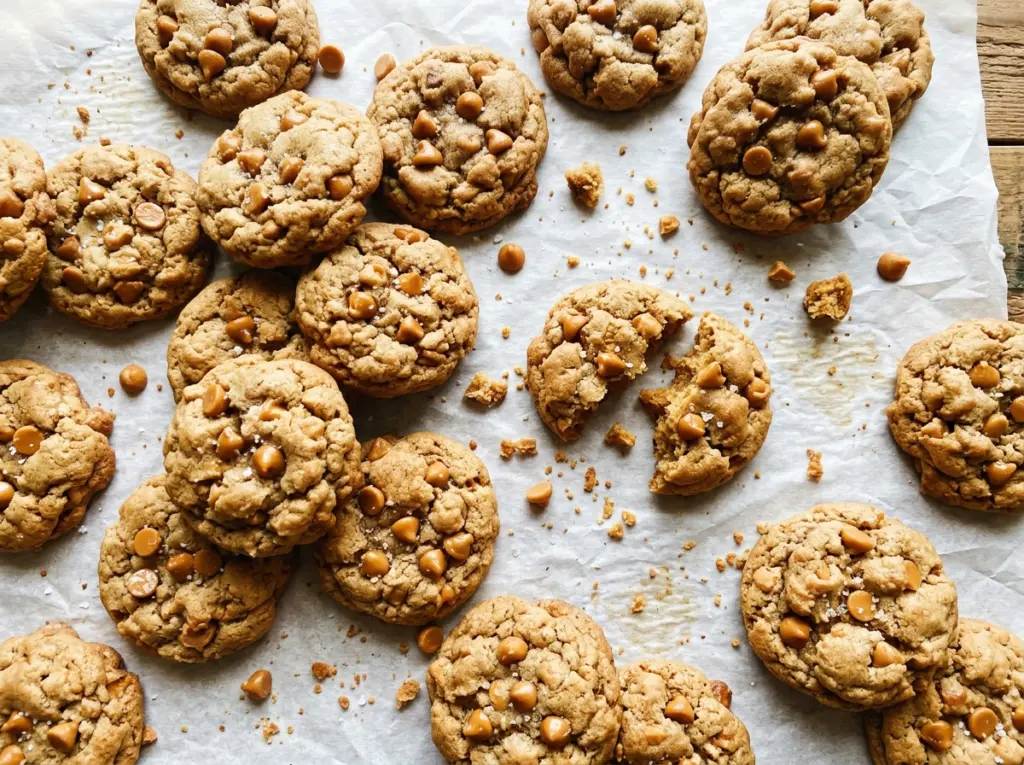
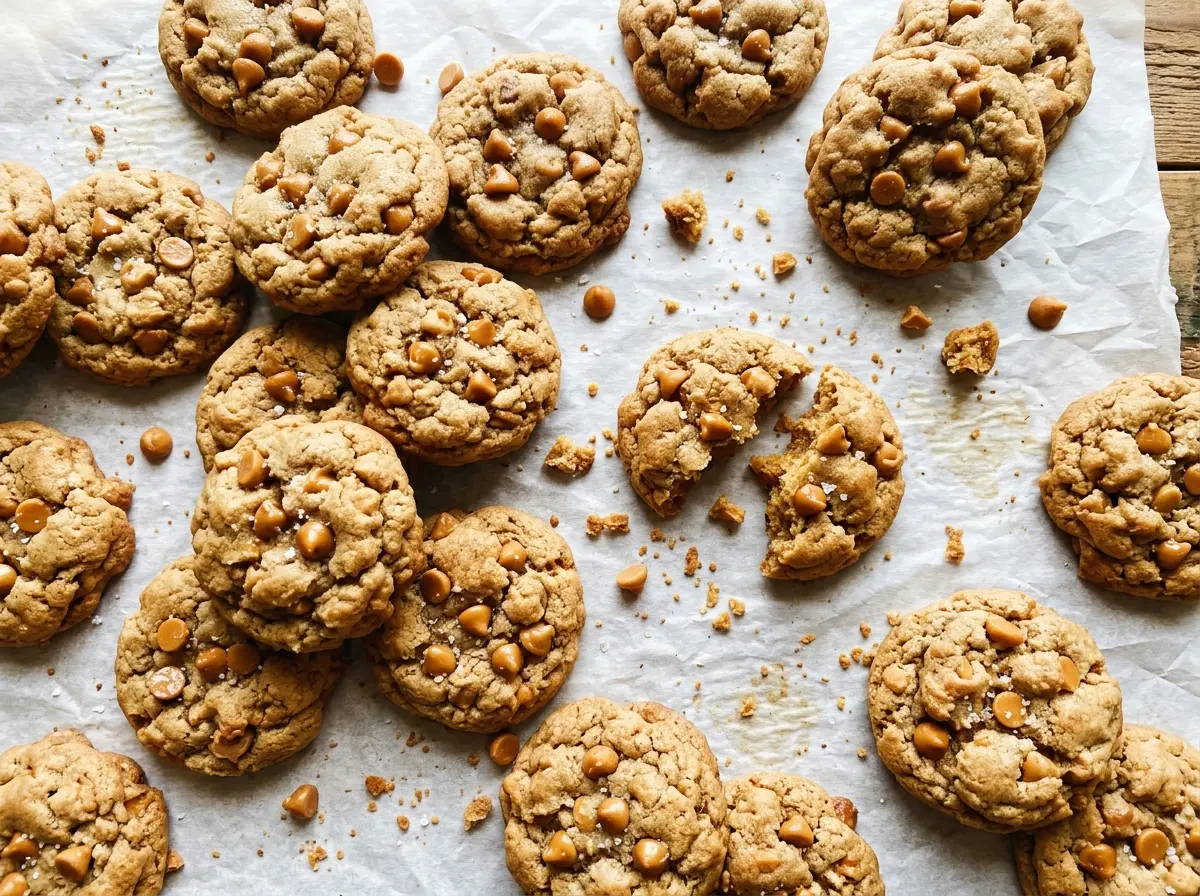
The edges turn pale gold while the centers still look soft, and that’s the moment to pull these cookies from the oven. They’ll finish setting on the warm baking sheet, leaving you with a tender middle instead of a dry, crisp cookie. That small visual cue makes a big difference in these Harry Potter Butterbeer Cookies.
I like that the butterbeer flavor comes through in two layers: butterscotch chips folded into the dough, then a cream soda glaze over the cooled cookies. The glaze is a drizzle, not a thick blanket, so you still taste the cookie underneath. Keep the dough simple and let those two finishes do the talking.
They’re easy to portion, bake in batches, and glaze once they’re cool. The finished cookies have lightly golden edges, soft centers, and a sweet cream soda finish.
Kitchen Note
Let the baking sheet cool before you scoop the next batch onto it. A hot sheet starts warming the butter in the dough before the cookies even reach the oven.
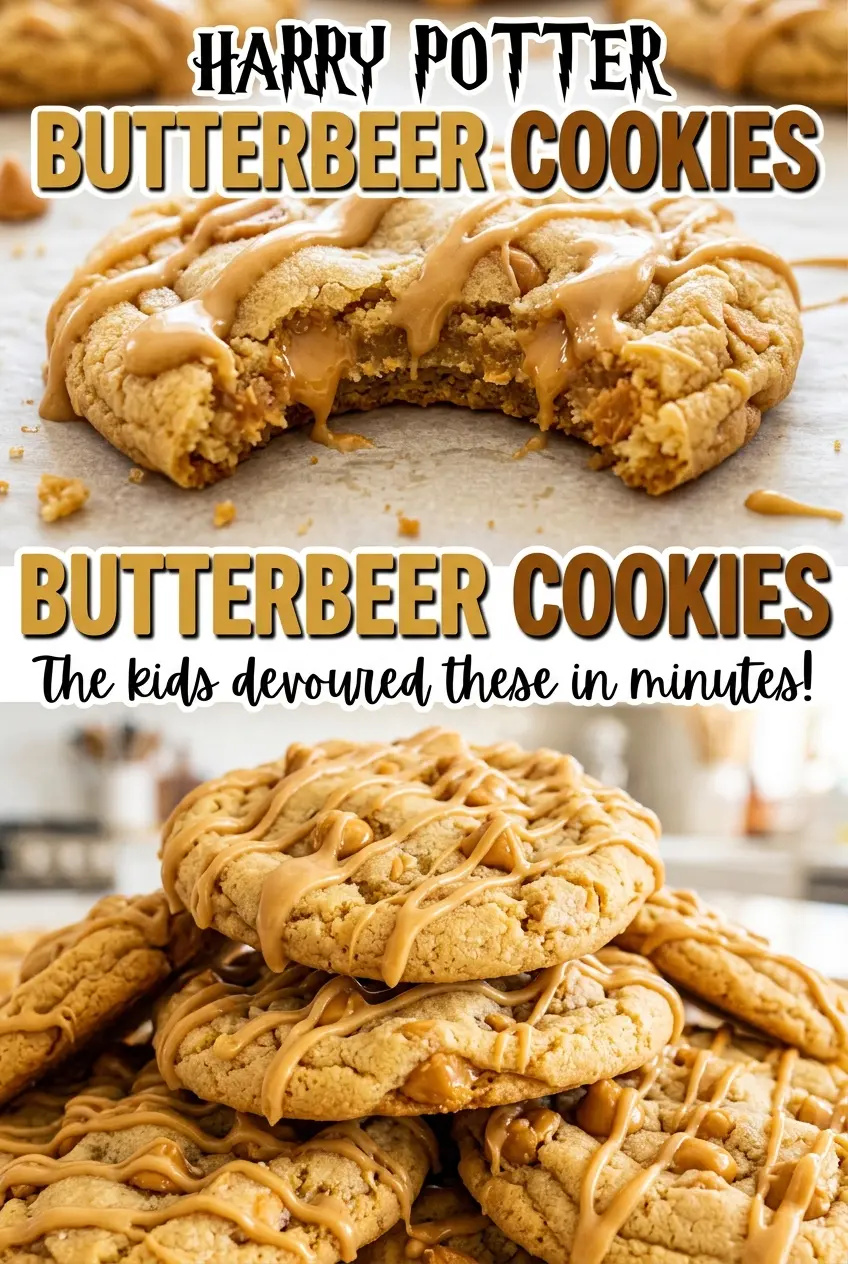
Save these Harry Potter Butterbeer Cookies for a bake with butterscotch chips, soft centers, and a cream soda glaze.
The Butterbeer Flavor Lives in the Finishing Touch, Not the Dough
These cookies don’t need cream soda mixed into the dough to taste like butterbeer. Butterscotch chips give each bite its sweet, buttery flavor, while a light glaze carries the cream soda note across the top. Keeping those flavors in separate parts of the cookie lets each one come through without turning the dough into a soda-flavored base.
That balance also explains why I keep the glaze to a drizzle. A heavy layer would take over the cookie and make the butterscotch less distinct. Let the glaze fall in thin ribbons, then give it time to set before serving. You’ll get a little sweetness and cream soda flavor in each bite, with the cookie still doing most of the work.
There’s no need to tint or flavor the dough further. The familiar butterbeer character comes from the combination of chips and glaze, not from adding extra ingredients or piling on a thicker topping.
Which Ingredients Give These Cookies Their Butterscotch-and-Cream-Soda Character
- All-purpose flour — It gives the cookies enough structure to hold their shape around the chips. Use ordinary all-purpose flour; there’s no need for a specialty brand, and a different flour won’t give quite the same result.
- Unsalted butter — Softened butter blends smoothly with the sugars, so let it lose its refrigerator chill without melting it. Unsalted butter also leaves the measured salt in control. A premium butter isn’t necessary here.
- Light brown and granulated sugars — Light brown sugar brings a deeper, molasses-like sweetness, while granulated sugar keeps the dough from leaning on brown sugar alone. Packed light brown sugar gives the intended balance; dark brown sugar would make the flavor more pronounced.
- Egg and extra yolk — The whole egg binds the dough, and the additional yolk contributes richness. Use large eggs as listed; leaving out the yolk changes the texture as well as the richness.
- Butterscotch chips — These are the main source of butterscotch flavor, so choose chips you enjoy tasting on their own. A standard grocery-store bag works; the more important thing is that the chips are fresh and not stale or waxy.
- Powdered sugar — Its fine texture makes a smooth glaze without gritty crystals. Keep it well sealed between uses so it doesn’t pick up moisture or clumps.
- Cream soda and vanilla — Cream soda gives the glaze its characteristic note, and vanilla rounds it out. Use cream soda rather than a different soda if you want that specific finish; a basic vanilla extract is all you need.
From Creaming to the Drizzle: The Order That Keeps the Cookies Tender
Whisk the Dry Ingredients Evenly
Whisk the flour, baking soda, and salt together in a medium bowl before you start the dough. This spreads the leavener through the flour, so one cookie doesn’t get a concentrated pocket of baking soda. Set the bowl aside while you cream the butter and sugars.
Cream the Butter and Sugars
Beat the softened butter with both sugars until creamy, about 2 minutes. Scrape down the bowl if the mixture climbs the sides, then beat in the egg, egg yolk, and vanilla until combined. The mixture should look cohesive rather than streaked with separate bits of butter or egg.
Finish and Portion the Dough
Add the flour mixture on low speed and stop as soon as no dry streaks remain. Mixing longer than that can make the cookies tougher, so fold in the butterscotch chips once the flour disappears. Scoop the dough into 1 1/2-tablespoon portions and leave about 2 inches between them on the parchment-lined sheet.
Bake, Cool, and Glaze
Bake in batches at 350°F for 10–12 minutes, until the edges are lightly golden and the centers still look soft. Leave the cookies on the sheet for 5 minutes, then move them to a rack and let them cool completely. Whisk the powdered sugar, cream soda, and vanilla until the glaze is smooth and thick enough to drizzle. Add it to the cooled cookies and let it set for about 20 minutes before serving.
Two Simple Ways to Change the Butterbeer Balance
Leave Off the Cream Soda Glaze
For a less sweet cookie with a stronger focus on the butterscotch chips, serve the cookies without glaze. The centers and edges stay the same, but you lose the cream soda note and the extra sweetness on top.
Make a Plain Brown Sugar Version
Leave the butterscotch chips out and keep the cream soda glaze. The result is a simpler brown sugar cookie, with the glaze supplying the main butterbeer-style accent instead of pockets of butterscotch in every bite.
Storage and Reheating
- Refrigerator: Store in an airtight container for up to 5 days; chilling firms the cookies, so let them come to room temperature before serving.
- Freezer: Freeze completely cooled, unglazed cookies in an airtight container for up to 2 months. Thaw at room temperature, then glaze once they’re fully thawed.
- Reheating: These are best at room temperature. For a warm unglazed cookie, microwave it briefly; don’t microwave a glazed cookie, since the topping will soften and run.
Questions That Come Up While Baking Butterbeer Cookies
Harry Potter Butterbeer Cookies
Ingredients
Equipment
Method
- Heat the oven to 350°F.
- Line an 18x13-inch rimmed baking sheet with parchment paper.
- Whisk the flour, baking soda, and salt together in a medium bowl.
- Beat the butter, brown sugar, and granulated sugar in a large bowl until creamy, about 2 minutes.
- Beat in the egg, egg yolk, and vanilla until combined.
- Mix in the flour mixture on low speed just until no dry streaks remain.
- Fold in the butterscotch chips.
- Scoop the dough into 1 1/2-tablespoon portions onto the prepared sheet, spacing them about 2 inches apart.
- Bake in batches for 10–12 minutes, until the edges are lightly golden and the centers still look soft.
- Cool the cookies on the sheet for 5 minutes.
- Transfer the cookies to a rack to cool completely.
- Let the sheet cool before baking the remaining dough.
- Whisk the powdered sugar, cream soda, and vanilla in a small bowl until smooth and thick enough to drizzle.
- Drizzle the glaze over the cooled cookies.
- Let the glaze set for about 20 minutes before serving.