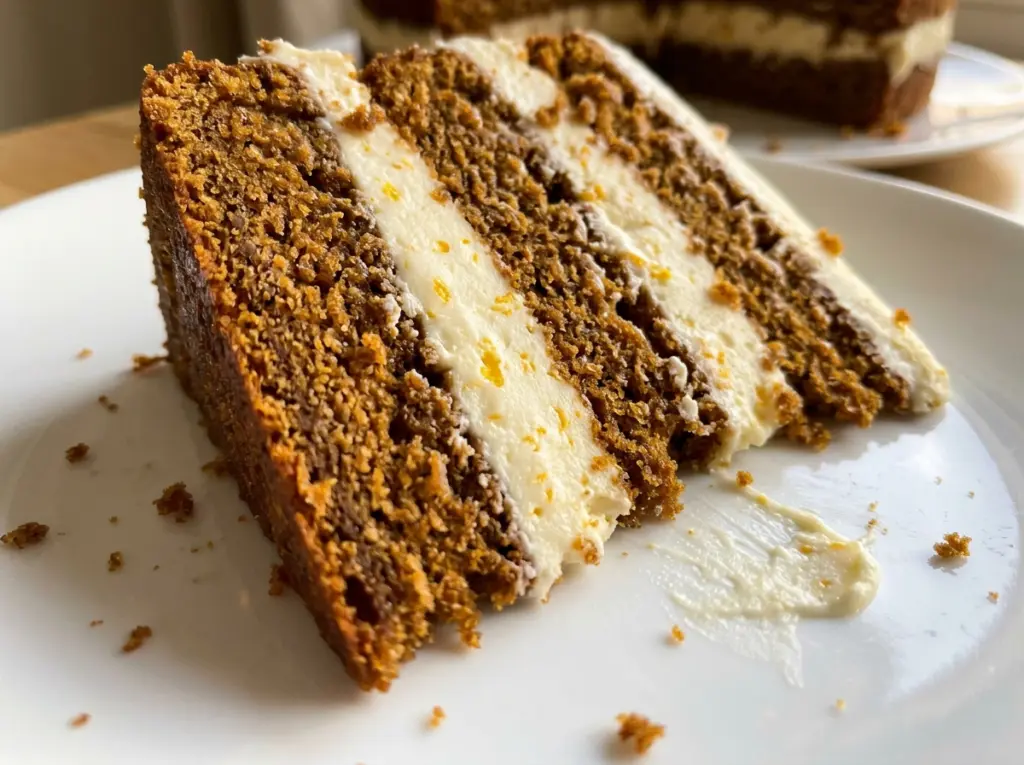
The molasses makes this cake batter thick and fragrant before it ever reaches the oven, and the first time I made it, I nearly beat that lovely texture right out of it. The flour goes in gradually, with buttermilk between additions, so the batter comes together without getting overworked. That’s what gives this vanilla orange gingerbread cream cake its soft, sturdy layers instead of a heavy crumb.
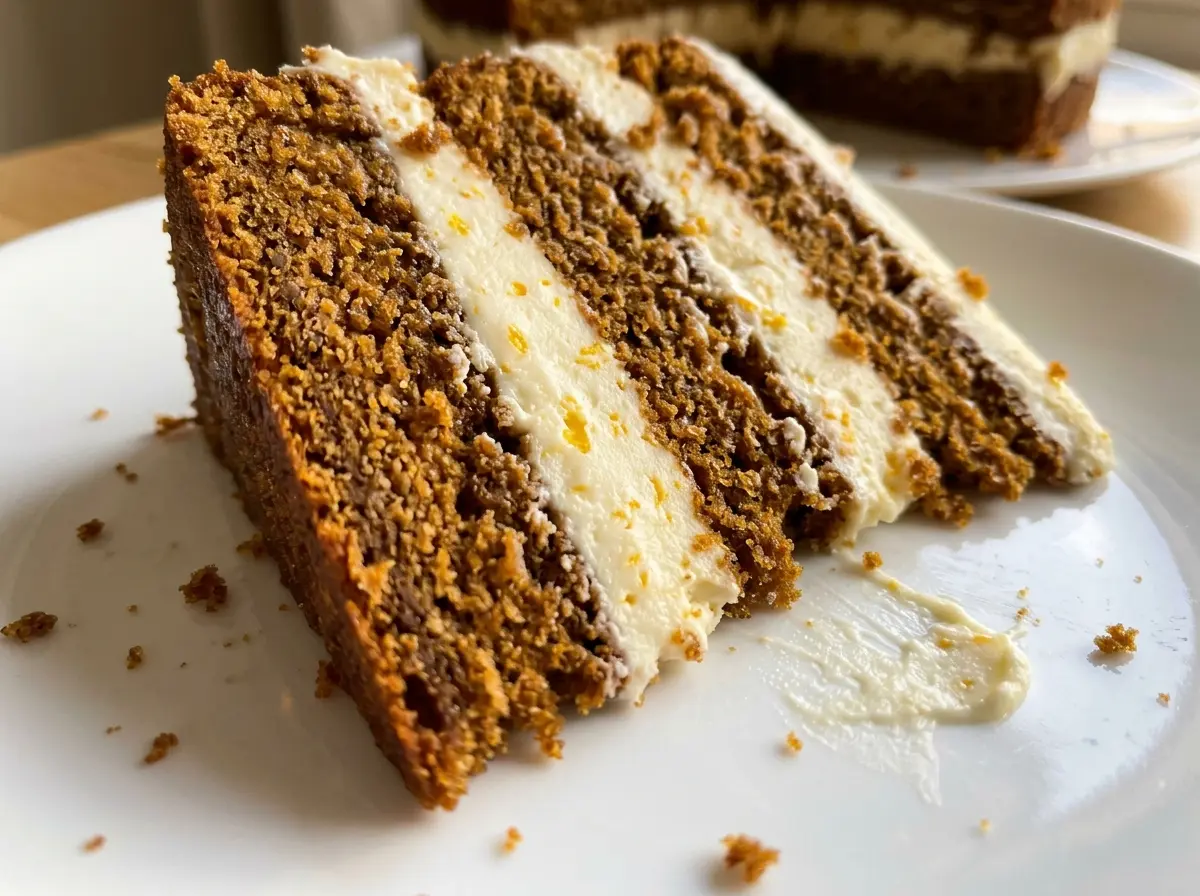
The cream brings a cool, bright contrast to the warm spices. I use mascarpone with orange zest and vanilla, then stream in cold heavy cream and whip it until it holds firm peaks. The result is rich without feeling dense, and the orange keeps the molasses from taking over. Each slice has a tender gingerbread layer and a generous sweep of vanilla orange cream.
Kitchen Note
Stop whipping as soon as the cream holds firm peaks. Mascarpone cream can turn dense and grainy if you keep beating after it reaches that point.
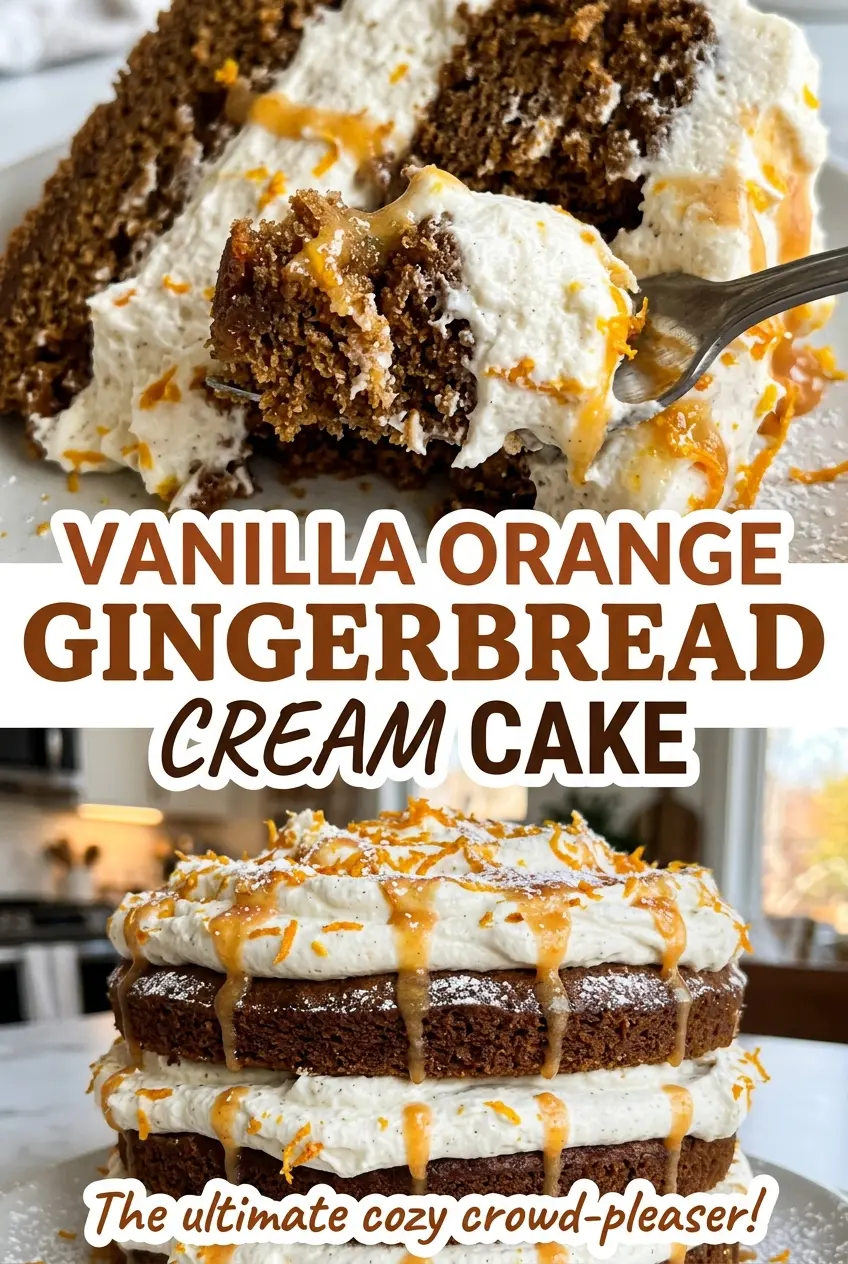
Save this vanilla orange gingerbread cream cake for its tender spiced layers and cool, citrusy mascarpone cream.
Why These Gingerbread Layers Stay Tender When You Alternate the Buttermilk
Gingerbread batter is thick, and it’s easy to keep mixing when streaks of flour still show. The trouble is that flour develops gluten as it’s worked; too much mixing can leave the finished cake tight instead of tender. I alternate the dry mixture with the buttermilk in three additions, beginning and ending with flour. Each splash of buttermilk loosens the batter before the next portion of flour goes in.
That order also helps the ingredients combine evenly without asking the mixer to do all the work at once. Start each addition on low speed, then stop as soon as the batter looks uniform. A few seconds of restraint matter more here than a perfectly smooth, glossy batter. If you keep mixing to chase every tiny lump, you’ll lose the soft crumb that makes these layers easy to stack and slice.
The molasses adds moisture and weight, so the goal isn’t a fluffy, airy batter. It should look thick and evenly blended, with no pockets of dry flour at the bottom of the bowl. Scrape the bowl if needed, but don’t turn that check into another long mixing session.
What Molasses, Buttermilk, and Mascarpone Each Bring to This Cake
- Unsulphured molasses — It gives the cake its deep gingerbread character and contributes moisture. Use unsulphured molasses rather than a sharper, more bitter style; a fresh bottle matters more than a premium brand. Stir it into the butter mixture after the eggs so it disperses evenly.
- Buttermilk — Its tang balances the sweetness, and its acidity works with the baking soda. Room-temperature buttermilk blends into the batter more smoothly than cold liquid. If you need a substitute, plain yogurt thinned with milk to a pourable consistency is the closest practical swap, though the crumb may be a little less delicate.
- Ground ginger, cinnamon, and cloves — Ginger leads, cinnamon rounds out the warmth, and cloves add a little depth. These pantry spices don’t need to be expensive, but old jars lose their aroma. Whisk them thoroughly with the flour so no one slice gets a concentrated pocket of spice.
- Unsalted butter and light brown sugar — Softened butter traps air as it’s beaten with the packed sugar, helping the layers rise with a tender texture. Standard grocery-store butter works well; it should yield to a finger without looking oily or melted. Keep the brown sugar packed when measuring so the batter has its intended moisture and sweetness.
- Room-temperature eggs — They help the butter-and-sugar mixture stay cohesive as the batter comes together. Cold eggs can make softened butter firm up into little flecks. Set them out ahead of mixing so they’re no longer refrigerator-cold.
- Mascarpone and heavy cream — Mascarpone gives the orange cream body without the sharper tang of some other cheeses, while heavy cream turns it into a spreadable frosting. Choose plain mascarpone and regular heavy cream; there’s no need for a specialty brand. Keep both cold for the creamiest result.
- Orange zest and vanilla — Finely grated zest adds fragrant citrus without thinning the cream, and vanilla softens the sharper edges of the spices. Grate only the colored peel; the white pith underneath tastes bitter. A good-quality vanilla extract is welcome, but the orange zest does most of the brightening.
From Molasses Batter to Stable Orange Cream
Prepare the Pans and Spice Mixture
Heat the oven to 350°F, coat two 8-inch round cake pans with nonstick cooking spray, and line their bottoms with parchment. Whisk the flour, baking powder, baking soda, fine salt, ginger, cinnamon, and cloves in a medium bowl until the spices are evenly distributed. This quick dry mix keeps the leaveners from clumping in one part of the batter. Set it aside while you cream the butter and sugar.
Build the Batter Without Overmixing
Beat the softened butter and packed light brown sugar with an electric mixer on medium speed until fluffy, about 2 minutes. Beat in the eggs one at a time, then mix in the molasses. Add the flour mixture in three additions, alternating with the buttermilk and starting and ending with flour. Stop as soon as the batter is evenly combined; scrape the bowl if you see dry flour clinging to the sides.
Bake Until the Centers Spring Back
Divide the batter evenly between the prepared pans and bake for 30 to 35 minutes. The tops should spring back lightly when touched, and a toothpick inserted in the center should come out clean. If it still carries wet batter, give the cakes more time rather than relying on color alone. Cool the cakes in their pans for 10 minutes, then turn them onto a wire rack, remove the parchment, and let them cool completely.
Whip the Cream and Stack the Layers
Beat the cold mascarpone, powdered sugar, vanilla, and orange zest on low speed until smooth. With the mixer still on low, gradually pour in the cold heavy cream, then increase to medium-high and beat until the cream holds firm peaks. Set one cooled cake layer on a serving plate and spread about 1 1/2 cups of cream over it. Add the second layer, cover the top and sides with the remaining cream, and refrigerate for at least 30 minutes before serving.
Three Ways to Change the Shape Without Losing the Gingerbread
Make It Gluten-Free
Replace the all-purpose flour with an equal volume of a cup-for-cup gluten-free baking blend that includes xanthan gum. The gingerbread flavor and orange cream stay the same, though the layers may be a little more delicate when you stack them. Let each layer cool completely before handling.
Leave the Sides Bare
Spread the cream between the layers and over the top, but leave the cake sides uncovered. You’ll use less cream on the outside, and the exposed gingerbread makes the two dark layers easy to see. Keep the assembled cake chilled just as you would the fully frosted version.
Turn It Into a Layered Trifle
Cut the completely cooled cake layers into bite-size pieces and arrange them in a serving bowl with the vanilla orange cream between the pieces. The cake absorbs a little cream as it chills, making each spoonful soft and cohesive. Refrigerate the trifle for at least 30 minutes before serving.
Storage and Serving
- Refrigerator: Keep the assembled cake covered in the refrigerator and enjoy it within 3 days. The crumb softens slightly as it sits with the cream.
- Freezer: The assembled cake isn’t a good candidate for freezing because the whipped mascarpone cream can lose its smooth texture after thawing. The unfrosted cake layers freeze better; wrap them tightly once completely cool and thaw before assembling.
- Serving: Serve the cake chilled after its initial 30-minute rest in the refrigerator. A sharp knife helps cut through the cream without dragging it across the layers.
Questions That Come Up While Baking This Gingerbread Cake
Vanilla Orange Gingerbread Cream Cake
Ingredients
Equipment
Method
- Preheat the oven to 350°F.
- Coat two 8-inch round cake pans with nonstick cooking spray.
- Line the bottoms of the pans with parchment paper.
- Whisk the flour, baking powder, baking soda, salt, ginger, cinnamon, and cloves in a medium bowl.
- Beat the softened butter and brown sugar in a large bowl with an electric mixer on medium speed until fluffy, about 2 minutes.
- Beat in the eggs one at a time.
- Mix in the molasses.
- Mix in the flour mixture in three additions, alternating with the buttermilk and beginning and ending with the flour mixture.
- Stop mixing as soon as the batter is evenly combined.
- Divide the batter evenly between the pans.
- Bake for 30 to 35 minutes, until the tops spring back lightly when touched and a toothpick inserted in the centers comes out clean.
- Cool the cakes in the pans for 10 minutes.
- Turn the cakes out onto a wire rack.
- Remove the parchment.
- Cool the cakes completely.
- Beat the mascarpone, powdered sugar, vanilla, and orange zest in a large bowl on low speed until smooth.
- With the mixer on low, gradually pour in the heavy cream.
- Beat on medium-high until the cream holds firm peaks.
- Set one cake layer on a serving plate.
- Spread about 1 1/2 cups of the cream over it.
- Place the second layer on top.
- Spread the remaining cream over the top and sides.
- Refrigerate the cake for at least 30 minutes before serving.
- Keep leftovers covered in the refrigerator.