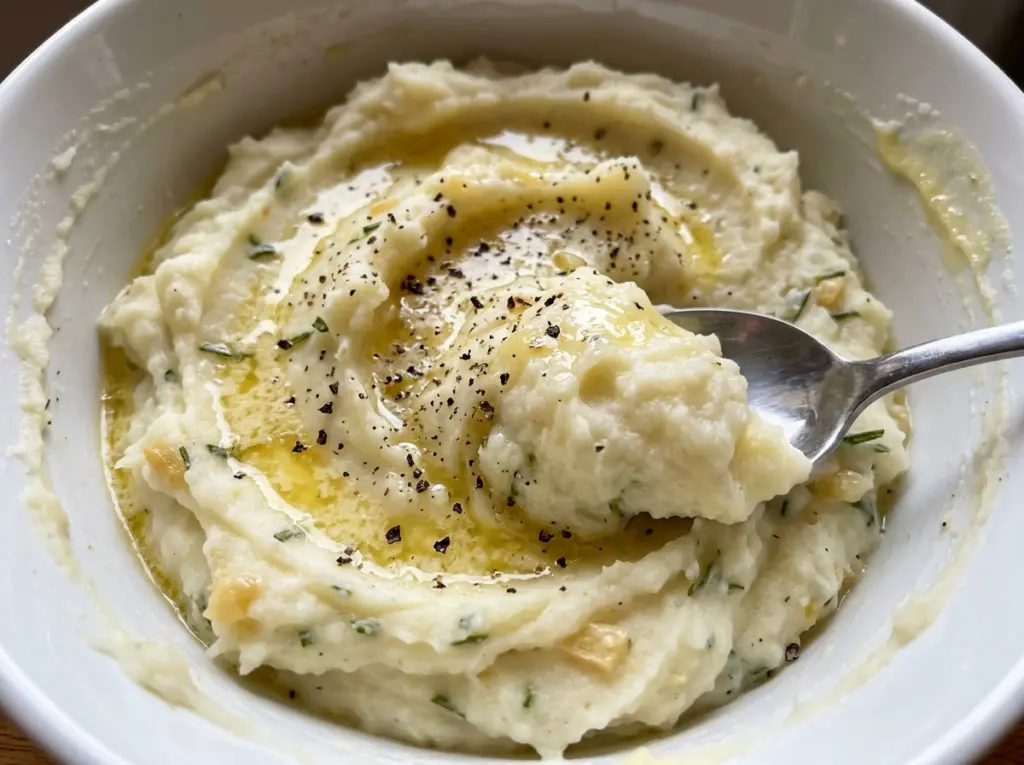
When a fork slides into a potato chunk with almost no resistance, you know the pot is ready; turning that tenderness into a creamy mash takes a little more care than just adding butter. These Rosemary Garlic Mashed Potatoes have the familiar, soft richness of a classic mash, with garlic mellowed by butter and rosemary in the background. Yukon Golds make a naturally buttery base, so the flavor doesn’t need a long list of extras. I like that each forkful tastes rounded rather than sharply garlicky.
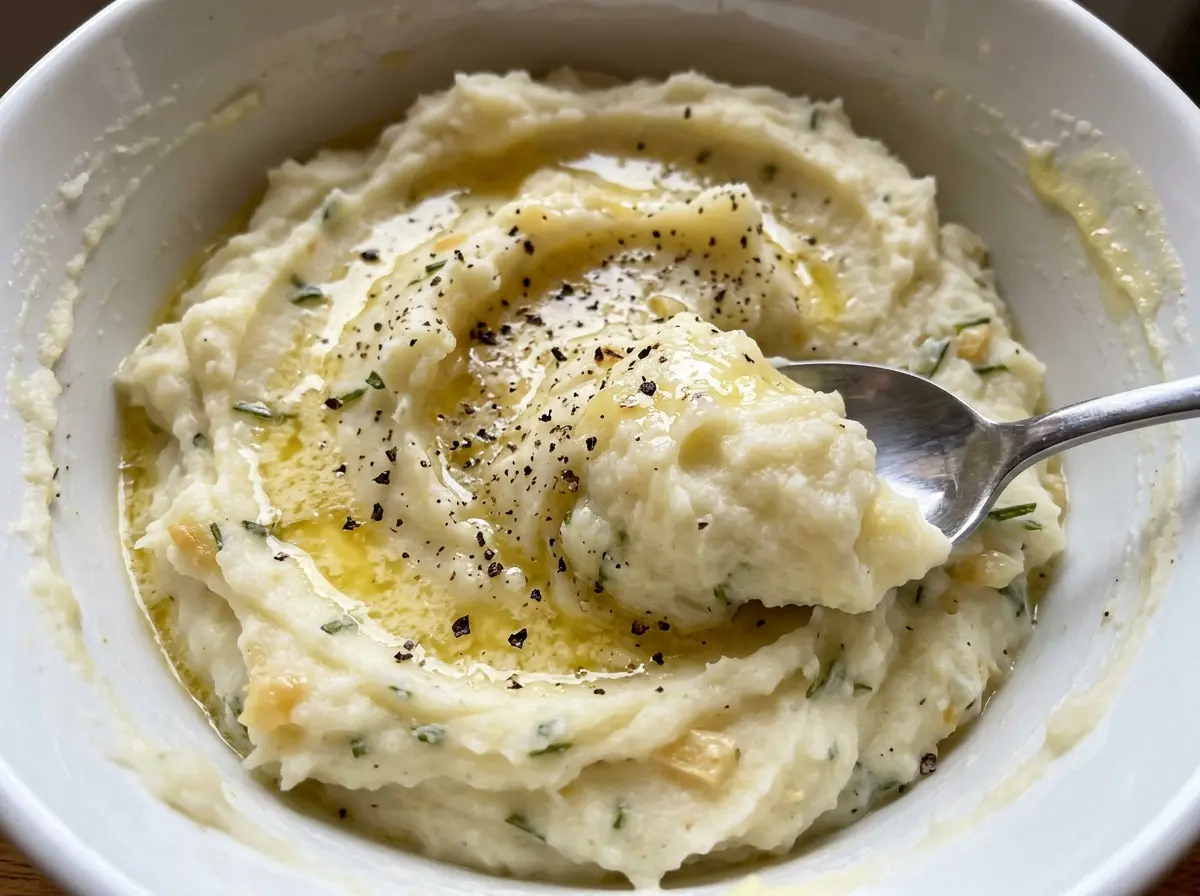
The rosemary comes through without taking over, and the garlic sits quietly underneath it. The finished potatoes should be smooth and creamy, not loose or pasty, with enough body to hold on a spoon. That balance makes this a useful side for a simple dinner or a fuller holiday table: familiar potatoes first, a gentle herbal note after. The ingredients are ordinary, but the order they meet matters, and the result is a rich, fragrant bowl of mashed potatoes.
Kitchen Note
Keep the milk mixture warm, not bubbling, while the rosemary infuses. After five minutes, take the pan off the heat and discard the sprigs so the mash gets their aroma without stray leaves.
Save these Rosemary Garlic Mashed Potatoes for a creamy, buttery side with mellow garlic and fresh rosemary aroma.
Why These Potatoes Need a Dry Minute Before the Dairy
Potatoes can be tender and still carry plenty of water on their surfaces. If that moisture stays in the pot, the milk and butter have to compete with it, and the mash can turn loose instead of creamy. This is easy to miss because the chunks look drained; a little water clings to their edges and settles in the bottom of the pot.
After draining, returning the potatoes to low heat gives that extra moisture a chance to evaporate. Shake the pot gently rather than stirring hard, and watch for the wet sheen to fade. You’re not trying to brown the potatoes or cook them further. This brief pause gives the warm dairy a better chance to blend into the potatoes instead of thinning them out, which is especially helpful when you’re aiming for a mash that feels rich but still holds its shape on the spoon.
It’s a small step with a noticeable payoff. Skip it, and the potatoes may need more mixing to feel cohesive; that extra handling can make their texture heavy. Let the surface moisture cook off first, then mash and add the warm mixture.
What Yukon Golds, Whole Milk, and Fresh Rosemary Bring to the Bowl

- Yukon Gold potatoes — Their naturally buttery character and creamy texture suit a smooth mash. Choose firm potatoes without soft spots, and cut them into similarly sized chunks so they become tender at about the same time. Russets make a fluffier, less buttery mash, while waxy red potatoes tend to stay denser.
- Unsalted butter — Butter brings richness and helps carry the garlic flavor through the potatoes. A standard grocery-store butter works well; using unsalted butter also lets the divided kosher salt season the mash without the extra salt in salted butter.
- Fresh garlic — Finely minced cloves disperse through the butter and milk mixture more evenly than large pieces. Fresh garlic gives the cleanest flavor here, and it’s worth taking a moment to mince it finely so no sharp chunks interrupt the creamy texture.
- Whole milk — Whole milk adds creamy body without making the potatoes as heavy as adding more butter would. Since it’s warmed with the butter before it meets the potatoes, the mixture blends in smoothly instead of cooling the mash.
- Fresh rosemary — Whole sprigs lend a gentle herbal aroma while staying easy to remove. Fresh rosemary is especially useful for this infusion; finely chopped needles would leave a more pronounced, woody texture in the finished potatoes.
How to Cook, Dry, and Mash the Potatoes Without Losing Their Creamy Texture
Simmer the Chunks Until Fork-Tender
Put the peeled potato chunks in a 5-quart pot with the cold water and 1 teaspoon of the kosher salt; the water should cover them by 1 inch. Bring everything to a boil over high heat, then reduce the heat and simmer for 15 to 20 minutes. Test a chunk with a fork: it should pierce easily, without the potato crumbling apart in the water. If the centers still feel firm, give them more time in the simmer rather than trying to mash them undercooked.
Warm the Garlic, Butter, Milk, and Rosemary
While the potatoes cook, melt the butter in a small saucepan over low heat. Stir in the finely minced garlic and cook for 1 minute, then add the milk and rosemary sprigs. Warm the mixture gently for 5 minutes without letting it boil; bubbling milk can scald on the bottom of the pan. Remove the saucepan from the heat and discard the rosemary sprigs.
Let the Drained Potatoes Shed Excess Moisture
Drain the potatoes well and return them to the pot. Set the pot over low heat for about 1 minute, shaking it gently until the excess moisture evaporates. Keep the heat low and the pot moving; you want the potatoes to dry slightly, not catch on the bottom. They’re ready for mashing when the wet sheen has mostly disappeared.
Mash in the Warm Mixture
Mash the potatoes, then stir in the warm milk mixture, remaining 1/2 teaspoon of kosher salt, and black pepper. Add the mixture to the potatoes while it’s still warm so it incorporates without chilling them. Stir until the mash looks smooth and creamy, then stop; prolonged, vigorous mixing can make potatoes gluey. Taste for seasoning before serving.
Two Easy Ways to Adapt Rosemary Garlic Mashed Potatoes
Make the Mash Dairy-Free
Replace the whole milk with unsweetened, unflavored oat milk and use dairy-free butter in the same quantities listed in the recipe card. The potatoes will still take on the garlic and rosemary, though the result will taste a little less rich and buttery than the original.
Let Garlic Take the Lead
Leave out the rosemary sprigs and keep the other ingredients and steps the same. You’ll get a straightforward garlic mash without the herbal note, a good choice when you want the potatoes to taste more classic.
Storage and Reheating
- Refrigerator: Keep leftovers in an airtight container for up to 4 days. The mash will firm up as it chills.
- Freezer: Freeze in an airtight, freezer-safe container for up to 1 month. Thaw overnight in the refrigerator; the texture may be a little less smooth after freezing.
- Reheating: Warm gently in a saucepan over low heat, stirring in a splash of milk if the potatoes seem stiff. High heat can scorch the bottom before the center is hot.
Questions That Come Up When Making These Mashed Potatoes
Rosemary Garlic Mashed Potatoes
Ingredients
Method
- Put the potatoes, water, and 1 teaspoon of the salt in a 5-quart pot.
- Bring to a boil over high heat, then reduce the heat and simmer for 15 to 20 minutes, until the potatoes are easily pierced with a fork.
- While the potatoes cook, melt the butter in a small saucepan over low heat.
- Stir in the garlic and cook for 1 minute.
- Add the milk and rosemary and warm gently for 5 minutes without boiling.
- Remove the pan from the heat and discard the rosemary sprigs.
- Drain the potatoes and return them to the pot.
- Set the pot over low heat for about 1 minute, shaking it gently, until excess moisture evaporates.
- Mash the potatoes.
- Stir in the warm milk mixture, remaining 1/2 teaspoon salt, and pepper until smooth and creamy.