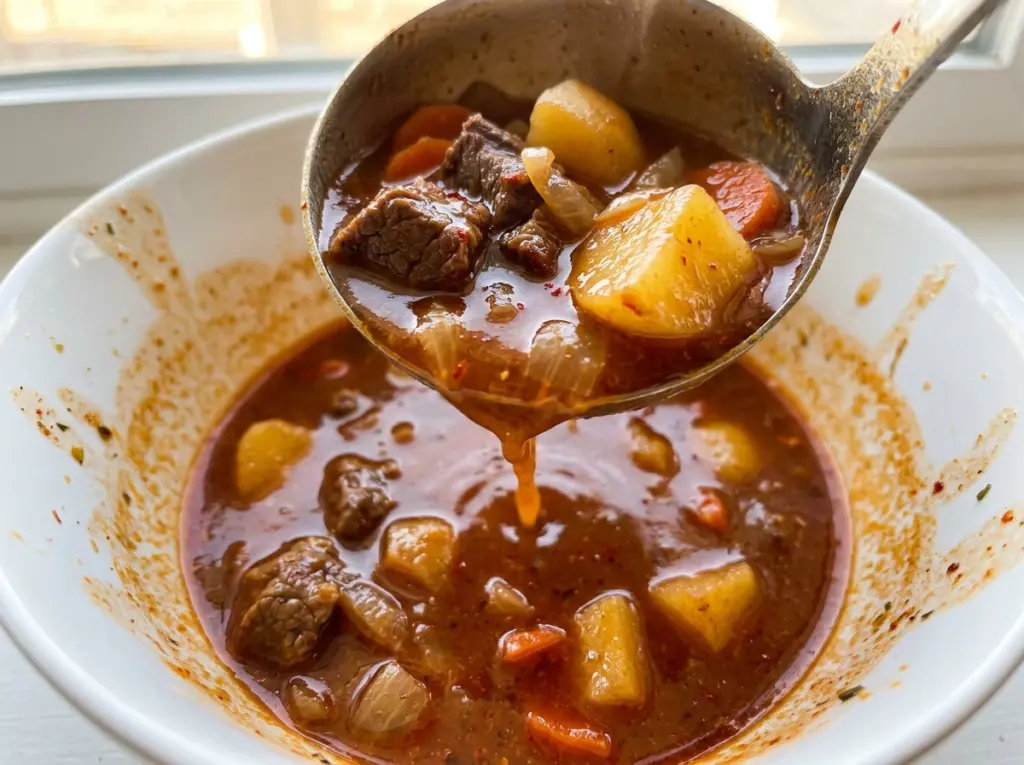
The first thing you notice is how quickly sweet paprika colors the onions and oil a deep red. Let it sit over direct heat too long, though, and that warm aroma can turn bitter. I take the pot off the burner before stirring in the paprika, caraway, and garlic, then add the vegetables and broth to cool everything down. That small timing choice gives Hungarian goulash its mellow, rounded paprika flavor.
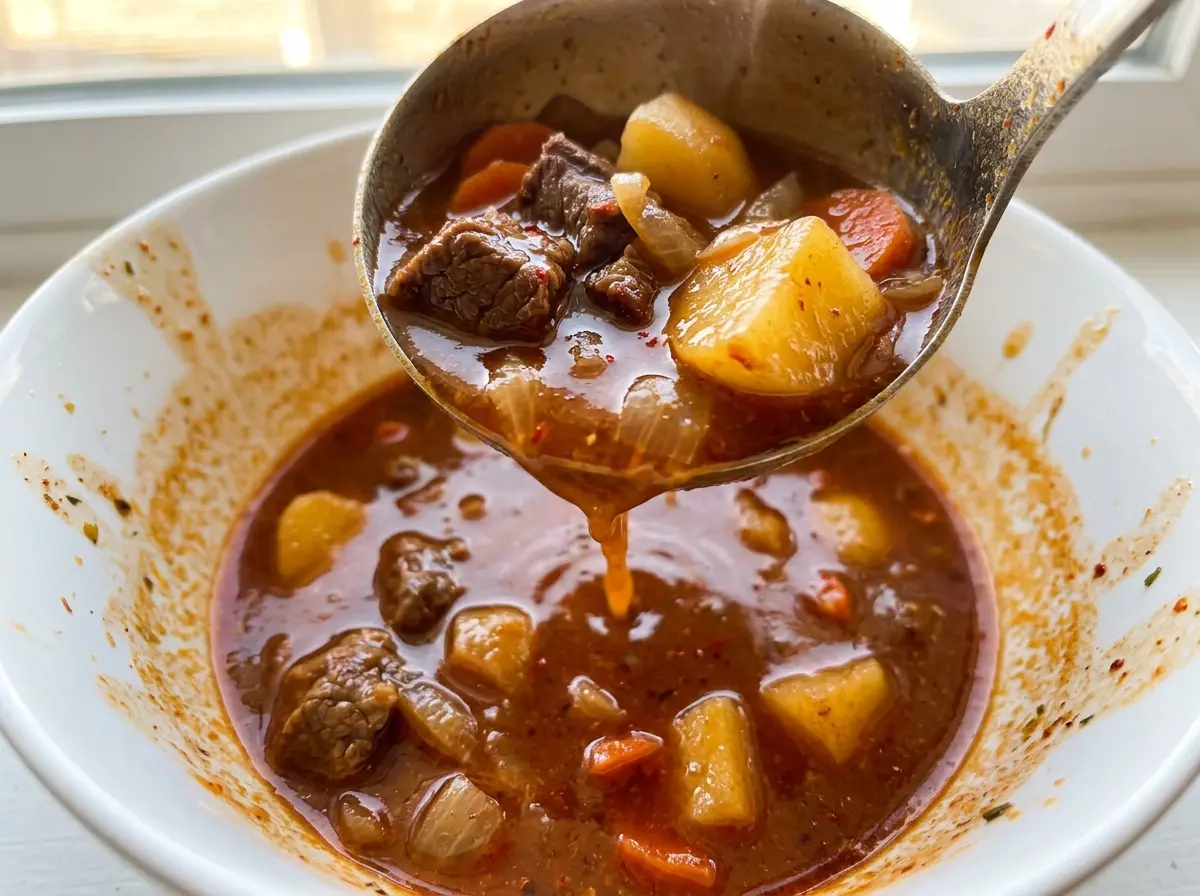
This is a patient Dutch-oven stew, not a quick sear-and-simmer dinner. The beef gets a head start in the broth so it can turn fork-tender before the carrots and Yukon Gold potatoes go in. Add those vegetables too early and they’ll spend the whole cook softening; add them near the end and they keep their shape while soaking up the savory broth. Each spoonful has tender beef, soft onions, and vegetables that still taste like themselves.
Kitchen Note
Give the onions their full 8 to 10 minutes; softened and lightly golden is the cue, not browned and crisp. They form a sweet, tender base for the beef, so don’t rush them over high heat.
Save this Hungarian goulash for a slow-simmered dinner with fork-tender beef, sweet paprika, and potatoes cooked right in the broth.
Why Paprika Belongs in the Pot Before the Broth
Paprika tastes different depending on how it meets heat. Stir it into hot oil while the Dutch oven is still on the burner and it can scorch before you have time to add the liquid. Scorched paprika brings a bitter edge that’s hard to balance later, even after a long simmer.
Taking the pot off the heat gives the paprika a brief moment in the warmth left behind by the onions. The crushed caraway and minced garlic go in at the same time, and 30 seconds is enough to wake up their aromas without letting them darken. Then the chopped tomato and green bell pepper follow, along with the beef and broth. That sequence lets the broth carry the spices through the long cook instead of asking the paprika to survive direct heat on its own.
It also explains why there’s no need to toast the spices separately or stir them in at the end. Their flavor has time to mingle with the beef as it simmers, while the fresh tomato adds a little brightness to the rich broth. Keep the pot off the burner only for that short spice-stirring moment; once the broth goes in, bring everything back to a simmer.
What the Beef, Paprika, and Caraway Bring to the Pot

- Beef chuck — Its connective tissue softens during the long, gentle simmer, making the cubes juicy and tender while giving the broth body. Trim away tough excess fat and cut the meat into even 1-inch pieces so they cook at a similar pace. Beef shoulder is the closest practical swap; lean, quick-cooking cuts won’t become as tender over this cooking time.
- Sweet Hungarian paprika — This is the stew’s defining warm, sweet pepper flavor and deep red color, so freshness matters more here than choosing an expensive brand. If the jar smells dusty instead of fragrant, replace it. Smoked paprika makes the stew noticeably smoky rather than sweet; for a gentler variation, swap only part of the sweet paprika.
- Caraway seeds — Lightly crushing them releases their earthy, slightly citrusy aroma. Use the seeds rather than ground caraway when you can; the whole seeds stay distinct in the broth. If you don’t have caraway, leave it out rather than substituting a much stronger spice such as cumin.
- Yukon Gold potatoes — They turn creamy at the edges but keep enough shape to hold together in the simmer. Red potatoes are a good substitute, cut to the same size; they’ll be a little firmer and less buttery. Russets break down more readily, so the broth will turn cloudier and thicker.
- Beef broth — A full-bodied broth supports the long-cooked beef flavor. Low-sodium beef broth works at the same volume; keep the listed kosher salt, then taste the finished stew before adding anything extra. If you need a gluten-free version, use gluten-free beef broth.
How to Brown the Beef and Build a Gentle Simmer
Brown the Chuck in Uncrowded Batches
Pat the beef dry before seasoning it with kosher salt and black pepper; a dry surface browns more readily than a wet one. Heat 1 tablespoon of vegetable oil in a 7-quart Dutch oven over medium-high heat, then brown the beef in batches and transfer each batch to a plate. Leave breathing room between pieces so they sear instead of steaming in their own moisture. Add the remaining oil only after the beef is out of the pot.
Soften the Onions, Then Bloom the Spices
Add the chopped onions and cook over medium heat for 8 to 10 minutes, stirring occasionally, until softened and lightly golden. Take the pot off the heat before you stir in the paprika, lightly crushed caraway, and minced garlic. Stir for 30 seconds; the spices should smell fragrant, not toasted dark. Add the chopped tomato and green bell pepper, then return the browned beef and any juices on the plate.
Bring the Broth to a Simmer and Tenderize the Beef
Pour in the beef broth and return the Dutch oven to medium-high heat. Scrape the bottom as the liquid warms so the browned bits loosen into the broth rather than staying stuck to the pot. Once it reaches a simmer, cover the pot, reduce the heat to low, and cook gently for 1 1/2 to 2 hours. Keep it at a quiet simmer, with small bubbles rather than a hard boil, until a fork slides into the beef easily.
Add the Carrots and Potatoes Near the End
Stir in the peeled, 1/2-inch-thick carrot slices and peeled, 1-inch potato cubes after the beef is tender. Cover the pot again and simmer for 25 to 30 minutes. Check a carrot and a potato cube for tenderness; both should yield easily to a fork without dissolving into the broth. If the pot is bubbling vigorously, lower the heat so the vegetables cook gently and hold their shape.
Three Small Changes That Give This Goulash a Different Turn
A Smokier Paprika Note
For a smoky edge, replace 1 tablespoon of the sweet Hungarian paprika with smoked paprika and keep the rest sweet. The stew will taste more woodsy and less purely sweet-peppery, so make this change only if you want that distinct smoky character.
A Sweeter, Milder Pepper
Use a chopped red bell pepper in place of the green one. It softens into the same long simmer but brings a sweeter, less grassy note to the broth, making the stew taste rounder.
A Gluten-Free Pot
Replace the beef broth with the same amount of gluten-free beef broth. The texture and savory character stay close to the original, so you don’t need to change the vegetables or cooking method.
Storage and Reheating
- Refrigerator: Transfer leftovers to shallow containers within 2 hours and refrigerate for 3 to 4 days. The potatoes will absorb some broth as they sit.
- Freezer: Freeze in airtight containers for up to 3 months. The beef freezes well, though the potatoes may soften and turn slightly grainy after thawing.
- Reheating: Warm gently in a covered saucepan over low heat, stirring now and then, until it reaches 165°F. Avoid a vigorous boil, which can break up the potatoes and dry the beef.
Questions That Come Up While the Goulash Simmeres
Hungarian Goulash
Ingredients
Equipment
Method
- Pat the beef dry and season it with the salt and pepper.
- Heat 1 tablespoon of the oil in a 7-quart Dutch oven over medium-high heat.
- Brown the beef in batches, transferring each batch to a plate.
- Add the remaining 1 tablespoon oil and the onions to the pot; cook over medium heat for 8 to 10 minutes, stirring occasionally, until softened and lightly golden.
- Take the pot off the heat and stir in the paprika, caraway seeds, and garlic for 30 seconds.
- Add the tomato, bell pepper, browned beef and any juices, and beef broth.
- Return the pot to medium-high heat and bring the liquid to a simmer, scraping up any browned bits from the bottom.
- Cover the pot, reduce the heat to low, and simmer gently for 1 1/2 to 2 hours, until the beef is fork-tender.
- Stir in the carrots and potatoes, cover, and simmer for 25 to 30 minutes, until the potatoes and carrots are tender.