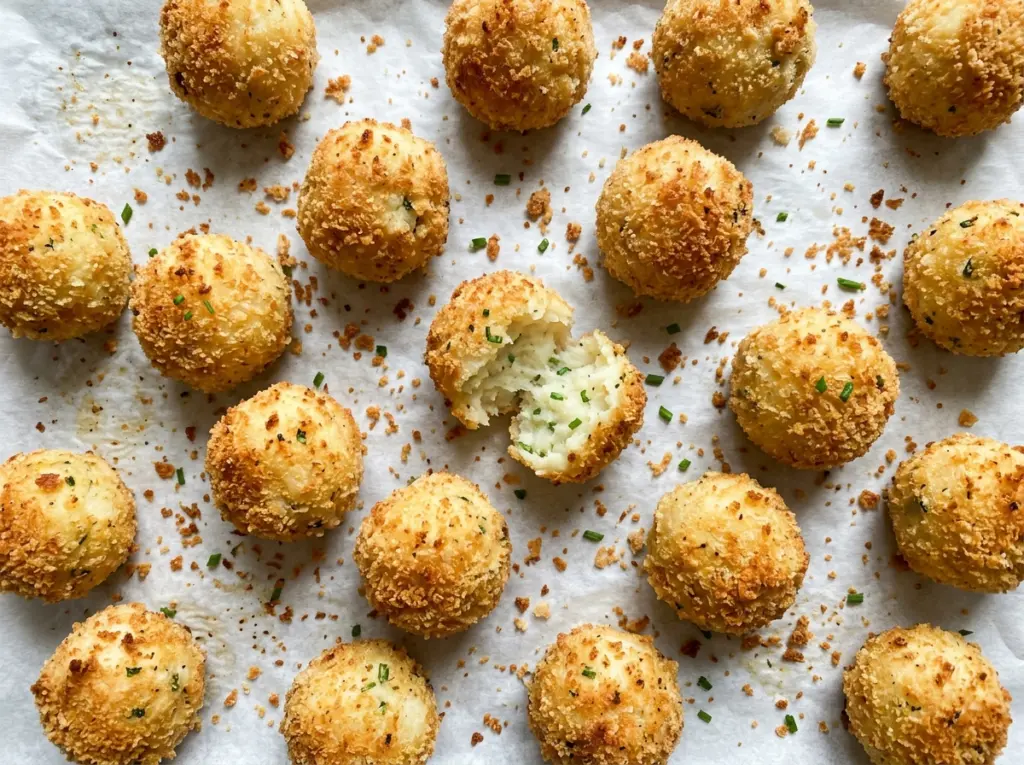
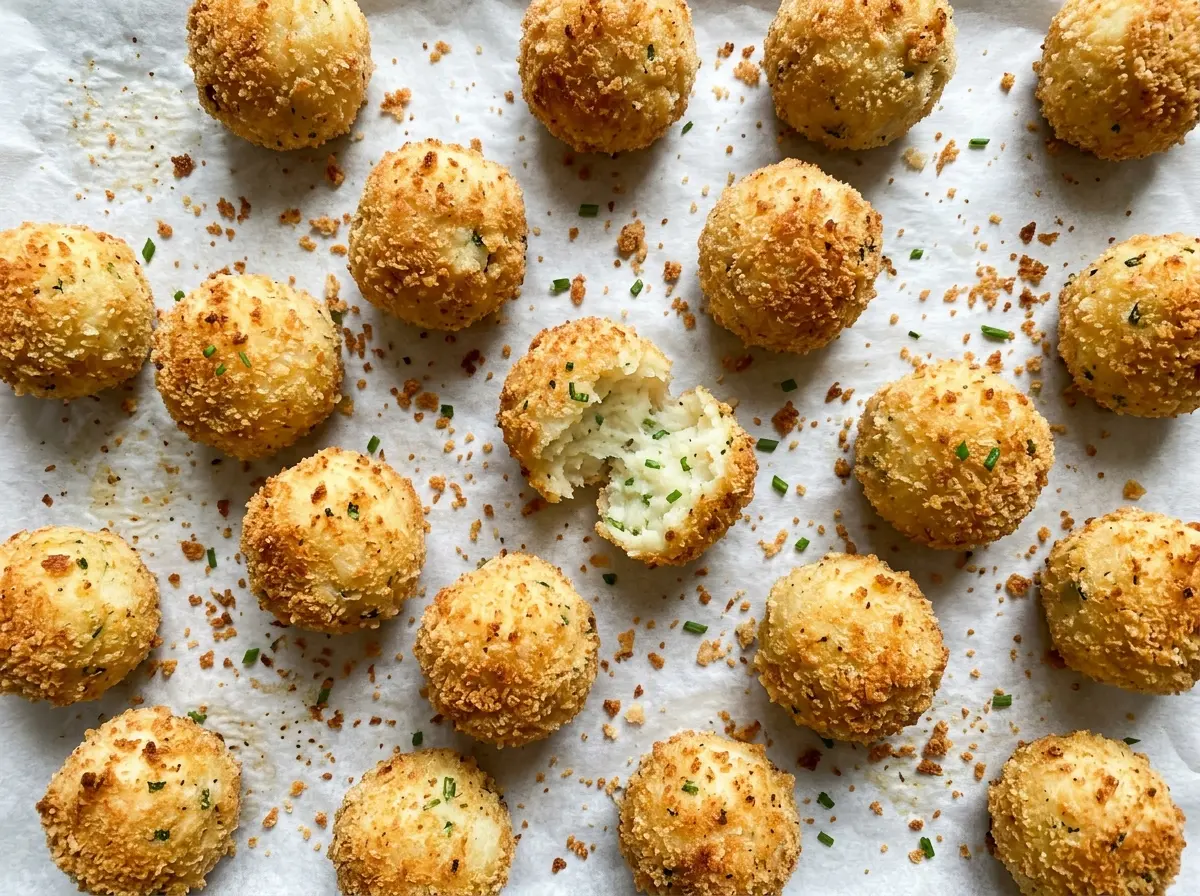
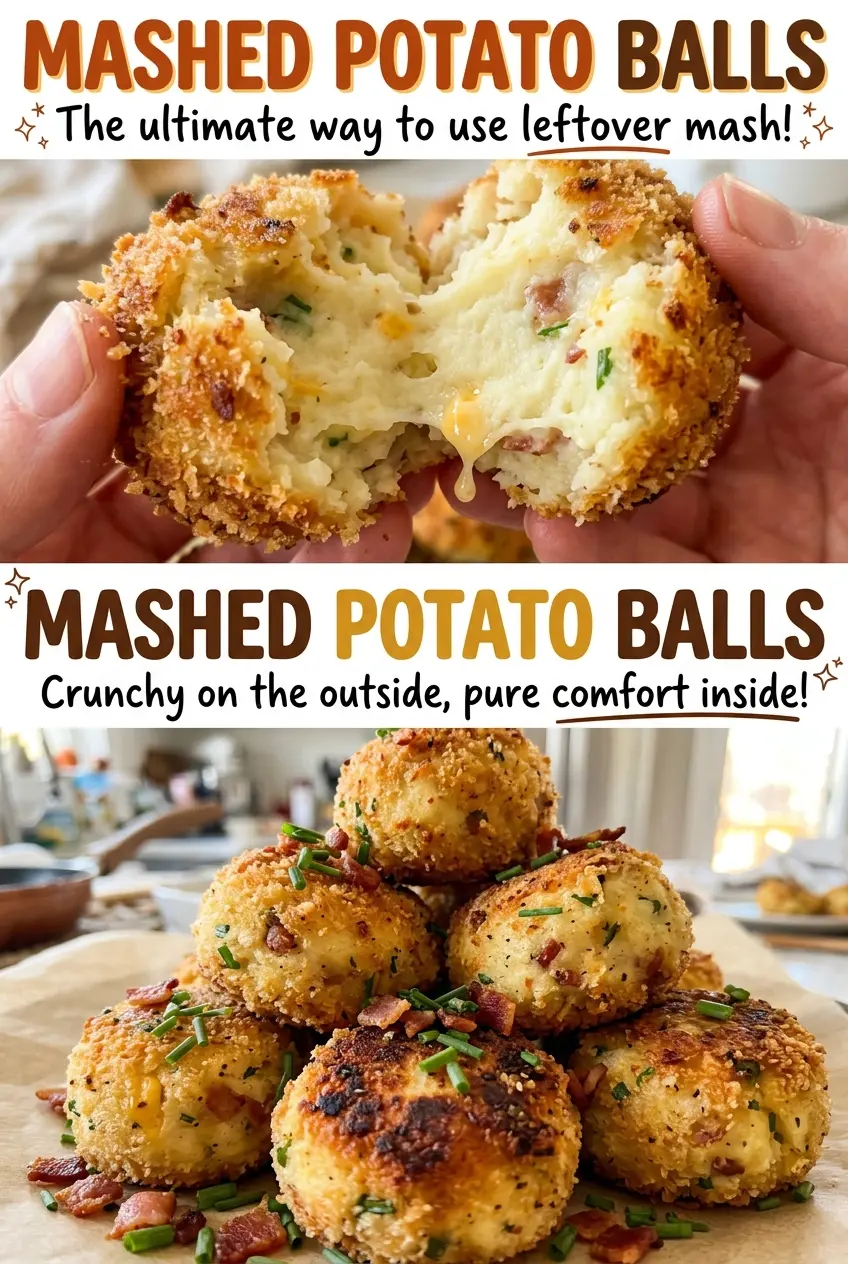
As soon as the first potato ball hits the oil, the panko should bubble steadily and start turning golden. That quick, even sizzle is what gives these mashed potato balls their crisp shell while the cheddar-filled center warms through. Cold, firm mashed potatoes make the difference before frying even begins; soft potatoes are much harder to shape and coat neatly.
I mix the potatoes with sharp cheddar, green onions, and black pepper, then shape the mixture into evenly sized balls and chill them before breading. That rest firms them up so they hold their shape through the flour, egg, and panko. Fry them in batches, and you’ll get a crunchy outside with a tender, cheesy middle.
Kitchen Note
Give the shaped potato balls the full 30 minutes in the refrigerator before breading. They should feel firm when you pick one up, which makes the coating much easier to apply without squashing the shape.
Save these mashed potato balls for their crisp panko coating and warm cheddar center—an easy way to turn cold mashed potatoes into a crunchy bite.
Why the Oil Temperature Matters More Than a Longer Fry
The potato mixture is already cooked, so frying is about crisping the panko and warming the center—not cooking a raw filling. At 350°F, the coating can brown in the 3 to 4 minutes the balls need in the oil. A deep-fry thermometer takes the guesswork out of that short window.
If the oil is too cool, the coating takes longer to turn golden and can absorb more oil before it crisps. If it’s too hot, the panko may darken before the center has a chance to warm. Crowding the Dutch oven creates another problem: adding too many balls at once pulls down the oil temperature. Fry in batches and let the oil return to about 350°F between them, watching the thermometer rather than relying on color alone.
Turn the balls occasionally so the panko browns all around. The goal is an even deep-golden shell, not a dark patch on one side and pale breadcrumbs on the other.
What Cold Potatoes and Panko Each Bring to the Coating
- Cold, firm mashed potatoes — Firm potatoes are easier to portion and shape than warm or loose mash. Leftover mashed potatoes work well when they’re plain enough to pair with cheddar and firm enough to hold a ball shape; a soft, heavily loosened mash will be more difficult to coat.
- Sharp cheddar — Sharp cheddar gives the filling a pronounced savory flavor that stands up to the potatoes. Shred it yourself for strands that mix evenly; pre-shredded cheese is convenient, though its coating can make it a little less free-flowing. For a milder taste, Monterey Jack can replace the cheddar, with a softer, less tangy cheese flavor.
- Green onions and black pepper — Thinly sliced green onions distribute through the filling without adding large pieces that make the balls harder to shape. Black pepper gives the cheese-and-potato mixture a little warmth. Slice the onions thinly so they mix in evenly.
- Flour, eggs, and panko — The flour gives the egg something to cling to, and the egg helps the panko stay attached. Panko’s larger, airy flakes make a craggy, crisp outer layer. Keep the three coatings in separate shallow bowls so each ball gets the same flour-to-egg-to-panko sequence.
- Vegetable oil — Use a neutral oil suitable for frying, and monitor its temperature with a deep-fry thermometer. The oil needs to be deep enough for the balls to fry in the Dutch oven; don’t substitute a shallow film of oil, which won’t coat them evenly as you turn them.
Shape, Coat, and Fry Without Losing the Crust
Mix a Filling That Holds Together
Stir the cold mashed potatoes with the shredded cheddar, thinly sliced green onions, and black pepper until the ingredients are evenly distributed. Break up any large clumps of potato as you mix so there aren’t pockets without cheese or seasoning. Shape the mixture into 12 balls about 1 1/2 inches wide, keeping them close in size so they fry at a similar pace. If the mixture feels too soft to shape, it needs to be colder and firmer before you continue.
Chill the Shaped Balls
Set the balls on a parchment-lined baking sheet with a little space between them. Refrigerate them for 30 minutes so the outsides firm up. That gives you a sturdier surface to roll through the breading bowls without flattening the balls. Keep them chilled until you’re ready to coat them.
Build an Even Panko Shell
Set out three shallow bowls: flour in the first, beaten eggs in the second, and panko in the third. Roll each chilled ball in flour, dip it in egg, then coat it evenly in the breadcrumbs. Let excess flour fall away before the egg, and let excess egg drip off before moving to the panko; a thick wet patch can leave the crumb coating uneven. Press the panko gently against the surface so it adheres all around.
Fry Until Deep Golden
Heat the vegetable oil in a 5-quart Dutch oven over medium heat to 350°F, checking it with a deep-fry thermometer. Add the balls in batches rather than crowding the pot, and turn them occasionally as they fry for 3 to 4 minutes per batch. Look for a deep-golden color across the surface and keep the oil near 350°F while each batch cooks. Transfer the finished balls to a wire rack and let them rest for 2 minutes before serving.
Three Practical Ways to Adapt the Potato Balls
Make a gluten-free coating
Replace the all-purpose flour with a gluten-free all-purpose flour blend and use gluten-free panko in place of regular panko. Keep the egg layer between them as usual. The outside will still turn crisp, though the crumb texture may vary a little by brand.
Use Monterey Jack for a milder center
Swap the sharp cheddar for the same amount of shredded Monterey Jack. It melts into the potatoes with a gentler flavor and less tang, while keeping the filling cheesy and soft.
Storage and Reheating
- Refrigerator: Refrigerate leftovers within 2 hours and keep them in an airtight container for 3 to 4 days. The panko softens in storage.
- Freezer: Freeze cooled, fried balls in a single layer until firm, then transfer them to an airtight freezer container for up to 2 months. The coating may lose a little crispness after freezing.
- Reheating: Reheat in a 375°F oven until hot through and crisp again. Avoid the microwave if you want to keep the panko crunchy; it tends to soften the coating.
Questions That Come Up When Making Mashed Potato Balls
Mashed Potato Balls
Ingredients
Equipment
Method
- In a medium bowl, mix the mashed potatoes, cheddar, green onions, and black pepper until evenly combined.
- Shape the mixture into 12 balls about 1 1/2 inches wide.
- Place the balls on a parchment-lined baking sheet and refrigerate for 30 minutes.
- Put the flour in a shallow bowl.
- Beat the eggs in a second shallow bowl.
- Put the panko in a third shallow bowl.
- Roll each chilled ball in flour.
- Dip each ball in the egg.
- Coat each ball evenly in panko.
- Heat the oil in a 5-quart Dutch oven over medium heat to 350°F, using a deep-fry thermometer to monitor the temperature.
- Fry the balls in batches, turning occasionally, for 3 to 4 minutes per batch until deep golden brown; keep the oil near 350°F and avoid crowding the pot.
- Transfer the balls to a wire rack to drain.
- Let the balls rest for 2 minutes before serving.