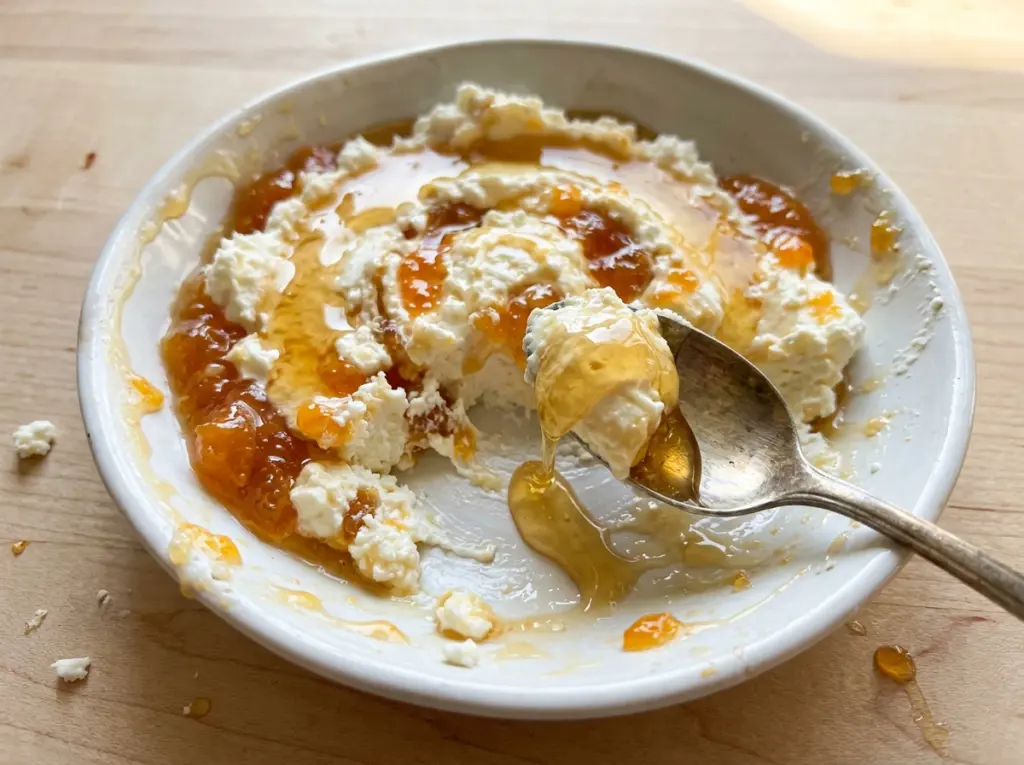
A hand mixer can turn cold goat cheese into little pebbles that cling to the beaters instead of a smooth spread. Letting both cheeses soften first is what makes this Honey Apricot Goat Cheese Spread come together cleanly, without needing extra liquid or a longer mixing session.
I beat the goat cheese and cream cheese until smooth before adding anything else. Then the finely chopped apricots, honey, lemon zest, and salt go in together, so the fruit stays distinct and every scoop gets a little sweetness and tang.
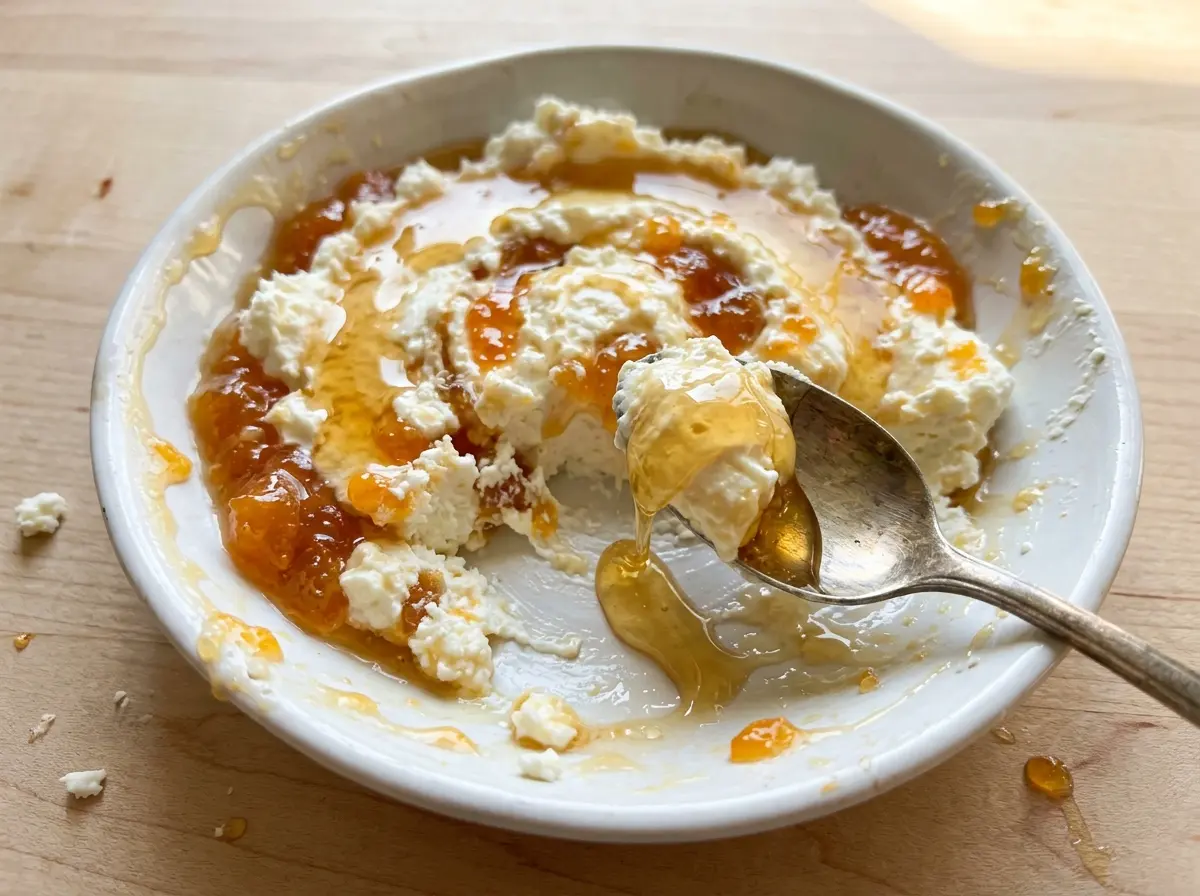
The finished spread is creamy with chewy apricot pieces, a bright lift from lemon zest, and honey that rounds out the goat cheese’s tang. It’s a simple combination, but the balance makes each bite feel complete.
Kitchen Note
Finely grate the lemon zest before you start mixing. Tiny flecks disappear into the soft cheese, while larger strips stand out against the spread’s smooth texture.
Save this Honey Apricot Goat Cheese Spread for a creamy, tangy appetizer with chewy apricot in every bite.
Why Finely Chopped Apricots Matter More Than You’d Expect
Dried apricots bring concentrated sweetness and a pleasantly chewy bite, but large pieces can take over a spoonful of this soft cheese mixture. Finely chopping them keeps the fruit present without making the spread difficult to scoop. It also helps the pieces distribute instead of gathering in one spot.
There’s a useful contrast here: the goat cheese is tangy, the cream cheese is mild, and the apricots add sweet, chewy pockets. Honey joins those flavors without turning the mixture into a fruit dip. Lemon zest and a small amount of salt keep the sweetness from feeling flat. Keep the pieces finely chopped rather than turning them to a paste; the little bits of fruit are part of the texture.
What Goat Cheese, Cream Cheese, and Dried Apricots Each Bring

- Goat cheese — This is the source of the spread’s distinct tang. A plain, fresh log gives you a clean base; strongly seasoned or flavored goat cheese would compete with the apricot and honey. Let it soften before mixing so it blends smoothly with the cream cheese.
- Cream cheese — It mellows the goat cheese and gives the mixture a familiar, spreadable body. Use the full-fat block-style kind for the texture this recipe is built around; whipped cream cheese has a different, airier consistency. It needs to soften alongside the goat cheese.
- Dried apricots — Choose pieces that are pliable rather than hard and leathery, which are more difficult to chop finely and stay chewy in the finished spread. Chop them before adding them to the bowl. Fresh fruit or apricot preserves aren’t direct replacements because their moisture changes the consistency.
- Honey — Honey adds sweetness and helps round off the cheeses’ tang. A mild everyday honey works well; a strongly flavored honey will make its own taste more prominent. There isn’t a perfect swap that keeps the same flavor and texture.
- Lemon zest — Finely grated zest gives the rich cheeses a bright citrus note without adding liquid. Lemon juice isn’t an equal substitute: it can loosen the spread and won’t provide the same fragrant lift.
- Kosher salt — A small amount sharpens the contrast between the creamy cheese, fruit, and honey. Keep it in the mixture; leaving it out makes the sweetness and tang less balanced.
Softening, Beating, and Folding Without Losing the Apricot Texture
Let Both Cheeses Soften Evenly
Set the goat cheese and cream cheese out at room temperature for 20 to 30 minutes. They should feel soft when pressed rather than firm in the center. If they’re still cold, the mixer can leave small lumps that are hard to beat out later. Give both cheeses the same time to soften so they come together at the same pace.
Beat the Cheese Base Until Smooth
Put the softened cheeses in a medium bowl and beat them with a hand mixer for about 1 to 2 minutes. Watch for a smooth, even mixture with no visible streaks of either cheese. Stop once it reaches that texture; the goal at this stage is a uniform base, not a fluffy whipped cheese. Adding the apricots before the base is smooth makes it harder to judge whether the cheeses are fully blended.
Mix in the Fruit, Honey, Zest, and Salt
Add the chopped apricots, honey, lemon zest, and kosher salt to the cheese mixture. Mix until the apricots are distributed throughout and no pocket of honey or salt remains in one area. The finished spread should look creamy with small, visible fruit pieces. If you’re changing the texture with one of the options below, keep the full mixture evenly combined.
Two Small Changes That Shift the Spread’s Texture and Sweetness
Keep the Apricot Pieces More Noticeable
For a fruitier, more textured bite, keep the apricots finely chopped but toward the larger end of that range. Fold them into the smooth cheese base with the other additions rather than running the mixer over the fruit. The spread stays creamy, with more distinct chewy pieces in each scoop.
Let Some Honey Show on Top
For a more noticeable honey finish, mix most of the honey into the cheese and reserve the rest from the recipe’s measured amount to drizzle over the top just before serving. That gives the first taste a little extra sweetness while keeping the inside balanced. The total honey stays the same.
Keeping and Serving the Spread
- Refrigerator: Store covered for 3 to 4 days. The spread firms up as it chills.
- Freezer: Freezing isn’t recommended; soft cheeses can turn grainy or release moisture after thawing.
- Serving: Keep it chilled until serving, then let it soften briefly if you want an easier-to-spread texture. Don’t microwave it, since the cheese can soften unevenly.
Questions That Come Up Before Mixing This Apricot Spread
Honey Apricot Goat Cheese Spread
Ingredients
Equipment
Method
- Let the goat cheese and cream cheese sit at room temperature for 20 to 30 minutes, until soft.
- In a medium bowl, beat the goat cheese and cream cheese with a hand mixer until smooth, about 1 to 2 minutes.
- Add the apricots, honey, lemon zest, and salt; mix until evenly combined.