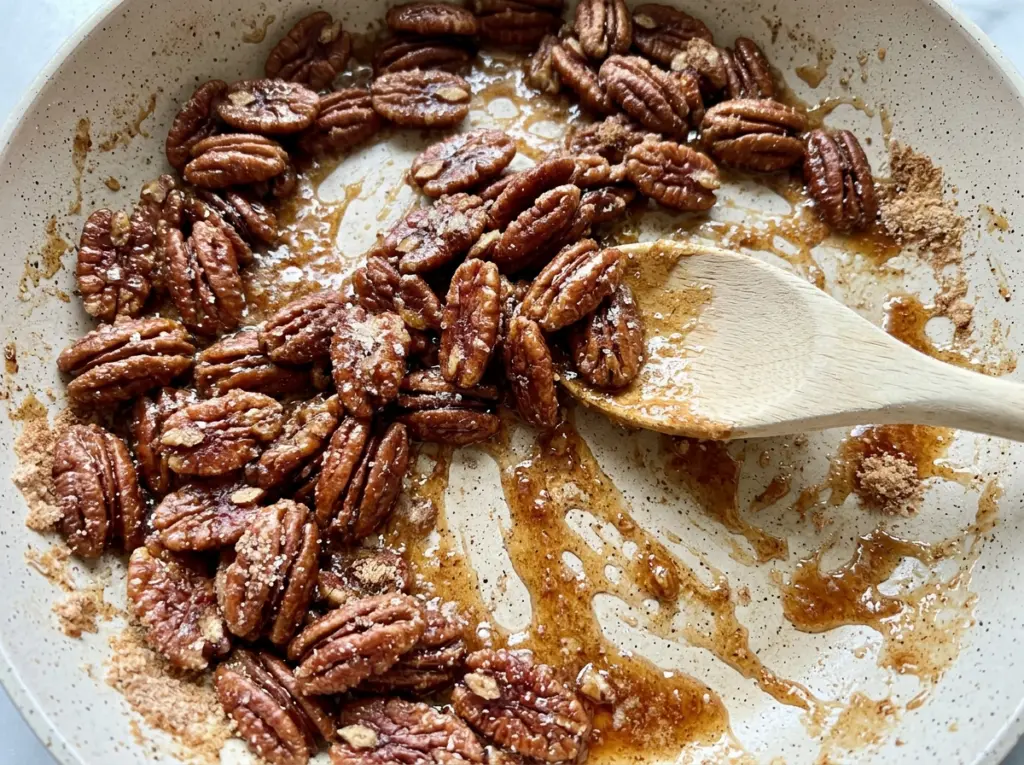
A bowl of pecans can look evenly coated and still come out of the oven with bare spots beside thick, sugary clumps. The difference is how the coating clings before baking. For these easy candied pecans, I whisk egg white and water until foamy, then toss the nuts in that light binder before adding the cinnamon sugar.
This oven method gives the pecans a dry, crisp shell instead of a sticky glaze. The low heat gives the coating time to dry without rushing the nuts, and a stir every 15 minutes keeps the pieces from sitting in one spot. It’s a small bit of hands-on work, but the bowl comes together quickly.
Once they’ve cooled, the pecans are crisp enough to snack on by the handful, with a thin cinnamon-sugar coating that doesn’t bury their buttery flavor.
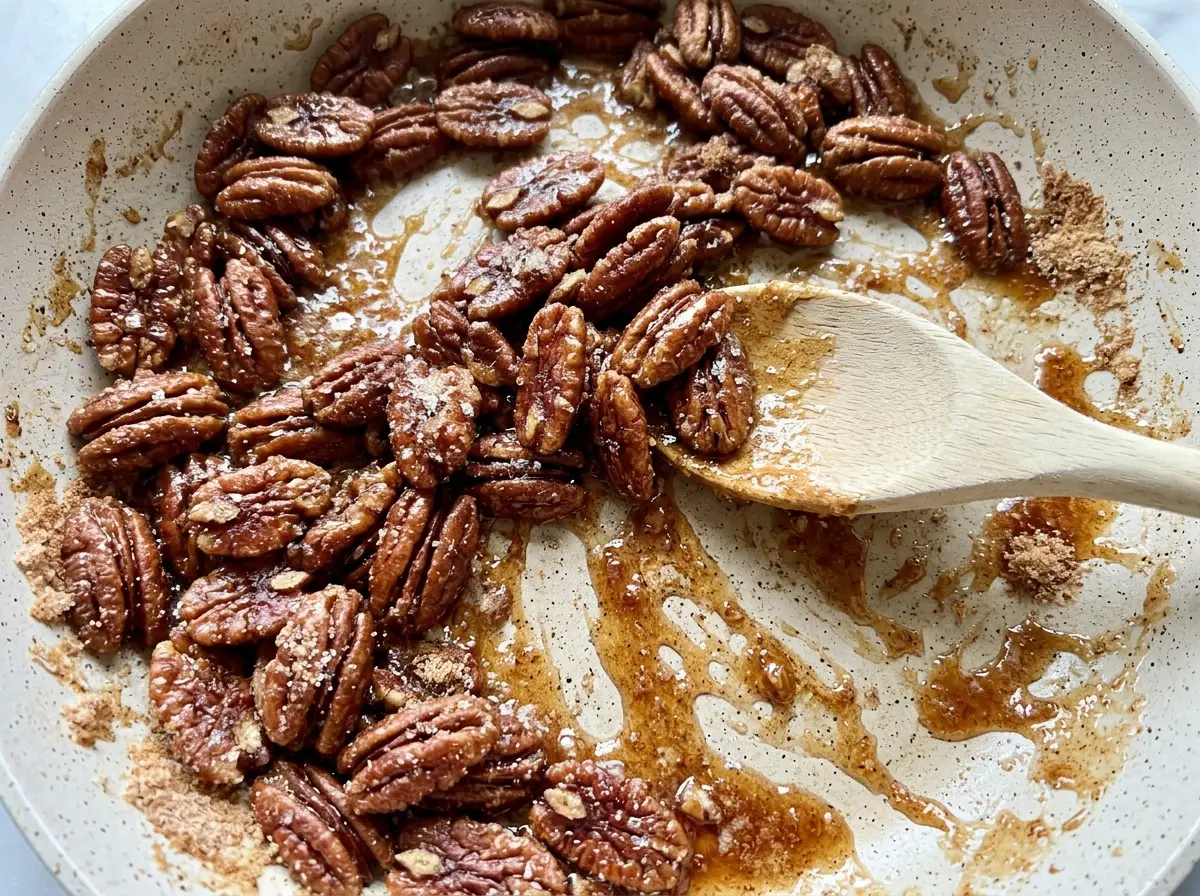
Kitchen Note
Let the pecans cool completely on the baking sheet before judging their texture. They can still feel a little soft when they first come out, but they turn crisp as they cool.
Save these Easy Candied Pecans for a snack with a crisp cinnamon-sugar shell and buttery pecan crunch.
Why These Pecans Get a Dry Cinnamon Shell Instead of a Candy Glaze
These pecans aren’t coated by cooking sugar into a syrup. The egg white and water make a thin, foamy layer that gives the sugar and cinnamon something to cling to, while the oven dries that coating around each nut. That’s why the finished surface is crisp and fine rather than shiny or sticky.
The texture depends on keeping that binder light and distributing it evenly. If the egg white is still clear and runny, the pecans can end up unevenly coated; whisk until it looks foamy before adding the nuts. Then toss until every pecan has a light sheen, not a puddle of egg white in the bottom of the bowl. The sugar mixture goes on afterward, so it adheres to the coated nuts instead of falling straight through.
Keeping the pecans in a single layer gives the coating room to dry on all sides. Crowding them together traps moisture between the nuts, and those touching spots are the ones most likely to stay tacky. A rimmed sheet holds the pieces in place when you stir without making it hard to spread them out again.
What the Egg White, Pecans, and Cinnamon Each Bring to the Coating

- Egg white and water — The egg white provides the light binder that holds the dry coating in place; water helps it whisk into a foamy mixture. A large egg white gives you the right amount to coat the pecans without leaving them swimming in binder. For an egg-free version, use unsalted aquafaba as described below.
- Pecan halves — Fresh pecans taste buttery and sweet, which is what makes this simple coating work so well. Check that the halves smell pleasantly nutty rather than stale or oily. Walnut halves are the closest straightforward nut swap; they’ll taste earthier and a little less buttery, but the coating method stays the same.
- Granulated sugar — Its dry, free-flowing crystals are easy to mix evenly with the cinnamon and salt. Brown sugar holds more moisture and tends to clump, so it won’t give you the same dry coating. Standard granulated sugar is the right choice here; there’s no need for a specialty sugar.
- Ground cinnamon — Fresh, fragrant ground cinnamon makes the coating taste warm rather than dusty. Use the ground spice directly in the sugar mixture so it distributes across the pecans; cinnamon sticks won’t work for this coating.
Coating and Drying the Pecans Without Sticky Patches
Whisk the Binder Until Foamy
Heat the oven to 250°F and line a 13×18-inch rimmed baking sheet with parchment paper. In a large bowl, whisk the egg white and water until foamy, then add the pecans and toss to coat. The nuts should look lightly sheened, without a pool of liquid collecting underneath. If the mixture still looks clear and loose, keep whisking before adding the pecans.
Mix the Cinnamon Sugar Separately
Stir the granulated sugar, ground cinnamon, and kosher salt together in a small bowl before they go near the pecans. This spreads the cinnamon through the sugar, so one area of the batch doesn’t get a heavy dusting while another tastes plain. Sprinkle the mixture over the coated nuts, then toss until you can’t see dry pockets of sugar sitting in the bowl. Use a steady tossing motion rather than crushing the halves.
Spread the Nuts Out Before Baking
Tip the coated pecans onto the prepared baking sheet and spread them into a single layer. Separate any pieces that have stuck together so the coating can dry around each one. Bake for 45 to 60 minutes, stirring every 15 minutes. After each stir, spread the nuts back out rather than leaving them piled in the middle.
Cool Until the Coating Turns Crisp
Look for a dry coating on the pecans before taking the sheet out of the oven; the exact point can vary within the 45-to-60-minute range. Move the baking sheet out and let the pecans cool completely on it, about 20 minutes. They won’t have their final crisp texture while they’re hot, so give them that cooling time before serving or packing them away. Once cool, the shell should feel dry rather than tacky.
Three Easy Ways to Change the Pecans Without Losing Their Crunch
Make Them Egg-Free with Aquafaba
Replace the egg white with 2 tablespoons of unsalted aquafaba, the liquid from a can of chickpeas. Whisk it with the water until foamy, then coat and bake the pecans the same way. The coating may be a little less rich, but it still gives the sugar a binder and keeps the batch vegan.
Add a Gentle Peppery Warmth
Stir a pinch of cayenne into the sugar, cinnamon, and salt before coating the pecans. It brings a mild heat at the finish without taking over the cinnamon. Keep the cayenne in the dry mixture so it spreads evenly instead of landing in one hot spot.
Turn the Halves into Smaller Snack Pieces
Roughly chop the pecan halves before coating them for smaller, easy-to-grab pieces. They’ll have more coated edges and a slightly crunchier feel, so check the coating as the bake approaches 45 minutes and remove the pan once it’s dry. Stir gently to keep the smaller pieces from breaking further.
Storage and Reheating
- Refrigerator: Store completely cooled pecans in an airtight container for up to 2 weeks. Humidity in the refrigerator can soften the coating, so room-temperature storage is better for keeping them crisp.
- Freezer: Freeze in an airtight container for up to 2 months. Thaw the container at room temperature before opening it to help keep condensation off the coating.
- Reheating: These are best served at room temperature and don’t need reheating. Avoid sealing them while warm; trapped steam softens the coating.
Questions That Come Up When Making Candied Pecans
Easy Candied Pecans
Ingredients
Equipment
Method
- Heat the oven to 250°F.
- Line a 13x18-inch rimmed baking sheet with parchment paper.
- Whisk the egg white and water in a large bowl until foamy.
- Add the pecans and toss to coat.
- Stir the sugar, cinnamon, and salt together in a small bowl.
- Sprinkle the sugar mixture over the pecans.
- Toss the pecans until evenly coated.
- Spread the pecans in a single layer on the prepared baking sheet.
- Bake for 45 to 60 minutes, stirring every 15 minutes, until the coating is dry.
- Cool the pecans completely on the baking sheet, about 20 minutes, until crisp.