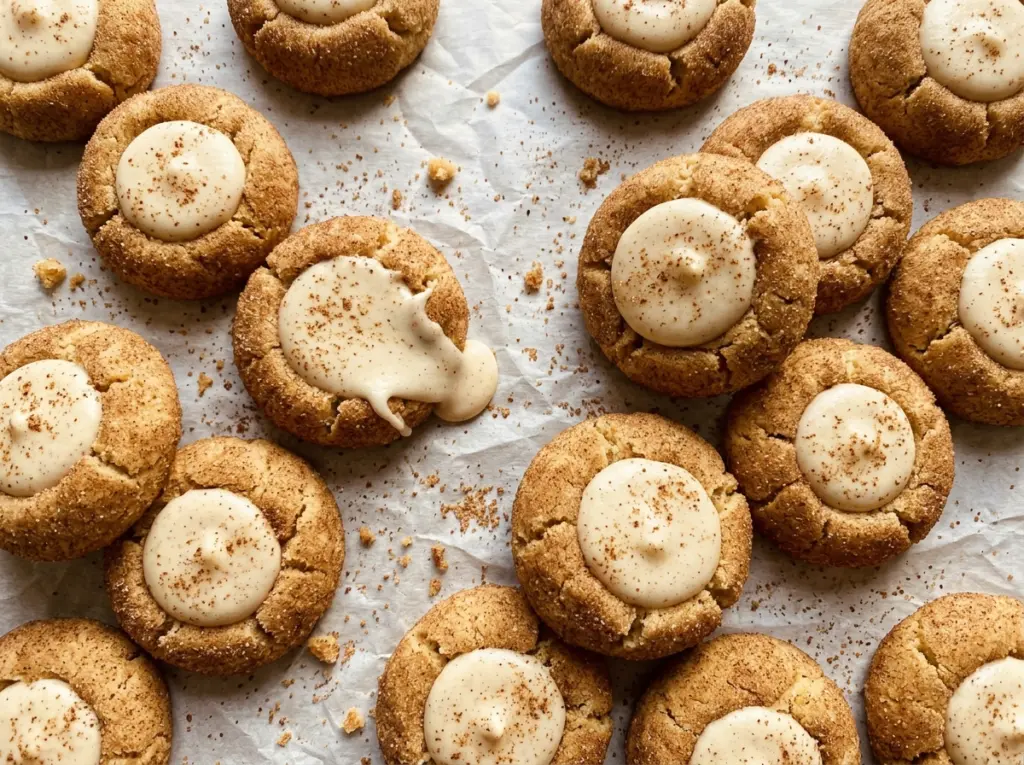
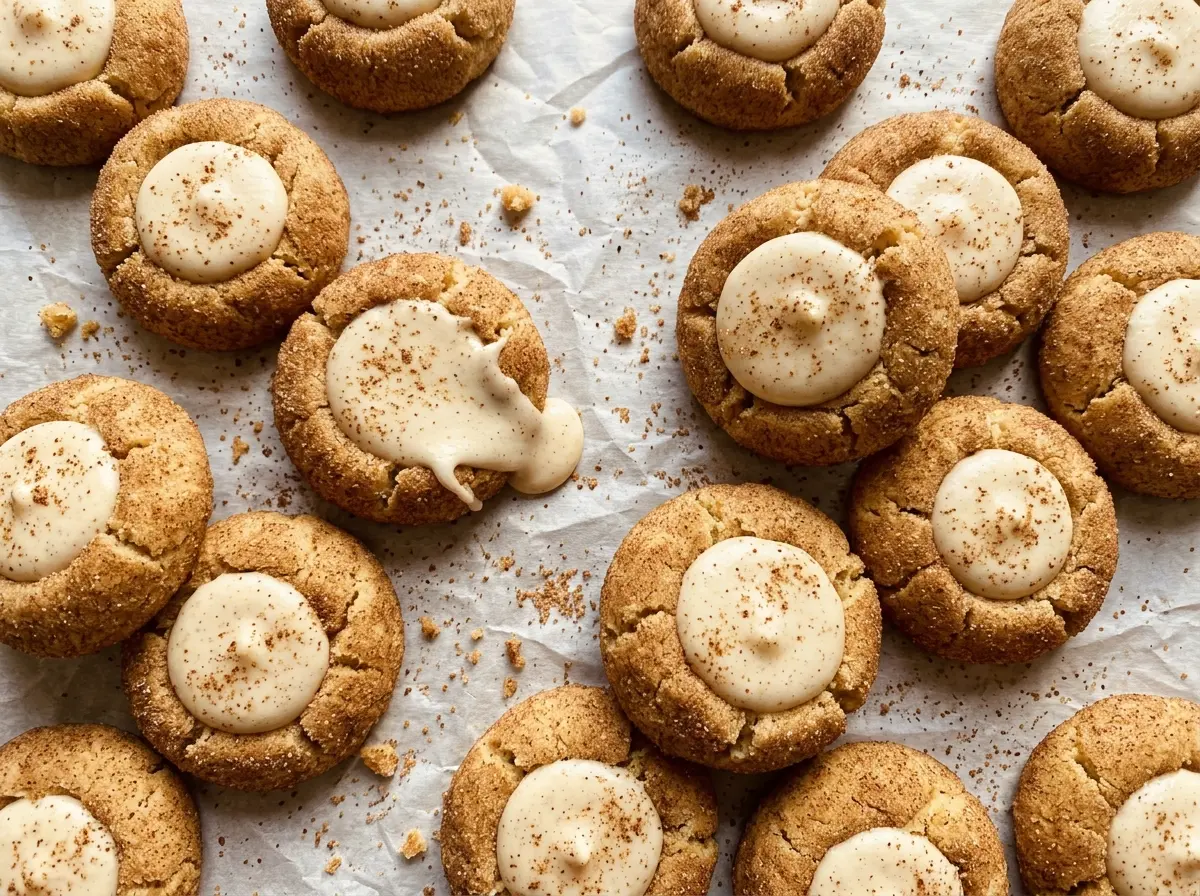
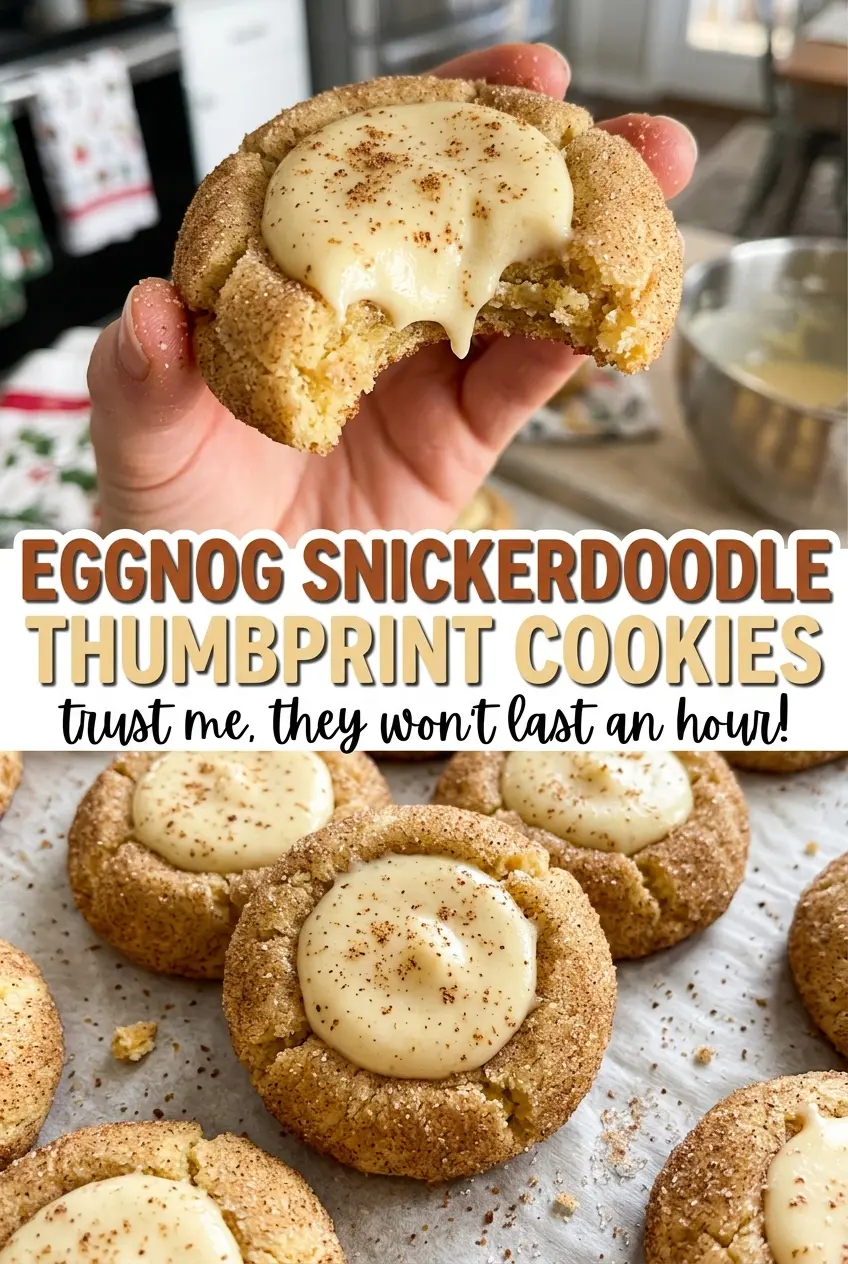
The cinnamon sugar leaves a fine crackle on the outside, while each thumbprint stays tender enough to give way under a spoonful of eggnog filling. When I tested these, I paid close attention to the wells: a shallow dip doesn’t leave much room for filling, and a puffed center is easy to press back into shape while the cookies are still warm. These eggnog snickerdoodle thumbprint cookies keep the familiar cinnamon-cookie base and put nutmeg and eggnog right in the middle, so each bite has a clear buttery-cookie-to-creamy-center contrast.
The dough comes together like a classic snickerdoodle dough, but the egg yolk keeps the texture rich without adding the extra moisture of a whole egg. A short chill makes the portions easier to roll, and the thick powdered-sugar filling stays nestled in the cooled cookies after its time in the refrigerator. You’ll get 24 cookies with crisp, cinnamon-sugar edges and a smooth eggnog center.
Kitchen Note
Give the dough its full 30 minutes in the refrigerator. It’ll be easier to portion and roll through the cinnamon sugar without smearing soft butter onto your hands.
Save these eggnog snickerdoodle thumbprints for a cookie plate with cinnamon-sugar edges and a creamy, nutmeg-scented center.
Cream of Tartar Keeps the Snickerdoodle Flavor in the Picture
The eggnog center brings its own warm spice and sweetness, so the cookie underneath needs enough character to hold its own. Cream of tartar gives a snickerdoodle its familiar slight tang; without it, the cinnamon-sugar coating would read more like a plain sugar cookie. It also reacts with the baking soda, helping the dough rise as it bakes.
That balance matters in a thumbprint. The cookie should be sturdy enough to hold a little well and a spoonful of filling, but not dry or hard once it cools. Cream of tartar helps build that soft, tender bite while keeping the flavor recognizably snickerdoodle. It isn’t just a spare leavener to leave out because the dough already has baking soda.
The filling is sweet and gently spiced, rather than strongly flavored like a drink. That makes the tang in the cookie a useful contrast: the center tastes distinctly of eggnog, while the cinnamon coating and cookie base keep each bite from being one-note. If you’re choosing one ingredient not to skip, keep the cream of tartar in the dough.
What Gives the Cookie Its Tender Bite—and the Filling Its Eggnog Flavor
- Unsalted butter — It gives the dough its rich, tender texture, and softened butter creams smoothly with the sugar. Standard grocery-store butter works well; it doesn’t need to be a specialty brand. Keep it soft enough to beat, not melted, or the dough will be too slack to shape neatly.
- Egg yolk — The yolk binds the dough and adds richness without the extra moisture of an egg white. A whole egg isn’t an even swap here; it changes the dough’s balance and can make the cookies puffier and more cake-like.
- All-purpose flour — It gives the cookies enough structure to keep their wells. Cake flour makes a more delicate cookie, while bread flour can turn the bite tougher, so all-purpose is the dependable choice.
- Eggnog and powdered sugar — Together they make a thick, smooth filling that carries the eggnog flavor. Use eggnog you enjoy drinking; powdered sugar matters for the filling’s smooth texture, while granulated sugar would leave it gritty.
- Cinnamon and nutmeg — The cinnamon gives the outside its classic snickerdoodle aroma, and nutmeg brings the eggnog note into the center. Ground spices from a fresh jar are fine; stale spices will taste muted in such a simple coating and filling.
From Soft Dough to a Neat Eggnog-Filled Center
Cream the Butter, Then Stop Mixing When the Flour Disappears
Heat the oven to 350°F and line two rimmed baking sheets with parchment paper. Beat the softened butter with the dough sugar on medium speed for about 2 minutes, until the mixture looks light and fluffy, then beat in the egg yolk and vanilla. Whisk the flour, cream of tartar, baking soda, and salt separately before adding them on low speed. Stop as soon as no dry flour remains; mixing beyond that point can make the cookies less tender.
Chill Before You Portion
Cover the dough and refrigerate it for 30 minutes. While it chills, stir the remaining granulated sugar with the cinnamon in a shallow bowl. After chilling, the dough should be firm enough to portion without collapsing, but still easy to roll between your palms. If it feels sticky, give it the full chill rather than adding extra flour, which can make the baked cookies dry.
Coat, Press, and Bake Until the Edges Set
Roll tablespoon-size portions into balls and turn each one in the cinnamon sugar until coated. Arrange them about 2 inches apart on the prepared sheets, then press a deep well into the center of each ball with your thumb. Bake for 10–12 minutes, swapping the sheets’ positions and rotating them halfway through. Look for set edges and lightly golden bottoms; the cookies shouldn’t need to brown across the top.
Cool Completely Before Filling
Let the cookies cool on the baking sheets for 5 minutes. If any wells have puffed up, gently press them again, then transfer the cookies to a wire rack to cool completely. Whisk the powdered sugar, eggnog, and nutmeg until the filling is smooth and thick, and spoon about 1 teaspoon into each cooled well. Refrigerate the filled cookies for 30 minutes so the centers set before serving.
Small Changes for a Different Spice Balance or a Dairy-Free Batch
A Lighter Cinnamon-Sugar Coating
Leave the cinnamon out of the coating and roll the dough balls in the granulated sugar on its own. The outside will be less warmly spiced, and the eggnog-nutmeg filling will stand out more clearly.
A Dairy-Free Adaptation
Use dairy-free baking sticks in place of the butter and dairy-free eggnog in the filling, keeping the same measured quantities. Choose firm sticks rather than soft tub spread, which can make the dough too loose to roll. This adaptation still contains egg yolk, so it isn’t egg-free.
Put the Nutmeg on the Outside
For a more aromatic first bite, stir the recipe’s nutmeg into the cinnamon-sugar coating and leave it out of the filling. The cookie will smell spicier as you bite in, while the center keeps a cleaner eggnog taste.
Storage and Reheating
- Refrigerator: Store the filled cookies covered in the refrigerator for up to 3 days. The cookie softens a little as it sits beside the filling.
- Freezer: I don’t recommend freezing the filled cookies; the eggnog centers may weep as they thaw and soften the cinnamon-sugar coating.
- Reheating: These cookies are best without reheating. Serve chilled, or let them sit at room temperature briefly if you prefer a less-cold center.
Questions That Come Up While Baking These Thumbprints
Eggnog Snickerdoodle Thumbprint Cookies
Ingredients
Equipment
Method
- Heat the oven to 350°F.
- Line two rimmed baking sheets with parchment paper.
- Beat the butter and 2/3 cup of the granulated sugar in a large bowl with an electric mixer on medium speed until light and fluffy, about 2 minutes.
- Beat in the egg yolk and vanilla until combined.
- Whisk the flour, cream of tartar, baking soda, and salt in a medium bowl.
- Mix the dry ingredients into the butter mixture on low speed just until no dry flour remains.
- Cover and refrigerate the dough for 30 minutes.
- Stir the remaining 1/4 cup granulated sugar and the cinnamon in a shallow bowl.
- Roll tablespoon-size portions of dough into balls, coat them in the cinnamon sugar, and arrange them about 2 inches apart on the prepared sheets.
- Press a thumb into the center of each ball to make a deep well.
- Bake for 10–12 minutes, swapping the sheets’ positions and rotating them halfway through, until the edges are set and the bottoms are lightly golden.
- Cool the cookies on the sheets for 5 minutes.
- Gently press the wells again if they have puffed up.
- Transfer the cookies to a wire rack to cool completely.
- Whisk the powdered sugar, eggnog, and nutmeg in a bowl until smooth and thick.
- Spoon about 1 teaspoon into each cooled cookie’s well.
- Refrigerate the filled cookies for 30 minutes, until the filling is set.
- Store leftovers covered in the refrigerator.