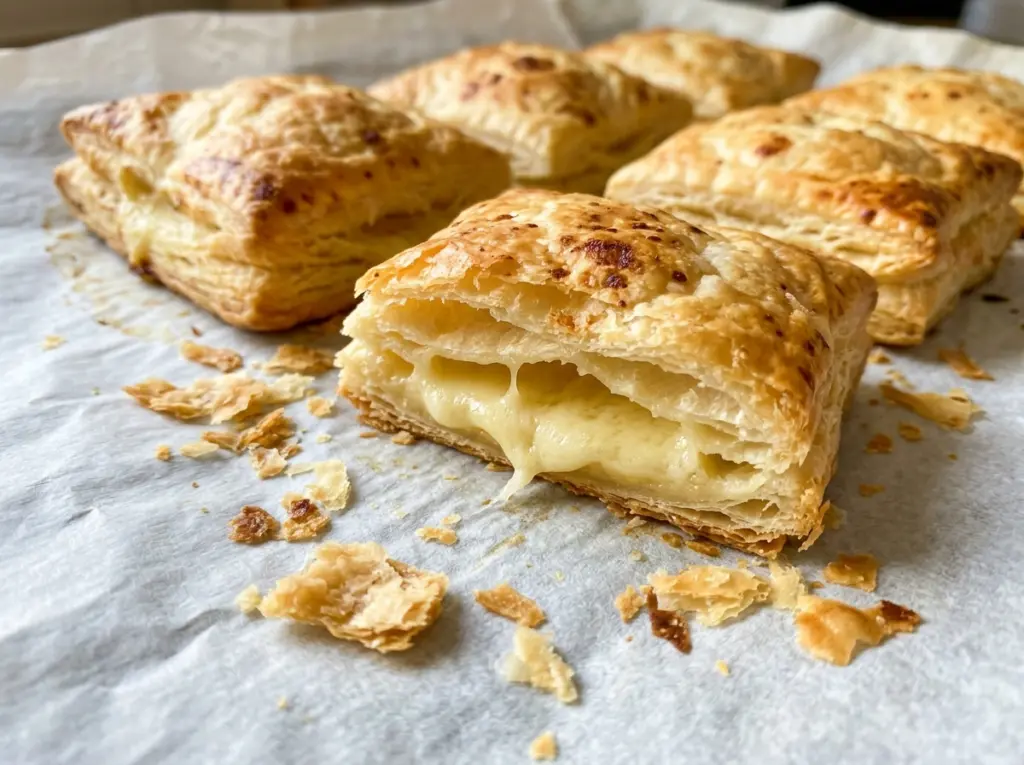
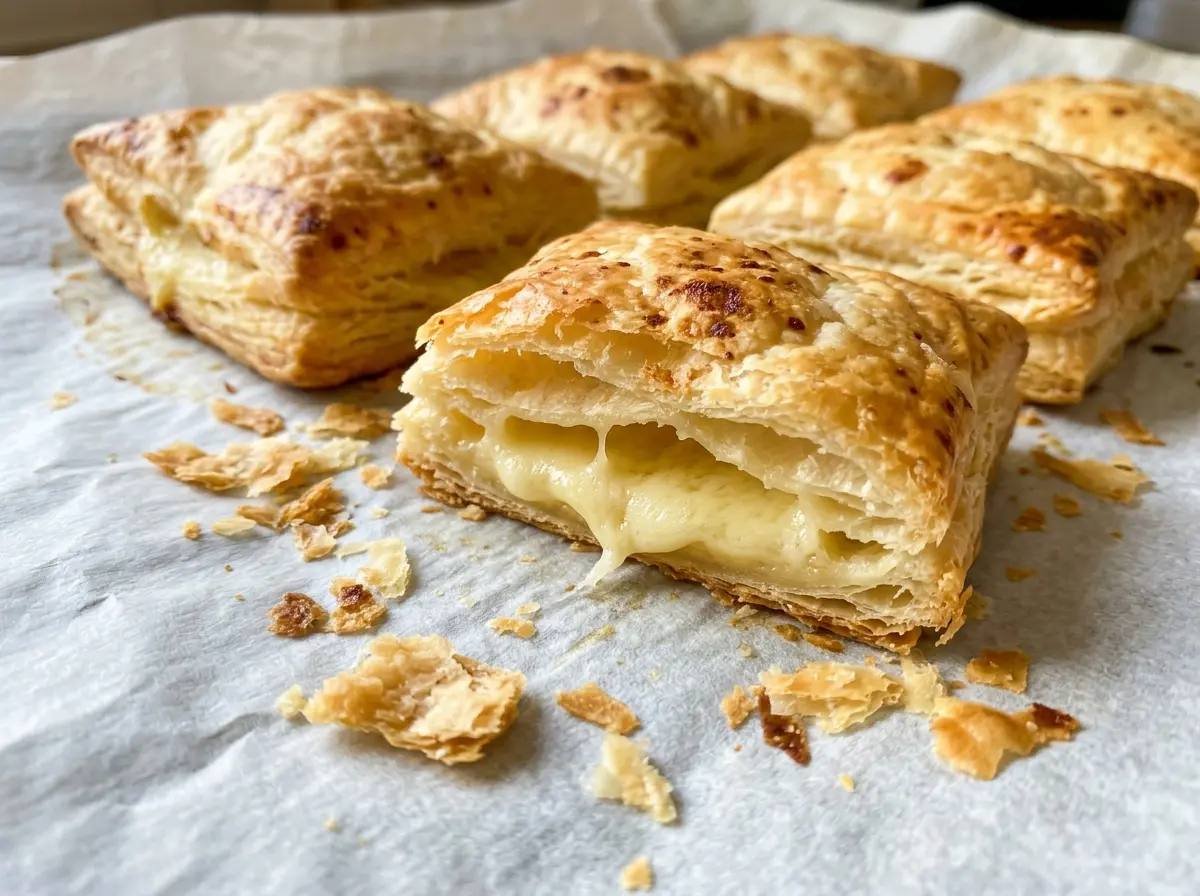
The pastry edges lift first, turning into a little frame around the melted cheese, while the centers stay flatter and crisp. I like that contrast in these Cheese Puff Squares: each bite has a flaky rim and a savory middle without needing a separate filling or sauce. The first time I made them, I pressed the fork too hard and the squares barely puffed in the center; a light touch gives the pastry room to do its job.
Sharp cheddar brings the familiar cheesy pull, and a little Parmesan makes the mixture taste more rounded without taking over. I keep the pastry squares even, score a border without cutting through, then prick only the centers. That small difference in where the pastry is scored and docked gives every piece its own raised edge, with melted cheese tucked inside. They come out golden, crisp at the corners, and easy to pick up while still warm.
Kitchen Note
Keep the puff pastry thawed but cold while you work. If it gets soft and floppy, the squares are harder to handle neatly, so work promptly and let the chilled dough keep its shape.
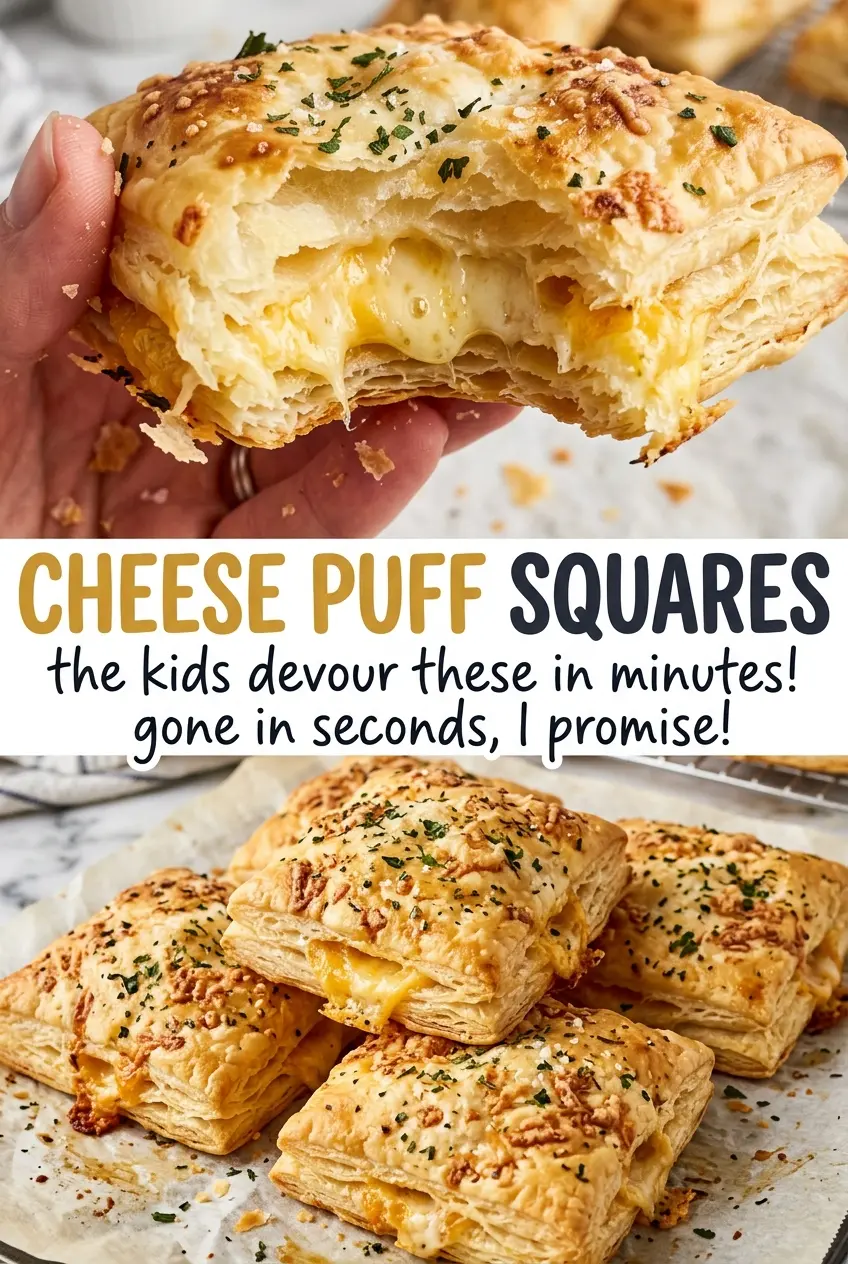
Save these Cheese Puff Squares for an easy savory bite with flaky pastry edges and a sharp cheddar-Parmesan center.
Why the Scored Border Makes a Better Cheese Puff
Puff pastry rises because its thin layers separate as the moisture inside turns to steam. The border and fork pricks give that lift somewhere to go: the scored outer strip can climb, while the docked center stays more contained beneath the cheese. Cut all the way through the border, though, and you lose the connected strip that forms the raised rim.
Think of the score as a shallow guide, not a cut. Use the tip of a knife to mark a half-inch frame, pressing only enough to see the line. Then prick the center with a fork so it doesn’t balloon up under the topping. Keep the cheese inside that frame; cheese on the outer edge can melt onto the parchment instead of staying on the pastry.
That little bit of restraint is what makes the squares look finished without adding another component. You’ll see a defined golden edge around a cheesy middle, and each piece will be sturdy enough to lift from the baking sheet after its brief cooling rest.
What the Cheddar, Parmesan, and Egg Wash Each Bring
- Puff pastry — The laminated layers are what give these bites their rise and crisp edges. Use a sheet that has thawed enough to unfold but is still cold to the touch; warm, slack pastry is more likely to stretch when you cut it. The sheet’s size and thickness also determine how evenly the 16 portions bake.
- Sharp cheddar — Its assertive flavor holds its own against the pastry. Shred it evenly so you can divide it among the centers without leaving a few squares overloaded. A milder cheddar will still melt, but the finished bites won’t have the same sharpness.
- Parmesan and black pepper — Parmesan adds a concentrated savory note alongside the cheddar, and pepper gives the cheese mixture a gentle bite. Stir them through the cheddar before topping the pastry, which helps keep the pepper from landing in just a few bites. I keep both cheeses in the blend rather than swapping one for the other; they contribute different kinds of savoriness.
- Egg and water — Beating these together makes a brushable wash for the pastry borders. The wash helps those exposed edges brown, while keeping it off the cheese avoids a shiny egg coating over the topping. Brush lightly rather than letting it pool along the sides.
Cutting, Topping, and Baking the Squares Evenly
Heat the oven and combine the cheese
Set the oven to 400°F and line a large baking sheet with parchment paper. Stir the cheddar, Parmesan, and black pepper together in a small bowl until the pepper looks distributed throughout. Mixing the topping first makes it easier to give every square a similar amount of both cheeses. Keep the bowl nearby once the pastry is cut so the centers can be filled without fuss.
Make even squares and mark the frame
Cut the sheet of puff pastry into 16 equal squares and arrange them on the lined baking sheet. Lightly score a half-inch border on each one, stopping before the knife goes all the way through. Prick the center of each square with a fork, keeping the holes inside the scored frame. If a corner lifts or stretches during cutting, gently reshape it before topping so the pieces bake more evenly.
Brush the edges and divide the topping
Beat the egg with the water, then brush the pastry borders with a thin coat. Keep the wash on the exposed pastry rather than flooding the scored line or the center. Divide the cheese mixture among the centers, spreading it within the border instead of piling it high in one spot. A fairly even layer melts into the pastry without weighing down one square more than its neighbors.
Bake until the pastry is golden
Bake for 15 to 18 minutes, until the pastry is puffed and golden and the cheese has melted. The color at the edges is a useful cue: pale pastry needs more time, while a deep golden rim signals that the layers have baked through. Let the squares cool on the baking sheet for 5 minutes before serving. The brief rest gives the melted topping a chance to settle and makes the pastry easier to lift.
Two Shapes to Try With the Same Cheddar-Pastry Base
Slim rectangular party bites
For a narrower look, cut the pastry into 16 equal rectangles instead of squares and keep the cheese divided evenly among them. Follow the same border-and-center pattern, tracing a half-inch frame inside each rectangle and docking its middle. Because the proportions differ, watch the pastry’s puff and golden color as it bakes rather than relying only on appearance at the corners.
Small triangular cheese puffs
Cut the pastry into eight equal squares, then halve each square diagonally to make 16 triangles. Divide the same cheese mixture among the centers, score a narrow border that follows each triangle’s shape, and prick the middle without cutting through. The points brown quickly, so use the same golden-pastry cue and keep an eye on them near the end of baking.
Storage and Reheating
- Refrigerator: Refrigerate leftovers within 2 hours and eat within 3 days. The pastry softens as it sits, even when the cheese stays flavorful.
- Freezer: Freeze fully cooled baked squares in an airtight container for up to 1 month. The pastry may lose some crispness after thawing.
- Reheating: Warm them in the oven until the pastry is hot and crisp again. Skip the microwave if you want to keep the layers flaky; it softens the pastry.
Questions That Come Up With Cheese Puff Squares
Cheese Puff Squares
Ingredients
Equipment
Method
- Heat the oven to 400°F.
- Line a large baking sheet with parchment paper.
- Stir together the cheddar, Parmesan, and black pepper in a small bowl.
- Cut the puff pastry into 16 equal squares.
- Arrange the squares on the prepared baking sheet.
- Lightly score a 1/2-inch border on each square without cutting all the way through.
- Prick the centers with a fork.
- Beat the egg with the water.
- Brush the pastry borders with the egg mixture.
- Divide the cheese mixture among the centers.
- Bake for 15 to 18 minutes, until the pastry is puffed and golden and the cheese is melted.
- Cool on the baking sheet for 5 minutes before serving.