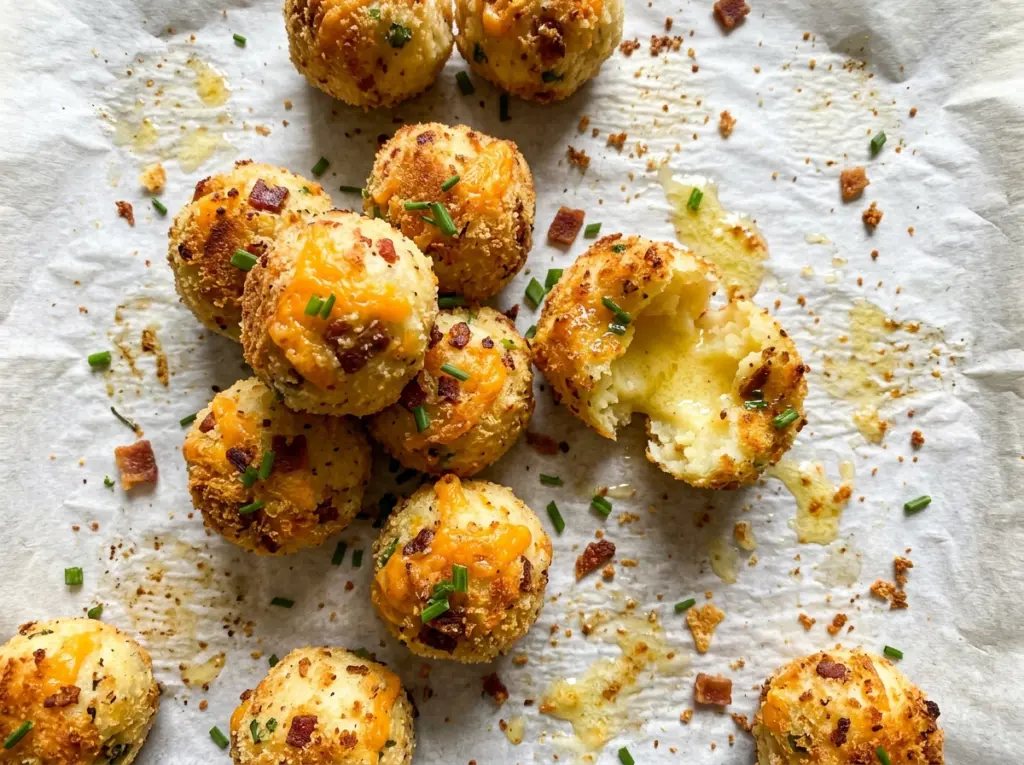
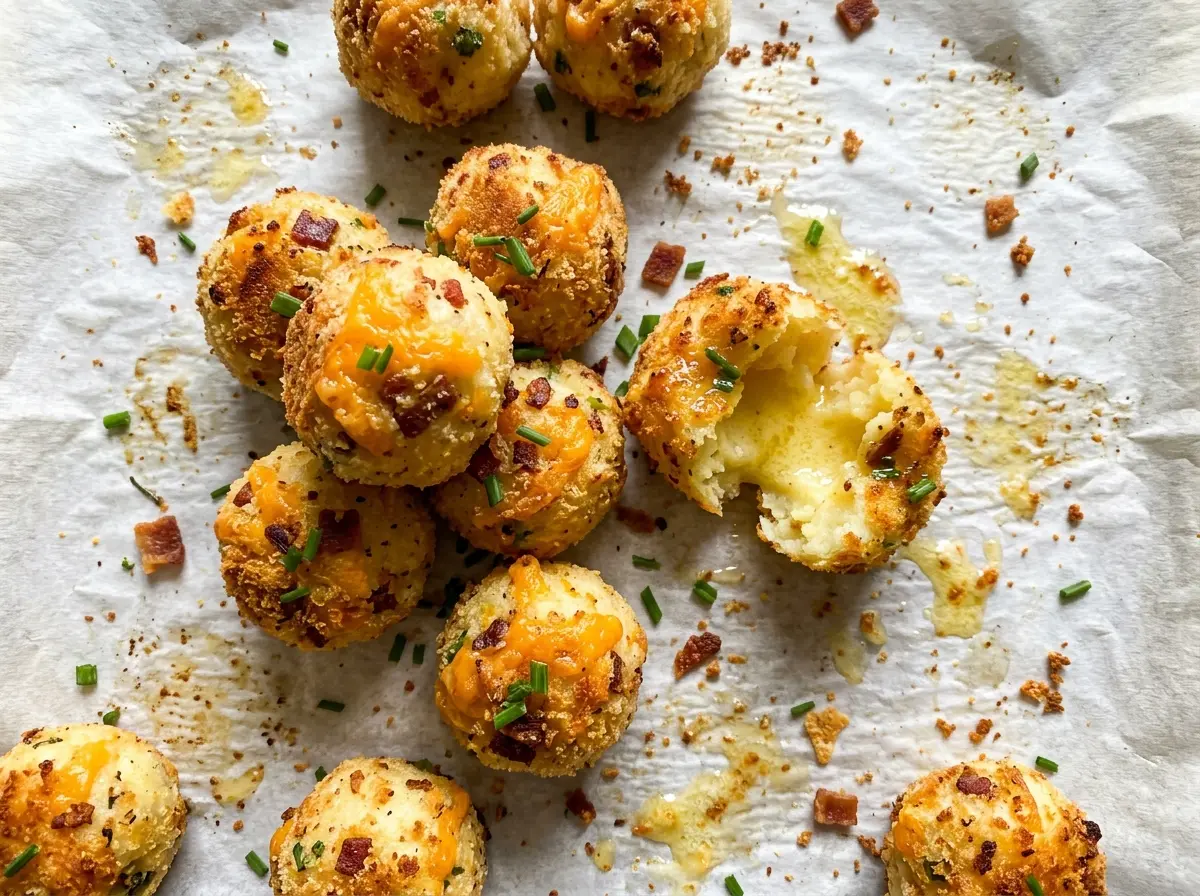
The first time you lift one of these from the baking sheet, the outside should feel crisp while the middle stays soft enough to give way to a little pocket of butter. I like that contrast in these Twice Baked Potato Butter Balls: they have the familiar bacon-and-cheddar potato filling, but every bite gets a crunchy panko shell.
The part that takes a little patience is letting the potato mixture chill before you shape it. Warm mashed potatoes are sticky and hard to seal around the cold butter, while a brief rest in the refrigerator makes the portions easier to handle. Bake them until the crumbs are deep golden and the centers are hot, then give them five minutes to settle before serving. That first bite has a crisp edge, fluffy potato, and a buttery center.
Kitchen Note
After scooping the potato flesh, let it cool until it’s warm rather than steaming before you mix in the egg yolk. Adding the yolk while the potatoes are piping hot can leave you with little cooked bits instead of a smooth, even filling.
Save these Twice Baked Potato Butter Balls for a crisp, cheesy bite with a warm butter center tucked inside.
Why a Gentle Mash Makes These Potato Balls Easier to Seal
Russets make a fluffy filling, but they can turn pasty if you mash them until they’re completely smooth. For these bites, I stop as soon as the butter, sour cream, cheese, bacon, chives, seasoning, and yolk are evenly mixed in. A few soft pieces of potato are fine; a dense, gluey mash is harder to shape and can feel heavy under the crumbs.
There’s also a useful difference between a filling that holds together and one that’s stiff. The egg yolk and the chill help the mixture stay together as you form each portion, but you still want the potato inside to be tender. Flatten each portion enough to make a small pocket, place the cold butter in the middle, then bring the potato around it and close the seam completely. If a bit of butter is exposed, it can leak onto the pan instead of staying in the center. A sealed ball gives you the contrast these are meant to have: a light panko crust around creamy potato, with melted butter waiting inside.
Russets, Cold Butter, and the Ingredients That Shape Each Bite

- Russet potatoes — Their starchy, fluffy flesh gives the filling enough body to form around the butter. Scrub and dry them before baking so the skins don’t carry grit into the scooped potato. Yukon gold potatoes are a workable substitute, but their waxier flesh makes a denser, less fluffy filling.
- Butter — Softened butter blends into the potato, while the cold pieces stay distinct during shaping and melt in the center as the balls bake. Keep the center pieces cold until you’re ready to fill each portion; softened pieces are harder to seal in place.
- Sour cream — It adds moisture and a tang that keeps the potato filling from tasting flat. Plain, full-fat Greek yogurt works measure for measure if that’s what you have; the filling will taste a little tangier and less rich.
- Sharp cheddar — The sharper flavor stands up to the potato and bacon, and shredded cheese distributes through the filling better than a large handful of uneven chunks. A block you grate at home melts smoothly, though packaged shredded cheddar is convenient here.
- Bacon and chives — Cook the bacon until crisp so it crumbles through the filling instead of adding soft, greasy pieces. Fresh chives bring a mild onion note; chop them shortly before mixing so they stay green and fresh-tasting.
- Eggs and panko — The yolk goes into the filling, while the beaten eggs help the coarse panko cling to each ball. Panko gives a lighter, craggy crust than fine breadcrumbs; regular breadcrumbs can coat the balls, but the shell will be denser and less crisp.
From Baked Russets to a Crisp Panko Shell
Bake the potatoes and crisp the bacon
Heat the oven to 400°F. Scrub and dry the potatoes, prick them several times with a fork, and bake them on a rimmed baking sheet for 50 to 60 minutes, until a knife slides easily into the centers. While they bake, cook the bacon in a skillet over medium heat for 8 to 10 minutes, turning as needed, until crisp; drain it on paper towels and crumble it. Let the potatoes cool until they’re easy to handle, about 10 minutes, before splitting and scooping out the flesh.
Mix the filling and give it time to firm
Discard the potato skins and let the flesh cool until warm rather than steaming, about 15 minutes. Add the softened butter, sour cream, cheddar, bacon, chives, salt, pepper, and egg yolk, then mash until combined. Don’t keep working the potatoes once the ingredients are evenly mixed; overmashing can make the texture sticky. Cover the bowl and refrigerate the mixture for 30 minutes so it’s easier to portion and shape.
Seal the cold butter inside
Heat the oven to 425°F, line a rimmed baking sheet with parchment, and lightly coat the parchment with nonstick cooking spray. Divide the chilled potato mixture into 16 portions and flatten them one at a time. Set one piece of cold butter in the center of each portion, then draw the potato mixture around it and pinch the seam closed. Roll each one gently between your hands to smooth the outside without pressing the filling too firmly.
Dip, crumb, and bake until golden
Beat the eggs with the water in a shallow bowl. Dip each ball into the egg mixture, let the excess drip off, and roll it in the panko, pressing gently so the crumbs adhere without flattening the shape. Arrange the balls on the prepared sheet and lightly coat their tops with nonstick cooking spray. Bake for 20 to 25 minutes, until golden brown and at least 160°F in the centers, then rest for 5 minutes before serving.
Two Simple Changes for Different Tables
A vegetarian batch without bacon
Leave out the bacon for a lacto-ovo vegetarian version. The potato, cheddar, chives, and butter still make a savory filling, though you’ll lose the smoky, salty pieces that run through the original.
A gentler cheddar flavor
Swap the sharp cheddar for the same amount of mild cheddar if you prefer a softer cheese flavor. The filling will be less tangy and assertive, while the mild cheese still melts into the potatoes and helps each bite feel creamy.
Storage and Reheating
- Refrigerator: Refrigerate leftovers within 2 hours and keep them in an airtight container for 3 to 4 days. The panko softens as it sits.
- Freezer: Once baked and cooled, freeze the balls in a single layer, then transfer them to an airtight freezer container for up to 2 months. The coating may be a little less crisp after thawing and reheating.
- Reheating: Warm them in a 350°F oven until hot in the center to bring back some crunch. The microwave heats them quickly but softens the panko, so use it only if crispness isn’t a priority.
Questions That Come Up Before the First Batch
Twice Baked Potato Butter Balls
Ingredients
Equipment
Method
- Preheat the oven to 400°F.
- Scrub and dry the potatoes, then prick them several times with a fork.
- Bake the potatoes on a rimmed baking sheet for 50 to 60 minutes, until a knife slides easily into the centers.
- While the potatoes bake, cook the bacon in a skillet over medium heat for 8 to 10 minutes, turning as needed, until crisp.
- Drain the bacon on paper towels and crumble it.
- Let the potatoes cool until easy to handle, about 10 minutes.
- Split the potatoes and scoop the flesh into a large bowl, discarding the skins.
- Let the potato flesh cool until warm rather than steaming, about 15 minutes.
- Add the softened butter, sour cream, cheddar cheese, crumbled bacon, chives, kosher salt, black pepper, and egg yolk to the potato flesh.
- Mash the mixture until combined, then cover and refrigerate for 30 minutes.
- Preheat the oven to 425°F.
- Line the rimmed baking sheet with parchment paper and lightly coat the parchment with nonstick cooking spray.
- Divide the potato mixture into 16 portions and flatten each portion.
- Place one piece of cold butter in the center of each portion and seal the potato mixture around it to form a ball.
- Beat the eggs with the water in a shallow bowl.
- Dip each ball in the egg mixture and let excess drip off.
- Roll each ball in the panko breadcrumbs, pressing gently so the crumbs adhere.
- Arrange the balls on the prepared baking sheet and lightly coat their tops with nonstick cooking spray.
- Bake for 20 to 25 minutes, until golden brown and at least 160°F in the centers.
- Rest for 5 minutes before serving.