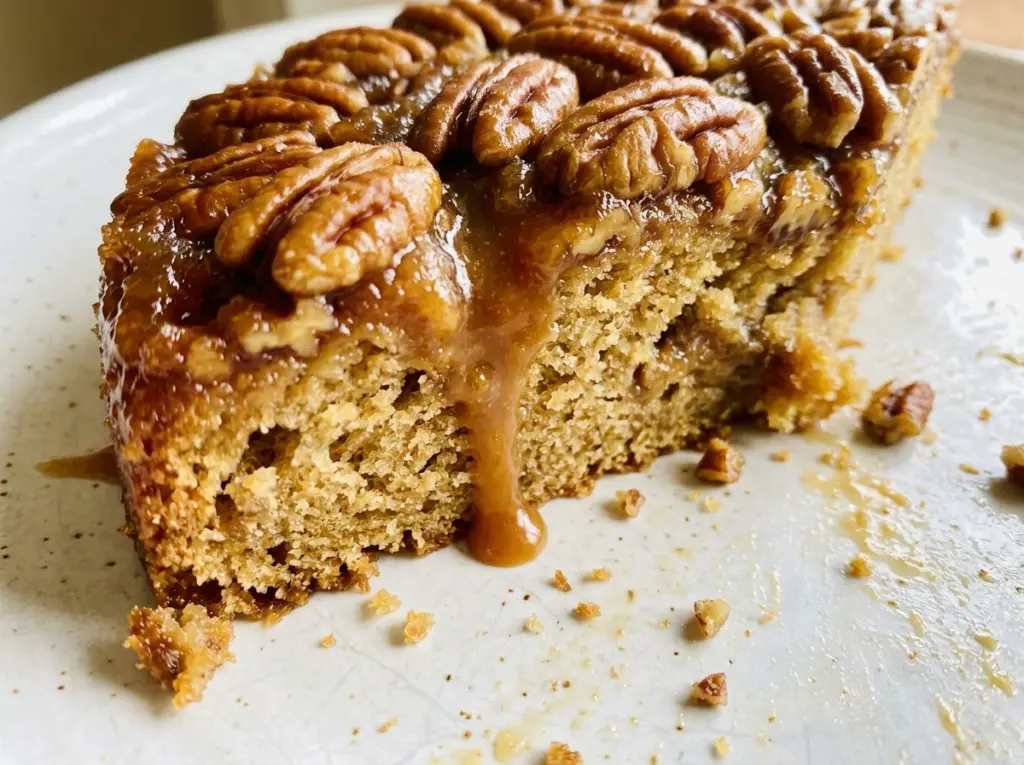
The brown sugar butter bubbles for a minute on the stove, then settles into a shiny layer beneath the pecans. That’s the moment this cake starts to take shape. I learned that arranging the pecans before adding the batter makes a difference: once the cake is turned out, the pattern you laid down is the top everyone sees.
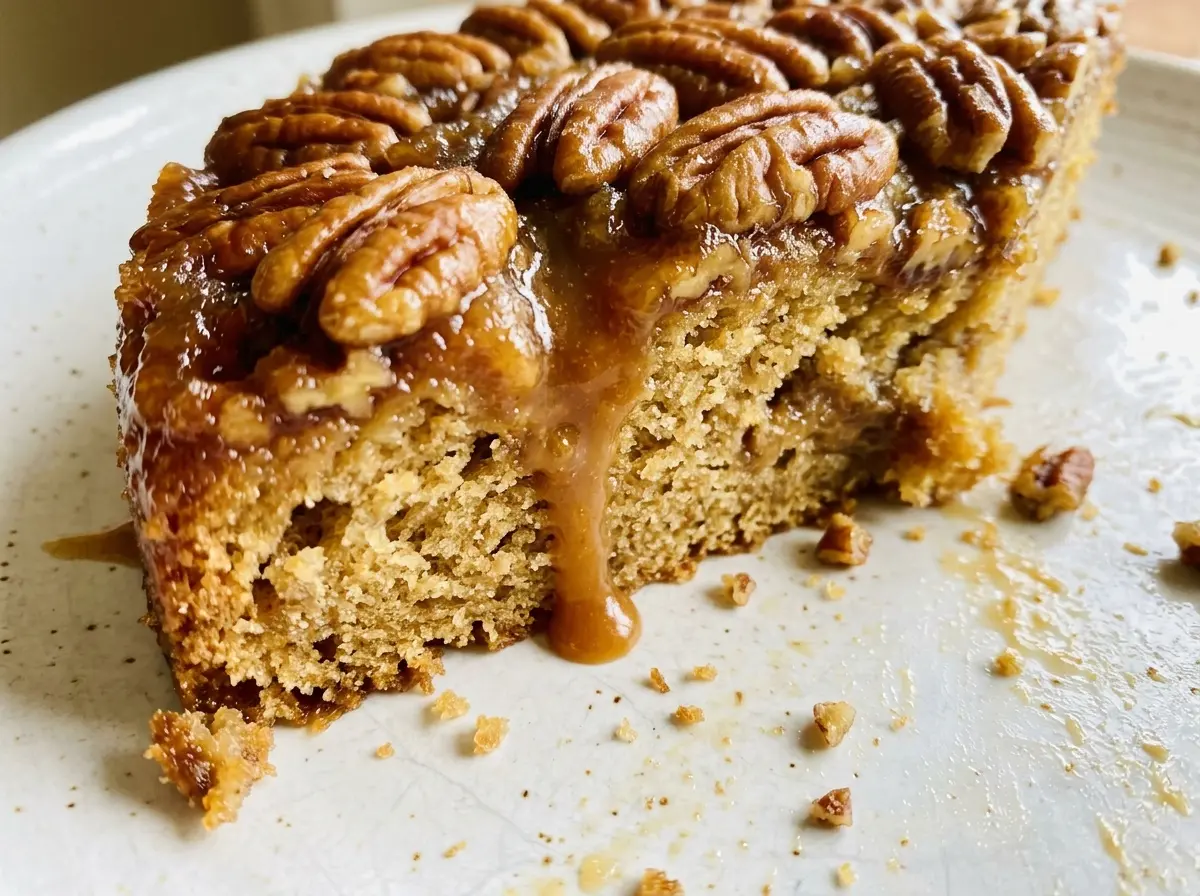
Pecan Upside Down Cake is a tender butter cake baked over that buttery, brown sugar topping. The pecans toast as the cake bakes, and flipping it onto a plate reveals a glossy top without needing frosting or a separate glaze.
Give the cake its full cooling time in the pan, but don’t leave it there until it’s completely cold. The topping needs time to settle, while it’s still warm enough to release cleanly. You’ll get neat slices with soft cake and pecans held in a rich, caramel-like layer.
Kitchen Note
Room-temperature eggs and milk blend into the creamed butter more smoothly than cold ones. Set them out before you start, so the batter stays cohesive when you mix it.
Save this Pecan Upside Down Cake for its glossy brown sugar topping and tender butter cake beneath a layer of toasted pecans.
Why the 10-Minute Cooling Window Matters Before You Flip the Cake
Turning out an upside-down cake too soon can leave the topping runny and the cake too delicate to hold together. Wait until the cake has rested in the pan for 10 minutes. That short pause gives the cake a chance to settle, while the butter and brown sugar topping is still warm enough to release from the pan.
Let it cool much longer in the pan and the topping may firm against the bottom, making it harder to unmold in one piece. Run a knife around the edge first, then place the serving plate over the pan and invert carefully. Lift the pan straight up rather than dragging it across the pecans. If a pecan stays behind, set it back in its spot while the topping is still warm. The cake needs at least 20 minutes of cooling after it’s turned out before you slice it; that gives the crumb a little more time to settle.
What the Brown Sugar and Pecan Layer Bring to This Cake
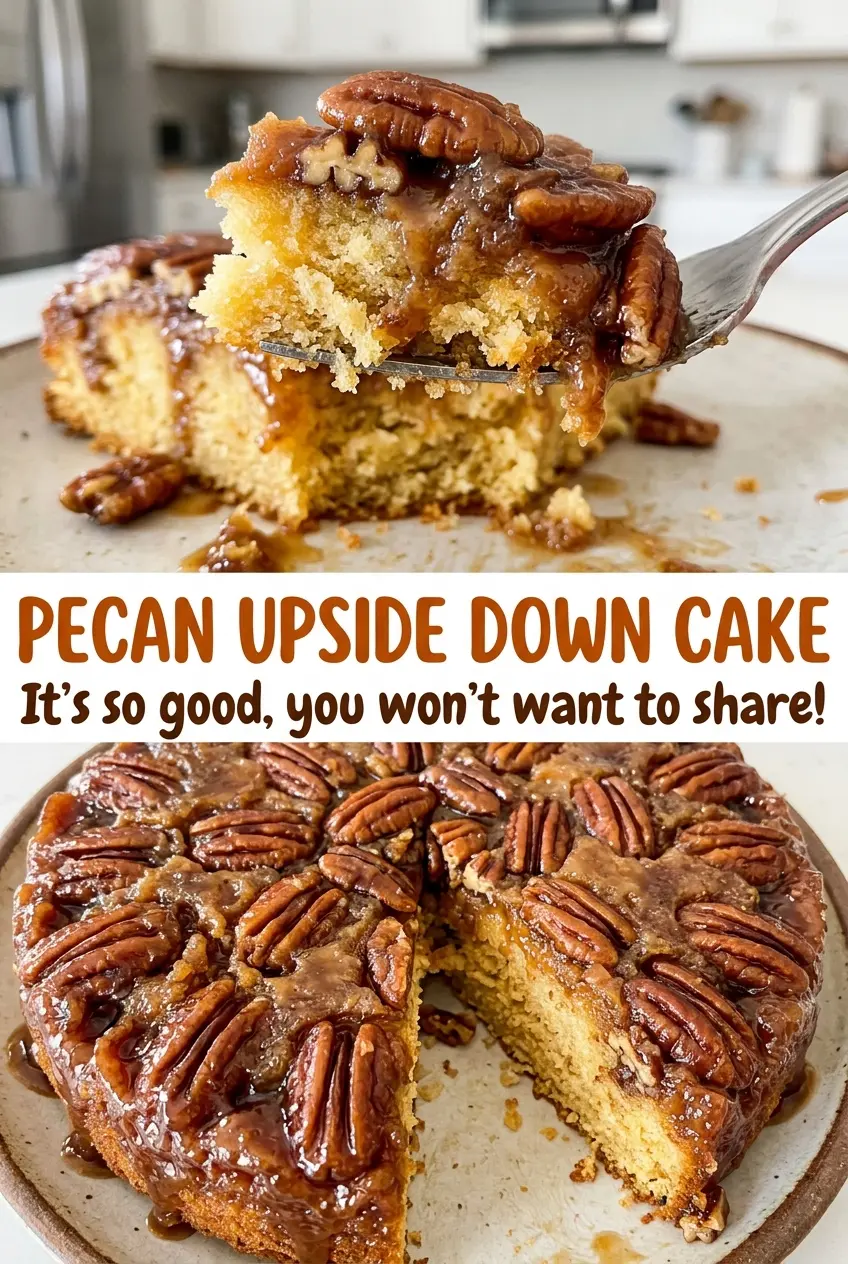
- Pecan halves — Halves make a clear, attractive pattern and keep their shape under the cake. Choose fresh-tasting pecans; stale nuts are especially noticeable in a topping this simple. Chopped pecans work too, but the top will look more rustic and have smaller crunchy pieces.
- Light brown sugar — Its moisture helps form the buttery topping as it cooks. Dark brown sugar can replace it in the same amount for a deeper molasses taste, though the topping will be darker.
- Unsalted butter — Butter carries the topping and gives the cake its tender texture. Using unsalted butter lets the measured salt in the batter stay in control; choose a butter you like the taste of, since it’s prominent in both layers.
- All-purpose flour and whole milk — Together they give the cake enough structure while keeping the crumb soft. Whole milk contributes richness; lower-fat milk can make the cake a little less tender, so stick with whole milk for the closest result.
Build the Butter Cake Without Overmixing It
Bubble the brown sugar topping
Heat the oven to 350°F and coat the bottom and sides of a 9-inch round cake pan with nonstick cooking spray. Melt the topping butter in a small saucepan over medium heat, stir in the brown sugar, and cook for about 1 minute, until the mixture bubbles. Pour it into the prepared pan and arrange the pecans in an even layer. Work carefully when pouring; the butter and sugar mixture is hot.
Cream the butter, then add the flour in stages
Beat the softened butter and granulated sugar in a large bowl until pale and fluffy, about 3 minutes. Add the eggs one at a time, beating after each, then mix in the vanilla. In a separate bowl, whisk together the flour, baking powder, and salt. Add the dry mixture in three additions, alternating with the milk, and mix just until combined; stop as soon as the flour disappears to avoid a dense cake.
Bake, rest, and turn it out
Spread the batter evenly over the pecans, taking care not to pull the nut layer out of place. Bake for 35 to 40 minutes, until the top is golden and a toothpick inserted in the center comes out clean. Cool the cake in the pan for 10 minutes, run a knife around the edge, then carefully invert it onto a serving plate and lift off the pan. Let it cool for at least 20 minutes before serving.
Small Changes That Keep the Pecan Cake on Track
A more rustic chopped-pecan top
Use chopped pecans instead of halves and spread them evenly over the brown sugar topping. You’ll get crunchy pieces in every bite rather than a neat pattern of whole pecans; keep the quantity the same by volume.
A darker, more molasses-forward topping
Swap dark brown sugar for the light brown sugar, using the same amount. The topping will taste more robust and bake to a deeper color, while keeping the same buttery texture.
A dairy-free version
Replace the butter with the same amount of firm dairy-free baking sticks, and use unsweetened oat milk in place of the whole milk. The cake will be a little less buttery, and the topping’s flavor will depend on the baking sticks you choose; avoid soft tub spread, which has a different water content.
Storage and Reheating
- Refrigerator: Cover the cake and refrigerate it for up to 4 days. The butter topping and crumb firm up when chilled; let a slice sit at room temperature briefly before eating if you prefer them softer.
- Freezer: Freeze fully cooled slices, wrapped tightly, for up to 2 months. Thaw them covered in the refrigerator or at room temperature.
- Reheating: Warm an individual slice in the microwave for about 10 seconds, then check it and continue in short bursts if needed. Don’t heat it too long; the sugar topping can get extremely hot before the cake feels warm.
Questions That Come Up Before You Bake or Flip This Cake
Pecan Upside Down Cake
Ingredients
Equipment
Method
- Heat the oven to 350°F.
- Coat the bottom and sides of a 9-inch round cake pan with nonstick cooking spray.
- Melt 6 tablespoons of the butter in a small saucepan over medium heat.
- Stir in the brown sugar.
- Cook for about 1 minute until the mixture bubbles.
- Pour the mixture into the pan.
- Arrange the pecans in an even layer.
- Beat the remaining 1/2 cup softened butter and the granulated sugar in a large bowl until pale and fluffy, about 3 minutes.
- Beat in the eggs one at a time.
- Mix in the vanilla.
- Whisk the flour, baking powder, and salt in a medium bowl.
- Add the dry ingredients to the butter mixture in three additions, alternating with the milk and mixing just until combined.
- Spread the batter evenly over the pecan layer.
- Bake for 35 to 40 minutes, until the top is golden and a toothpick inserted in the center comes out clean.
- Cool the cake in the pan for 10 minutes.
- Run a knife around the edge.
- Carefully invert the cake onto a serving plate and lift off the pan.
- Cool at least 20 minutes before serving.