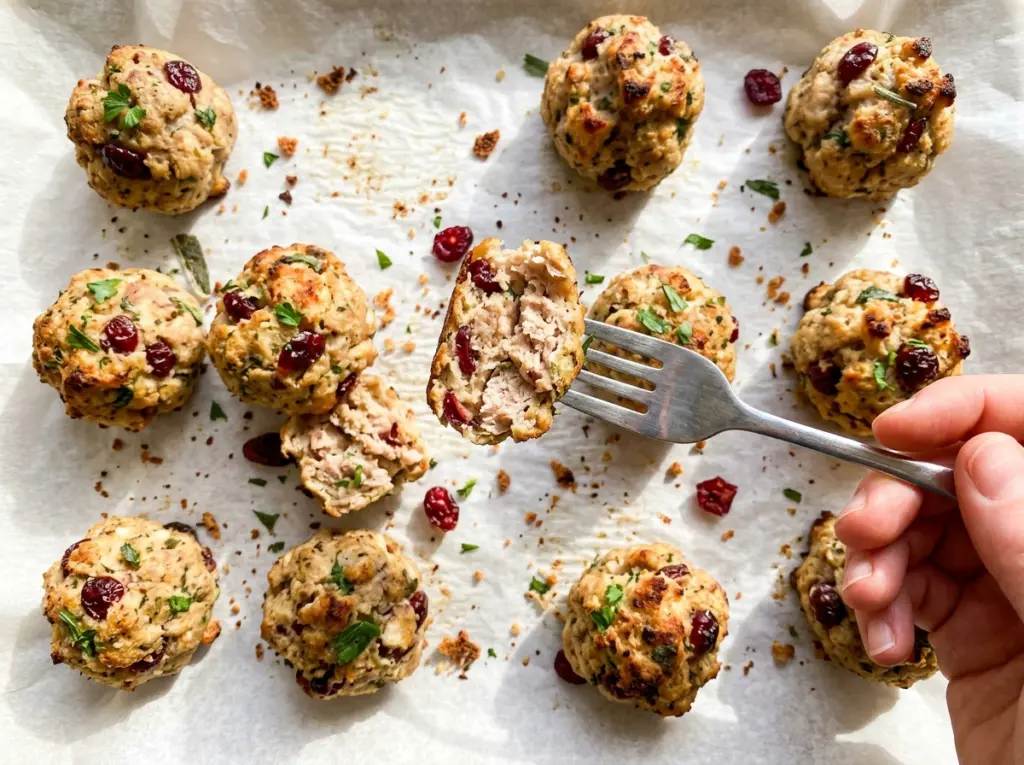
The broth looks like too much for the stuffing cubes at first, but after five minutes covered off the heat, they soften and take it in. That pause gives the bread time to absorb the savory liquid instead of leaving wet pockets in the mixture. In these cranberry turkey stuffing balls, the cubes do more than add familiar herb flavor: they help the ground turkey hold together while the cranberries bring a chewy, tart-sweet bite. The result is a browned bite with a tender center, not a dry turkey meatball pretending to be stuffing.
I like that each ball carries the flavors of a classic stuffing side in a shape that’s easy to portion. Softened onion and celery blend into the savory base, and the poultry seasoning brings the whole mixture together without competing with the fruit. You get twelve individual bites from one batch, each with stuffing flavor throughout and a little cranberry in the middle.
Kitchen Note
Give the stuffing mixture its full 10-minute cool before it meets the turkey. I wait until the center of the mixture no longer feels warm; it’s easier to combine gently once it has cooled.
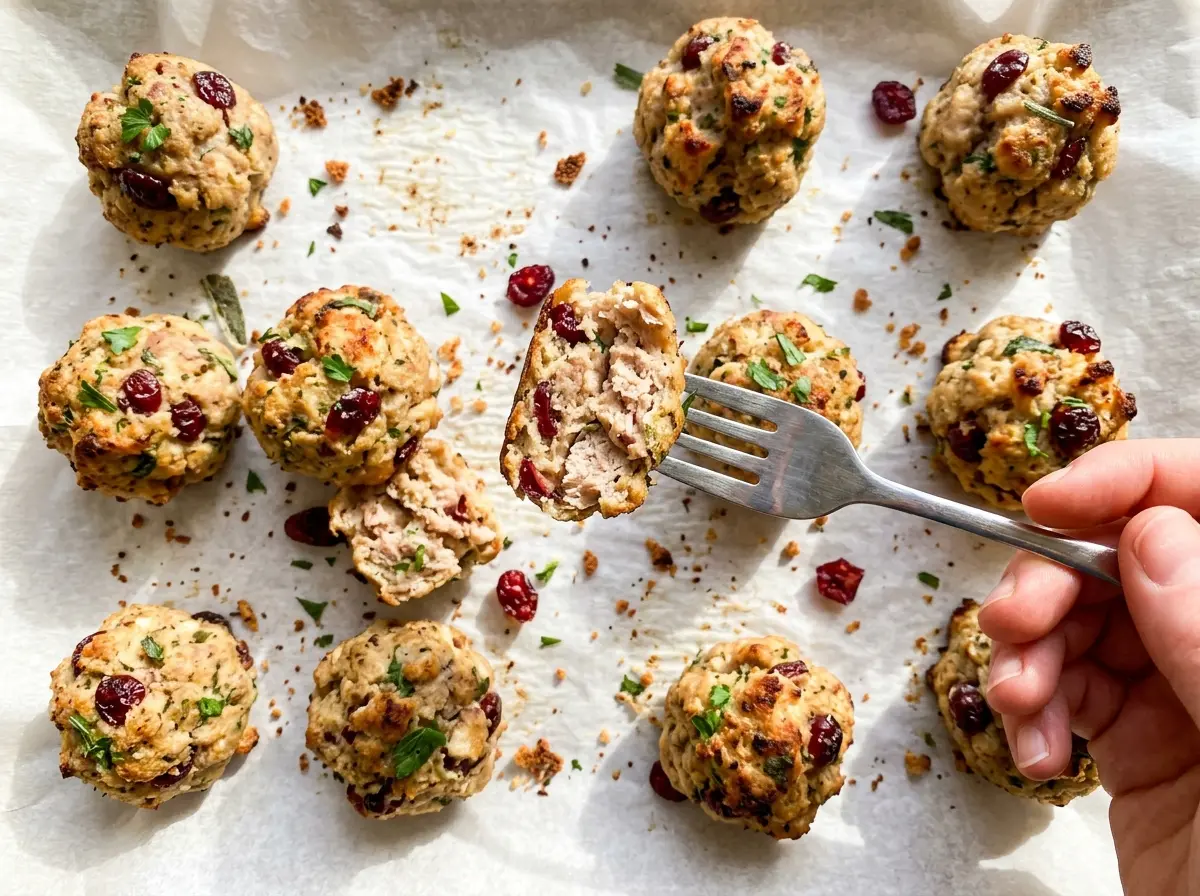
Save these cranberry turkey stuffing balls for a holiday table or a cozy dinner—the browned edges and tart cranberry bites make stuffing easy to portion.
Why the Stuffing Cubes Matter More Than a Breadcrumb Binder
In a standard turkey meatball, breadcrumbs mostly help hold the meat together. Here, dry herb-seasoned stuffing cubes do that job while also bringing the bread and seasoning you expect from stuffing. Once the cubes take up the broth, they soften into the turkey mixture instead of behaving like a separate dry coating. The egg adds another bit of structure, so the balls hold their shape without needing extra crumbs.
That’s why the cubes need to start dry and get hydrated in the pan, rather than being replaced with soft, prepared stuffing. The dry bread absorbs the seasoned broth in a controlled way; already-moist stuffing would bring a different amount of liquid and could leave the mixture loose. It’s a small distinction, but it changes how easy the mixture is to form and how cohesive the cooked centers feel. Keep the cubes as the base, and the stuffing flavor stays woven through every bite instead of sitting in uneven clumps.
What the Turkey, Stuffing, and Cranberries Each Bring

- Herb-seasoned stuffing cubes — These supply both the seasoned bread flavor and the structure that holds the turkey mixture together. Choose dry cubes rather than soft, prepared stuffing; fresh bread cubes aren’t a direct swap because they start with more moisture. A standard store-bought bag works well.
- Ground turkey — Turkey keeps the bites mild enough for the cranberry and herb flavors to come through. Ordinary ground turkey is fine; there’s no need to seek out a premium grind. Handle it gently, since working the meat too much can make the finished texture firm.
- Dried cranberries — Dried fruit gives the mixture a tart-sweet chew without adding the extra moisture fresh fruit would bring. Choose soft, plump cranberries if you have the option; if yours feel quite firm, chop them so they’re distributed more evenly.
- Low-sodium chicken broth — The broth moistens the cubes and lets you control the seasoning alongside the stuffing and poultry seasoning. A basic carton is perfectly suitable. Vegetable broth can replace it for a less poultry-forward flavor, while keeping the same method.
- Yellow onion and celery — Finely chopping both helps them soften in the skillet and blend into the stuffing rather than leaving large crisp pieces. Inexpensive produce is fine here; even-sized pieces matter more than choosing a particular variety.
- Egg and poultry seasoning — The egg helps bind the mixture, so don’t leave it out. A familiar grocery-store poultry seasoning is a good fit because it seasons the turkey and bread together; the stuffing cubes already bring their own herb flavor.
From Softened Aromatics to Browned, Tender Centers
Soften the Onion and Celery
Heat the butter in a medium skillet over medium heat, then add the finely chopped onion and celery. Cook for 5 to 7 minutes, stirring occasionally, until both are softened. You’re looking for tender pieces, not browned edges. If the pan starts coloring the vegetables quickly, lower the heat so they soften without scorching.
Hydrate the Stuffing Cubes
Add the chicken broth and bring it to a simmer. Stir in the stuffing cubes, dried cranberries, and poultry seasoning, then cover the skillet and take it off the heat. Let it stand for 5 minutes so the cubes soften, then cool the mixture for 10 minutes. Don’t rush straight from the warm skillet to the turkey; the mixture should no longer feel warm.
Mix Gently and Shape Evenly
Heat the oven to 400°F and line a rimmed baking sheet with parchment paper. Beat the egg in a large bowl, then add the ground turkey, cooled stuffing mixture, salt, and pepper. Mix gently, stopping as soon as everything is combined; a long, vigorous mix makes ground turkey dense. Form 12 balls, about 2 inches each, and arrange them on the prepared sheet.
Bake Until Browned and Let Them Rest
Bake for 20 to 25 minutes, until the outside is browned and an instant-read thermometer inserted into the center reads 165°F. Check a ball from the middle of the baking sheet, where heat can behave differently from the edges. If it needs more time, return the pan to the oven and check again. Let the balls rest on the baking sheet for 5 minutes before serving.
Easy Swaps for a Different Batch
Use dried cherries for a deeper fruit note
Replace the dried cranberries with the same amount of chopped dried cherries. They bring a rounder, less tart sweetness, while keeping the chewy bits that work well against the savory stuffing.
Make the stuffing base gluten-free
Use gluten-free herb-seasoned stuffing cubes in place of the regular cubes, and choose gluten-free broth and poultry seasoning. The texture can vary by brand, so pay attention to how the cubes soften during their covered rest; the finished bites may be a little less uniform.
Trade turkey for ground chicken
Ground chicken works in the same quantity and keeps the flavor mild, with a slightly different meatiness. Shape and bake the balls the same way, checking the centers with an instant-read thermometer before taking them out.
Storage and Reheating
- Refrigerator: Refrigerate the cooled balls in an airtight container within 2 hours of baking and use within 3 to 4 days. The browned exterior will soften in the container.
- Freezer: Freeze fully cooled balls in a single layer until firm, then move them to an airtight freezer container for up to 3 months. Thaw overnight in the refrigerator for more even reheating.
- Reheating: Warm covered in a 350°F oven until steaming hot throughout, uncovering briefly at the end to bring back a little of the browned exterior. A microwave also works in short, covered intervals. Long, uncovered reheating is the easiest way to dry out the turkey.
Questions About Making Cranberry Turkey Stuffing Balls
Cranberry Turkey Stuffing Balls
Ingredients
Equipment
Method
- Heat the butter in a medium skillet over medium heat, then add the onion and celery and cook for 5 to 7 minutes, stirring occasionally, until softened.
- Add the chicken broth and bring it to a simmer, then stir in the stuffing cubes, dried cranberries, and poultry seasoning. Cover, remove from the heat, and let stand for 5 minutes before cooling for 10 minutes.
- Heat the oven to 400°F and line a rimmed baking sheet with parchment paper.
- Beat the egg in a large bowl, then add the ground turkey, cooled stuffing mixture, salt, and pepper and mix gently until just combined.
- Form the mixture into 12 balls, about 2 inches each, and arrange them on the prepared baking sheet.
- Bake for 20 to 25 minutes, until browned and the centers reach 165°F on an instant-read thermometer.
- Let the stuffing balls rest on the baking sheet for 5 minutes before serving.