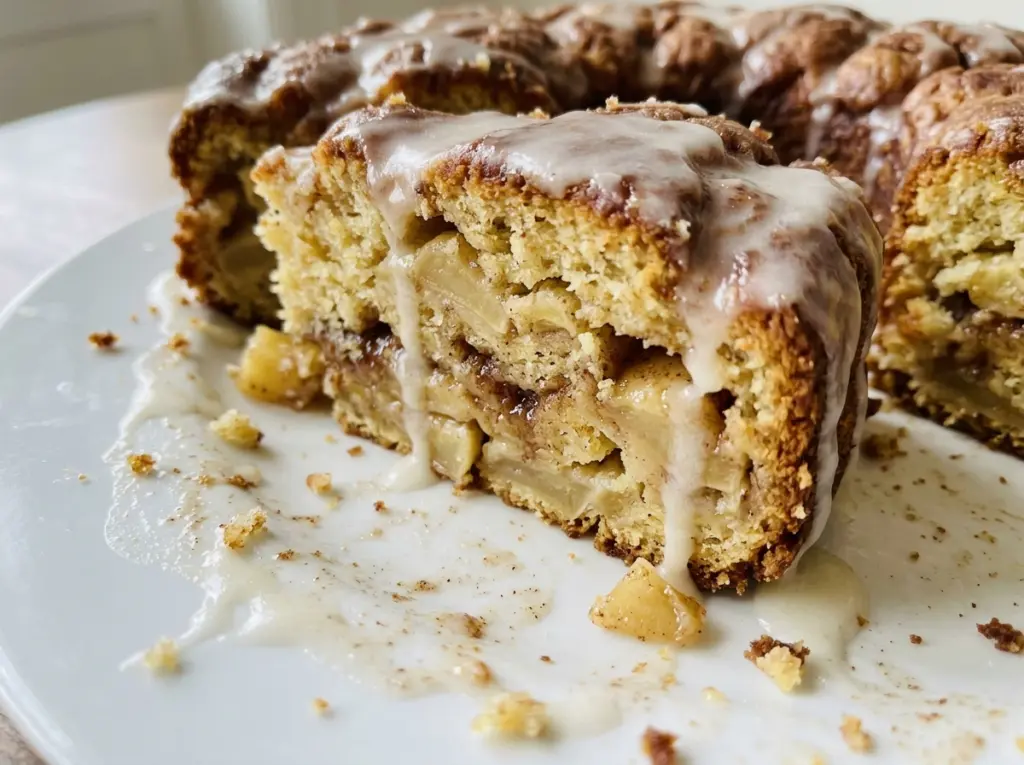
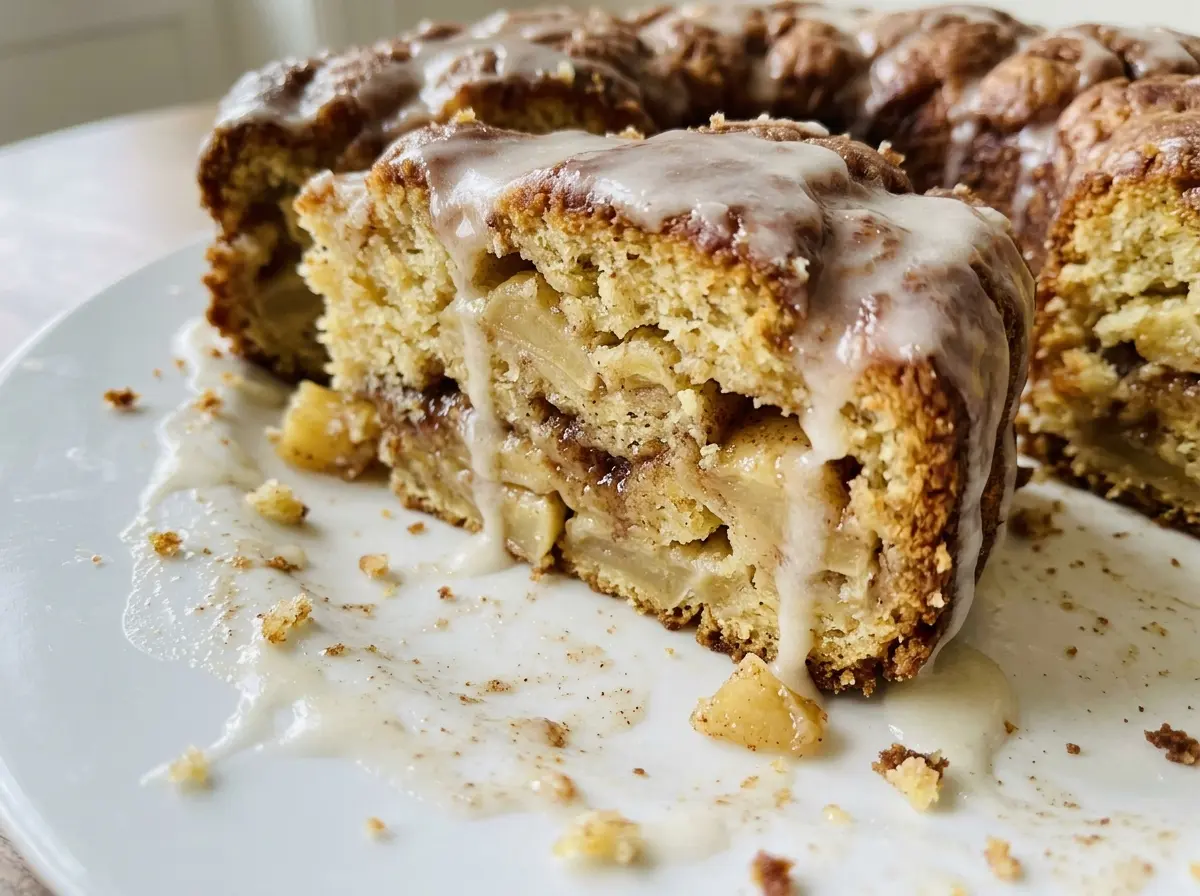
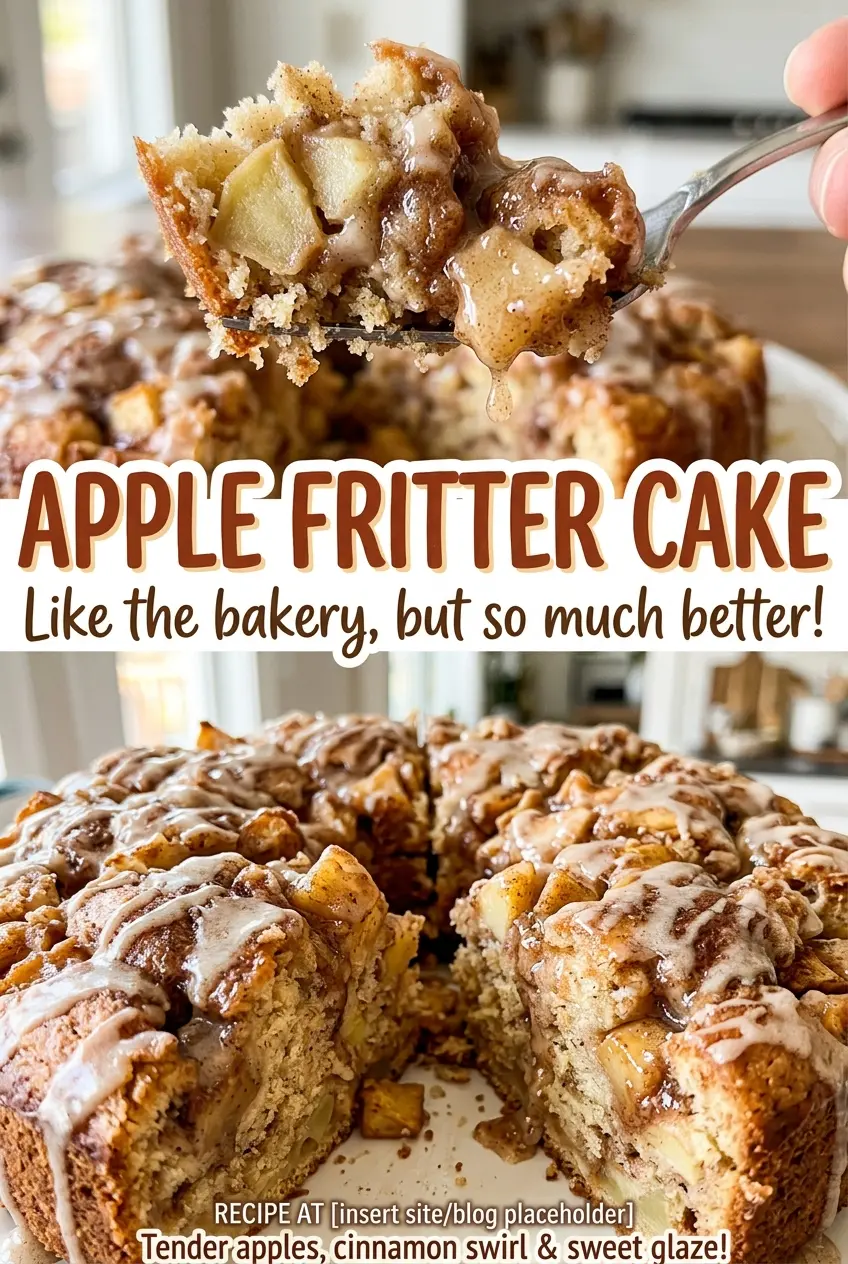
When the knife moves through the top, it catches cinnamon-sugar apples tucked into a soft, buttery crumb. That layered bite is what makes this Apple Fritter Cake feel like the best part of an apple fritter without frying a thing. The apples stay juicy, the cinnamon runs through every slice, and a quick milk glaze gives the top a sweet finish.
I like this cake for the way its familiar ingredients turn into something generous enough to share from a 9×13-inch dish. Sour cream keeps the crumb tender, while the apple mixture brings a little brown-sugar warmth into the middle and across the top. The glaze goes on while the cake is still warm, so it settles into thin ribbons instead of sitting in a thick layer. Cut a slice and you get cake, cinnamon apples, and glaze together in one forkful.
Kitchen Note
Keep the apples in even, 1/2-inch pieces. That size gives you tender bites throughout the cake without large chunks interrupting the layers.
Save this Apple Fritter Cake for a cozy bake: cinnamon apples tucked between soft cake layers, finished with a simple warm-cake glaze.
Why the Apples Need Two Layers, Not One Thick Stripe
Putting all the apples in the middle sounds like the simplest way to get a strong apple layer, but it leaves the top of the cake without the cinnamon-sugar finish that makes this bake feel like an apple fritter. Dividing the apple mixture gives you fruit through the center and a visible, fragrant layer on top. The shallow knife swirls blend the surface just enough without stirring the apples deep into the batter.
The batter is thick enough to support this arrangement when you spread it gently. Work in halves: batter, apples, the remaining batter, then the rest of the apples. Don’t try to stir the fruit into the whole bowl of batter; that makes it harder to distribute evenly and can leave some slices with far more apple than others. A few light passes through the top finish the cake with cinnamon streaks while keeping the layers distinct.
This approach also gives you a useful doneness check. Apple pieces stay moist, so a toothpick pushed into fruit won’t tell you whether the cake crumb is baked. Test a cake-only spot instead, and look for a few moist crumbs rather than waiting for the pick to come out completely dry.
What the Sour Cream, Apples, and Cinnamon Each Bring
- All-purpose flour and the leaveners — Flour gives the cake enough structure to hold the apple layers, while baking powder and baking soda help it rise. Ordinary store-brand all-purpose flour works well; skip self-rising flour because the batter already has measured leaveners and salt.
- Butter and granulated sugar — Beating these together creates the light base that helps the cake rise and keeps the crumb tender. Use softened butter so it creams smoothly; if salted butter is your only option, see the FAQ before swapping it in.
- Eggs and sour cream — Room-temperature eggs blend more evenly into the creamed butter, and sour cream adds moisture with a gentle tang. Plain full-fat Greek yogurt is the closest practical swap for sour cream in this kind of cake; use the same amount, knowing the crumb may be a little less rich.
- Apples — Choose firm apples that hold their shape in the oven. Granny Smith gives a tart contrast, while a sweeter firm apple makes the filling milder; peeling them keeps the fruit tender against the cake crumb.
- Light brown sugar and cinnamon — The packed brown sugar coats the fruit and brings a molasses note that granulated sugar wouldn’t give in the swirl. Cinnamon is what gives the apple layer its familiar fritter-like warmth, so use fresh, fragrant ground cinnamon if yours has been open a long time.
- Powdered sugar and milk — Powdered sugar dissolves into a smooth drizzle without cooking, and milk loosens it to a pourable consistency. A fresh bag of powdered sugar is less likely to leave stubborn lumps; whisk until the glaze looks smooth before drizzling.
How to Layer and Bake the Apple Fritter Cake
Cream the butter and sugar until airy
Heat the oven to 350°F and grease a 9×13-inch baking dish. Beat the softened butter and granulated sugar with a mixer for 2 to 3 minutes, until the mixture looks light and fluffy rather than dense and grainy. Add the eggs one at a time, then mix in the vanilla. If the mixture looks slightly uneven after an egg goes in, keep mixing until it comes together before adding the next one.
Bring the batter together without overmixing
Mix in the room-temperature sour cream until combined. Whisk the flour, baking powder, baking soda, and salt in a separate bowl, then add that mixture to the wet ingredients in three additions with the mixer on low. Stop as soon as no dry streaks remain; continuing to beat the batter after the flour disappears can make the cake firm instead of tender.
Coat the apples and build the layers
Toss the prepared apples with the brown sugar and cinnamon until the pieces are evenly coated. Spread half the batter into the greased dish, then distribute half the apples across it. Carefully spread the remaining batter over the fruit and add the rest of the apple mixture on top. A few shallow swirls through the surface are enough; deep strokes pull the top apples down into the batter.
Bake until the cake portion tests done
Bake for 50 to 60 minutes, until the top is golden. Insert a toothpick into a cake portion away from apple pieces; it should come out with a few moist crumbs. If it comes out coated in wet batter, give the cake more time and check again. Let it cool in the dish for 20 minutes before finishing.
Whisk and drizzle the glaze
Whisk the powdered sugar and milk until the glaze is smooth, with no dry pockets of sugar around the bowl. Drizzle it over the warm cake so it falls in delicate lines across the cinnamon apples. If the glaze is lumpy, keep whisking before it goes on; lumps are much harder to smooth once they’re on the cake.
Three Small Changes That Give This Cake a Different Finish
Use a tart apple for sharper contrast
Choose Granny Smith apples in place of a sweeter variety. Their tartness cuts through the brown-sugar swirl and makes the cinnamon taste more pronounced without changing the cake method.
Trade light brown sugar for a deeper note
Use dark brown sugar in the apple mixture in place of light brown sugar, keeping the same amount. It brings a more pronounced molasses taste to the swirl, so the apple layer reads a little richer.
Leave the glaze off for a less-sweet slice
Skip the powdered sugar and milk drizzle if you’d rather let the cinnamon apples lead. The cake still has its brown-sugar topping, but the finish is less sweet and the top stays free of glaze.
Storage and Reheating
- Refrigerator: Cover the cake and refrigerate it for up to 4 days. The butter-rich crumb will feel firmer when cold; let a slice sit out briefly before serving.
- Freezer: Freeze individual slices in airtight wrapping for up to 2 months. For the neatest finish, freeze the cake before glazing; thaw slices overnight in the refrigerator and add glaze after thawing.
- Reheating: Warm one slice in the microwave for about 10 to 15 seconds, then check it before adding more time. Longer heating can make the crumb tough and melt the glaze into the surface.
Questions That Come Up While Baking This Apple Cake
Apple Fritter Cake
Ingredients
Equipment
Method
- Heat the oven to 350°F.
- Grease a 9x13-inch baking dish.
- Whisk the flour, baking powder, baking soda, and salt together in a medium bowl.
- In a large bowl, beat the butter and granulated sugar with a mixer until light and fluffy, 2 to 3 minutes.
- Beat in the eggs one at a time.
- Beat in the vanilla.
- Mix in the sour cream until combined.
- Add the flour mixture in three additions, mixing on low just until no dry streaks remain.
- In a medium bowl, toss the apples with the brown sugar and cinnamon until evenly coated.
- Spread half the batter in the prepared dish.
- Distribute half the apple mixture over the batter.
- Spread the remaining batter on top.
- Finish with the remaining apple mixture.
- Use a knife to make a few shallow swirls through the top layer.
- Bake for 50 to 60 minutes, until the top is golden and a toothpick inserted into a cake portion, away from apple pieces, comes out with a few moist crumbs.
- Cool in the dish for 20 minutes.
- Whisk the powdered sugar and milk until smooth.
- Drizzle the glaze over the warm cake.