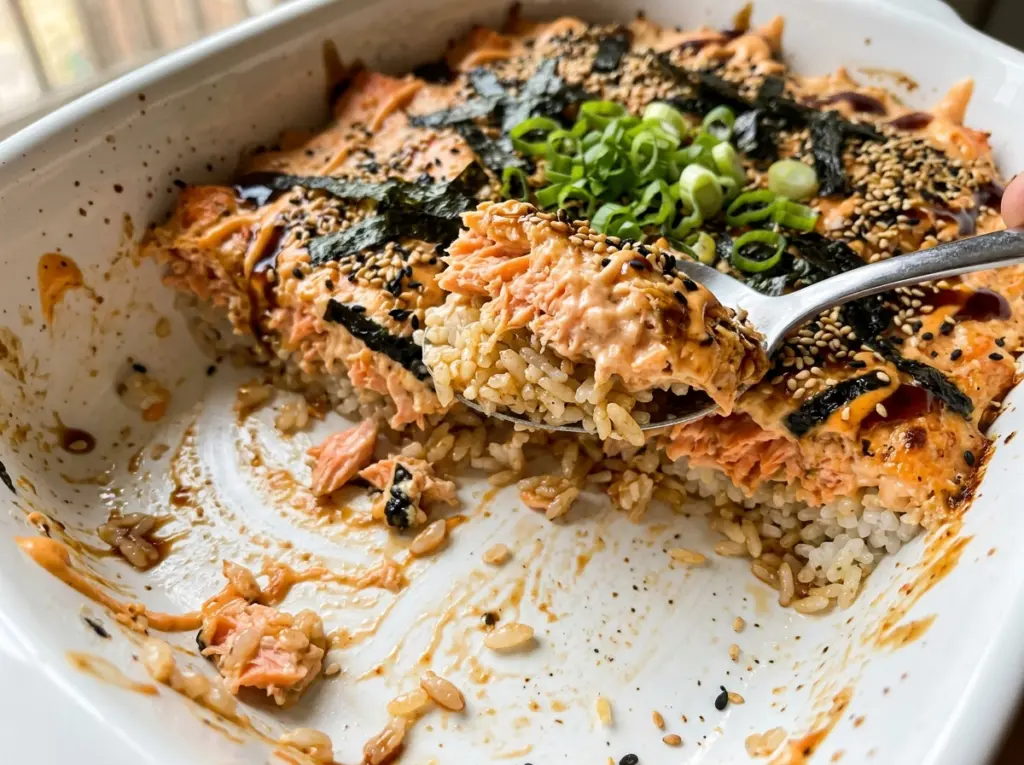
When the lid comes off the rice pot, a little steam carries that sharp, clean smell of rice vinegar through the kitchen. It softens as the vinegar gets folded in, leaving the rice lightly sweet and tangy. That contrast is what makes this Spicy Salmon Sushi Bake work: the base is gently seasoned, and the salmon topping brings the creamy heat.
Short-grain rice gives you a base that holds together when you scoop it, without turning the dish into a dense slab. The salmon mixture spreads right over it, so each serving gets both layers in one warm bite.
I like serving it straight from the baking dish with roasted seaweed sheets alongside. Scoop a little bake onto a sheet, fold it up, and you get the crisp, salty wrapper without having to roll anything. The top stays creamy, the rice is tender, and the sriracha gives the salmon a pleasant kick.
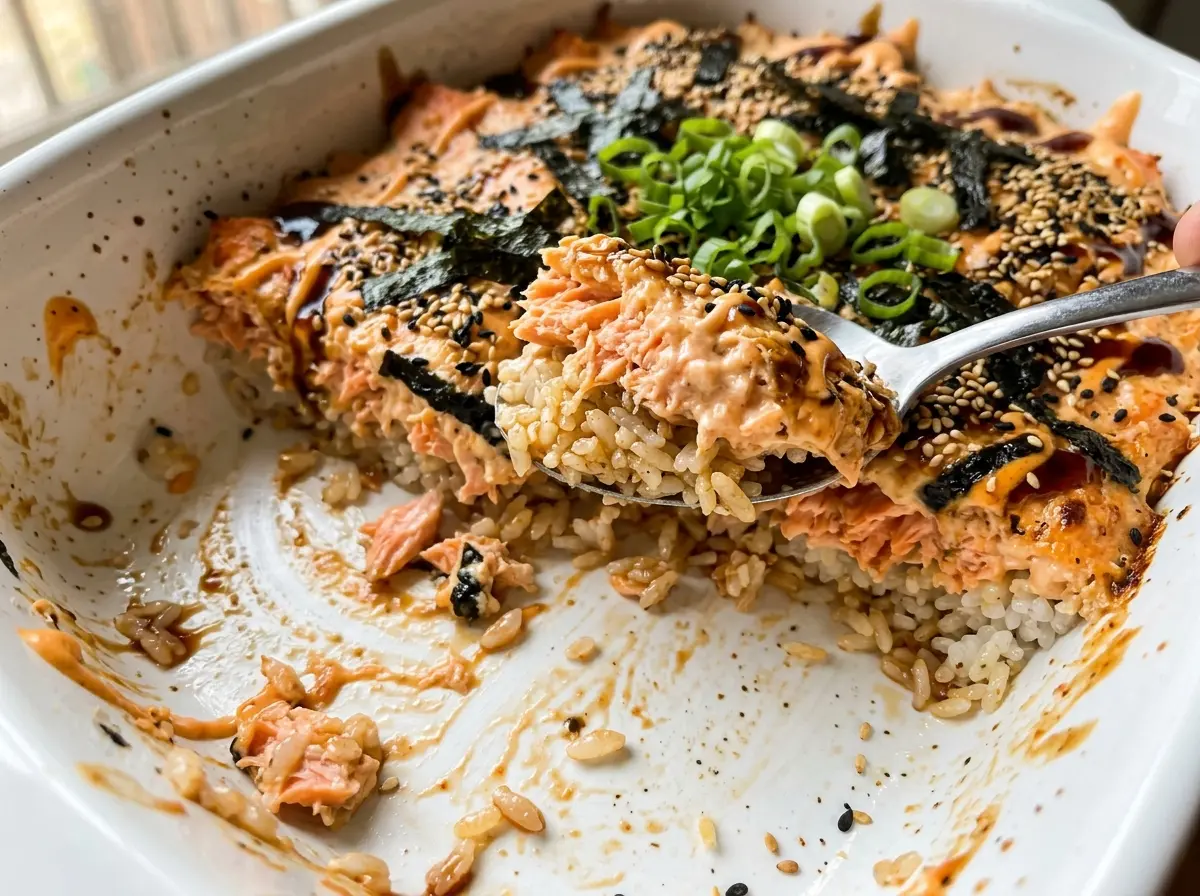
Kitchen Note
When you turn off the heat under the rice, leave the lid on for the full 10-minute rest. The covered pot finishes the steaming gently, so the grains are tender before you fold in the vinegar mixture.
Save this Spicy Salmon Sushi Bake for a cozy dinner with creamy, sriracha-spiked salmon and crisp seaweed scoops.
Why Half-Inch Salmon Cubes Make This Bake More Reliable
The salmon pieces need to be small enough to cook through in the same time the rice and topping warm together. At half an inch, they distribute across the creamy mixture instead of sitting in a few thick clumps. That gives you salmon in each scoop, rather than bites that are mostly rice in one spot and a large piece of fish in another.
The topping also surrounds the salmon as it bakes, which helps keep the pieces moist while the surface sets. Cut the fish into similarly sized cubes before folding it into the cream cheese mixture; uneven pieces cook at different rates, and the smaller ones can dry out while you wait for a thicker piece to finish. If your salmon fillet varies in thickness, cut the wider sections a little smaller so the pieces are closer in size. An instant-read thermometer gives you a dependable check in the center without guessing from the browned top.
That balance matters because this isn’t a baked salmon fillet with a side of rice. The fish is mixed into a soft topping and spread in a shallow layer over the rice, so piece size—not a long bake—is what helps the salmon cook evenly while the rice stays tender.
What Each Ingredient Is Doing in This Sushi Bake

- Short-grain white rice — Its starch gives the bottom layer enough cling to scoop neatly onto seaweed. Regular grocery-store short-grain rice works well; medium-grain rice is the closest substitute, while long-grain rice will make a looser base.
- Unseasoned rice vinegar — It brings a clean tang without adding extra salt or sweetness beyond what you measure into the seasoning. Seasoned rice vinegar already contains sugar and salt, so it can throw off that balance; stick with unseasoned for the intended taste.
- Skinless salmon — Skinless fillet is ready to cut into cubes and fold into the topping. Freshness matters more than choosing a premium variety, and evenly sized pieces help the layer cook consistently.
- Cream cheese and mayonnaise — Softened cream cheese blends into a smooth coating, while mayonnaise loosens it enough to spread over the rice. A standard block of cream cheese and regular mayonnaise are both fine; avoid using cold cream cheese, which leaves stubborn lumps.
- Sriracha and soy sauce — Sriracha supplies the heat, and soy sauce adds a savory, salty note to the creamy salmon. For a gluten-free adaptation, use gluten-free tamari in place of the soy sauce; it keeps the savory quality, with a slightly rounder taste.
- Furikake and roasted seaweed snack sheets — Furikake seasons the rice layer, and the seaweed sheets act as crisp little wrappers at the table. Furikake brands vary in saltiness, so a familiar brand is useful; keep the seaweed separate until serving so it stays crisp.
Build the Rice Base Before Adding the Salmon
Cook the Short-Grain Rice
Rinse the rice in a fine-mesh strainer under cold water until the water runs mostly clear, then drain it well. Combine it with the water in a 3-quart saucepan and bring it to a boil. Cover the pan, reduce the heat to low, and simmer for 15 minutes; avoid lifting the lid while it cooks, since that lets steam escape. Turn off the heat and leave the pot covered for 10 minutes.
Season the Rice While It’s Warm
While the rice rests, microwave the rice vinegar, sugar, and kosher salt in a small bowl for 20 to 30 seconds. Stir until the sugar and salt dissolve; undissolved grains leave little sharp or salty pockets in the finished rice. Gently fold the vinegar mixture through the rice rather than stirring hard, which can mash the tender grains. Spread the seasoned rice into an even layer once it’s ready for the baking dish.
Mix the Creamy Salmon Topping
Stir the softened cream cheese, mayonnaise, sriracha, and soy sauce in a medium bowl until smooth. If the cream cheese is still firm, it won’t blend cleanly, so let it soften before mixing rather than trying to break up cold lumps around the fish. Fold in the salmon cubes just until they’re coated. The finished mixture should be thick enough to spread but not so stiff that you have to press hard on the fish.
Layer, Bake, and Scoop
Heat the oven to 400°F and lightly coat a 9×13-inch baking dish with nonstick cooking spray. Press the rice evenly into the dish, sprinkle it with furikake, then spread the salmon mixture over the top. Bake uncovered for 15 to 20 minutes, until an instant-read thermometer inserted in the center of the salmon reads 145°F. Let the bake stand for 5 minutes, then scoop portions onto roasted seaweed snack sheets.
Three Simple Ways to Adjust the Heat or Ingredients
Make the topping milder
Use less sriracha than the listed amount if you want the salmon’s flavor to come through with gentler heat. The topping will be a little less spicy, but the cream cheese and mayonnaise still make it smooth and spreadable.
Turn up the sriracha
For a hotter bake, add a little more sriracha to the creamy mixture before the salmon goes in. More sauce makes the topping looser as well as spicier, so increase it gradually and stop when the mixture still spreads in a thick layer.
Make it gluten-free with tamari
Replace the soy sauce with the same amount of gluten-free tamari, and choose furikake and seaweed sheets made without gluten-containing ingredients. The bake keeps its savory, creamy character, though tamari often tastes a little rounder than soy sauce.
Storage and Reheating
- Refrigerator: Refrigerate leftovers within 2 hours and keep them covered for up to 3 to 4 days. The rice firms as it chills, and the seaweed loses its crispness, so store the sheets separately.
- Freezer: Freeze cooled portions without the seaweed in an airtight container for up to 2 months. Thaw them overnight in the refrigerator; the rice may be drier and the cream cheese topping slightly grainier after freezing.
- Reheating: Cover a portion and warm it in a 325°F oven until the center reaches 165°F, or microwave it in short bursts until hot throughout. Keep the seaweed out of the oven and add it only when serving, or it will turn limp.
Questions That Come Up When Making Sushi Bake
Spicy Salmon Sushi Bake
Ingredients
Equipment
Method
- Rinse the rice in a fine-mesh strainer under cold water until the water runs mostly clear, then drain well.
- Combine the rice with the water in a 3-quart saucepan, bring to a boil, cover, reduce heat to low, and simmer for 15 minutes.
- Turn off the heat and let the rice stand covered for 10 minutes.
- While the rice rests, microwave the rice vinegar, sugar, and salt in a small bowl for 20 to 30 seconds.
- Stir the vinegar mixture until dissolved, then gently fold it into the rice.
- In a medium bowl, stir the cream cheese, mayonnaise, sriracha, and soy sauce until smooth.
- Fold in the salmon.
- Preheat the oven to 400°F and lightly coat a 9x13-inch baking dish with nonstick cooking spray.
- Press the rice evenly into the dish and sprinkle with furikake.
- Spread the salmon mixture evenly over the rice.
- Bake uncovered for 15 to 20 minutes, until the salmon reaches 145°F in the center when checked with an instant-read thermometer.
- Let stand for 5 minutes.
- Scoop onto the roasted seaweed sheets to serve.