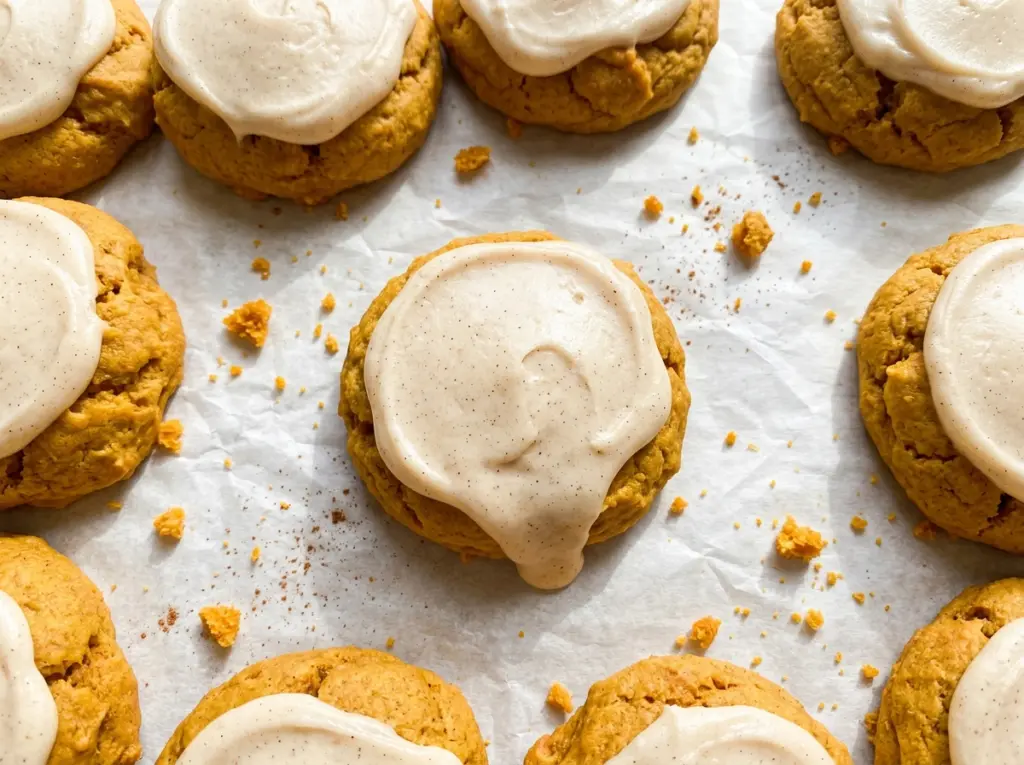
When the pumpkin goes into the creamed butter and sugar, the dough turns soft and orange, nothing like a firm cookie dough. That’s exactly what I want here: these soft pumpkin cookies bake up tender, with warm spice in every bite and a cinnamon frosting that gives them a sweet finish.
I use canned pumpkin puree, not pumpkin pie filling, and mix the flour in only until the dry streaks disappear. The puree brings moisture that keeps the cookies soft, while the careful mixing helps them stay tender instead of tough. Let them cool all the way before frosting; the cinnamon topping spreads neatly over a cool cookie instead of sliding off into the pan.
Kitchen Note
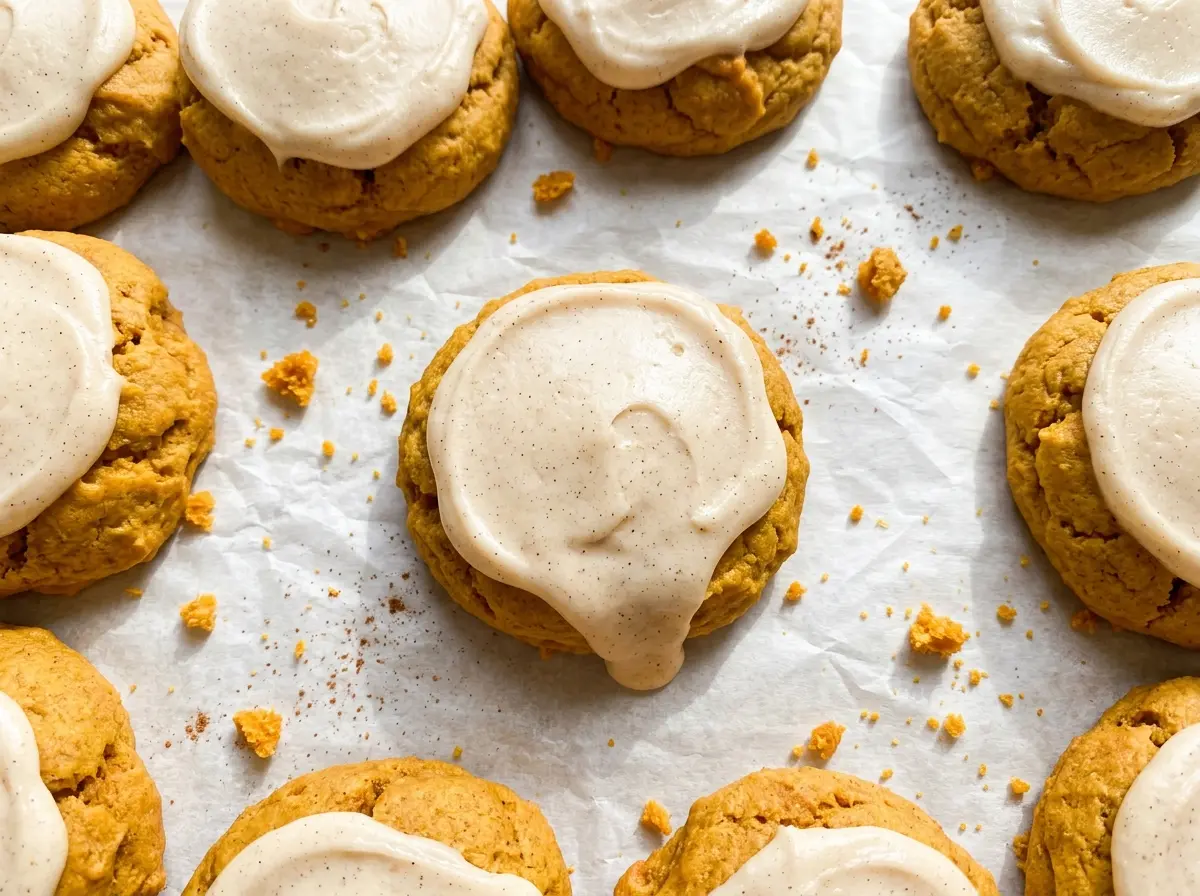
Let the baking sheet cool before the next batch goes on. A warm sheet starts softening the dough before it reaches the oven, and the cookies won’t bake as evenly.
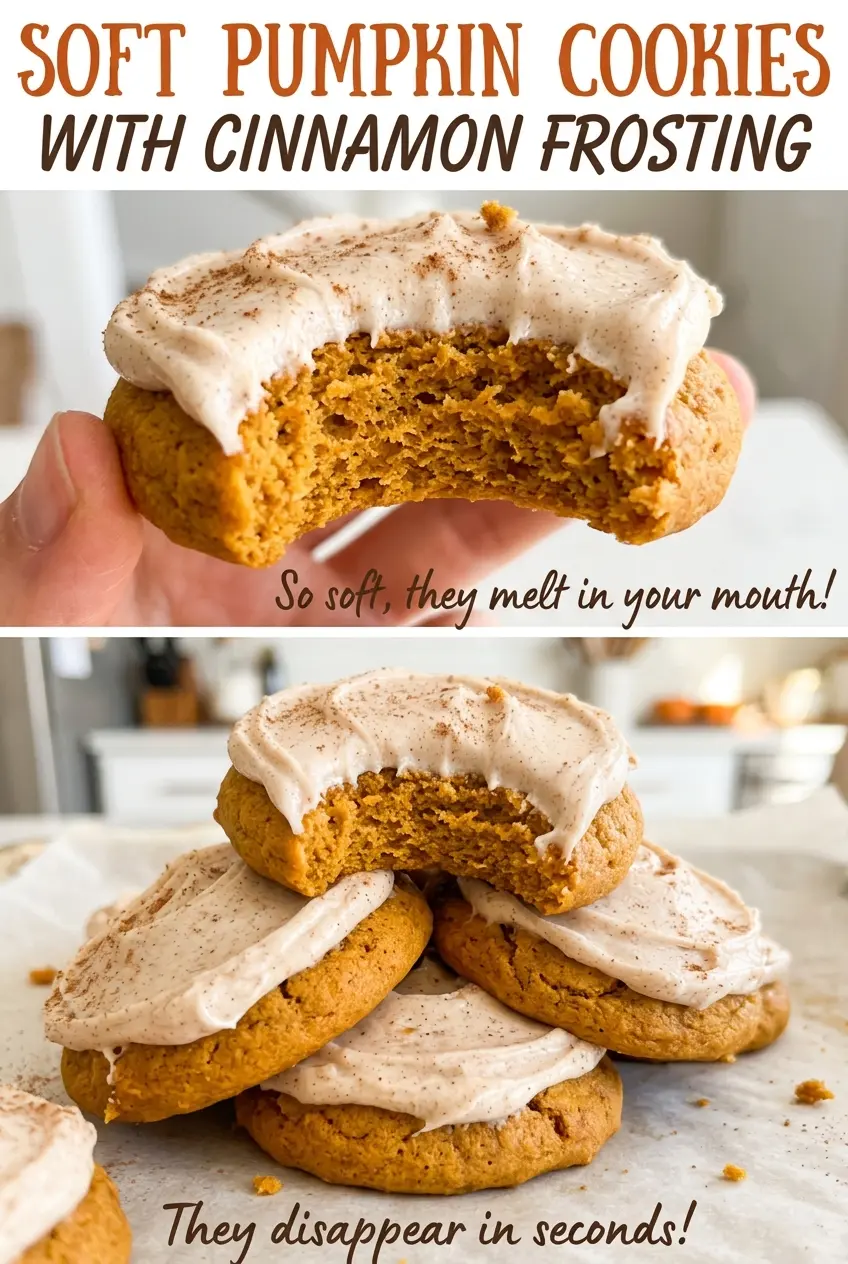
Save these soft pumpkin cookies with cinnamon frosting for a fall baking day—the tender spiced cookies are finished with a creamy cinnamon topping.
Pumpkin Purée Makes These Cookies Soft, Not Chewy
Pumpkin puree adds moisture to cookie dough, so these bake with a soft, tender crumb rather than the crisp edge and chewy center you might expect from a classic sugar cookie. That texture is the point. The tops should set and spring back lightly when touched, but the cookies won’t turn crisp or deeply browned before they’re ready.
Using plain canned pumpkin puree matters because pumpkin pie filling is already sweetened and spiced. It would change both the sweetness and the balance of cinnamon, ginger, and nutmeg. The puree also carries enough moisture on its own, so don’t try to correct the soft dough by adding extra flour. A little softness is normal; mixing in flour beyond the listed amount can leave the baked cookies dry and dense.
The dough gets its structure from the flour and leavening, while the pumpkin keeps the middle moist. Mixing only until the flour disappears gives those ingredients a chance to do their jobs without developing a tough texture. Think soft, gently spiced cookies—not crisp pumpkin snaps.
Why Canned Pumpkin and Brown Sugar Shape the Crumb
- Canned pumpkin puree — Choose a can labeled pumpkin puree, not pumpkin pie filling. The puree gives these cookies their moist texture and pumpkin flavor; pie filling brings extra sweetener and spices that throw off the dough. There isn’t a direct swap that keeps the result the same.
- Brown and granulated sugar — Brown sugar adds a deeper sweetness and helps keep the crumb tender, while granulated sugar balances it. Pack the brown sugar when measuring so the dough has the intended sweetness and moisture.
- Softened butter — Butter should give slightly when pressed but shouldn’t look melted or greasy. Softened butter creams with the sugars and creates a smooth base; melted butter won’t give the same structure.
- Cinnamon, ginger, and nutmeg — The combination makes the pumpkin taste warm and rounded rather than dominated by one spice. Ground spices from a recently opened jar will be more fragrant, but the standard grocery-store versions work just fine.
- Powdered sugar and milk — Powdered sugar gives the frosting its smooth, spreadable body, and the milk loosens it into a creamy topping. Use unsalted butter in the frosting so its sweetness and cinnamon stay in the foreground.
Mixing and Baking the Cookies Without Toughening Them
Whisk the dry ingredients evenly
Heat the oven to 350°F and line a large baking sheet with parchment paper. Whisk the flour, baking powder, baking soda, cinnamon, ginger, nutmeg, and salt together in a medium bowl so the leavening and spices are distributed throughout. Break up any visible spice clumps as you whisk. Set the bowl aside while you cream the butter and sugars.
Cream the butter and build the pumpkin dough
Beat the softened butter with the brown sugar and granulated sugar in a large bowl using an electric mixer until creamy, about 2 minutes. Beat in the egg and vanilla, then mix in the pumpkin puree until combined. Add the flour mixture and mix just until no dry streaks remain. Stop there; beating longer after the flour goes in can make the cookies less tender.
Scoop, bake, and cool completely
Drop rounded 2-tablespoon portions of dough about 2 inches apart on the parchment-lined sheet. Bake one batch at a time for 12–14 minutes, until the tops are set and spring back lightly when touched. Leave the cookies on the baking sheet for 5 minutes, then transfer them to a wire rack to cool completely. Let the baking sheet cool before putting the remaining dough on it.
Beat and spread the cinnamon frosting
Beat the softened butter in a medium bowl until smooth. Add the powdered sugar, cinnamon, vanilla, and milk, then beat until the frosting is creamy. The cookies need to be completely cool before you spread it over the tops; residual warmth can soften the butter in the frosting and make it slide. Spread a layer over each cookie once they’re ready.
Three Ways to Adapt the Pumpkin Cookies
Make a gluten-free batch
Replace the all-purpose flour with a measure-for-measure gluten-free baking blend that includes xanthan gum, using the same quantity. The cookies may have a slightly different crumb, but the blend is designed to replace wheat flour without changing the rest of the ingredient list.
Use dairy-free butter and milk
For a dairy-free version, use dairy-free baking butter in place of both portions of butter and unsweetened plant milk in place of the milk. Choose a firm baking stick rather than a soft tub spread, which can make the dough and frosting looser. The frosting may set up a little differently, but it keeps the cinnamon finish.
Skip the frosting for a less-sweet cookie
Leave off the cinnamon frosting and serve the cooled cookies plain. You’ll taste the pumpkin and the spices more directly, and the cookies will be less sweet. This is also the simplest option if you want to freeze the cookies for later.
Storage and Reheating
- Refrigerator: Store frosted cookies in an airtight container for up to 5 days. The frosting firms up when cold, and the cookies feel softer after they sit at room temperature briefly.
- Freezer: Freeze unfrosted cookies in an airtight container with parchment between layers for up to 2 months. Thaw at room temperature, then frost if you like.
- Reheating: These are best served without reheating. Let refrigerated cookies sit at room temperature for about 20 minutes; microwaving can melt the frosting and make it slide.
Questions That Come Up While Baking Pumpkin Cookies
Soft Pumpkin Cookies with Cinnamon Frosting
Ingredients
Equipment
Method
- Heat the oven to 350°F.
- Line a large baking sheet with parchment paper.
- Whisk the flour, baking powder, baking soda, cinnamon, ginger, nutmeg, and salt together in a medium bowl.
- In a large bowl, beat the softened butter, brown sugar, and granulated sugar with an electric mixer until creamy, about 2 minutes.
- Beat in the egg and vanilla.
- Mix in the pumpkin puree until combined.
- Add the flour mixture and mix just until no dry streaks remain.
- Drop rounded 2-tablespoon portions of dough about 2 inches apart on the prepared baking sheet.
- Bake one batch at a time for 12–14 minutes, until the tops are set and spring back lightly when touched.
- Cool the cookies on the baking sheet for 5 minutes.
- Transfer the cookies to a wire rack to cool completely.
- Let the baking sheet cool before baking the remaining dough.
- Beat the softened butter in a medium bowl until smooth.
- Beat in the powdered sugar, cinnamon, vanilla, and milk until creamy.
- Spread the frosting over the completely cooled cookies.