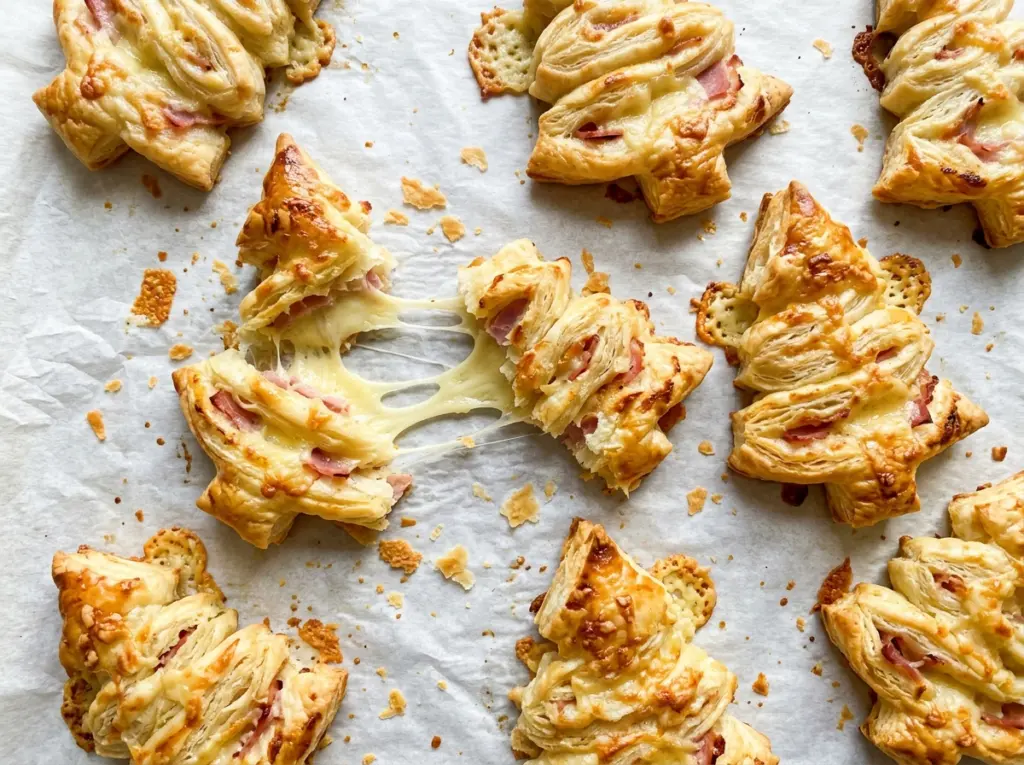
When the pastry sheets slide out of alignment, the tree shape gets lopsided before the filling even goes on. I stack the two sheets first and cut through both at once; that gives each tree a matching top and bottom, with edges that line up when it’s time to seal. These ham and cheese puff pastry Christmas trees turn deli ham and Swiss into a savory, pull-apart holiday appetizer without any complicated shaping.
Dijon mustard adds a little tang beneath the filling, and the egg wash helps the pastry bake up glossy and deeply golden. The part that takes a light touch is cutting the branches: stop before the center so the tree keeps its spine, then twist each branch without pulling the pastry out of shape. After a short rest on the pans, the layers are crisp at the edges and tender around the warm ham and cheese.
Kitchen Note
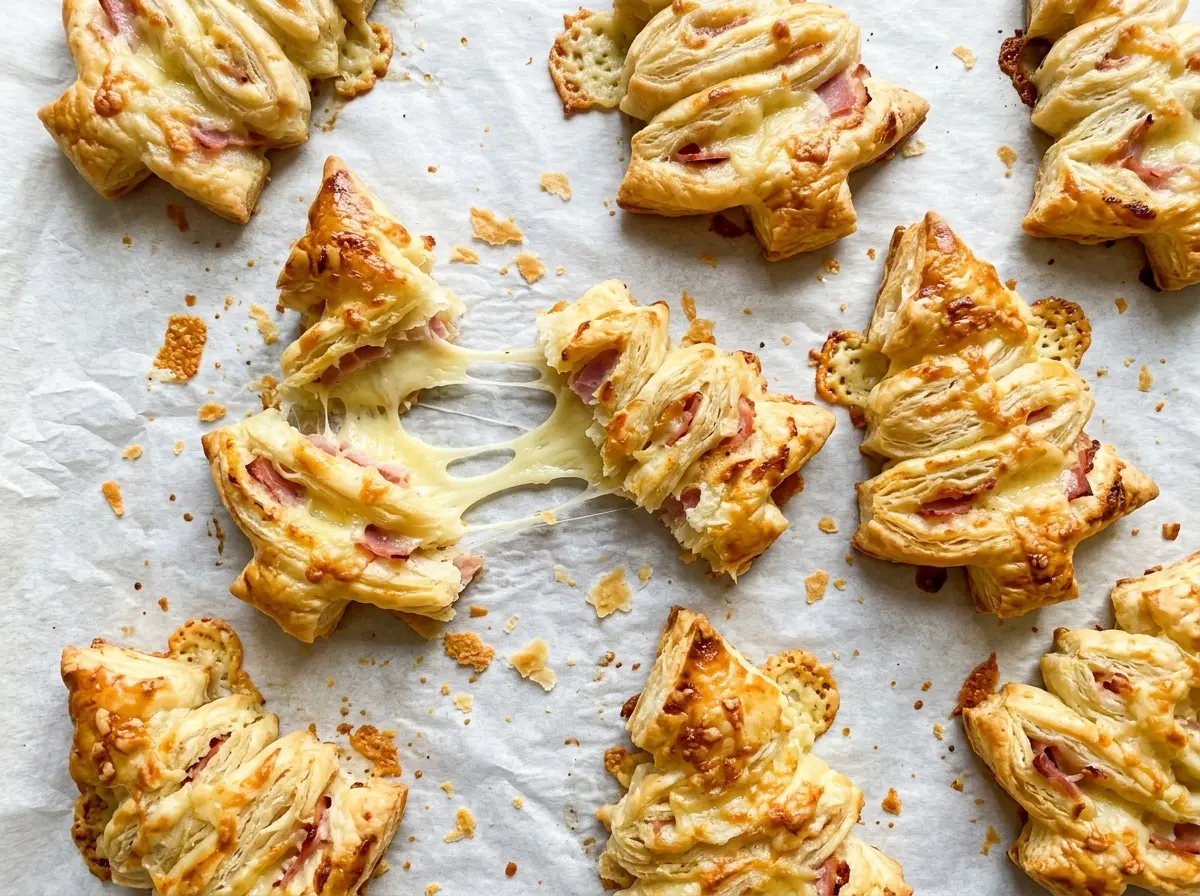
Twist each branch twice, but don’t crank it tight. A gentle twist leaves room for the layers to puff and keeps the branches from looking pinched after baking.
Save these ham and cheese puff pastry Christmas trees for a holiday appetizer with crisp, golden branches and a savory Swiss filling.
Why Cutting the Pastry Sheets as a Pair Makes the Trees Easier to Fill
A filled pastry tree has two outlines to manage: the base and the top. Cutting the sheets together gives you matching shapes, so you’re not trying to stretch one piece or trim it after the filling is already in place. Keep the cut tops nearby and pair each one with its own base; that simple organization makes assembly calmer and helps the edges meet evenly.
The shape also does more than look festive. The centered spine gives the branches a sturdy middle, while the sloping sides leave room for the ham and cheese between the layers. A short rectangular trunk completes the outline without making the bottom branches hard to handle. If the sides are uneven, don’t try to pull the pastry into a new shape once it’s filled. Press the matching edges lightly together and keep the tree flat on its parchment-lined pan.
Working with one tree at a time is useful here. Spread the mustard and divide the filling over a base, then add its matching top before moving on to the other tree. That keeps the exposed pastry from sitting while you finish assembling the second one, and it’s easier to see whether the filling is staying inside the border.
What the Pastry, Dijon, and Swiss Each Bring to These Trees

- Frozen puff pastry — Its many thin layers are what create the tree’s lift and flaky branches. Thaw it according to the package directions so it’s workable for stacking and cutting; pastry that’s still hard can crack, while pastry that’s too soft is difficult to handle. A gluten-free puff pastry is the most useful option for a gluten-free adaptation, though the texture and puff can differ from standard pastry.
- Dijon mustard — The mustard adds a sharp, savory layer that keeps the ham-and-cheese filling from tasting one-note. A smooth Dijon spreads evenly without weighing down the pastry. For a milder version, leave it out; the trees will still hold together, but they’ll lose that tangy contrast.
- Deli ham — Finely chopping the ham helps it distribute through the branches instead of leaving bulky pieces that make the top difficult to seal. Choose ham you like eating on its own; the flavor comes through clearly. Finely chopped deli turkey can replace it for a lighter, less smoky filling.
- Swiss cheese — Shredded Swiss melts into the ham and gives the filling its nutty, savory character. Shred it finely enough to spread in an even layer. Shredded cheddar works as a swap for a sharper, more familiar cheese flavor.
- Egg and water — Beating them together makes a thin egg wash that brushes over the pastry surface. It helps the finished trees take on a deeper golden color. Brush lightly so the wash coats the top without pooling around the edges.
How to Shape Branches That Stay Attached and Puff Up
Cut Matching Tree Shapes
Heat the oven to 400°F and line two rimmed baking sheets with parchment paper. For each tree, stack two pastry sheets and cut through both into a shape with a centered point, sloping sides, and a short rectangular trunk at the bottom. Put one cut sheet on each prepared pan and set its matching top aside. Keeping the pairs together makes the next stage straightforward.
Layer the Mustard, Ham, and Swiss
Spread 1 tablespoon of Dijon mustard over each bottom pastry, leaving a 1/2-inch border clear around the edges. Divide the finely chopped ham and shredded Swiss between the two bases, spreading the filling so it reaches the branches without crossing the border. Add the matching pastry tops and press the edges lightly to seal. If filling catches at the edge, move it back toward the center before pressing.
Cut and Twist the Branches
Cut horizontal slits through both pastry layers from each sloping edge toward the center, stopping about 1 1/2 inches short of the center spine. Space the slits about 3/4 inch apart so the branches are distinct and have room to puff. Twist each branch twice, keeping the center intact. Beat the egg with the water and brush the wash over the pastry.
Bake Until Deep Golden
Bake the trees for 20 to 25 minutes, switching the pans’ positions halfway through. Look for pastry that’s visibly puffed and deep golden brown, not pale around the center or trunk. Let the trees rest on the pans for 5 minutes before serving; the short rest makes them easier to lift and gives the hot filling a moment to settle.
Simple Ways to Adapt the Ham and Swiss Filling
A milder tree without Dijon
Leave out the Dijon for a gentler ham-and-cheese flavor. The filling will be less tangy, but the pastry, ham, and Swiss still make a savory appetizer; keep the other ingredients and shaping method the same.
A gluten-free pastry version
Use gluten-free puff pastry in place of the regular puff pastry, following its package directions for thawing. Handle it gently while stacking and cutting, since some gluten-free pastry is more delicate and may not puff quite as much. Check the package labels on the other ingredients if you need to avoid gluten.
Turkey and cheddar branches
Replace the ham with finely chopped deli turkey and the Swiss with shredded cheddar. The filling becomes milder and less nutty, with a sharper cheese note; use the same amount of each replacement as the ham and cheese in the original version.
Storage and Reheating
- Refrigerator: Store leftovers covered for 3 to 4 days. The pastry softens in the refrigerator, so it won’t stay as flaky as it is fresh.
- Freezer: Baked leftovers freeze well when wrapped airtight; use them within 1 to 2 months for the best texture. Thaw in the refrigerator before reheating.
- Reheating: Warm the trees in the oven until heated through and crisp again. The microwave is quicker, but it softens the pastry rather than bringing back its flaky texture.
Questions That Come Up While Making Puff Pastry Trees
Ham and Cheese Puff Pastry Christmas Trees
Ingredients
Equipment
Method
- Heat the oven to 400°F.
- Line 2 rimmed baking sheets with parchment paper.
- For each tree, stack 2 pastry sheets and cut through both into a tree shape with a centered point, sloping sides, and a short rectangular trunk at the bottom.
- Place one cut sheet on each prepared pan and set the matching tops aside.
- Spread 1 tablespoon Dijon mustard over each bottom pastry, leaving a 1/2-inch border.
- Divide the ham and cheese between them.
- Add the matching pastry tops and press the edges lightly to seal.
- Cut horizontal slits through both pastry layers from each sloping edge toward the center, stopping about 1 1/2 inches short of the center spine and spacing the slits about 3/4 inch apart.
- Twist each branch twice.
- Beat the egg with the water.
- Brush the egg mixture over the pastry.
- Bake for 20 to 25 minutes, switching the pans’ positions halfway through, until the pastry is puffed and deep golden brown.
- Let the trees rest on the pans for 5 minutes before serving.