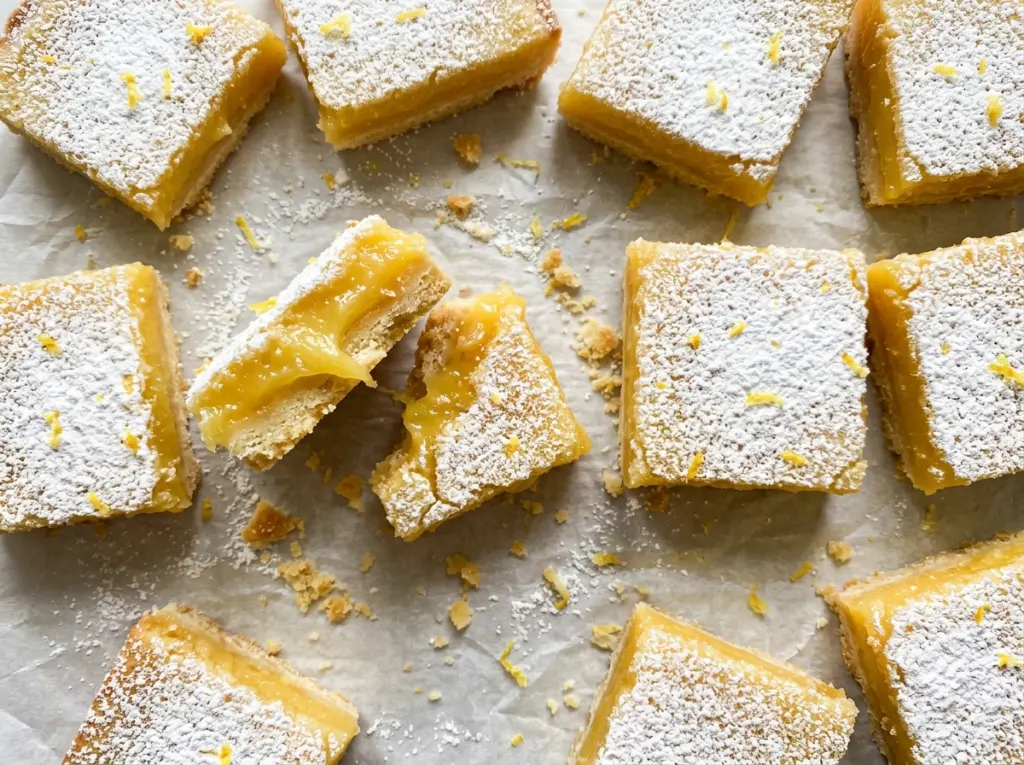
At 350°F, the edges of the shortbread turn lightly golden while the middle stays pale. That’s the cue I look for before the lemon filling goes on. These Lemon Bar Cookies bake in two stages, so the crust has time to set before the bright, gently wobbly center starts cooking.
The filling comes together while the crust is in the oven: eggs and sugar first, then flour, lemon juice, and zest. Pour it over the crust while that base is still hot, and the two layers bake together without an extra cooling pause. Once the pan has cooled and chilled, the parchment overhang makes it easy to lift out the bars and cut them into neat squares. Each bite has a tender shortbread base, a tart lemon middle, and a light veil of powdered sugar.
Kitchen Note
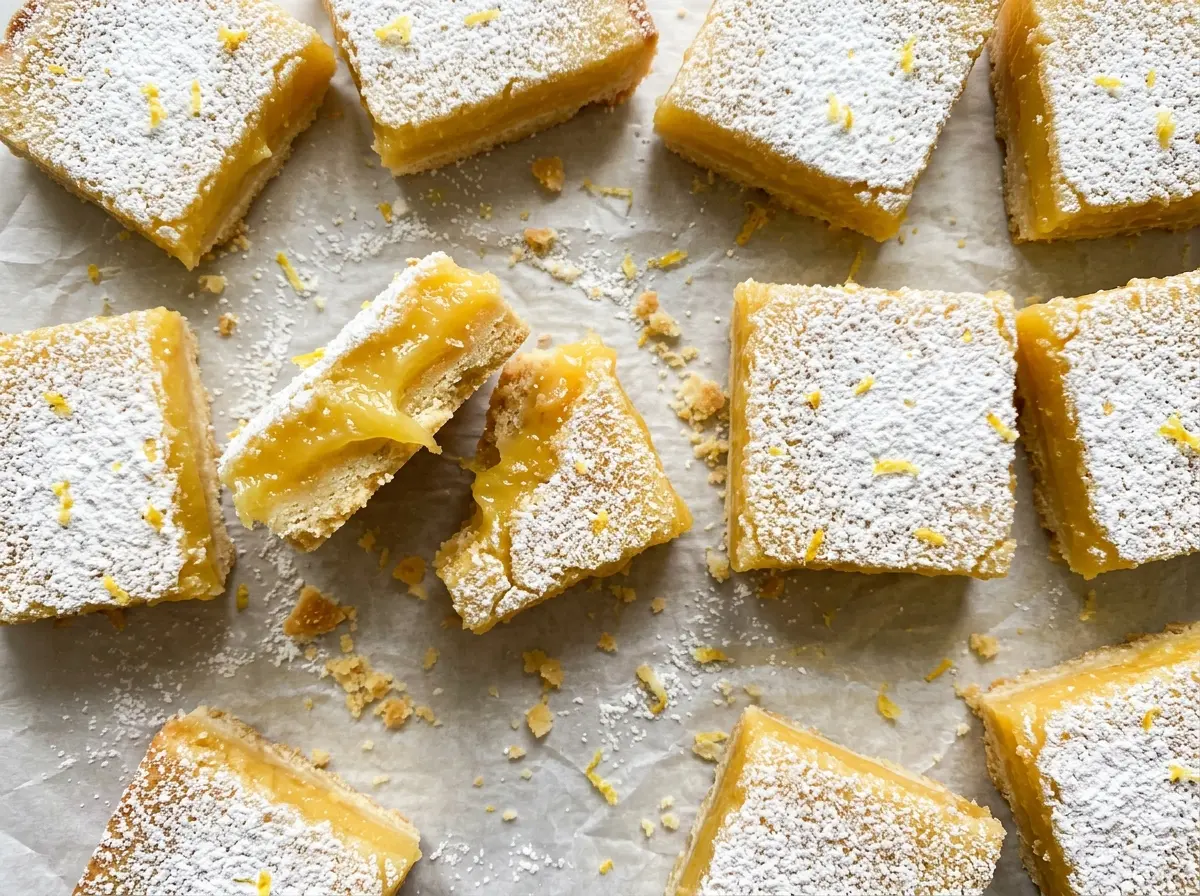
Pour the filling over the crust while it’s still hot. The filling is ready quickly, so whisk it while the crust bakes and have it waiting when the pan comes out.
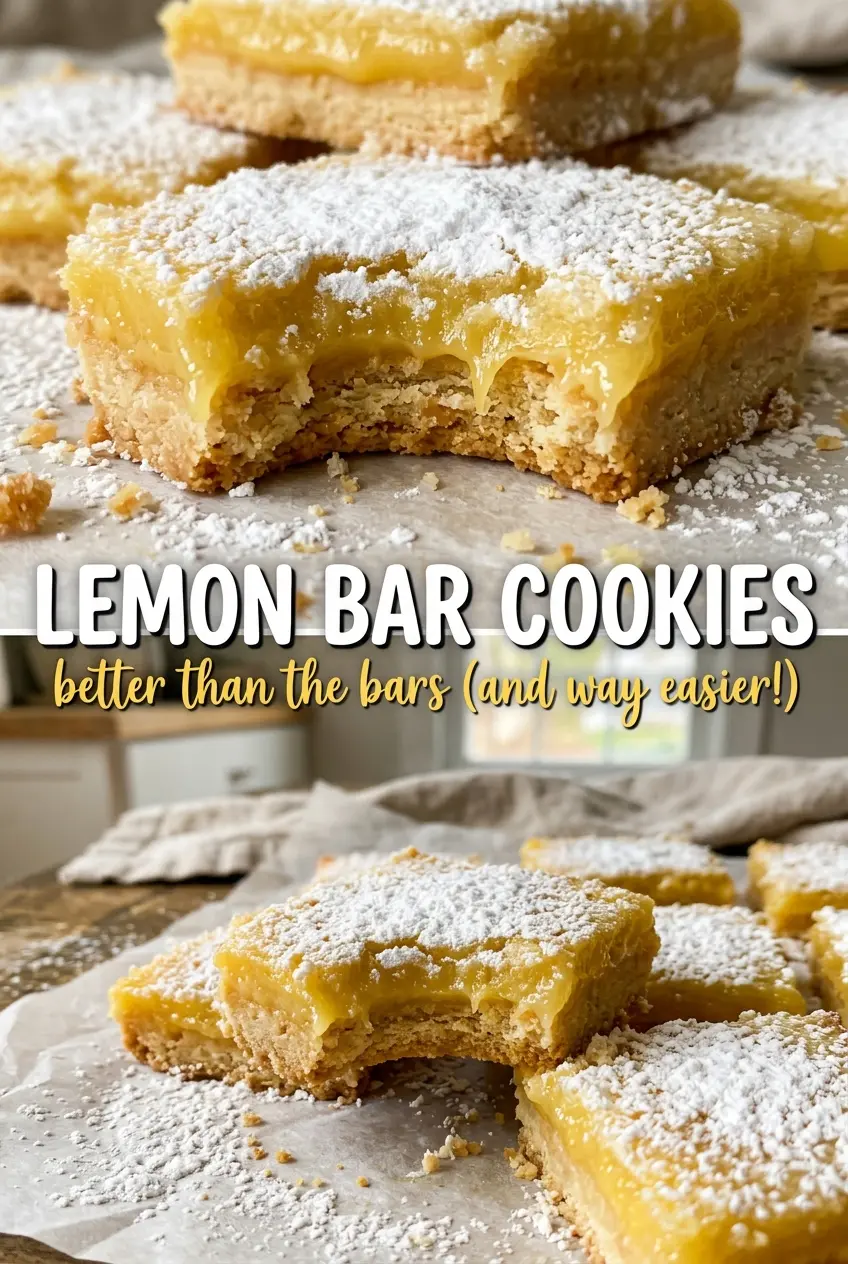
Save these Lemon Bar Cookies for their crisp shortbread base, tart lemon center, and snowy powdered sugar finish.
Why the Shortbread Starts With Powdered Sugar, Not Granulated
This base isn’t cookie dough meant to spread around a baking sheet. It’s a shortbread layer pressed into the bottom of the pan, and creaming softened butter with powdered sugar gives it a fine, tender texture. The sugar blends smoothly into the butter, so the crust comes together without needing to dissolve crystals or add liquid.
That texture matters because the crust has to support a soft lemon layer after chilling. Mix the flour and salt in only until a soft dough forms, then press it evenly into the pan. If you keep mixing after the dough comes together, the crust can turn tougher than you want. An even layer also helps the edges and center bake at a similar pace; thick spots stay softer while thin spots can brown first. Take a moment to spread the dough into the corners before it goes into the oven.
The powdered sugar in the topping has a different job from the sugar in the base. It gives the finished squares a light, delicate finish rather than adding another crunchy layer. Cut the chilled slab first, then dust the individual squares so the tops look clean and the lemon filling stays visible.
The Lemon Zest Does More Than Make the Filling Smell Bright
- Fresh lemons — The juice gives the filling its tartness, while the finely grated zest brings fragrant citrus oils that juice alone can’t provide. Measure the juice rather than relying only on the number of lemons; this batch uses 1/4 cup.
- Eggs — They give the lemon layer its custardy structure as it bakes. Whisk them with the granulated sugar until smooth before adding the flour, so the filling starts without streaks of egg white.
- All-purpose flour — Flour has two different roles here: it helps the shortbread hold together and gives the lemon filling enough body to slice after chilling. Keep the portions for the crust and filling separate as you prep.
- Unsalted butter — Softened butter creams smoothly with the powdered sugar and binds the crust. Unsalted butter lets the measured fine salt provide the seasoning without making the base taste too salty.
- Powdered and granulated sugar — Granulated sugar sweetens the tart filling, while powdered sugar blends into the crust and finishes the tops. They aren’t interchangeable here: each texture suits a different layer.
How to Bake Two Distinct Layers in One 8×8-Inch Pan
Line the pan for an easy lift
Heat the oven to 350°F, lightly grease an 8×8-inch baking pan, and line it with parchment paper. Leave an overhang on two sides so you can lift out the cooled, chilled slab later. Press the parchment into the corners rather than letting it bunch up, which can make the crust uneven. The overhang is your handle once the bars are ready to cut.
Press and bake the shortbread base
Beat the softened butter with the powdered sugar until creamy. Add the flour and fine salt, mixing only until you have a soft dough, then press it evenly across the bottom of the prepared pan. Bake for 18–22 minutes, watching for lightly golden edges. The middle can look paler; don’t wait for the whole surface to brown.
Whisk the lemon filling while the crust bakes
Whisk the eggs and granulated sugar until smooth, then whisk in the flour. Add the lemon juice and finely grated zest and mix until the filling looks even. Getting the filling ready during the crust’s bake keeps the next step simple. Pour it over the crust as soon as the crust comes out of the oven.
Bake until the center has only a slight wobble
Return the pan to the oven and bake the filling for 20–25 minutes. The edges should look set, while the center should still have a slight wobble rather than looking completely firm. Check that the center reaches 160°F. Cool the pan completely, refrigerate for at least 2 hours, then lift the slab out with the parchment and cut it into 16 squares.
Two Ingredient Swaps for a Different Batch
Make the shortbread gluten-free
Use a measure-for-measure gluten-free flour blend in place of the all-purpose flour in both the crust and the filling. Choose a blend intended to replace wheat flour in baking, rather than a single flour such as almond flour; the crust may be a little more delicate, but the lemon layer will still set into bars.
Trade lemon for lime
Use finely grated lime zest and enough fresh lime juice to measure 1/4 cup in place of the lemon zest and juice. The bars will taste sharper and more tropical, with the same buttery shortbread underneath. Measure the juice because limes vary in size and juiciness.
Keeping and Serving Lemon Bars
- Refrigerator: Keep the cooled bars covered in the refrigerator for up to 4 days.
- Freezer: Freeze the bars without the powdered sugar, with parchment between layers in an airtight container, for up to 2 months. Thaw them in the refrigerator.
- Serving: These bars are best served chilled or brought briefly to room temperature. Dust the squares after thawing or just before serving.
Questions That Come Up When Baking Lemon Bar Cookies
Lemon Bar Cookies
Ingredients
Equipment
Method
- Heat the oven to 350°F.
- Lightly grease an 8x8-inch baking pan.
- Line the pan with parchment paper, leaving an overhang on two sides.
- Beat the softened butter and 1/4 cup powdered sugar until creamy.
- Mix in the flour and salt just until a soft dough forms.
- Press the dough evenly into the prepared pan.
- Bake for 18–22 minutes, until the edges are lightly golden.
- While the crust bakes, whisk the eggs and granulated sugar until smooth.
- Whisk in the flour.
- Whisk in the lemon juice and zest.
- Pour the filling over the hot crust.
- Bake for 20–25 minutes, until the edges are set, the center has only a slight wobble, and the center reaches 160°F.
- Cool completely in the pan.
- Refrigerate for at least 2 hours.
- Lift the cookies out using the parchment.
- Cut into 16 squares.
- Dust with the remaining powdered sugar.