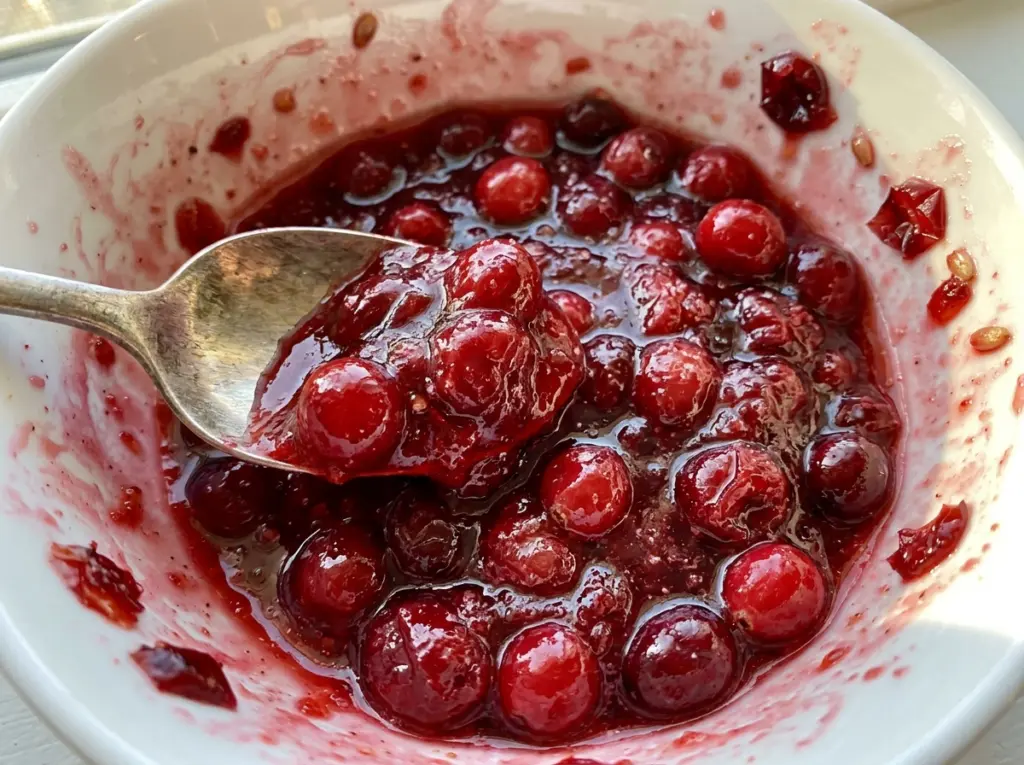
The cranberries hit the hot syrup and start popping before the pan has even settled back into a boil. That little burst is what turns three pantry-friendly ingredients into a tart, ruby-red sauce without chopping, zesting, or opening a can. I make this 3 Ingredient Cranberry Sauce when I want the berries to taste like berries, not like a long list of extras.
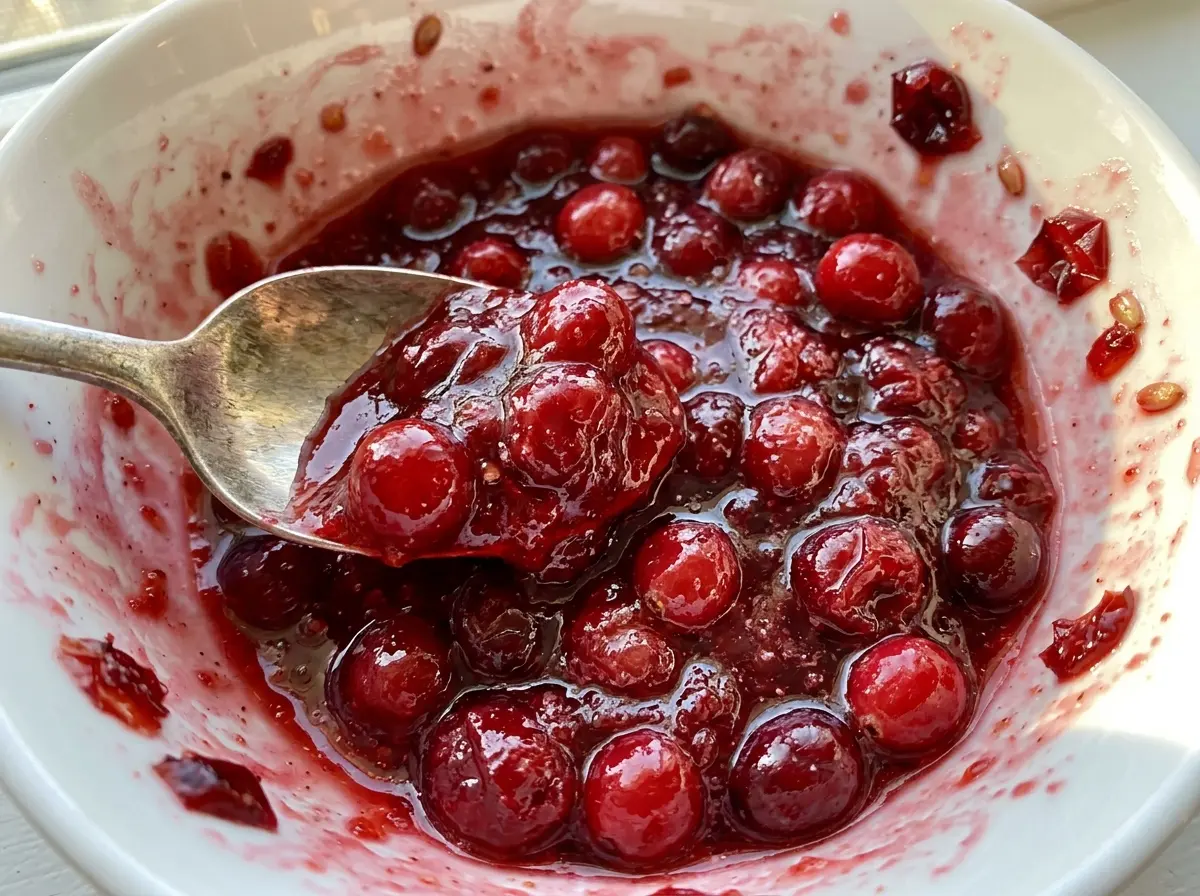
The order matters: dissolve the sugar in the water first, then stir in the cranberries. Once the berries simmer, most of them burst and release their juices, while a few keep their shape. The sauce looks loose when it’s hot, so give it time to cool and chill before deciding how it turned out. After a couple of hours in the refrigerator, it’s ready to spoon alongside a holiday meal or any roast dinner.
Kitchen Note
A 2-quart saucepan gives the bubbling syrup and cranberries room to move without crowding the rim. I reach for that size before I start, rather than trying to manage a full, spluttering pan later.
Save this 3 Ingredient Cranberry Sauce for a bright, berry-forward side that needs just three ingredients and a little time to chill.
Why Cranberry Sauce Looks Too Thin Before It Goes in the Fridge
Hot cranberry sauce can look more like a loose syrup than the spoonable condiment you had in mind. That’s expected. The berries have burst and released their juices, but the mixture hasn’t cooled enough to show its final texture yet. Don’t keep simmering just to make the hot sauce look thick; cooking it down too far can leave you with a stiff, sticky sauce after it chills.
Cranberries bring natural pectin, and cooling gives the sauce time to settle and thicken. The sugar also dissolves into the water and berry juices, creating the syrup that coats the fruit. That’s why the visual cue in the pan is “slightly syrupy,” not jam-thick. The refrigerator does part of the finishing work, so the two-hour chill isn’t an optional wait if you want the sauce to serve neatly.
Once chilled, expect a soft, spoonable texture with plenty of berries broken down and a few whole ones mixed through. If the sauce seems loose straight from the stove, follow the cooling step before making changes. A hot spoonful isn’t a reliable preview of what will land on the table.
Three Ingredients, Three Jobs in This Cranberry Sauce
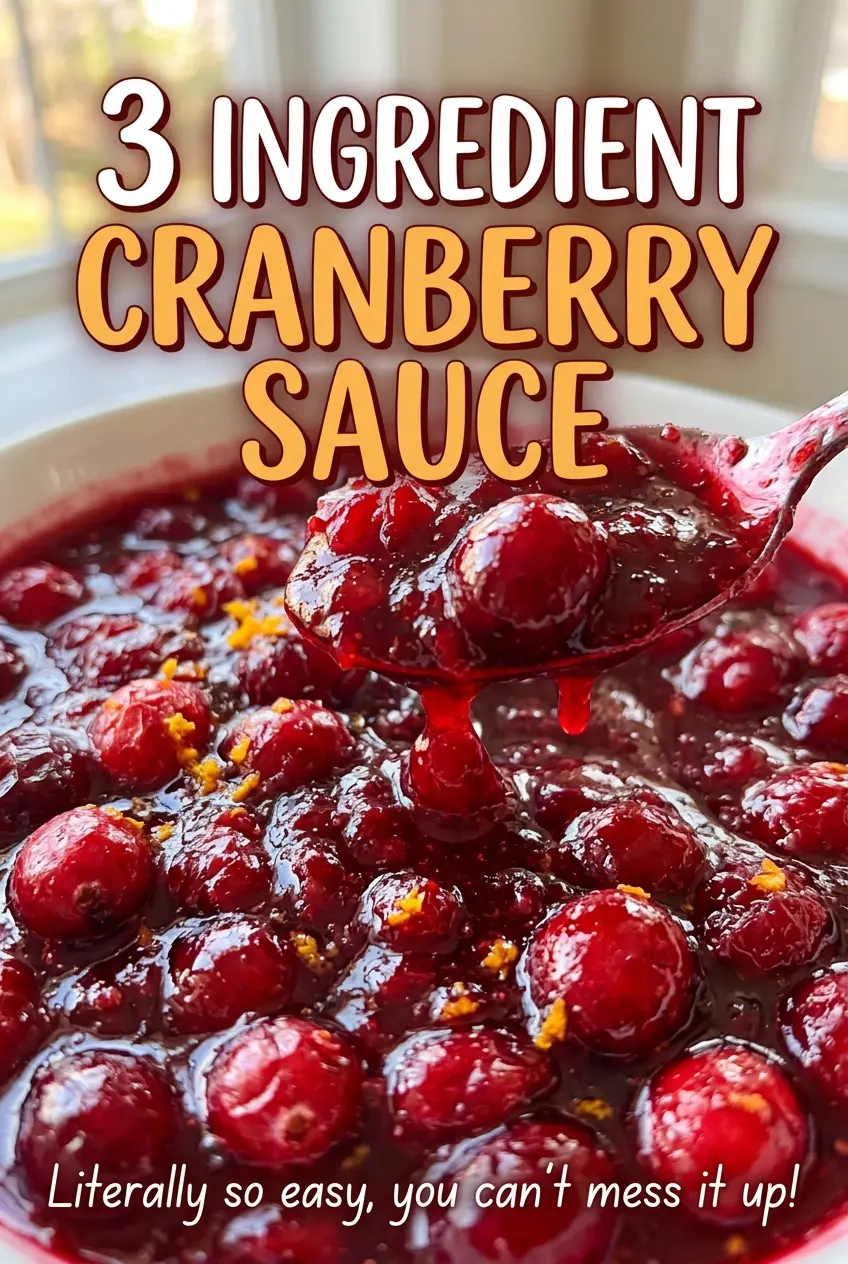
- Fresh or frozen cranberries — The berries supply the sharp, unmistakable cranberry taste and the fruit that gives the sauce its body. Either form works here; choose a plain bag of cranberries rather than dried fruit or a sweetened cranberry product. There’s no chopping or other prep called for before they go into the pan.
- Granulated sugar — Sugar softens the berries’ tartness and dissolves into the water and cranberry juices to form the syrup. Granulated sugar is the straightforward choice because it dissolves cleanly in the boiling water. A different sweetener isn’t a like-for-like swap in this three-ingredient balance, so I keep this ingredient as written.
- Water — Water gives the sugar a liquid base to dissolve in and gives the cranberries liquid to simmer in as they begin to burst. Tap water is fine; there’s no need for broth or juice, which would change the sauce’s clean cranberry flavor.
Build the Sauce in Three Stages, Then Let It Chill
Dissolve the Sugar Before Adding Fruit
Combine the water and granulated sugar in a 2-quart saucepan and bring it to a boil over medium-high heat, stirring until the sugar dissolves. The liquid should look clear rather than cloudy with loose sugar crystals. If sugar is still visible on the bottom, keep stirring as the water heats. Starting with dissolved sugar gives the cranberries a smooth syrup to cook in.
Simmer Until Most Berries Have Burst
Stir in the cranberries and bring the mixture back to a boil. Reduce the heat and simmer for 10 to 12 minutes, stirring occasionally. You’ll hear the berries pop as they soften, and most should split open by the end; a few whole berries are fine. The sauce should look slightly syrupy, not thick like jam while it’s still hot.
Cool Completely, Then Refrigerate
Take the saucepan off the heat and let the sauce cool to room temperature. Cover it and refrigerate for at least 2 hours before serving. The chilled sauce will be thicker and easier to spoon than it was in the pan. If you’re packing it away, use a covered container so it doesn’t pick up other refrigerator odors.
Fresh or Frozen: Choose the Cranberries You Have
Use fresh cranberries when they’re on hand
Fresh berries make this sauce with no change to the ingredient list or method. Look for a bag of plain cranberries, then stir them into the dissolved sugar syrup and cook until most have burst. The result stays focused on the berries, sugar, and water.
Frozen cranberries work in the same three-ingredient sauce
A bag of frozen cranberries is the other option for this recipe, and it keeps the same tart cranberry character without introducing another ingredient. Use cranberries rather than a sweetened cranberry blend so the sugar balance stays tied to this sauce. The method still centers on dissolving the sugar first and simmering until most of the berries burst.
Storage and Reheating
- Refrigerator: Keep the sauce covered and refrigerated for 3 to 4 days. It will stay thick and spoonable when cold.
- Freezer: It freezes well in a sealed freezer-safe container for up to 2 months. Leave a little room at the top, thaw it in the refrigerator, and stir before serving.
- Reheating: This sauce is served chilled, but you can warm a portion gently in a small saucepan over low heat, stirring until loosened. Don’t bring it to a hard boil; that can reduce the syrup and make the sauce sticky.
Questions That Come Up With Three-Ingredient Cranberry Sauce
3 Ingredient Cranberry Sauce
Ingredients
Equipment
Method
- Combine the water and sugar in a 2-quart saucepan and bring to a boil over medium-high heat, stirring until the sugar dissolves.
- Stir in the cranberries and return the mixture to a boil.
- Reduce the heat and simmer for 10 to 12 minutes, stirring occasionally, until most of the berries have burst and the sauce looks slightly syrupy.
- Remove the pan from the heat and let the sauce cool to room temperature.
- Cover and refrigerate for at least 2 hours before serving.