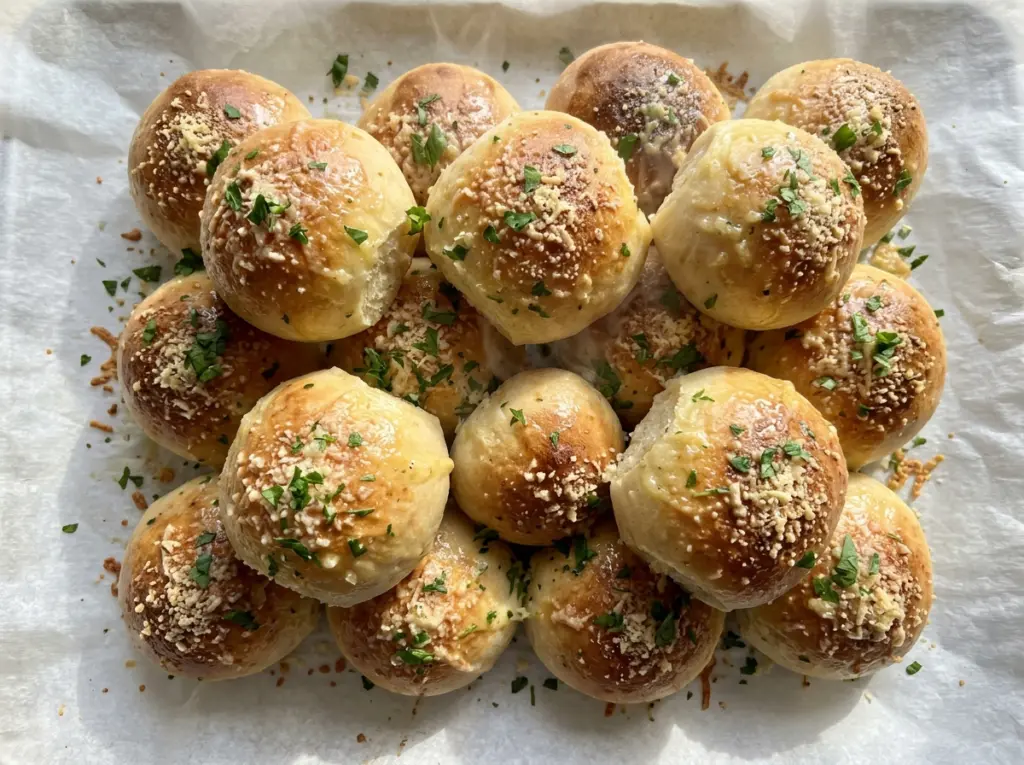
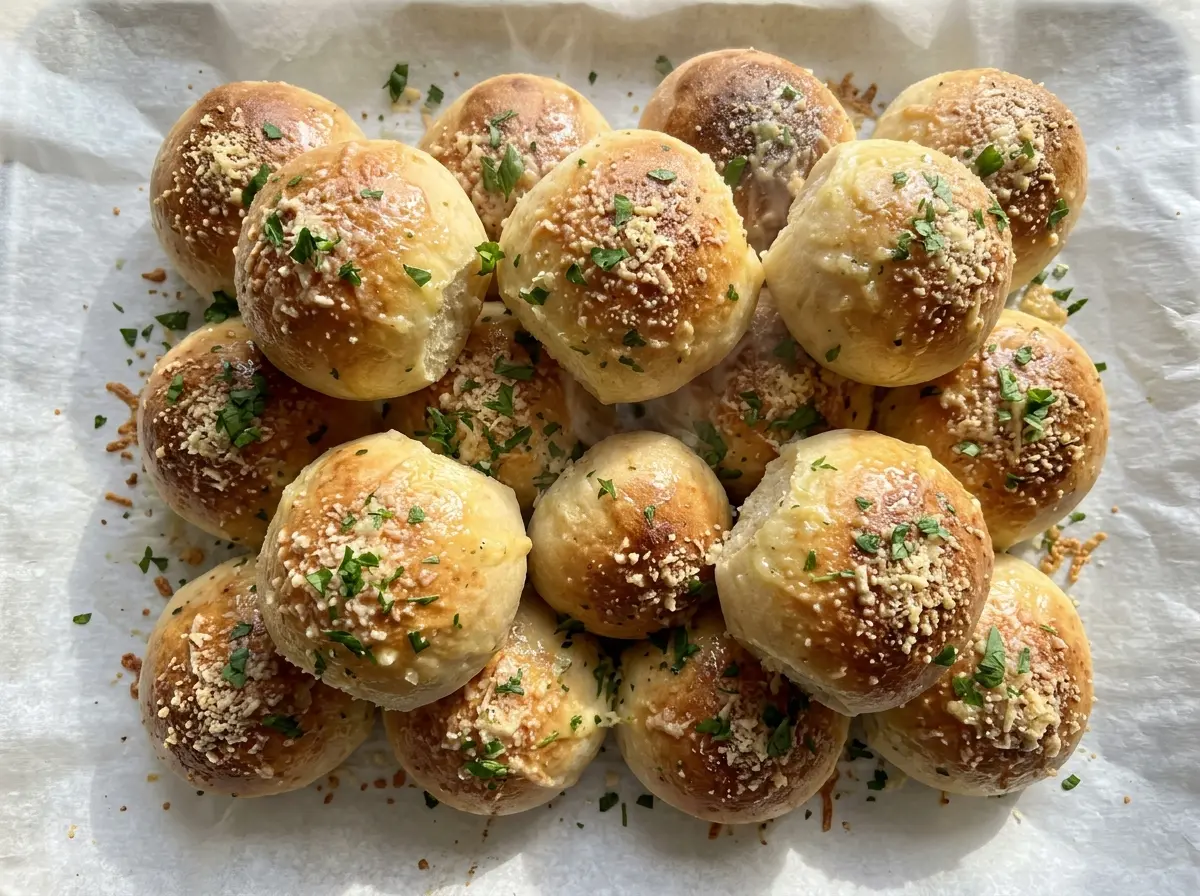
The dough starts out soft and a little shaggy, then turns smooth under your hands as you knead. That change is the cue I watch for before shaping these garlic Parmesan dinner rolls; it matters more than making every ball perfectly round. Once they rise together in the baking dish, the rolls bake into a soft pull-apart batch with golden tops and a savory Parmesan finish.
I work the Parmesan into the dough near the end of kneading, after the flour has had time to come together into an elastic dough. The cheese is finely grated, so it distributes through the rolls without leaving big pockets that interrupt the soft crumb. A quick garlic butter goes on while the rolls are hot, which helps the Parmesan and parsley cling to the tops instead of falling off.
They’re rich enough to stand beside dinner, but the warm garlic aroma makes it hard not to pull one apart as soon as the five-minute rest is over. The centers stay tender, and every top gets a buttery, garlicky finish.
Kitchen Note
The milk should feel warm, not hot, and the yeast mixture should look foamy after it rests. If you don’t see that foam, pause before adding the flour; active yeast is what gives these rolls their lift.
Save these garlic Parmesan dinner rolls for a soft, pull-apart batch topped with warm garlic butter, Parmesan, and parsley.
Why the Parmesan Goes In After the Dough Turns Elastic
Cheese can make a yeast dough harder to work if it’s added before the flour has had a chance to form a smooth, stretchy structure. I let the dough develop first, then knead in the finely grated Parmesan near the end. That order gives the dough a head start, so it’s easier to bring together and the cheese spreads through it rather than clumping in one spot.
Pay attention to the feel of the dough as you knead. It should become smooth and elastic over the full 8–10 minutes, not stay ragged or tear every time you stretch it. The Parmesan adds savory flavor inside the rolls, while the separate topping gives the outside a more pronounced garlic-and-cheese finish. Keeping those jobs separate is what makes the rolls taste seasoned throughout without relying on a heavy coating on top.
Finely grated cheese is especially useful here: it disappears into the dough more evenly than coarse shreds. Add it near the end, and keep kneading until the dough looks cohesive again rather than stopping as soon as the cheese goes in.
What the Milk, Yeast, and Two Parmesan Additions Each Do

- Whole milk and active dry yeast — The milk hydrates the flour and brings richness, while the yeast provides the lift that makes the rolls soft instead of dense. Warm the milk to the specified range before stirring in the sugar and yeast; milk that’s too hot can keep the yeast from working as it should. Use active dry yeast that’s fresh enough to foam during its short rest.
- All-purpose flour — This gives the dough its structure and makes it easy to knead into individual rolls. Add it gradually rather than tipping it all in at once; the dough should become smooth and elastic, not stiff from excess flour. Measuring flour carefully helps keep the finished rolls tender.
- Finely grated Parmesan in the dough — A fine grate distributes the cheese through the dough, adding a salty, savory note to the crumb. A wedge grated finely at home works well, and finely grated packaged Parmesan is convenient here. Coarse shreds won’t blend through the dough as evenly.
- Garlic, Parmesan, and fresh parsley for the topping — Minced garlic releases its aroma quickly in butter, so the short cook over low heat is enough. Finely grated Parmesan melts into the warm butter, while chopped parsley adds a fresh finish. Keep the topping ingredients separate from the dough’s Parmesan so the rolls have both savory centers and a garlicky top.
- Egg and melted butter in the dough — The egg contributes tenderness and helps bind the dough; cooled melted butter adds richness without heating the yeast mixture. Let the butter cool before mixing it in, so it doesn’t undo the careful milk temperature.
From Foamy Yeast to Golden, Pull-Apart Tops
Wake Up the Yeast Without Overheating the Milk
Warm the milk to 105–110°F, then stir in the sugar and active dry yeast. Let the mixture stand for 5–10 minutes, until foam forms on top. That foamy surface is your sign to continue; a flat mixture means the yeast hasn’t shown the activity you want. Avoid rushing this brief rest, because the dough depends on the yeast for its rise.
Knead Until Smooth, Then Work In the Cheese
Stir the egg, cooled melted butter, and salt into the yeast mixture. Add the flour gradually, then knead for 8–10 minutes until the dough feels smooth and elastic. Knead in the finely grated Parmesan near the end, and continue until it’s distributed without leaving the dough rough or streaky. If it feels sticky at first, keep working it before adding extra flour; the dough should become elastic as you knead.
Give the Dough Time to Double
Set the dough in a lightly greased bowl, cover it, and let it rise in a warm spot for 1–1 1/2 hours. Look for the dough to double in size rather than relying on the clock alone, since a cooler or warmer spot changes how quickly it rises. Keep it covered so the surface doesn’t dry out. If it hasn’t doubled, give it more time before shaping.
Shape the Rolls and Let Them Puff in the Dish
Grease a 9×13-inch baking dish and divide the dough into 12 equal pieces. Shape each piece into a ball and arrange them in the dish, then cover and let rise for 30–45 minutes, until puffy. The rolls should look fuller before they go into the oven; skipping this second rise leaves them tighter. Heat the oven to 375°F and bake for 18–22 minutes, until the tops are golden brown.
Make the Garlic Butter While the Rolls Bake
While the rolls bake, melt the butter in a small saucepan over low heat. Add the minced garlic and cook for about 30 seconds, just until fragrant; don’t let it brown, since browned garlic can taste bitter. Take the pan off the heat and stir in the Parmesan and parsley. Brush the topping over the rolls as soon as they come out of the oven, then let them rest for 5 minutes before serving.
Easy Ways to Change the Garlic Parmesan Finish
A garlic-free Parmesan topping
Leave the minced garlic out of the topping and keep the butter, Parmesan, and parsley. The rolls still get a savory, buttery finish, but the garlic aroma is gentler and won’t dominate the meal.
Parmesan rolls without parsley
Skip the chopped parsley and finish the hot rolls with the garlic-Parmesan butter. The topping will taste richer and more focused on garlic and cheese, without the fresh herbal note.
Soft Parmesan rolls with no topping
Leave off the garlic-Parmesan butter and serve the baked rolls plain. The Parmesan kneaded into the dough still gives each roll a savory center, while the tops stay softer and less buttery.
Storage and Reheating
- Room temperature: Keep cooled rolls covered in an airtight container for up to 2 days; the tops soften under cover.
- Refrigerator: Store airtight for up to 4 days. Chilling can make bread feel firmer, so warm the rolls before serving.
- Freezer: Freeze cooled rolls in an airtight freezer bag for up to 2 months. Thaw at room temperature before reheating.
- Reheating: Warm the rolls in the oven until heated through, or microwave one briefly. Long microwave heating can make bread tough, so stop as soon as the center is warm.
Questions That Come Up While Making These Dinner Rolls
Garlic Parmesan Dinner Rolls
Ingredients
Equipment
Method
- Warm the milk to 105–110°F, then stir in the sugar and yeast. Let stand for 5–10 minutes until foamy.
- Stir in the egg, melted butter, and salt.
- Add the flour gradually, then knead for 8–10 minutes until the dough is smooth and elastic, kneading in the 1/2 cup Parmesan near the end.
- Place the dough in a lightly greased bowl, cover, and let rise in a warm spot for 1–1 1/2 hours, until doubled in size.
- Grease a 9x13-inch baking dish.
- Divide the dough into 12 equal pieces, shape into balls, and arrange in the dish.
- Cover and let rise for 30–45 minutes, until puffy.
- Heat the oven to 375°F.
- Bake the rolls for 18–22 minutes, until golden brown.
- While the rolls bake, melt the butter in a small saucepan over low heat.
- Add the garlic and cook for about 30 seconds until fragrant, then remove from the heat.
- Stir in the Parmesan and parsley.
- Brush the hot rolls with the garlic-Parmesan butter and let rest for 5 minutes before serving.