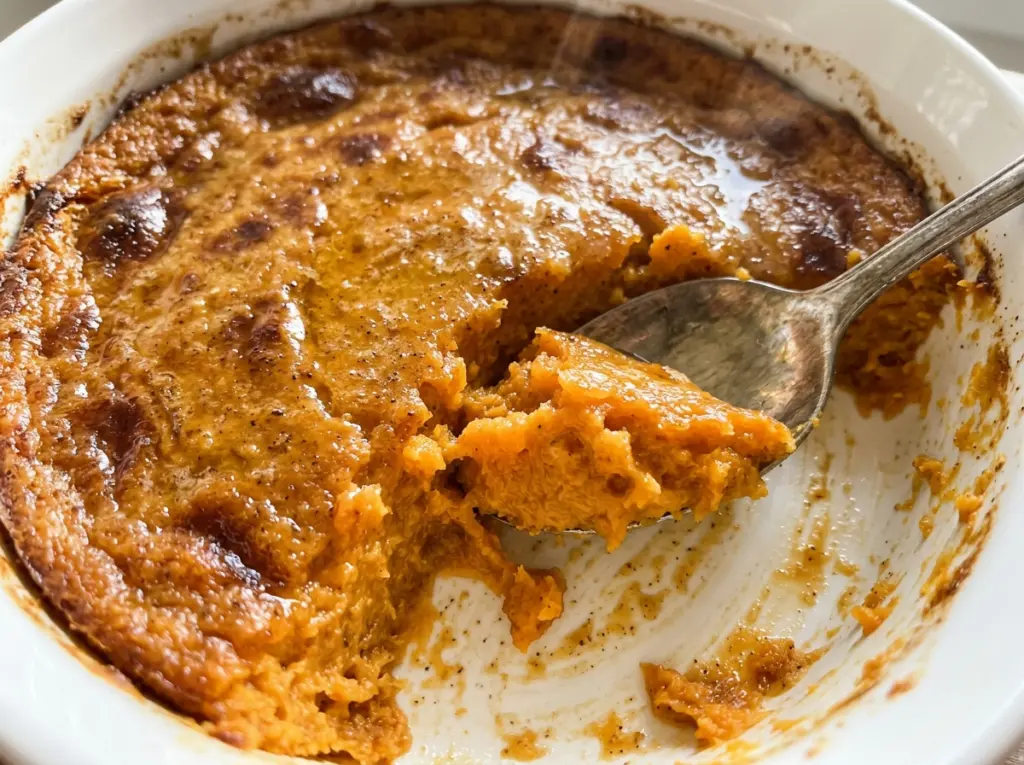
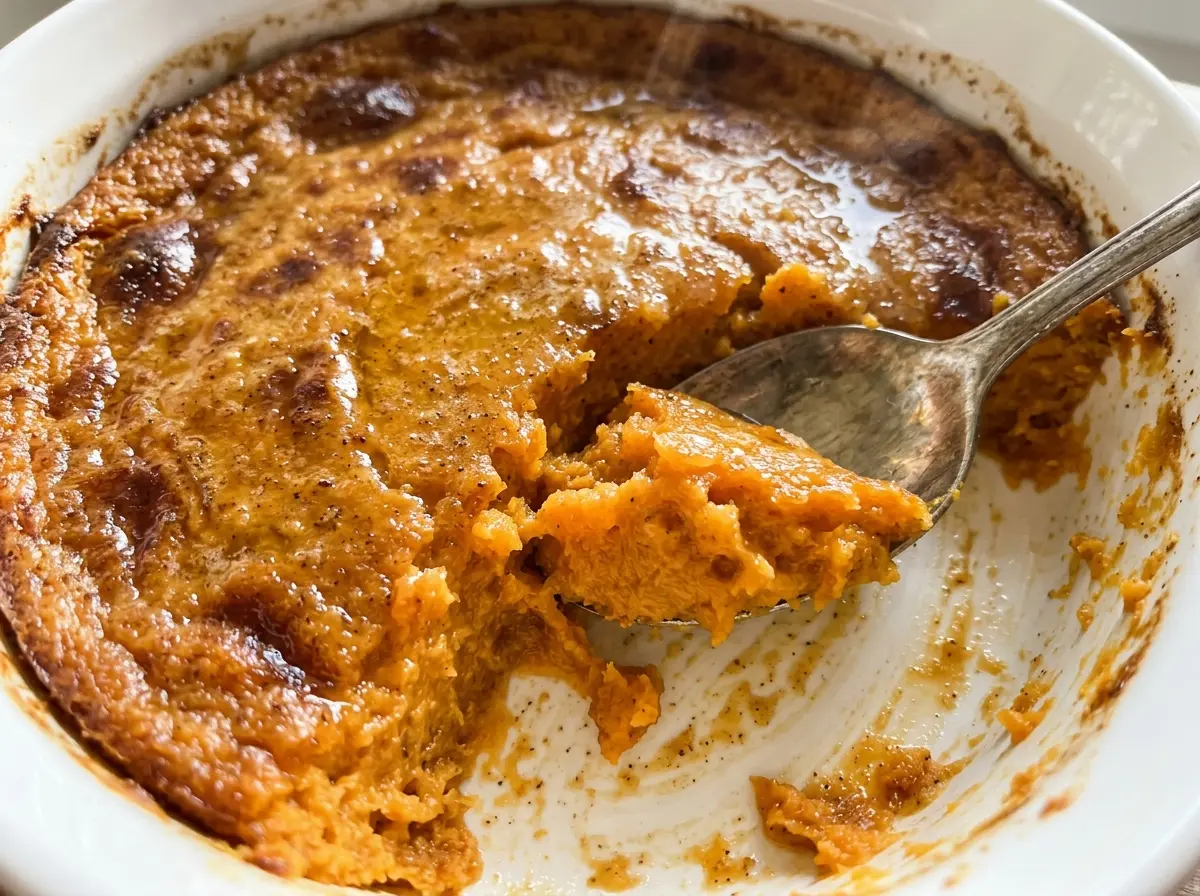
When the edges of a sweet potato bake turn brown, the center can still look soft enough to make you reach for the oven mitt. That contrast is part of this Southern Sweet Potato Pudding: the top and edges settle first, while the middle finishes into a tender, spoonable custard. It’s a welcome change from a smooth sweet potato casserole, with little strands of potato in every bite.
I grate the peeled sweet potatoes on the large holes of a box grater, then fold them into a simple mixture of eggs, milk, melted butter, sugar, and warm spices. The potatoes soften as the pudding bakes, and the eggs bring everything together without turning it into a puree. Give the pan a full rest before serving; the cinnamon-scented center is at its best when it has had time to settle.
Kitchen Note
Let the pudding rest for the full 15 minutes before you scoop it. The center firms as it sits, so cutting in right away gives you a looser serving than the finished pudding is meant to have.
Save Southern Sweet Potato Pudding for a cozy bake with tender grated sweet potatoes and a cinnamon-nutmeg custard.
Why This Pudding Starts with Grated, Not Mashed, Sweet Potatoes
Mashing gives you a smooth, dense base. Coarsely grated sweet potatoes make a different kind of pudding: the strands stay distinct as they soften, and the egg-and-milk mixture fills the spaces between them. You get a custardy bake with a little texture, not a bowl of sweet potato puree set with eggs.
That texture depends on keeping the shreds coarse and fairly even. The large holes of a box grater do the job without turning the potatoes to pulp. The potatoes go into the pan raw, too, so they soften gradually while the custard sets around them. No precooking or mashing is needed, and swapping in cooked puree would change both the texture and the balance of moisture.
Think of the dish as a baked custard carrying tender sweet potato strands rather than a casserole made from mashed potatoes. That’s why the center needs to be set before the pan comes out, even when the browned edges already look finished. The contrast between those soft middle bites and the more browned edges is what makes this version distinctive.
What the Sweet Potatoes and Custard Each Bring to the Pan

- Sweet potatoes — Start with firm, unblemished potatoes; their fresh, starchy flesh gives the pudding its characteristic strands. Orange-fleshed sweet potatoes are the familiar choice here. Canned puree won’t stand in for the grated raw potatoes because it has a different texture and moisture.
- Eggs — Eggs set the milk mixture into a custard and hold the grated potato together. Use large eggs, as called for, so the proportions stay balanced. There isn’t a straightforward egg-free swap that gives this pudding the same set.
- Whole milk — Whole milk gives the custard its creamy body. A lower-fat milk will work in the same quantity, but the pudding will taste less rich; there’s no need to buy a specialty brand.
- Unsalted butter — Butter adds richness that carries the cinnamon and nutmeg through the custard. Standard grocery-store butter is fine, and unsalted butter keeps the seasoning from being harder to control. Let it cool slightly after melting before it goes into the eggs.
- Granulated sugar — The neutral sweetness lets the sweet potato and spices stay clear. A cup-for-cup swap to packed light brown sugar gives the pudding a deeper, molasses-like note; that option is described below.
- Cinnamon, nutmeg, and vanilla — These round out the custard without covering up the sweet potato. Freshly grated nutmeg smells especially warm, but ordinary ground nutmeg and vanilla extract work well; save specialty ingredients for another dish.
From Coarse Shreds to a Set, Golden Center
Grate the Potatoes Evenly
Heat the oven to 350°F and grease a 9×13-inch baking dish. Peel the sweet potatoes, then grate them on the large holes of a box grater into a large bowl. Aim for coarse shreds rather than fine, damp pulp, so the potato keeps some texture through baking. Keep the shreds in the bowl while you mix the custard.
Whisk the Custard Before Combining
In a separate bowl, whisk the sugar and eggs until combined. Whisk in the milk, slightly cooled melted butter, vanilla, cinnamon, nutmeg, and salt until the liquid looks uniform. Pour it over the grated sweet potatoes and stir until the strands are evenly coated, with no dry clumps tucked at the bottom. Spread the mixture across the prepared dish so it bakes in an even layer.
Bake Until the Middle Sets
Bake for 75 to 90 minutes. The edges should be browned, and the center should look set rather than liquid; a thermometer inserted in the center should read at least 160°F. If the edges are already deeply browned but the middle hasn’t set, use the center—not the color at the sides—as your cue to keep baking. Let the pan rest for 15 minutes before serving.
Three Simple Ways to Change the Spice and Sweetness
Use Brown Sugar for a Deeper Sweetness
Replace the granulated sugar with the same volume of packed light brown sugar. It brings a gentle molasses note and makes the pudding taste a little more caramel-like, while keeping the same custardy format.
Make It Dairy-Free with Oat Milk and Plant Butter
Use 1 1/2 cups unsweetened oat milk in place of the whole milk and 1/2 cup unsalted plant-based butter in place of the dairy butter. The eggs still set the pudding, while oat milk and plant butter give it a slightly less dairy-rich taste.
Keep the Spice Milder
Leave out the nutmeg for a softer, cinnamon-led flavor. The pudding still has warmth from the cinnamon and vanilla, but the sweet potato comes through more plainly.
Storage and Reheating
- Refrigerator: Cool, cover, and refrigerate within 2 hours. Keep leftovers for 3 to 4 days; the chilled custard firms and the sweet potato strands soften.
- Freezer: Freeze individual portions in airtight containers for up to 2 months. Thaw in the refrigerator; the texture may be a little softer after freezing.
- Reheating: Warm covered portions in a 325°F oven until hot, or microwave single servings in short bursts. Reheat leftovers to 165°F, and avoid leaving the dish uncovered in the oven long enough to dry out the edges.
Questions That Come Up When Making Sweet Potato Pudding
Southern Sweet Potato Pudding
Ingredients
Equipment
Method
- Heat the oven to 350°F.
- Grease a 9x13-inch baking dish.
- Coarsely grate the sweet potatoes on the large holes of a box grater and put them in a large bowl.
- In a separate bowl, whisk the sugar and eggs until combined.
- Whisk in the milk, melted butter, vanilla, cinnamon, nutmeg, and salt.
- Pour the milk mixture over the grated sweet potatoes and stir until evenly combined.
- Spread the mixture in the prepared baking dish.
- Bake for 75 to 90 minutes, until the edges are browned, the center is set, and a thermometer inserted in the center reads at least 160°F.
- Let the pudding rest for 15 minutes before serving.