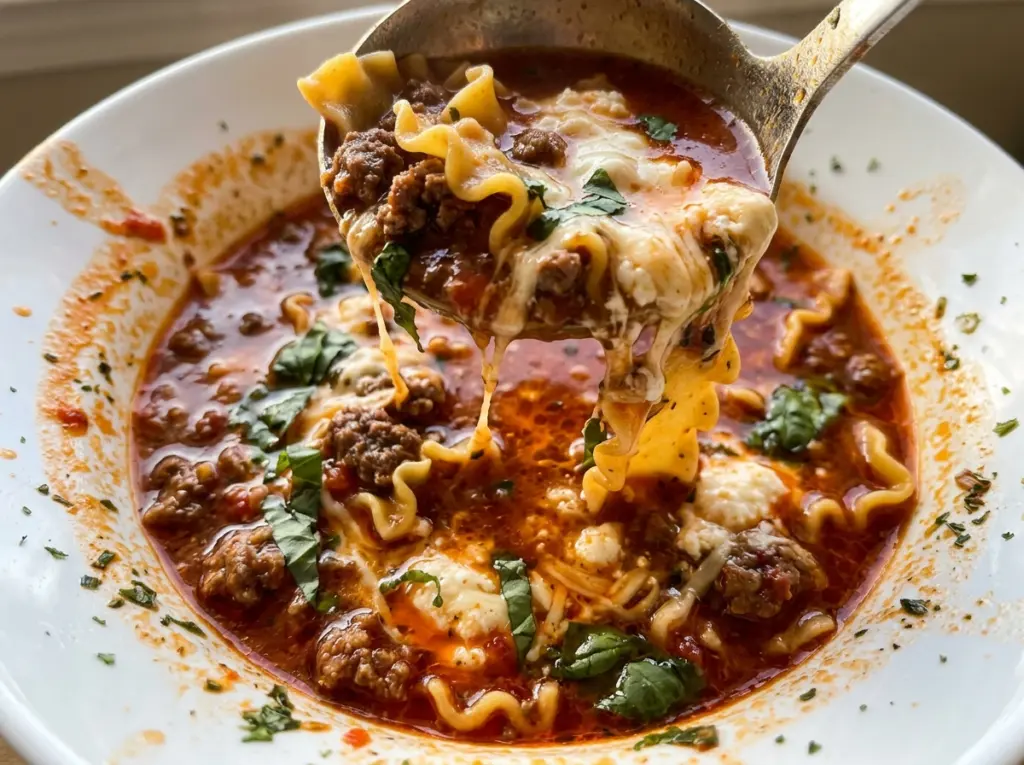
When the broken lasagna noodles hit the simmering broth, they turn a pot of tomato soup into something that eats like dinner. I used to worry they’d stick together or soak up every bit of liquid, but a steady simmer and an occasional stir keep them moving. This beef lasagna soup gives you the familiar layers of browned beef, tomato, pasta, and cheese without assembling a pan of lasagna.
The tomato paste gets a minute in the pot before any broth goes in. That small pause gives it time to deepen alongside the onion and garlic, so the soup tastes rounded rather than like broth with tomatoes stirred through. A cool, creamy spoonful of ricotta and mozzarella finishes each bowl, with Parmesan and parsley worked right into the topping. You get tender noodles, a savory tomato broth, and a little pocket of cheese in every serving.
Kitchen Note
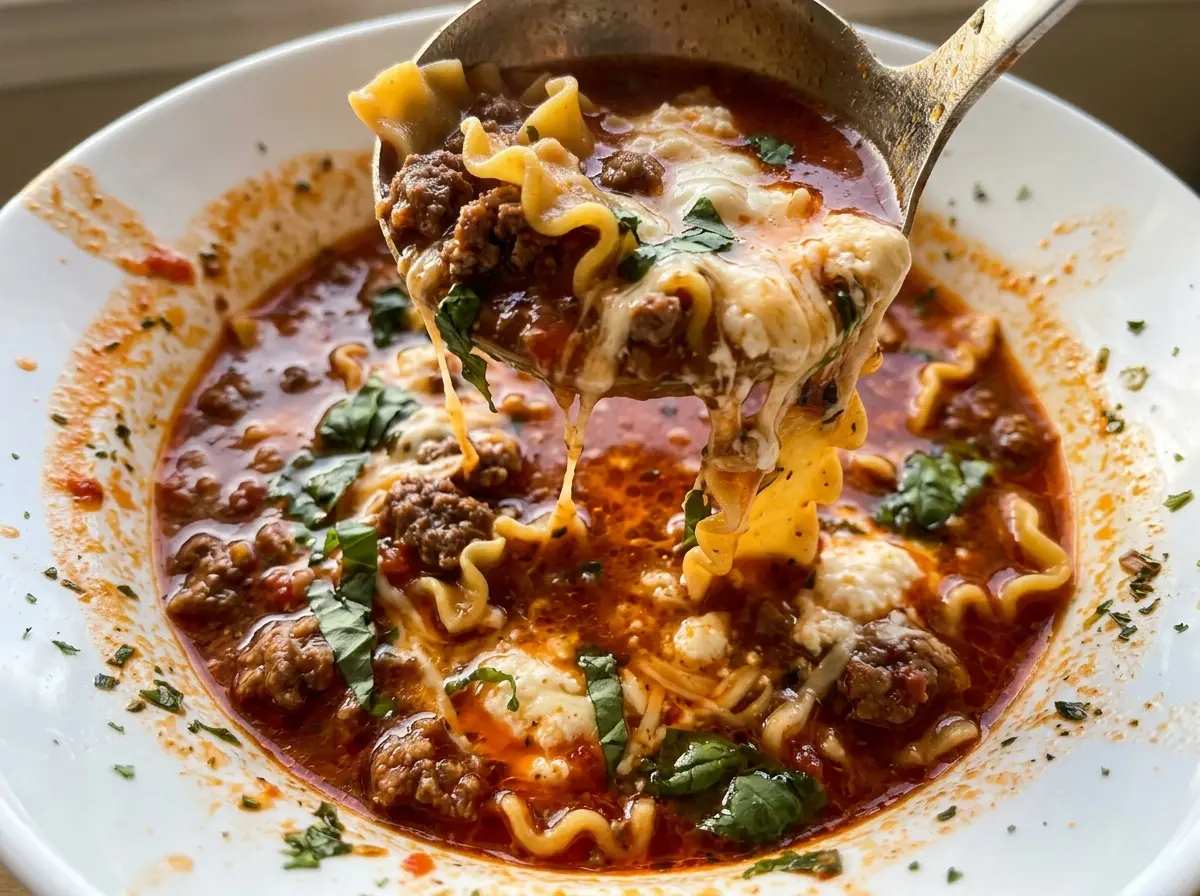
Mix the ricotta, mozzarella, Parmesan, and parsley in a bowl, then spoon it over each serving. Keeping the cheese mixture on top gives you a creamy, distinct bite instead of melting all the cheese into the pot.
Save this Beef Lasagna Soup for a cozy dinner with tender pasta, savory tomato broth, and a creamy ricotta topping.
Why the Tomato Paste Gets a Minute Before the Broth
Tomato paste can taste sharp and a little tinny when it goes straight from the can into a pot of liquid. Letting it cook briefly with the garlic and softened onion gives it a chance to darken and concentrate. It also coats the bottom of the Dutch oven, picking up some of the browned beef flavor already there.
That minute matters in a soup where crushed tomatoes and broth do most of the liquid work. Without it, the tomato flavor can feel thin beside the beef and cheese. Stir the paste around the pot so it cooks evenly, and keep it moving rather than letting it sit in one spot. If it begins to stick, the next addition of tomatoes and broth will loosen the browned bits, but you don’t want the paste to scorch first.
There’s no need to cook it until it turns dark brown or dry. Look for a slightly deeper red and a fragrant, savory smell, then add the tomatoes and broth. That quick change gives the finished soup a fuller tomato base without adding another pan or a long cooking time.
The Ingredients That Keep This Lasagna Soup Rich, Not Watery

- Ground beef — The 85% lean beef brings a good balance of browned-beef flavor and fat. Leaner beef works but makes a less rich base; a fattier grind is fine, too, with excess fat drained after browning. Break it into small pieces as it cooks so you get beef throughout the soup rather than a few large clumps.
- Crushed tomatoes and tomato paste — Canned crushed tomatoes give the broth a consistent texture, while the paste adds concentrated tomato flavor. Brand matters less than choosing plain crushed tomatoes without added seasoning. If you have whole canned tomatoes instead, crush them by hand to a similar consistency before adding them.
- Low-sodium beef broth — Beef broth reinforces the browned meat and keeps the soup savory. Low-sodium broth gives you room to season without the finished pot tasting too salty; regular broth works, but reduce the added kosher salt to taste. Chicken broth is a workable substitute, though the beef flavor will be less pronounced.
- Lasagna noodles — Dried noodles bring the familiar lasagna shape and a pleasantly chewy bite. Break them into pieces of roughly the same length so they cook at a similar pace. Standard dried lasagna noodles are the dependable choice here; no-boil noodles can soften unpredictably in a simmering soup.
- The cheese topping — Ricotta makes the topping soft and creamy, low-moisture mozzarella gives it a stretchy, cheesy quality, and Parmesan brings a salty edge. Part-skim ricotta works, though whole-milk ricotta tastes richer; pre-shredded mozzarella is convenient, while freshly grated Parmesan tends to blend more smoothly. Fresh parsley adds a clean finish, so chop it shortly before mixing.
Build the Beef-Tomato Broth Before the Noodles Go In
Brown the Beef and Soften the Onion
Set a 6-quart Dutch oven over medium-high heat and cook the ground beef for 6 to 8 minutes, breaking it into small pieces as it browns. It should reach 160°F, and you can drain excess fat if the pot looks greasy. Add the diced onion and cook for 4 to 5 minutes, stirring occasionally, until it softens. Don’t rush the onion; it should lose its raw crunch before the garlic goes in.
Wake Up the Garlic and Tomato Paste
Add the minced garlic and stir constantly for 30 seconds. Garlic burns quickly, so don’t walk away during this short stage. Stir in the tomato paste and cook it for 1 minute, moving it around the pot so it darkens slightly without sticking. The smell should turn savory and tomato-rich before you add the liquids.
Simmer the Broth with the Noodles
Add the crushed tomatoes, beef broth, Italian seasoning, kosher salt, and black pepper, then bring the soup to a boil over high heat. Stir in the lasagna pieces and lower the heat until the pot holds a steady simmer. Cook uncovered for 10 to 12 minutes, stirring occasionally so the noodles don’t settle and stick to the bottom. Start checking near the lower end of the range; the noodles should be tender when bitten, not falling apart.
Stir the Cheese Topping and Ladle
While the noodles cook, stir the ricotta, mozzarella, Parmesan, and chopped parsley together in a medium bowl. The mixture should look thick and spoonable, not loose or soupy. Ladle the finished soup into bowls and add a spoonful of cheese mixture to each one. The hot broth softens the topping as you eat.
Three Practical Ways to Adapt Beef Lasagna Soup
Make It Vegetarian with Plant-Based Crumbles
Swap the ground beef for an equal amount of plant-based ground crumbles and use vegetable broth instead of beef broth. Brown the crumbles according to their package directions, then continue with the onion and remaining soup ingredients. The soup keeps its tomato-and-cheese character, though the broth won’t have the same beefy depth.
Make a Gluten-Free Pot
Replace the regular lasagna noodles with gluten-free lasagna noodles and break them into pieces before cooking. Gluten-free pasta brands vary in how quickly they soften, so use the package timing as a guide and check the pieces as they simmer. Stir gently as they cook; some gluten-free noodles are more fragile and can break down if handled roughly.
Use Dairy-Free Cheese Alternatives
For a dairy-free version, combine dairy-free ricotta-style, mozzarella-style, and Parmesan-style products in place of the cheeses in the topping. Their saltiness and melting behavior vary by brand, so taste the mixture before serving and expect a different texture from traditional ricotta and mozzarella. Keep the parsley for a fresh finish.
Storage and Reheating
- Refrigerator: Refrigerate leftovers within 2 hours and keep them for 3 to 4 days. The noodles continue to absorb broth, so the soup will thicken as it sits.
- Freezer: Freeze cooled portions in airtight containers for up to 2 to 3 months for best quality. The noodles will soften after thawing, so the texture won’t be quite as firm as freshly cooked soup.
- Reheating: Warm on the stovetop over medium-low heat, stirring gently; add a splash of beef broth if it has thickened. Heat leftovers to 165°F, and avoid a hard boil that can make the noodles mushy.
Questions That Come Up When Making Lasagna Soup
Beef Lasagna Soup
Ingredients
Equipment
Method
- In a 6-quart Dutch oven over medium-high heat, cook the ground beef, breaking it into small pieces, for 6 to 8 minutes, until browned and it reaches 160°F; drain excess fat if needed.
- Add the onion and cook for 4 to 5 minutes, stirring occasionally, until softened.
- Add the garlic and cook for 30 seconds, stirring constantly.
- Stir in the tomato paste and cook for 1 minute.
- Add the crushed tomatoes, beef broth, Italian seasoning, salt, and pepper.
- Bring the soup to a boil over high heat.
- Stir in the broken lasagna noodles and reduce the heat to maintain a steady simmer.
- Cook uncovered for 10 to 12 minutes, stirring occasionally, until the noodles are tender.
- In a medium bowl, stir together the ricotta, mozzarella, Parmesan, and parsley.
- Ladle the soup into bowls.
- Top each serving with a spoonful of the cheese mixture.