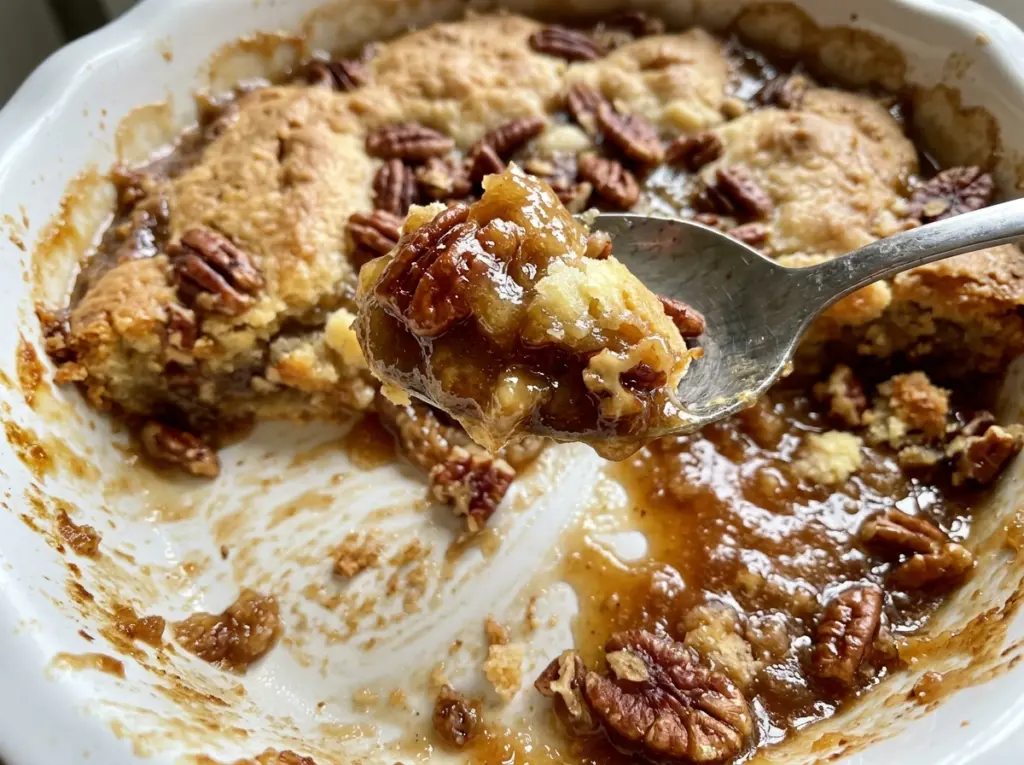
When the filling goes into the dish, it looks loose and glossy, with pecans bobbing up through it. The first time I made Pecan Pie Cobbler, I expected the bottom pastry to bake through under all that syrup; giving it a head start is what helps the layers hold together. It’s a generous 9-by-13-inch dessert, with a pastry base, brown-sugar pecan filling, and strips of dough laid across the top.
The pastry starts with cold shortening cut into the flour until the pieces are about the size of peas. I stop there instead of working the fat in until the mixture looks sandy. Those small pieces help keep the crust tender, while just enough ice water brings the dough together without making it sticky or tough to roll.
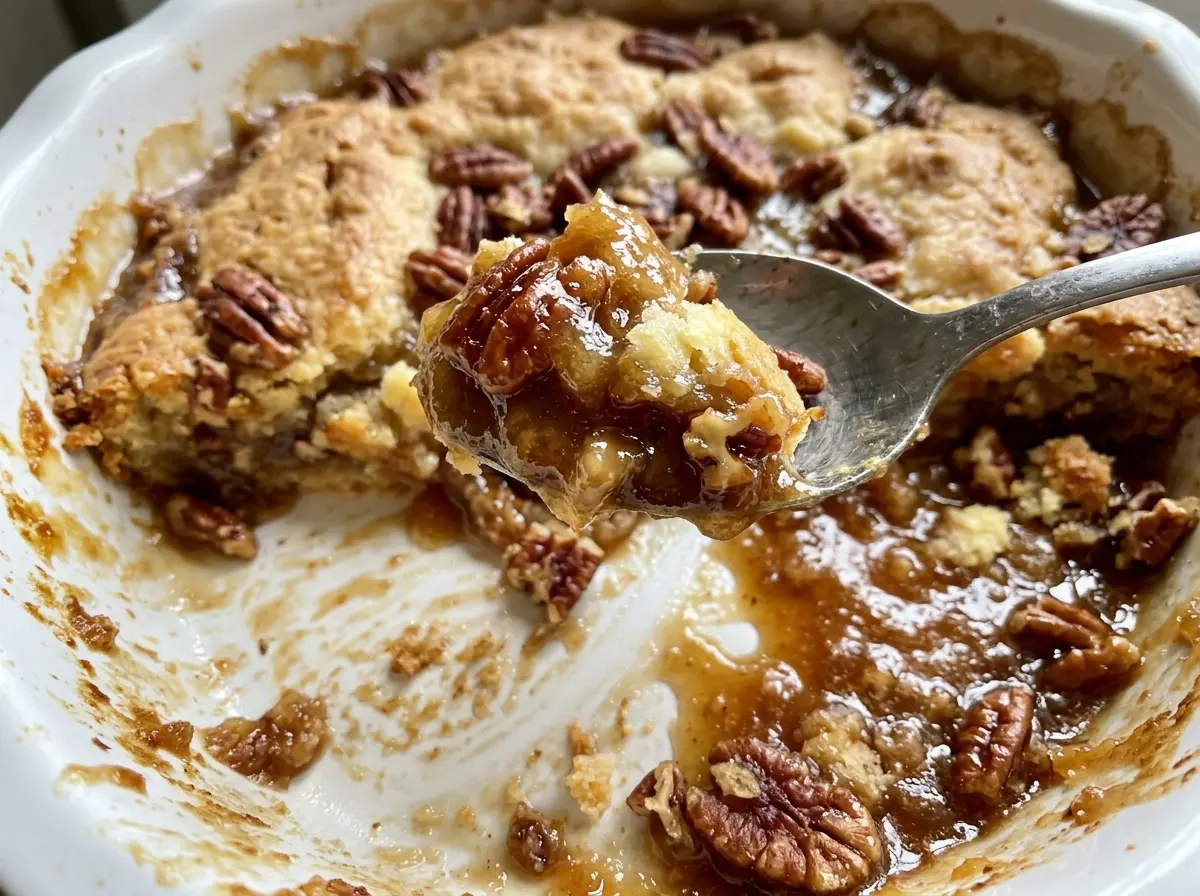
Once baked, the top turns golden and the filling sets around the pecans, but the center keeps a little movement. Give it time to cool before serving; the filling needs that quiet time to settle into neat, spoonable slices.
Kitchen Note
Let the cobbler cool in the dish for the full two hours before serving. The filling is still soft when it comes out of the oven, and slicing too soon leaves syrup running into the bottom of the pan.
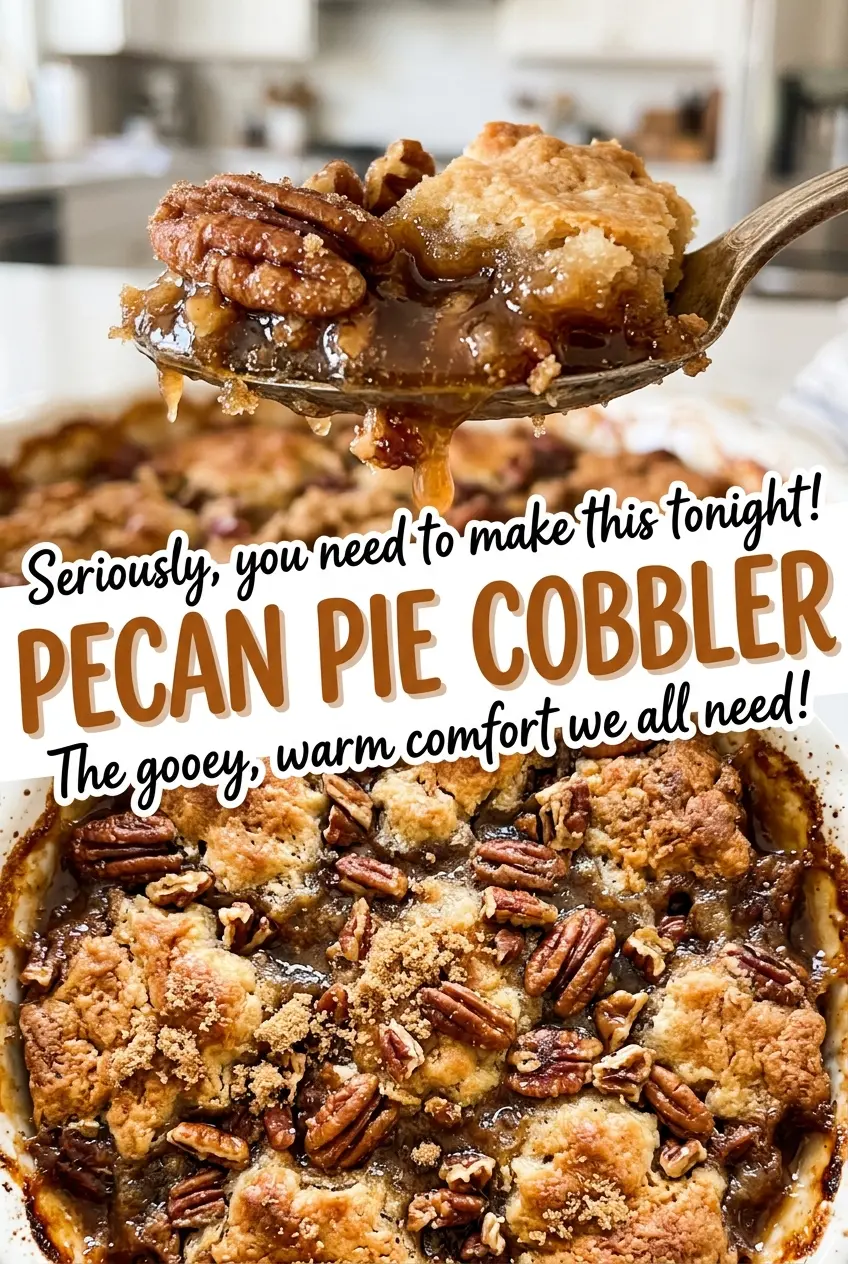
Save Pecan Pie Cobbler for a dessert with a golden lattice, tender pastry, and a syrupy pecan filling that sets as it cools.
Why the Bottom Crust Needs a Head Start Before the Syrup Goes In
The filling is rich with eggs, corn syrup, and brown sugar. If that wet mixture goes into raw pastry, the base has to cook while surrounded by filling; it’s harder to tell when the underside has baked through. A short parbake gives the bottom crust time to look dry and set before the filling goes in, without taking it all the way to golden brown.
Pie weights hold the pastry in place during that first bake, so the base doesn’t puff up into the space meant for filling. The parchment makes the weights easy to lift out afterward. Keep an eye on the color rather than waiting for browning: at this stage, dry-looking pastry is the cue to move on. The filling and lattice finish baking together at a lower oven temperature, giving the crust time to turn golden while the edges of the custard set.
That two-part bake is useful here because the bottom crust and the pecan filling need different things. The shell gets a brief bake on its own; the filling then gets the longer bake it needs to set around the nuts. You get a defined pastry base instead of asking one long bake to do both jobs at once.
What the Pastry Fat and Syrup Each Bring to Pecan Pie Cobbler
- All-purpose flour — It gives the pastry enough structure to line the dish and hold the filling. Regular all-purpose flour is the right everyday choice; a specialty pastry flour isn’t needed. For a gluten-free adaptation, see the variation below rather than swapping flour without adjusting your expectations for the dough.
- Vegetable shortening — Cold shortening creates a tender, easy-to-roll pastry. The ordinary store brand works; what matters most is keeping it cold as you cut it into the flour. Butter can replace shortening in pie pastry, but it changes the texture and makes the dough less forgiving to handle, so it won’t give the same result.
- Ice water — It brings the dough together while keeping the shortening firm. Add it gradually and stop once the dough holds together; adding more than it needs makes pastry sticky and harder to roll. If you don’t have ice cubes, very cold water is a workable fallback.
- Large eggs — Eggs give the filling its set, custardy structure. Use large eggs for the balance this filling needs; smaller eggs leave it short on liquid and may affect how it sets. Fresh, ordinary grocery-store eggs are fine.
- Light corn syrup — It supplies the smooth, thick sweetness that holds the pecans in the filling. Light corn syrup keeps the flavor mild, and a standard bottle is all you need. Dark corn syrup works as a swap but brings a deeper, more pronounced molasses note.
- Packed light brown sugar — Brown sugar adds a mellow molasses flavor alongside the corn syrup. Fresh, soft brown sugar blends more smoothly than a dry, hard lump; break up any clumps before whisking.
- Unsalted butter — Melted butter adds richness, and letting it cool slightly before mixing keeps it from going into the eggs hot. Unsalted butter also lets the measured salt in the pastry do its job without extra saltiness in the filling.
- Vanilla extract and pecan halves — Vanilla rounds out the filling, so a standard extract is enough; there’s no need for a specialty bottle. Pecan halves give the cobbler its substantial nutty bites. Use fresh-tasting pecans, since stale nuts can bring an unpleasant, paint-like flavor; pecan pieces work too, though you’ll get smaller bites.
From Pea-Size Pastry Pieces to a Golden Pecan Lattice
Bring the Dough Together Without Overworking It
Heat the oven to 400°F and grease a 9×13-inch baking dish. Whisk the flour and salt, then cut in the cold shortening until you see pea-size pieces rather than a uniform powder. Stir in 8 tablespoons of ice water first, adding up to 2 tablespoons more only if the dough still won’t hold together. Divide it into two portions, one about twice the size of the other, wrap both, and chill for 30 minutes.
Parbake a Dry, Set Shell
Roll the larger portion on a lightly floured surface into a 10×14-inch rectangle. Fit it into the dish and trim the edges, taking care not to stretch the dough to reach the corners. Line the pastry with parchment and pie weights, then bake for 15 to 18 minutes. It should look dry and set, not browned; a browned shell now can get too dark during the longer bake.
Whisk the Filling and Lay on the Lattice
Reduce the oven to 350°F while you prepare the filling. Whisk the eggs, corn syrup, brown sugar, melted butter, and vanilla until the mixture looks smooth, then fold in the pecans so they’re distributed throughout. Pour it into the parbaked crust. Roll the smaller dough portion into a rectangle, cut it into strips, and arrange them in a lattice over the filling; avoid pressing the strips down into the liquid.
Bake Until the Edges Set and the Center Barely Moves
Bake for 45 to 55 minutes, watching the crust color as the filling sets. The crust should be golden, the edges of the filling set, and the center should jiggle only slightly when the dish is moved gently. If the pastry browns faster than the filling is setting, loosely cover the top with foil and continue baking. Let the cobbler cool in the dish before serving.
Three Ways to Change the Pastry or Pecan Texture
Use a Cup-for-Cup Gluten-Free Flour Blend
For a gluten-free pastry, replace the all-purpose flour with the same volume of a gluten-free baking blend designed as a 1:1 replacement and containing a binder. The dough is more delicate, so handle it gently when rolling and fitting it into the dish; the pastry may not have quite the same tenderness as the shortening-and-wheat-flour version.
Make the Pecans Smaller and More Evenly Distributed
Chop the pecan halves before folding them into the filling if you prefer smaller bites in each slice. Keep the same total quantity of pecans; the filling will have a more even nutty texture, with fewer large pieces to cut through.
Storage and Reheating
- Refrigerator: Refrigerate leftovers promptly in a covered container and eat within 3 to 4 days. The pastry softens some as it sits against the filling.
- Freezer: Freeze fully cooled portions tightly wrapped for up to 2 months. Thaw them in the refrigerator; the pastry may be softer after thawing.
- Reheating: Warm an individual slice in the microwave in short bursts until just warm. Avoid heating it until the filling bubbles, which can make the center overly hot and the pastry soft.
Questions That Come Up When Baking Pecan Pie Cobbler
Pecan Pie Cobbler
Ingredients
Equipment
Method
- Heat the oven to 400°F.
- Grease a 9x13-inch baking dish.
- Whisk the flour and salt in a large bowl.
- Cut in the shortening until the mixture has pea-size pieces.
- Stir in 8 tablespoons ice water, adding up to 2 tablespoons more as needed, just until the dough holds together.
- Divide the dough into two portions, one about twice the size of the other, wrap, and chill for 30 minutes.
- Roll the larger portion on a lightly floured surface into a 10x14-inch rectangle, fit it into the prepared dish, and trim the edges.
- Line the pastry with parchment and pie weights.
- Bake for 15 to 18 minutes, until the pastry looks dry and set but is not browned.
- Reduce the oven to 350°F.
- Whisk the eggs, corn syrup, brown sugar, melted butter, and vanilla in a large bowl until smooth.
- Fold in the pecans.
- Pour the filling into the parbaked crust.
- Roll the remaining dough into a rectangle and cut it into strips.
- Arrange the strips in a lattice over the filling.
- Bake for 45 to 55 minutes, until the crust is golden, the edges of the filling are set, and the center jiggles only slightly.
- Loosely cover the top with foil if the pastry browns too quickly.
- Cool in the dish for 2 hours before serving.
- Refrigerate leftovers promptly.