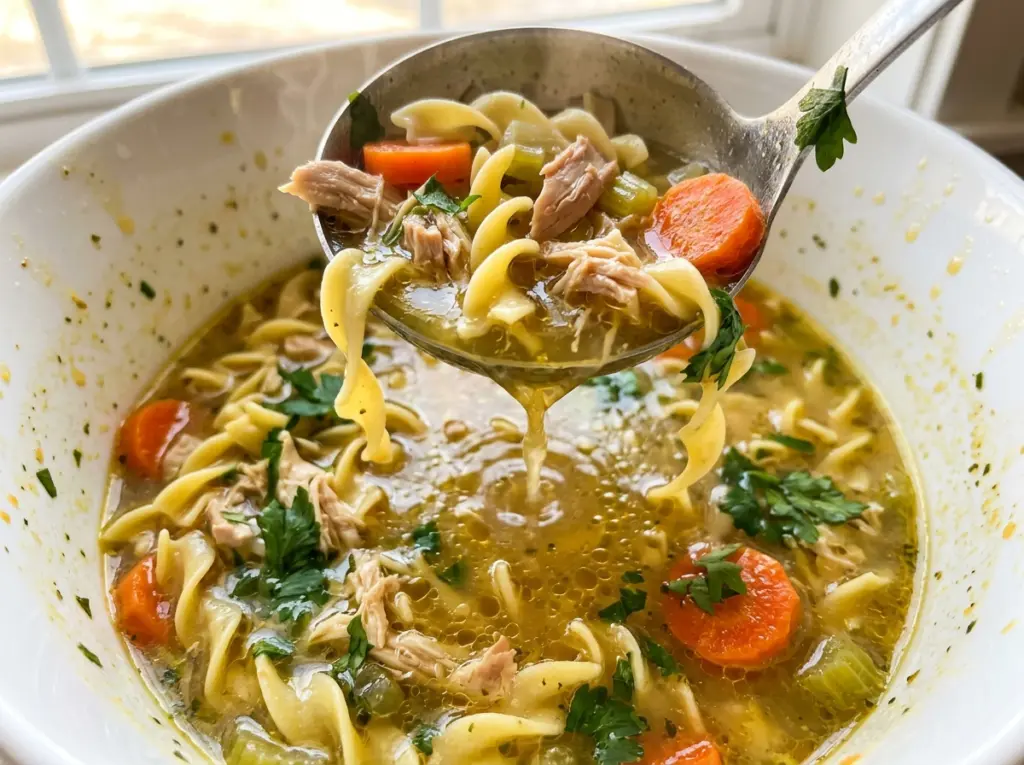
When the broth reaches a gentle simmer, the kitchen smells savory before the chicken even goes in. The carrots are still bright, the thyme rises with the steam, and the wide noodles turn the pot into a proper bowl of soup. That’s when this 30-Minute Homemade Chicken Noodle Soup starts to feel like more than a quick weeknight fix.
The pace comes from using cooked, shredded chicken and adding it near the end. It needs only a short simmer to warm through, while the vegetables and noodles cook in the same pot. There’s no separate pan of pasta to drain or extra pot to wash.
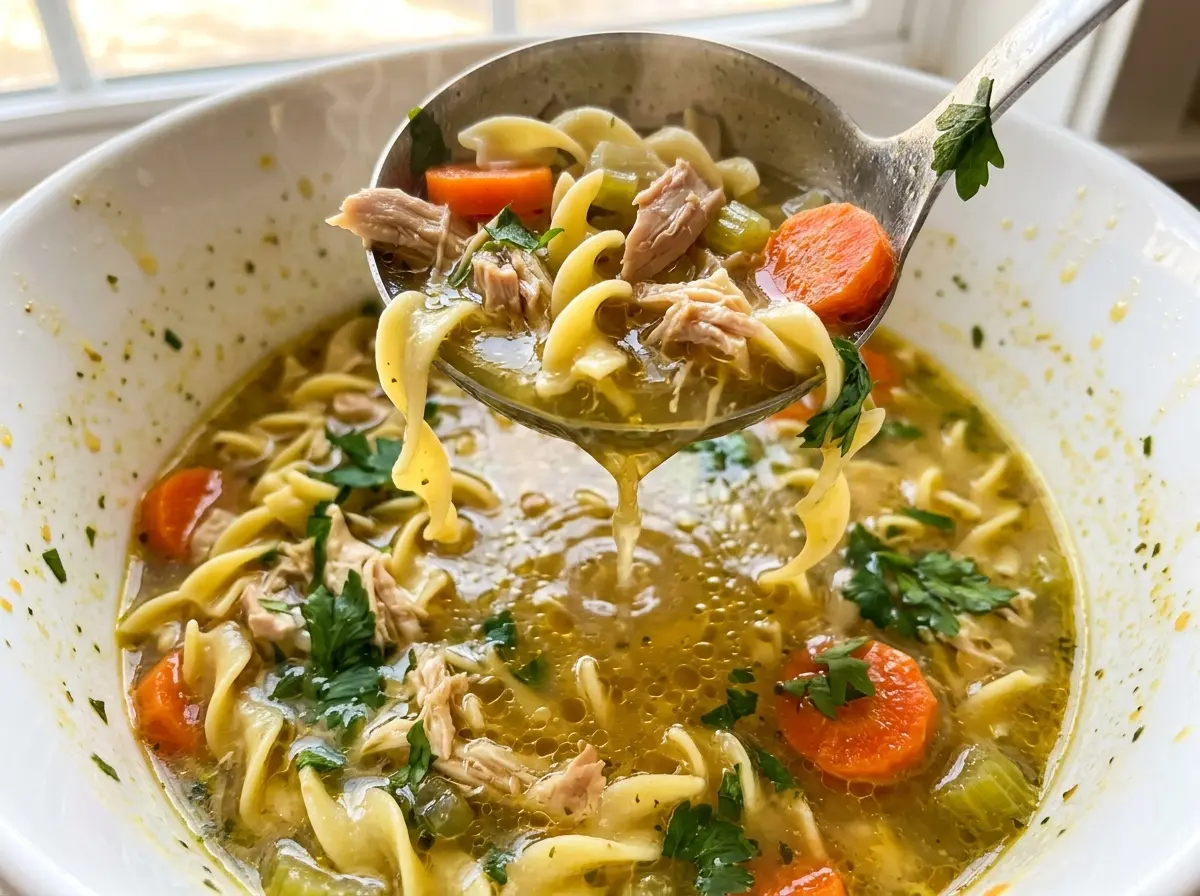
I like the contrast in each spoonful: tender noodles, soft vegetables, and chicken in a savory broth with a fresh parsley finish. The recipe makes six servings, and the whole pot comes together in a 6-quart pot for a straightforward, satisfying meal.
Kitchen Note
Give the minced garlic its full 30 seconds, but don’t wait for it to brown. Once it smells fragrant, add the broth; garlic can turn bitter quickly if it stays in the hot pot too long.
Save this 30-Minute Homemade Chicken Noodle Soup for a quick pot of tender noodles, thyme-scented broth, and shredded chicken.
Why Cooking the Noodles in the Soup Changes the Broth
Here, the egg noodles cook right in the broth instead of in a separate pot of water. As they soften, they release a little starch into the soup. That gives the broth a touch more body without needing cream or a flour-based thickener, and the noodles take on the thyme and chicken flavor as they cook.
It’s a small technique choice, but it changes the whole bowl. The broth stays light enough to sip, while the wide noodles make each spoonful feel substantial. It also keeps the method genuinely one-pot: there’s no pasta water to drain and no extra saucepan to clean. The tradeoff is that noodles continue to soften as they sit in hot liquid, so the soup’s texture is at its best when the noodles are just tender rather than cooked past that point.
Wide egg noodles suit this style because they have enough surface to pick up broth and a soft, satisfying bite. If you prefer a thinner noodle, the soup will still work, but the finished bowl will feel a little less hearty. Either way, the noodle is part of the soup’s texture, not just something added to it.
What Each Ingredient Brings to This Chicken Noodle Soup

- Yellow onion — It sweetens as it softens and gives the broth a savory base. A white onion works in its place; dice it the same way, knowing its flavor will be a little sharper. There’s no need to buy a specialty onion for soup.
- Carrots and celery — Fresh vegetables hold their shape and bring the familiar sweet-savory balance to the pot. If you’re out of carrots, peeled parsnip sliced to the same thickness is a workable swap, with a slightly earthier, sweeter result. Fennel can stand in for celery when needed, though it adds a light anise note.
- Low-sodium chicken broth — This is the soup’s main flavor, so choose broth you’d be happy to sip; a standard grocery-store carton is fine. Low-sodium broth leaves room for the measured kosher salt without making the finished soup taste too salty. Homemade chicken stock can replace it in the same volume.
- Dried thyme and bay leaf — Dried thyme is convenient and holds up well through a brief simmer. Fresh thyme leaves can replace dried thyme; use about three times the volume for a similar herbal presence. The bay leaf contributes a subtle background aroma, so use a whole leaf that’s easy to spot and remove.
- Wide egg noodles — Their broad shape gives the soup its classic, tender bite. Medium egg noodles work if that’s what you have, though they make a narrower spoonful; follow their package timing rather than assuming every brand cooks at the same speed.
- Cooked chicken — Shredded chicken blends easily into the soup and warms quickly. Cooked turkey is the closest substitute and can be shredded the same way, with a slightly different flavor. Rotisserie chicken is convenient; remove the meat from the bones and shred it before adding.
- Fresh parsley — Chopped fresh parsley brings a clean, green finish that dried parsley won’t quite match. Chopped fresh dill is a useful swap if you want a more pronounced, grassy herb note.
Building the Soup in the Right Order for a 30-Minute Finish
Soften the vegetables in olive oil
Heat the olive oil in a 6-quart pot over medium-high heat, then add the diced onion along with the sliced carrots and celery. Cook for 4 to 5 minutes, stirring occasionally, until the onion begins to soften. The vegetables should be glossy and just starting to lose their raw look, not browned. Keep the slices consistent so they soften at a similar pace.
Simmer the broth until the carrots are nearly tender
Stir in the minced garlic and cook for 30 seconds, then add the chicken broth, dried thyme, bay leaf, kosher salt, and black pepper. Bring the pot to a boil, then lower the heat to a simmer for 5 to 7 minutes. Look for carrots that are nearly tender when pierced but still hold their shape. If they’re still firm, give them a little more time before adding noodles.
Cook the noodles gently in the soup
Add the wide egg noodles and keep the soup at a gentle boil for 6 to 8 minutes, following the package timing. Stir occasionally so the noodles don’t settle together on the bottom of the pot. They’re ready when tender but still intact, not limp or breaking apart. A hard, rolling boil can rough up the noodles, so adjust the heat if the surface is churning aggressively.
Warm the chicken and finish with parsley
Stir in the cooked shredded chicken and chopped fresh parsley, then simmer for 2 to 3 minutes. The chicken should be heated through to 165°F before serving. Take the pot off the heat and remove the bay leaf; don’t leave it hidden in the soup, since it’s there to season the broth, not to eat.
Two Simple Swaps for a Different Bowl
Make it gluten-free with wide gluten-free noodles
Use wide gluten-free noodles and gluten-free chicken broth in place of the egg noodles and regular broth. Cook the noodles according to their package timing; gluten-free varieties can soften quickly, so start checking as they approach tender. The soup keeps its familiar savory character, though the noodle texture will vary by brand.
Add a bright lemon finish
Stir a squeeze of lemon juice into the pot with the parsley. It brightens the savory broth and gives the soup a fresher edge without changing its familiar chicken-and-noodle feel. Add it gradually, tasting as you go so the lemon lifts the broth rather than taking it over.
Storage and Reheating
- Refrigerator: Store in an airtight container for 3 to 4 days. The noodles soften and absorb some broth as the soup sits.
- Freezer: Freeze airtight portions for up to 2 to 3 months. The soup freezes safely, but the noodles will be softer after thawing.
- Reheating: Warm gently on the stovetop, stirring now and then, until steaming hot throughout. If the soup has thickened, loosen it with a splash of chicken broth; avoid a hard boil, which can break down the noodles.
Questions That Come Up While Making This Soup
30-Minute Homemade Chicken Noodle Soup
Ingredients
Method
- Heat the olive oil in a 6-quart pot over medium-high heat, then add the onion, carrots, and celery and cook for 4 to 5 minutes, stirring occasionally, until the onion begins to soften.
- Stir in the garlic and cook for 30 seconds.
- Add the broth, thyme, bay leaf, salt, and pepper; bring to a boil and simmer for 5 to 7 minutes, until the carrots are nearly tender.
- Add the egg noodles and cook at a gentle boil for 6 to 8 minutes, following the package timing, until tender.
- Stir in the cooked chicken and parsley and simmer for 2 to 3 minutes, until the chicken is heated through to 165°F.
- Remove and discard the bay leaf before serving.