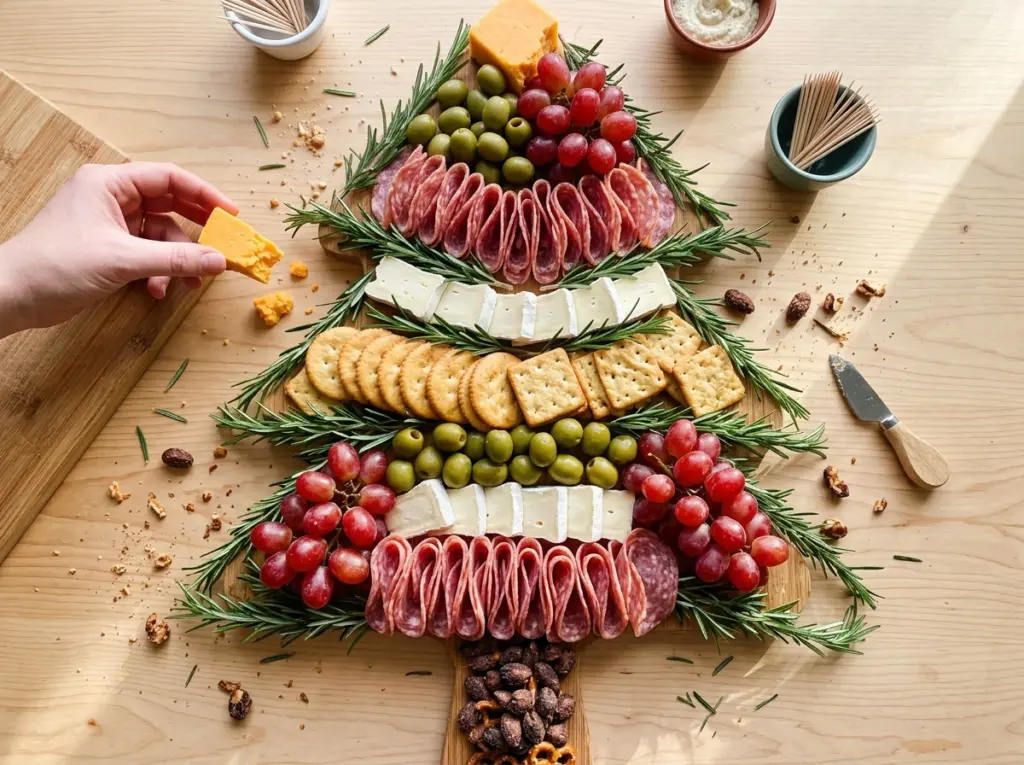
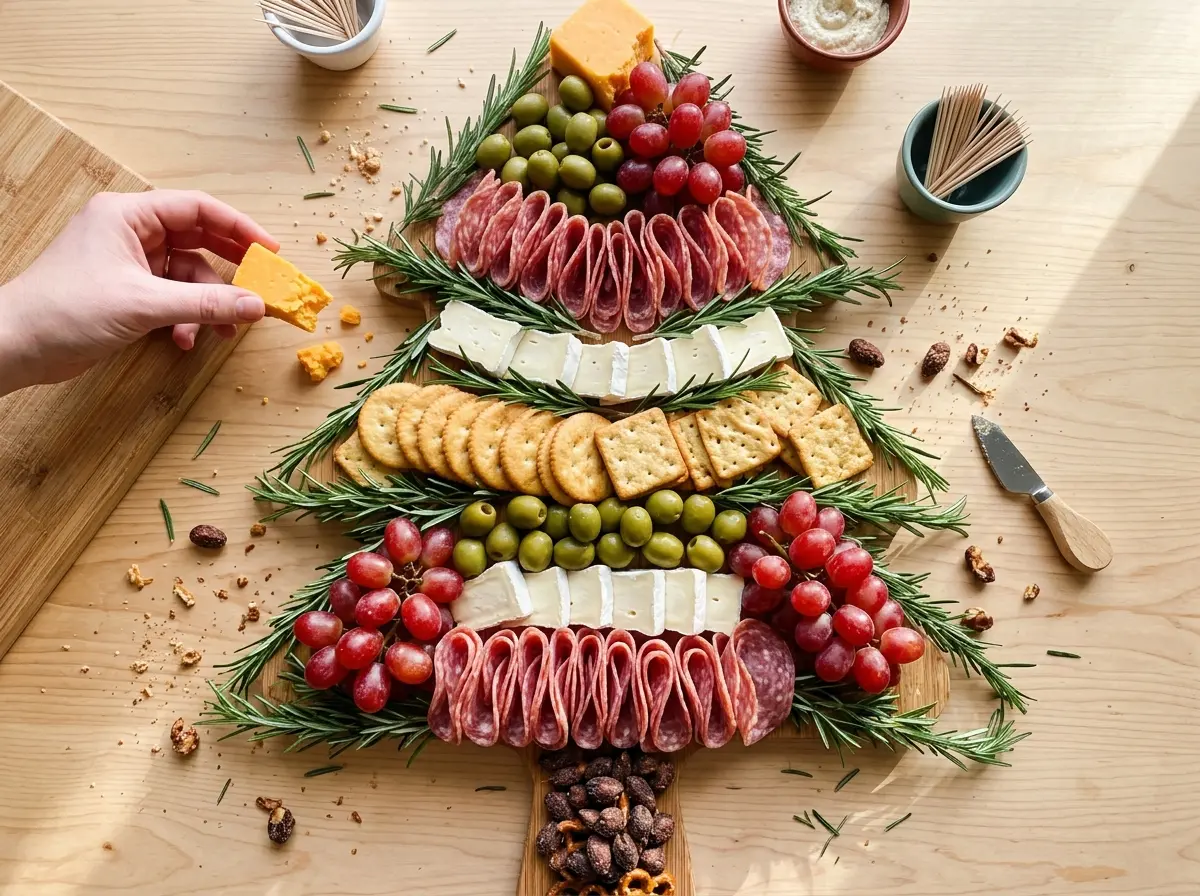
A rosemary outline can disappear fast when the rows inside it spread too wide. I keep the edges easy to see by building the tree from the top down, with each row growing a little wider toward the base. That gives the cheese, salami, and fruit their own places without losing the tree shape. This Christmas Tree Charcuterie Board serves eight and turns familiar party snacks into a centerpiece that’s easy to graze from.
The rosemary does more than decorate the platter: it gives you a clear boundary to build against, while the alternating rows keep the colors from blending together. I use a large 18×24-inch board or platter so there’s room for the tree, crackers, and pretzel-stick trunk without crowding the food. The cheddar slice becomes a star at the top, and the tomatoes and olives tuck into the open spaces like ornaments. The finished board looks festive before anyone takes a bite.
Kitchen Note
Dry the grapes well after rinsing, then cut them into small clusters. Damp grapes leave little beads of water on the board and make the rows harder to keep neat.
Save this Christmas Tree Charcuterie Board for a party spread with sharp cheese, folded salami, juicy grapes, and a rosemary tree outline.
Why the Tree Shape Holds Together Even as People Serve Themselves
A board like this has two jobs: look like a tree from across the room and still be easy to pick from up close. The rosemary outline solves the first job, but the direction of the rows matters just as much. Narrow rows near the point and wider rows at the bottom create a recognizable silhouette; if every row is the same width, the arrangement reads more like a rectangle with a point on top.
Alternating the cheddar, pepper Jack, salami, and grape clusters gives each row a different color and texture. That separation makes it easier to see what’s available and lets guests choose a bite without pulling apart a pile of mixed ingredients. Tomatoes and olives work best as small accents in the gaps, not as a solid border that hides the rows. Leave enough of the rosemary visible around the outside to define the shape, and keep the crackers beyond that outline so the centerpiece has a little breathing room.
The board doesn’t need perfect geometry. A few uneven edges look natural, but the overall tree should widen as it comes down the platter. If the lower rows start to sprawl, bring the crackers in around them rather than letting the food cover the rosemary.
What Each Ingredient Adds to the Tree
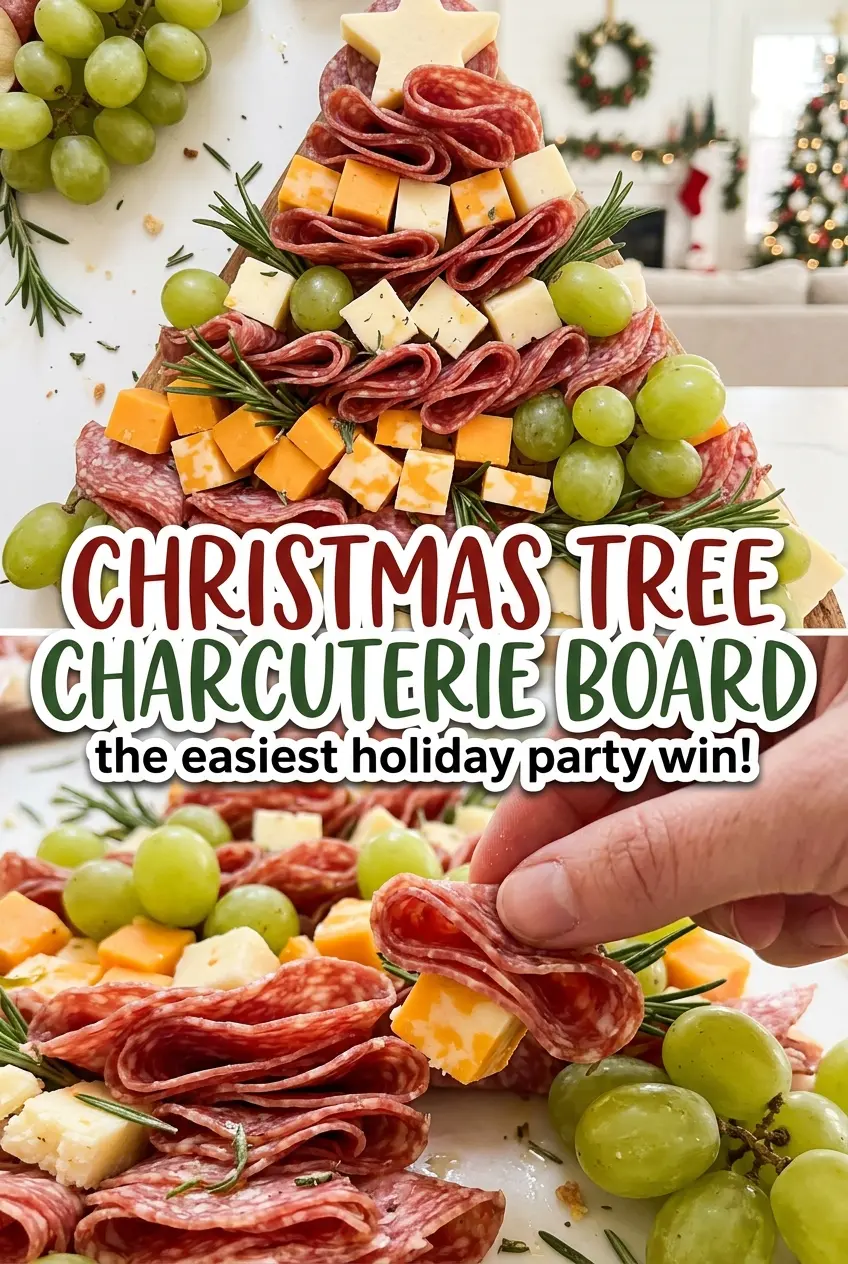
- Sharp cheddar — Its deeper color stands out beside the pepper Jack, and a thin slice cuts neatly into the star. A block is practical here because you can cube most of it and reserve one slice for the topper.
- Pepper Jack — This brings a mild kick and a lighter color that breaks up the cheddar rows. The cubes need to hold their shape; pre-cubed cheese can work, but the pieces may not match the board’s 3/4-inch size.
- Genoa salami — Folding each piece into quarters gives the row height and a ruffled look without needing extra picks. The folded shape also keeps the meat from lying flat like a solid strip.
- Green grapes — Small clusters add a fresh, sweet contrast to the salty cheese and olives. Keep the clusters small enough to fit into a row rather than letting long stems interrupt the tree shape.
- Cherry tomatoes — Their bright color reads clearly as little ornaments against the cheese and rosemary. Choose firm tomatoes that hold their shape when tucked into the gaps.
- Pitted mixed olives — Pitted olives are ready to eat and easy to pick up from the board. Draining them first keeps extra brine from running into the other ingredients.
- Fresh rosemary — The sprigs create the outline and lend the board its evergreen look. Choose flexible sprigs that can be arranged into a point and a broad base without snapping.
- Assorted crackers and pretzel sticks — The crackers make a border around the tree, while the pretzel sticks give the base a simple trunk. Assorted shapes add visual variety; the pretzels should be straight enough to sit together neatly.
Build the Rosemary Outline Before Filling the Rows
Cut the Cheddar Star
Cut the star from the thin slice of reserved cheddar with a small star-shaped cutter before arranging the board. A thin slice is easier for the cutter to pass through and keeps the topper from looking bulky. Set the star aside while you build the tree so it stays intact. If the cheddar is too thick, the points can break instead of coming away cleanly.
Lay Out the Evergreen Shape
On an 18×24-inch serving board or platter, arrange the rosemary sprigs into a tree outline. Start with the point at the top and spread the wide end toward the bottom, leaving the center open for the food. Step back and check that the sides angle outward evenly; small adjustments are easiest before anything is placed inside. The rosemary should mark the shape rather than cover the food area.
Fill with Alternating Rows
Arrange the cheddar, pepper Jack, folded salami, and grape clusters in alternating rows inside the outline. Keep the rows shorter near the top and wider toward the bottom so the tree keeps its silhouette. Place the cheddar star at the top point. If one row looks crowded, shift a few pieces before adding the next row instead of pressing everything together.
Add Ornaments, Crackers, and the Trunk
Tuck the cherry tomatoes and drained olives between the rows, spreading them across the tree rather than clustering them in one spot. Arrange the crackers around the rosemary outline, then set the pretzel sticks together at the base to form a short trunk. Take a quick look from above so the colors are distributed across the full tree. Serve promptly, while the crackers and pretzels are still crisp.
Two Simple Ways to Adapt the Board Without Losing Its Shape
Make It Meat-Free by Leaving Off the Salami
Omit the folded salami and build the alternating rows with cheddar, pepper Jack, and grape clusters. The board will have less savory, salty richness, but the cheeses, fruit, olives, and tomatoes still give the tree plenty of color and variety. Keep the rosemary outline and the same widening shape so the platter stays recognizable.
Use Fewer Starchy Bites
For a board with fewer starches, leave off the crackers and pretzel-stick trunk. The tree will look more minimal and leave more open space around the rosemary; the cheese, salami, grapes, tomatoes, and olives remain the focus. This reduces the crackers and pretzels, but the fruit is still part of the board.
Make-Ahead and Leftovers
- Before serving: Cut the cheeses, fold the salami, rinse and dry the produce, and drain the olives ahead. Assemble the tree close to serving time so the crackers and pretzels stay crisp.
- Leftovers: Refrigerate leftovers within 2 hours. The crackers and pretzels soften as they sit against the other foods, so expect less crunch.
- Freezer and reheating: Freezing isn’t a good fit for this assembled cold board; the produce, cheese, and crisp snacks won’t keep their original textures after thawing. There’s no reheating step for this platter.
Questions That Come Up When Assembling This Charcuterie Tree
Christmas Tree Charcuterie Board
Ingredients
Equipment
Method
- Use a small star-shaped cutter to cut a star from the reserved cheddar slice.
- On an 18x24-inch serving board or platter, arrange the rosemary sprigs into the outline of a tree, with the point at the top and the wide end at the bottom.
- Fill the outlined tree with alternating rows of cheddar, pepper Jack, folded salami, and grape clusters, keeping the rows wider toward the bottom.
- Place the cheddar star at the top.
- Tuck cherry tomatoes and olives between the rows as ornaments, distributing them evenly over the tree.
- Arrange the crackers around the tree.
- Make a short trunk at the base with pretzel sticks.
- Serve promptly.
- Refrigerate leftovers within 2 hours.