
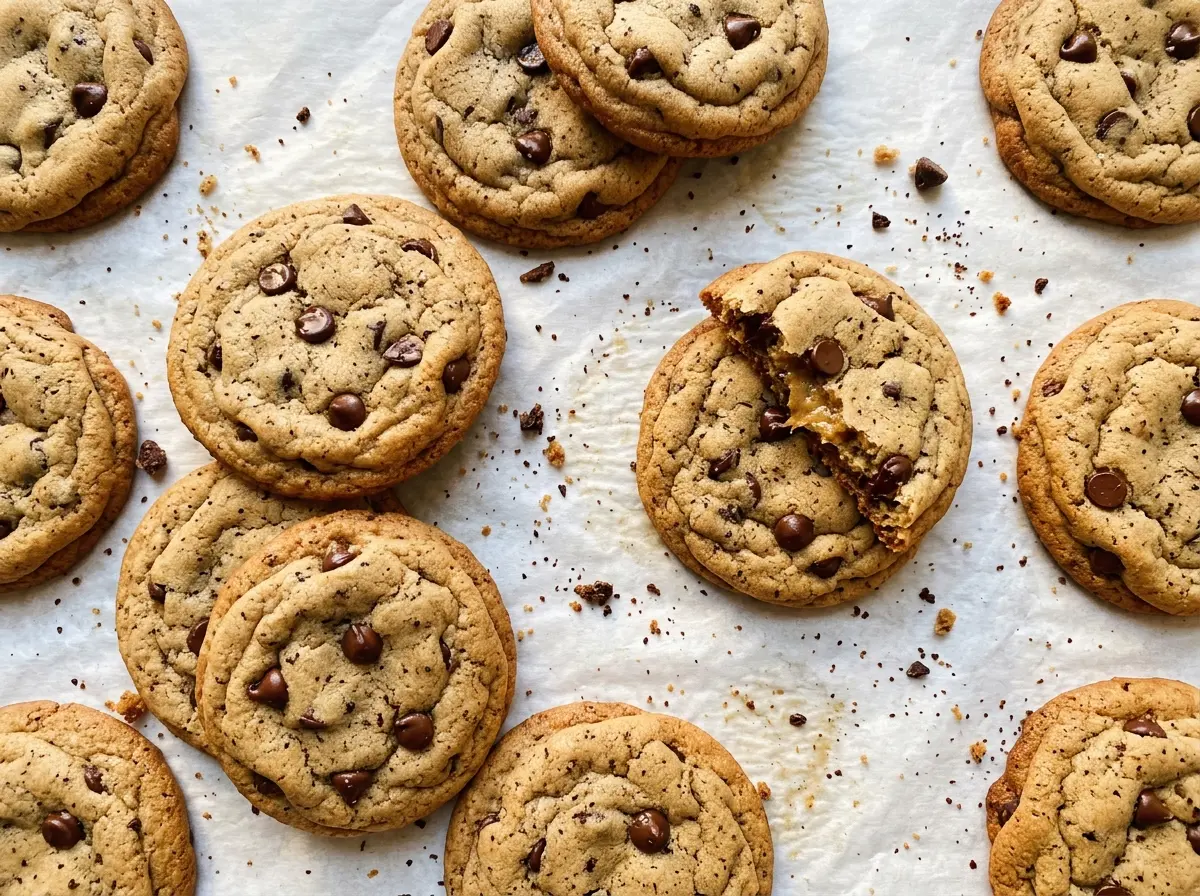
The first tray tells you what these cookies are about: the edges turn golden while the centers still look a little soft, and the chocolate stays glossy for a moment after they come out of the oven. I wanted the espresso to deepen the chocolate rather than make every bite taste like a cup of coffee, so I kept the dough rich and let the semisweet chips do their share of the work.
Chilling the dough for 30 minutes gives the softened butter time to firm back up, which makes the dough easier to scoop and helps the cookies bake with tender centers. The extra egg yolk adds richness, while the brown sugar keeps the middle soft. You get a cookie with a gentle espresso note, plenty of chocolate, and edges that set without turning crisp all the way through.
Kitchen Note
Room-temperature eggs blend into softened butter more smoothly than cold ones. If you forgot to set them out, leave them in their shells in a bowl of warm water for a few minutes before mixing.
Save these espresso chocolate chip cookies for a bake day when you want soft centers, golden edges, and chocolate with a quiet coffee note.
Why Espresso Makes the Chocolate Taste More Like Chocolate
These aren’t meant to taste like mocha cookies. The espresso powder sits behind the semisweet chocolate, giving its sweetness a little more depth without adding liquid to the dough. That distinction matters: a spoonful of brewed coffee would add moisture and change the dough, while instant espresso powder can be whisked through the dry ingredients and distributed evenly.
It also explains why a cookie can smell strongly of chocolate and still have only a mild coffee note. The espresso is there to support the chocolate, not compete with it. If you want a cookie that tastes boldly of coffee, this balance won’t deliver that; adding extra powder would shift the flavor away from the chocolate-forward result this dough is built for. The soft, brown-sugar center gives that background note somewhere to land, while semisweet chips keep each bite unmistakably chocolatey.
The Ingredients That Shape the Cookie’s Soft Center

- Light brown and granulated sugars — Brown sugar brings moisture and a softer middle; granulated sugar balances it and helps the edges set. Dark brown sugar can replace light brown sugar for a deeper molasses note, though the cookies will taste less delicate.
- Butter — Unsalted butter keeps the salt level predictable and contributes the familiar buttery flavor. Use a standard butter you like eating; a premium cultured butter isn’t necessary here. Plant-based baking sticks are a workable dairy-free swap, but tub spreads are too soft for a dependable result.
- Egg and egg yolk — The whole egg binds the dough, and the extra yolk adds richness without adding another white. There isn’t a simple one-for-one egg substitute that preserves the same tender texture, so keep both for this version.
- All-purpose flour — It gives the dough enough structure to hold the chocolate chips without making a heavy cookie. A cup-for-cup gluten-free baking blend is the most useful swap; choose one designed to replace wheat flour in baking, and expect a slightly different texture.
- Instant espresso powder — Instant espresso powder disperses through the dough far more evenly than coarse coffee grounds. A good supermarket brand works; ordinary ground coffee isn’t a direct substitute because its texture can leave gritty flecks.
- Semisweet chocolate chips — Chips hold their shape and give you chocolate in every scoop. Chopped semisweet chocolate can replace them in the same volume for softer, less uniform pockets; the inexpensive baking-bar option works well because the chocolate is mixed into the dough.
- Baking soda — This is the leavener that helps the cookies spread and brown. Don’t swap in baking powder one-for-one; it behaves differently and won’t give you the same result.
From Creamed Butter to Soft-Centered Cookies
Cream the Butter and Sugars Until Smooth
Beat the softened butter with both sugars on medium speed for about 2 minutes, stopping when the mixture looks creamy and even. Scrape down the sides if you see butter or sugar clinging above the beaters. Butter that is too cold can stay in small lumps, while butter that’s oily or melted won’t cream into the same texture. Start with butter that yields when pressed but still holds its shape.
Blend in the Egg, Yolk, and Vanilla
Add the egg, egg yolk, and vanilla, then beat just until the mixture comes together. Scrape the bottom and sides of the bowl so no streaks of butter mixture are hiding underneath. It may look a little loose at this stage; that’s fine before the dry ingredients go in. Stop once the egg is combined rather than beating for an extended time.
Mix the Dry Ingredients Without Overworking the Dough
Whisk the flour, espresso powder, baking soda, and salt in a separate bowl so the espresso and leavener don’t land in concentrated spots. Add that mixture to the butter mixture and mix on low. Stop as soon as you can’t see dry flour; continuing to mix after that point can make the cookies tougher. Stir in the chocolate chips until they are spread through the dough.
Chill, Scoop, and Give Each Cookie Room
Cover the bowl and refrigerate the dough for 30 minutes. While it chills, heat the oven to 350°F and line two baking sheets with parchment paper. Scoop rounded tablespoons onto the sheets, leaving about 2 inches between portions so the cookies have space to spread. Crowding them risks cookies baking into one another instead of keeping their individual edges.
Bake for Golden Edges, Then Let the Centers Set
Bake for 10–12 minutes, watching for golden edges and centers that still look slightly soft. Don’t wait for the centers to look firm in the oven; they continue setting on the hot baking sheets. Leave the cookies there for 5 minutes, then transfer them to a wire rack to cool completely. Moving them too soon can break the soft centers before they have enough time to hold together.
Simple Swaps for a Different Chocolate Chip Cookie
Make the batch dairy-free
Use baking sticks made from plant-based oils in place of the butter, and choose dairy-free semisweet chips. The cookies will have a slightly different buttery flavor, and their spread can vary a little by brand; avoid soft margarine sold in tubs.
Go darker with bittersweet chocolate
Replace the semisweet chips with bittersweet chips in the same volume. The cookies will taste less sweet and the espresso note will stand out a little more, while the chip format keeps the dough easy to scoop.
Try a deeper brown-sugar flavor
Use dark brown sugar instead of light brown sugar. Its stronger molasses character makes the cookies taste richer and a touch less neutral, without changing the mixing method.
Storage and Reheating
- Room temperature: Once completely cool, keep the cookies in an airtight container for up to 4 days. They soften a little as they sit.
- Freezer: Freeze completely cooled cookies in an airtight freezer container for up to 2 months. Separate layers with parchment so the chocolate doesn’t make them stick together.
- Reheating: Warm one cookie in the microwave for about 8 seconds to soften the chocolate. Longer heating can make the cookie hot and tough instead of gently warm.
Questions That Come Up When Baking These Cookies
Espresso Chocolate Chip Cookies
Ingredients
Equipment
Method
- In a large bowl, beat the butter, brown sugar, and granulated sugar with an electric mixer on medium speed until creamy, about 2 minutes.
- Beat in the egg, egg yolk, and vanilla until combined, scraping down the bowl as needed.
- In a separate bowl, whisk together the flour, espresso powder, baking soda, and salt.
- Add the flour mixture to the butter mixture and mix on low just until no dry flour remains.
- Stir in the chocolate chips.
- Cover the bowl and refrigerate the dough for 30 minutes.
- Heat the oven to 350°F.
- Line two baking sheets with parchment paper.
- Scoop rounded tablespoons of dough onto the prepared sheets, spacing them about 2 inches apart.
- Bake for 10–12 minutes, until the edges are golden and the centers still look slightly soft.
- Let the cookies cool on the baking sheets for 5 minutes.
- Transfer the cookies to a wire rack to cool completely.