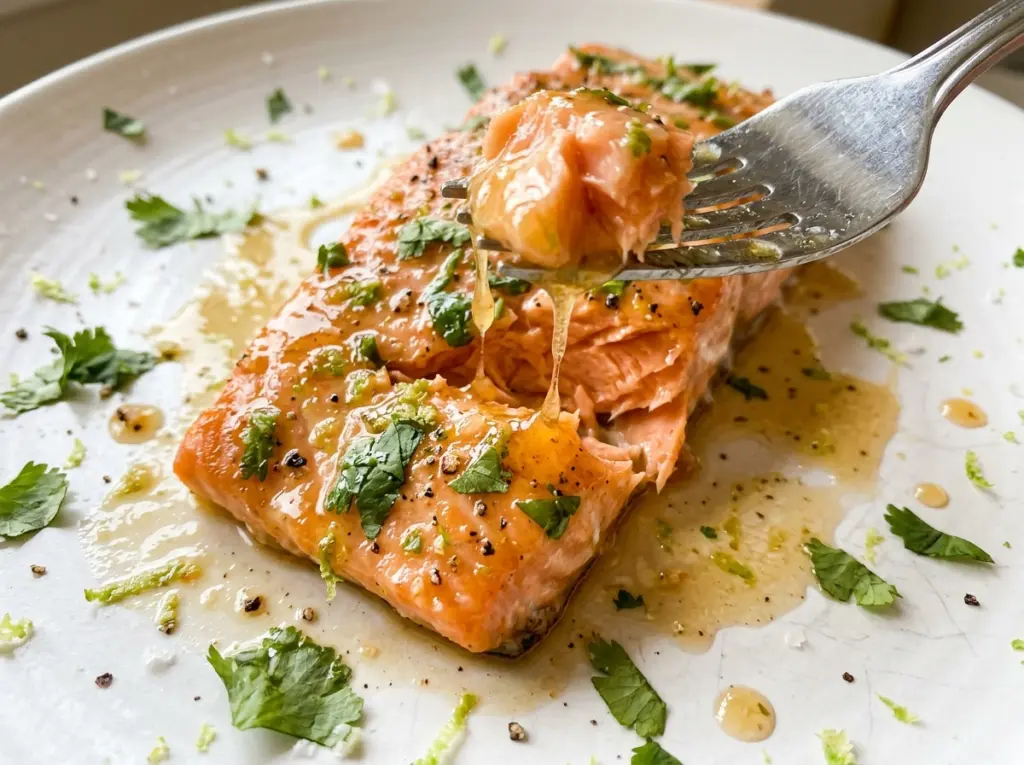
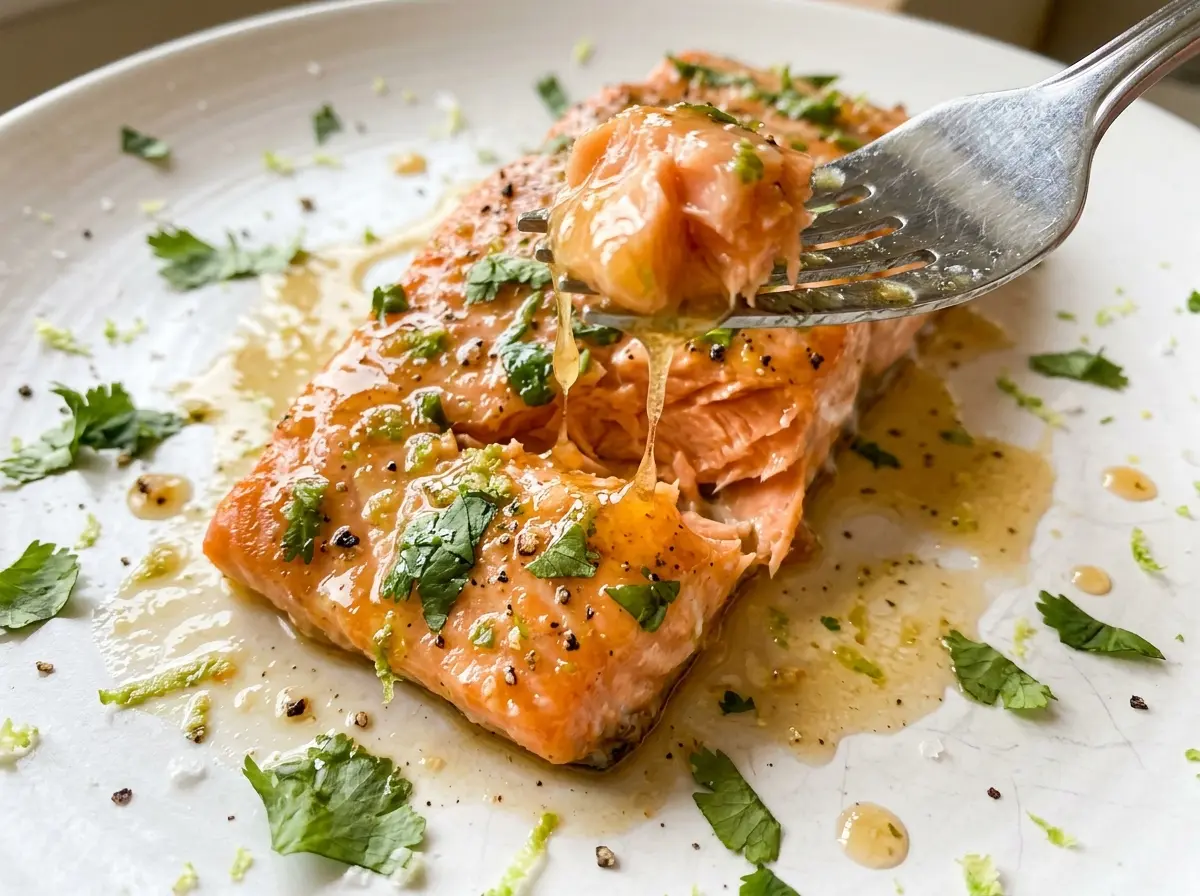
The butter and honey loosen into a shiny glaze as the salmon bakes, and the lime keeps it from tasting too sweet. I spoon the mixture over the top of the fish rather than trying to coat every side; the skin stays against the parchment, and the glaze settles over the flesh where you want it. That’s the simple approach behind this Sweet Cilantro Lime Salmon.
Fresh lime zest does more here than add a citrusy note. It gives the melted butter and honey a fragrant lift before the pan even goes into the oven. I add the cilantro after baking, while the salmon rests, so its fresh flavor stays bright instead of disappearing into the glaze. The finished fish is tender, gently sweet, and flecked with green cilantro.
Kitchen Note
Use a fine grater for the lime zest so it blends into the melted butter instead of leaving big chewy strips. Stop when you reach the white pith; zest only the green outer peel for the cleanest lime flavor.
Save this Sweet Cilantro Lime Salmon for a simple oven-baked dinner with a buttery honey-lime glaze and fresh cilantro on top.
Why the Thick Center Sets the Pace for the Whole Fillet
A salmon fillet isn’t the same thickness from end to end. The narrow tail cooks sooner than the thick center, so judging doneness by the thinnest section can leave the middle underdone. The thickest part gives you the most useful reading for the whole piece, while the tail may look more cooked by the time the center is ready.
The glaze also makes surface color a poor doneness test. Honey and butter coat the top, so a browned or glossy surface doesn’t tell you what’s happening inside the thick section. Check the thickest part and look for the fish to separate into moist flakes when gently nudged with a fork. That combination gives you a much better read than the outside alone, especially when your fillet tapers noticeably at one end.
What the Salmon, Lime, and Honey Each Bring to the Glaze

- Skin-on salmon — The skin gives you a natural side to rest on the parchment and keeps the fillet easier to handle as it bakes. Choose a fresh-looking fillet with moist flesh and an even thickness where possible; very thin tails will cook ahead of the center.
- Unsalted butter and honey — Melted butter carries the lime, garlic, and honey over the surface, while honey brings the sweet note and helps the glaze cling. Unsalted butter lets the salt level stay in your hands. The butter doesn’t need to be a specialty brand, but it should be fully melted before you stir the glaze together.
- Fresh lime — Juice adds tartness, and finely grated zest gives the glaze a more fragrant citrus aroma. Use a lime with a firm, brightly colored peel that’s easy to zest. Juice alone won’t bring the same aroma, so keep both parts in the mixture.
- Garlic — Mince the clove finely so it spreads through the glaze rather than landing in one large piece. Fresh garlic gives the butter mixture a savory edge that balances the honey.
- Fresh cilantro — Chopped cilantro adds a green, herbal finish. Fresh leaves matter most here because they’re sprinkled on after baking, when their color and flavor are easy to notice.
How to Coat and Bake the Salmon Without Losing the Glaze
Set Up the Fillet on Parchment
Heat the oven to 400°F and line a rimmed baking sheet with parchment paper. Put the salmon on the sheet skin-side down, with the flesh facing up. Season the fillet evenly with kosher salt and black pepper so the center and tapered end are both seasoned. Keep the skin against the parchment; turning the fish over would put the glaze on the wrong side.
Stir the Butter-Honey Lime Mixture
Stir the melted butter with the honey, fresh lime juice, lime zest, and minced garlic. Scrape the bottom of the bowl as you mix so the honey doesn’t sit in a thick layer underneath. Spoon the mixture across the top of the salmon, spreading it over the flesh rather than pouring it beneath the fish. If a little glaze runs onto the parchment, leave it there.
Bake Until the Center Is Ready
Bake for 12 to 16 minutes, checking the thickest part of the fillet. It’s ready when that spot reaches 145°F and the fish flakes easily with a fork. The thinner end may look firmer first, so don’t use it as your only cue. If the thick center hasn’t reached the target yet, continue baking and check it again rather than relying on the clock alone.
Add Cilantro and Let the Fish Rest
Take the salmon out of the oven, sprinkle the chopped cilantro over the top, and let the fish rest for 3 minutes before serving. Add the herbs after baking so they stay bright against the glossy glaze. Lift the fillet from the parchment carefully; it’s tender and can break if you try to move it with a small utensil. A wide spatula supports the fish as you transfer it.
Small Changes for a Less Herbal or Less Sweet Salmon
Leave Off the Cilantro
Skip the chopped cilantro if you prefer a clean lime-and-garlic finish. The salmon will still have the honey-butter glaze, but it won’t have the fresh herbal note on top.
Leave Out the Honey for a Tarter Finish
Omit the honey from the glaze if you want the lime and garlic to lead. The topping won’t be as sweet or as glossy, but the butter still carries the citrus over the salmon.
Storage and Reheating
- Refrigerator: Keep cooked salmon in a covered, airtight container for 3 to 4 days. The flesh will firm up as it chills.
- Freezer: It freezes well for about 2 to 3 months when wrapped tightly and stored in an airtight container. Thaw it in the refrigerator before reheating.
- Reheating: Warm gently in short microwave bursts or in a covered oven-safe dish until the center reaches 165°F. Avoid prolonged high heat, which dries the salmon quickly.
Questions That Come Up When Baking Sweet Cilantro Lime Salmon
Sweet Cilantro Lime Salmon
Ingredients
Equipment
Method
- Heat the oven to 400°F.
- Line a rimmed baking sheet with parchment paper and place the salmon skin-side down on the sheet.
- Season the salmon evenly with the salt and pepper.
- Stir together the melted butter, honey, lime juice, lime zest, and garlic.
- Spoon the mixture over the salmon.
- Bake for 12 to 16 minutes, until the thickest part reaches 145°F and the fish flakes easily with a fork.
- Sprinkle with the cilantro.
- Let the salmon rest for 3 minutes before serving.