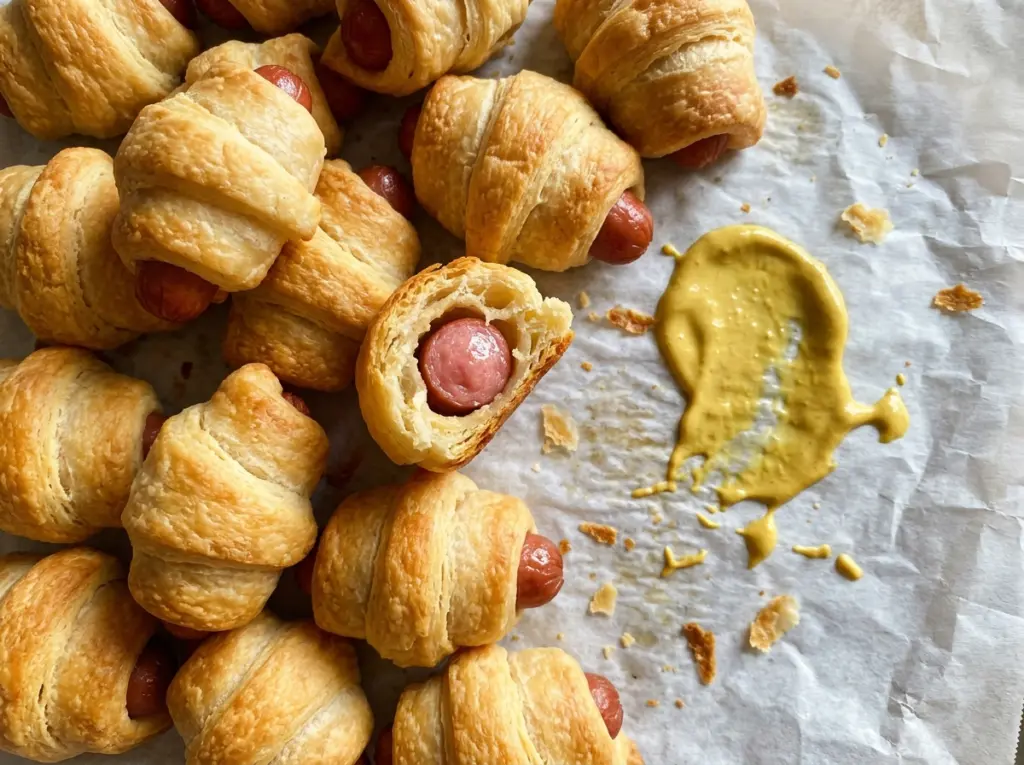
When crescent dough first goes into the oven, the wraps look small and pale; a few minutes later, the layers puff around the hot dogs and turn golden. That quick change is what makes Pigs in a Blanket such a satisfying snack to bake, whether you’re putting out a party platter or making a simple lunch.
With just refrigerated crescent roll dough and hot dogs, the little details matter. I separate the dough into its eight triangles, start each hot dog at the wide end, and roll toward the point so the dough wraps around it in one smooth layer. Set each roll seam-side down on parchment, and you’ll have a tidy batch of golden, puffy bites.
Kitchen Note
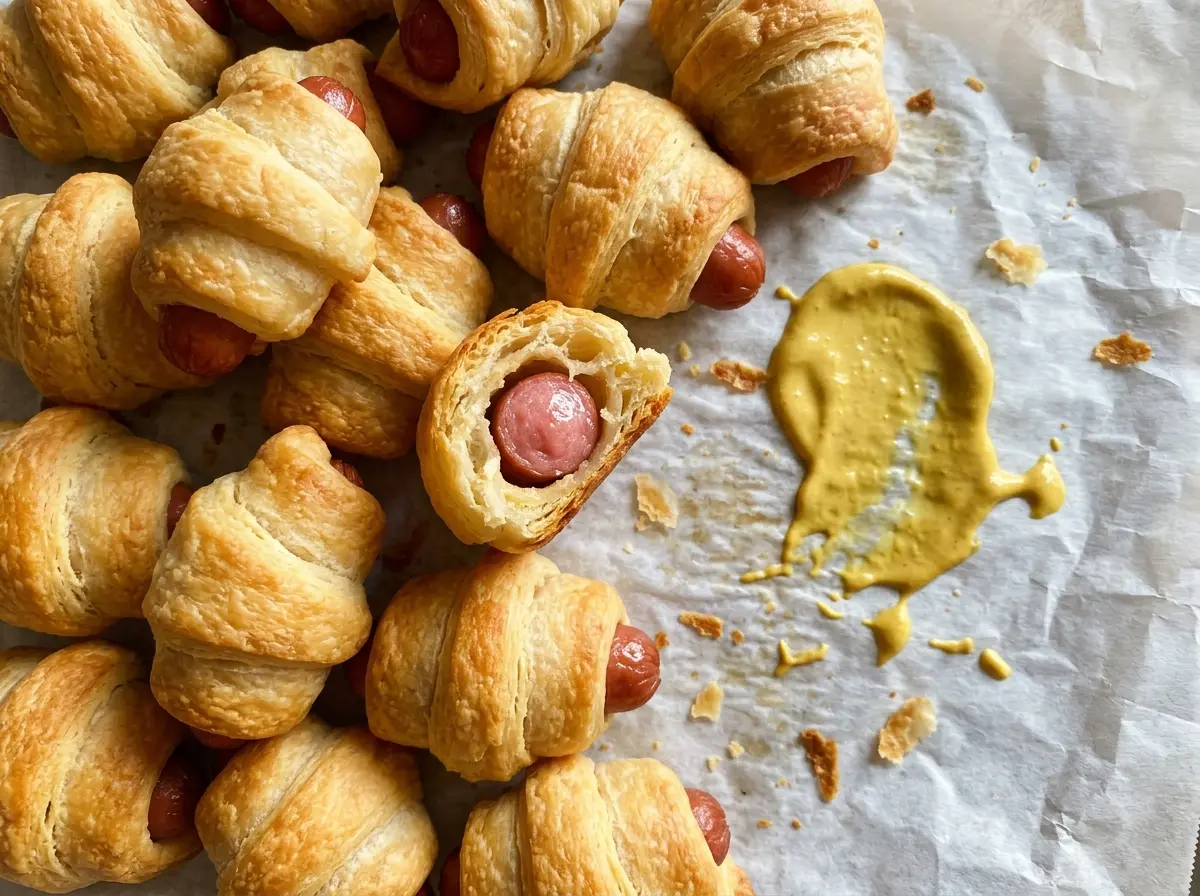
Start checking at 12 minutes, since crescent dough can brown quickly near the end. Pull the pan when the dough is puffed and golden, not just because the timer has reached the first number.
Save these Pigs in a Blanket for an easy batch of puffed, golden crescent-wrapped hot dogs.
Why the Wide End Goes First—and the Seam Belongs Underneath
The triangle’s shape does the wrapping for you. Its wide end gives the hot dog a broad starting point, and rolling toward the narrow tip lets the dough travel around the dog without bunching into a thick knot in the middle. If the hot dog starts at the point, there isn’t enough dough there to make a neat first turn, and the roll is more likely to look uneven.
The seam matters once the rolls are on the pan. Set them seam-side down so the weight of each hot dog holds the loose edge against the parchment while the dough puffs in the oven. That simple orientation keeps the wrapping in place without pinching or pressing the dough closed. You want a snug roll, not a tight one: the dough needs room to expand as it bakes, and the pointed end should rest naturally against the roll.
There’s no filling to prepare or sauce to thicken, so an even wrap is the small bit of assembly that gives the finished batch its recognizable shape. Take a second to position all eight rolls with the seam underneath before the baking sheet goes in.
Why Crescent Dough, Not Just Any Pastry, Makes the Wrap

- Refrigerated crescent roll dough — The perforations divide the can into the eight triangles this method uses, and the sloped shape rolls around a hot dog without extra cutting. Use the refrigerated crescent dough called for here rather than swapping in a different pastry; puff pastry and biscuit dough behave differently and won’t give you the same simple roll. Separate the triangles along their perforations rather than stretching them wider.
- Hot dogs — Standard-size hot dogs fit the triangles and keep the dough-to-filling balance close to the batch’s eight-roll format. The source quantity is about a pound total, so unusually large dogs may leave too little dough to wrap around them neatly. Choose the hot dogs you like eating; there’s no seasoning or chopping step needed before rolling.
- Parchment paper — It keeps the crescent dough from sticking to the baking sheet and makes cleanup easier. Lay it flat on the large baking sheet before arranging the rolls so the dough has a clean surface to bake on.
From Eight Triangles to Golden Wraps
Prepare the Baking Sheet and Dough
Heat the oven to 375°F and line a large baking sheet with parchment paper. Unroll the refrigerated crescent dough and separate it into eight triangles at the perforations. If a triangle starts to stretch as you pull it apart, ease it away along the seam instead of tugging from the narrow tip.
Roll Each Hot Dog in Its Triangle
Place one hot dog along the wide end of each triangle. Roll it toward the point, keeping the dough around the hot dog without winding it into a thick overlap. Arrange each one seam-side down on the prepared baking sheet so the loose edge rests against the parchment.
Bake Until Puffed and Golden
Bake for 12–15 minutes, until the crescent dough is puffed and golden brown. The dough should look baked through rather than pale or soft, especially where it wraps around the hot dog. If the tops are still light at 12 minutes, give them the remaining time and use the color and puff as your cues.
Two Easy Ways to Adapt These Pigs in a Blanket
Make a vegetarian batch with plant-based hot dogs
Replace the hot dogs with eight standard-size, fully cooked plant-based hot dogs, keeping the crescent dough and rolling method the same. The filling will taste different, but the familiar puffy crescent outside stays intact; choose a product close to the original hot dogs in size so each triangle can wrap around it.
Use turkey hot dogs for a lighter-tasting filling
Swap in eight standard-size turkey hot dogs, keeping the crescent dough and baking method unchanged. The filling has a milder taste than many beef hot dogs, while the crescent layer still brings the buttery, golden exterior. Keep the size close to the original so the dough triangles cover the hot dogs neatly.
Storage and Reheating
- Refrigerator: Refrigerate leftovers within 2 hours and eat them within 3–4 days. The crescent dough softens as it sits.
- Freezer: Freeze cooled pieces in an airtight container for up to 2 months for best quality. Thaw them overnight in the refrigerator.
- Reheating: Warm them in a 350°F oven until the centers reach 165°F. The microwave works in a pinch, but it softens the dough rather than bringing back its baked texture.
Questions That Come Up Before the Pan Goes in the Oven
Pigs in a Blanket
Ingredients
Equipment
Method
- Preheat the oven to 375°F.
- Line a large baking sheet with parchment paper.
- Unroll the crescent dough and separate it into 8 triangles.
- Place a hot dog along the wide end of each triangle and roll it up toward the point.
- Arrange the rolls seam-side down on the baking sheet.
- Bake for 12–15 minutes, until the dough is puffed and golden brown.