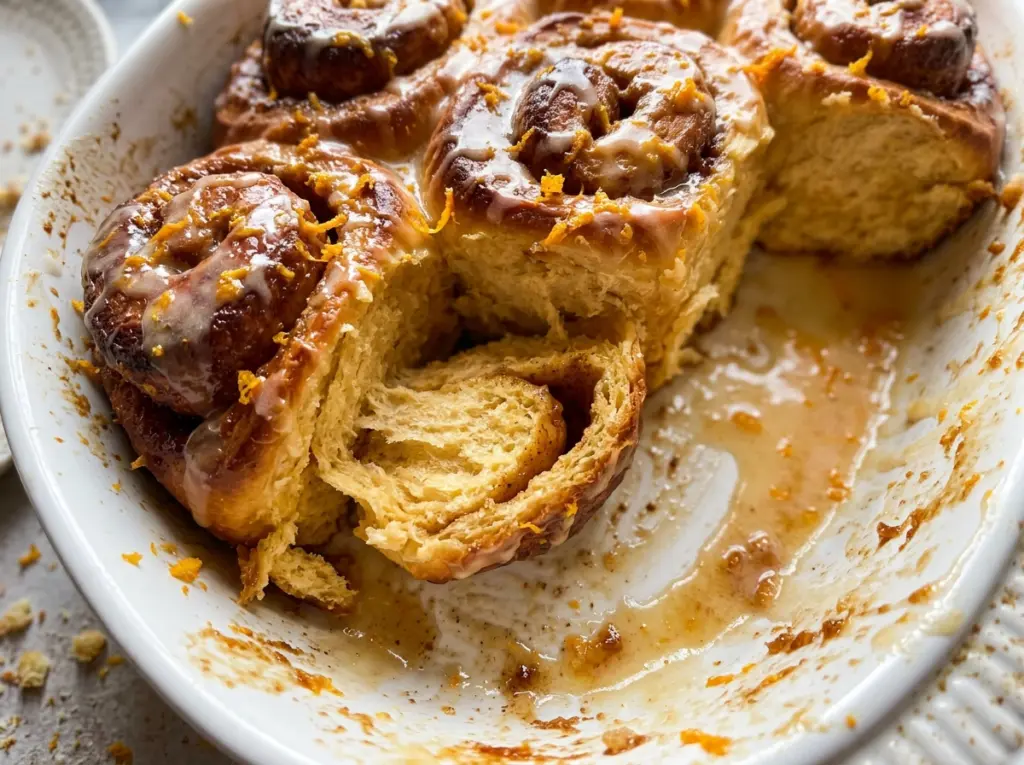
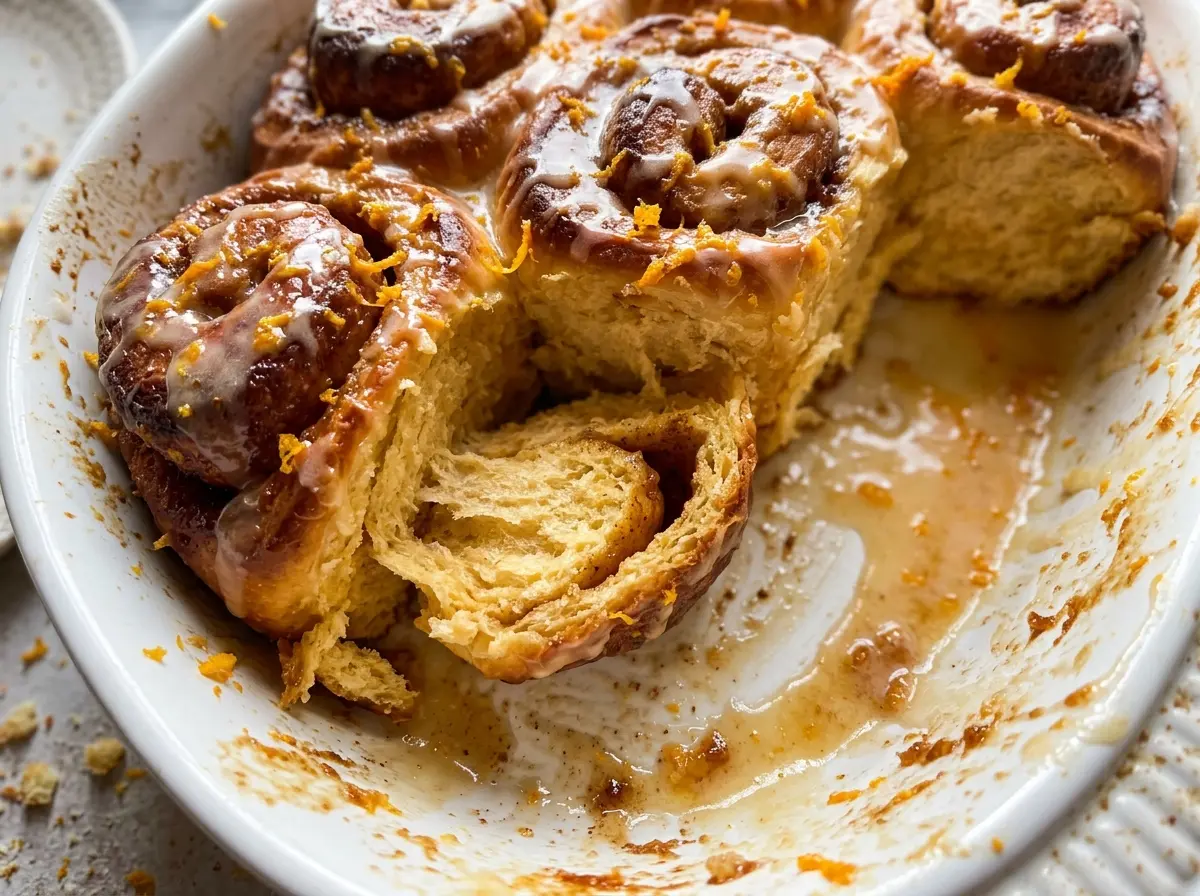
The yeast should turn the warm milk cloudy and foamy while it rests; if it stays flat, the rolls won’t get the lift you want. Once that first cue looks right, the dough comes together into a soft, slightly tacky ball that rises into a tender base for these glazed orange sweet rolls. The orange filling smells bright as it goes on, and the glaze adds another hit of citrus without burying the dough beneath a heavy layer of sweetness.
I knead in the flour gradually, stopping when the dough feels smooth and still has a little tack. It’s easy to keep adding flour until the dough feels dry and tidy, but that can leave the baked rolls dense. Give the dough time to double, then roll it into an even rectangle so the filling reaches the edges. The finished rolls have soft centers, golden tops, and a thin orange glaze that settles into every swirl.
Kitchen Note
Let the rolls cool in the dish for the full 10 minutes before glazing. They’ll still be warm enough for the icing to soften and settle into the spirals, but it won’t disappear into a runny puddle.
Save these Glazed Orange Sweet Rolls for a weekend bake: soft spirals, a citrus-sugar filling, and a fresh orange glaze.
Why Orange Zest Belongs in the Sugar, Not Just the Dough
Orange juice gives the glaze its citrus tang, but the filling gets its strongest orange aroma from the zest. Rubbing the finely grated zest into the sugar before it goes over the butter helps release the fragrant oils from the peel. The sugar takes on a moist, sandy feel and turns pale orange as you work it. That’s a more even way to distribute the citrus through the spiral than scattering loose zest over the dough.
This distinction matters because the dough itself stays buttery and mild. It gives the filling room to taste clearly orange, rather than making every bite taste uniformly sweet and citrusy. Spread the butter across the rectangle first, then distribute the orange sugar as evenly as you can; bare patches mean some spirals will have less filling. The glaze brings the peel and juice together again on top, so the citrus comes through in both the soft center and the finish.
What Gives These Rolls Their Orange Aroma and Tender Crumb

- Active dry yeast and whole milk — The yeast provides the rise, while whole milk brings richness to the dough. Use milk warmed to the stated temperature range; 2% milk works measure-for-measure if that’s what you have, though the dough will be a little less rich.
- All-purpose flour — It gives the rolls enough structure while keeping the crumb tender. Add it gradually during kneading; the dough should finish smooth and slightly tacky, not stiff from excess flour.
- Egg and unsalted butter — The egg adds structure and richness, while the butter is split between the dough and the filling. Bring the egg to room temperature and use softened butter for the filling so it spreads without tearing the dough.
- Orange zest and juice — Fresh oranges are worth using for the finely grated zest, which supplies the peel’s aromatic oils. The juice can be fresh or bottled; choose juice with a clean orange taste rather than one with added sweeteners.
From Foamy Yeast to Glazed Tops: The Roll-Making Stages
Wake up the yeast
Stir the warm milk with the yeast and the portion of sugar set aside for the dough. Let the bowl stand for 5–10 minutes, until the surface looks foamy. If there’s no foam, pause before adding the other ingredients; yeast that isn’t active won’t give the dough a dependable rise.
Knead until the dough turns smooth
Whisk the egg and melted, slightly cooled butter into the yeast mixture, then stir in the salt and 3 1/2 cups of flour. When a shaggy dough forms, knead it on a clean work surface for 8–10 minutes, adding the remaining flour a little at a time. The dough is ready when it feels smooth and slightly tacky; if it’s still rough, keep kneading before reaching for more flour.
Give the dough its first rise
Cover the bowl and leave it in a warm place for 1–1 1/2 hours. Look for dough that has doubled in size rather than relying only on the clock, since the room’s warmth affects how quickly it rises. Keep it covered while it rests so the surface doesn’t dry out.
Fill, roll, and proof the spirals
Coat a 9×13-inch baking dish with nonstick cooking spray, then roll the dough on a clean work surface into a 12×18-inch rectangle. Spread on the softened butter and sprinkle over the orange zest rubbed into the filling sugar. Roll the dough up from a long edge into an 18-inch log, cut it into 12 equal pieces, and arrange them cut-side up in the dish. Cover and let the rolls rise for 30–45 minutes, until puffy; preheat the oven to 350°F during the final 20 minutes.
Bake until the centers look set
Bake for 22–27 minutes, until the tops are golden brown and the center rolls no longer look doughy. The center is the best place to check because the rolls there bake more slowly than the ones at the edge. Let them cool in the dish for 10 minutes, then whisk the powdered sugar with the orange juice and remaining zest until smooth. Spread the glaze over the warm rolls.
Two Useful Ways to Change the Citrus or Make the Dough Dairy-Free
Switch the orange to lemon
Use finely grated lemon zest wherever the filling and glaze call for orange zest, and replace the orange juice with lemon juice in the same listed amount. The citrus comes through sharper and less sweet-smelling, while the dough and shaping stay the same.
Make the dough dairy-free
Replace the whole milk with unsweetened oat milk and use an unsalted dairy-free baking stick in place of both portions of butter, keeping each replacement measure-for-measure. The rolls will still rise and taste buttery, though the crumb may be a little less rich. The egg remains in the dough, so this change makes the rolls dairy-free, not vegan.
Storage and Reheating
- Refrigerator: Store the rolls airtight for up to 4 days. Chilling firms the crumb, so let a roll sit at room temperature briefly before eating.
- Freezer: Freeze the cooled rolls individually for up to 2 months; freeze them before glazing if possible, then thaw at room temperature.
- Reheating: Warm a roll loosely covered in a 300°F oven for 8–10 minutes, adding glaze afterward if you froze it unglazed. Leaving it uncovered can dry the edges before the center warms.
Questions That Come Up While Making Orange Sweet Rolls
Glazed Orange Sweet Rolls
Ingredients
Equipment
Method
- Stir the warm milk, yeast, and 1/4 cup sugar together in a large bowl and let stand for 5–10 minutes, until foamy.
- Whisk in the egg and melted butter.
- Stir in the salt and 3 1/2 cups flour until a shaggy dough forms.
- Knead the dough on a clean work surface for 8–10 minutes, adding the remaining flour a little at a time until the dough is smooth and slightly tacky.
- Cover the bowl and let the dough rise in a warm place for 1–1 1/2 hours, until doubled in size.
- Coat a 9x13-inch baking dish with nonstick cooking spray.
- Roll the dough on a clean work surface into a 12x18-inch rectangle.
- Rub 1 tablespoon orange zest into the remaining 1/2 cup sugar.
- Spread the softened butter over the dough, then sprinkle the orange sugar evenly over it.
- Roll the dough up from a long edge into an 18-inch log and cut it into 12 equal pieces.
- Arrange the rolls cut-side up in the dish, cover, and let rise for 30–45 minutes, until puffy.
- During the final 20 minutes of rising, preheat the oven to 350°F.
- Bake for 22–27 minutes, until golden brown and the center rolls no longer look doughy.
- Let cool in the dish for 10 minutes.
- Whisk the powdered sugar, orange juice, and remaining 1 teaspoon orange zest until smooth.
- Spread the glaze over the warm rolls.