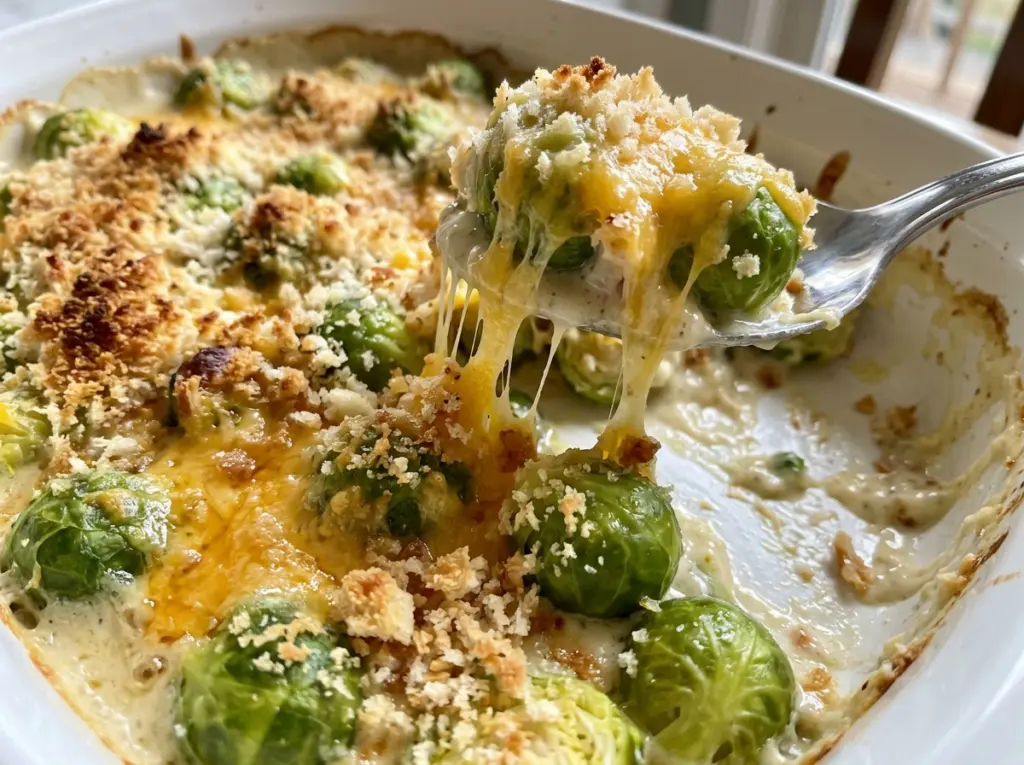
The sprouts should be bright green and just tender when they leave the blanching water, not soft enough to fall apart. That quick stop in boiling water gives Brussels sprouts casserole a head start before they meet the cheese sauce, while the crisp panko topping finishes in the oven.
I drain the sprouts well before they go into the baking dish, because extra water can loosen the sauce before the top has a chance to brown. The sauce comes together on the stovetop, then gets poured over the sprouts and finished with Parmesan-panko crumbs. At the table, you get tender sprouts under a bubbling cheddar sauce and a crisp, golden top.
Kitchen Note
Pull the saucepan off the heat before you stir in the cheddar. The hot sauce melts it smoothly without the direct heat that can leave the cheese oily or grainy.
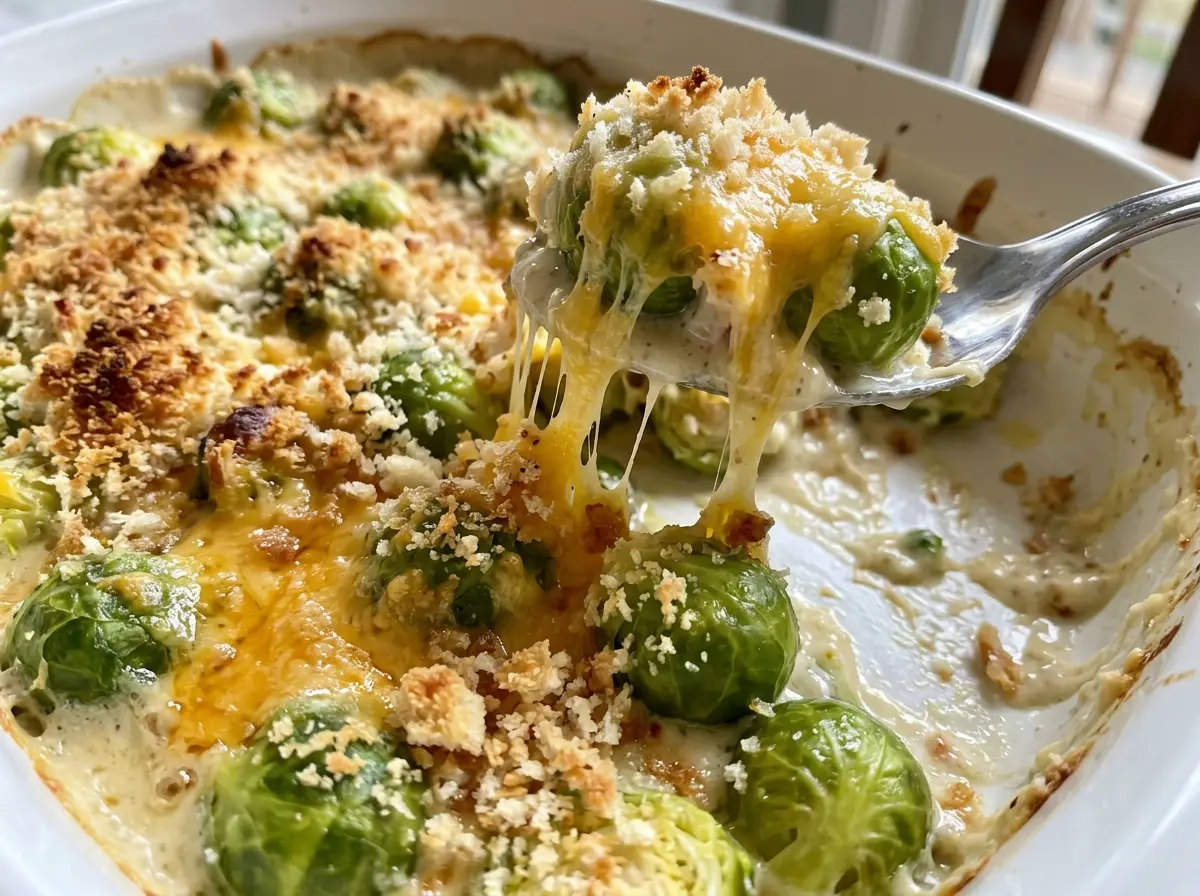
Save this Brussels sprouts casserole for its bubbling cheddar sauce, tender sprouts, and crisp Parmesan-panko topping.
What Keeps Brussels Sprouts From Watering Down the Cheese Sauce
Brussels sprouts release moisture as they cook. If they go into the baking dish raw, they need longer in the oven to become tender, and all that time gives them a chance to shed liquid into the sauce. A brief blanch gets the centers started before baking, so the finished casserole doesn’t have to spend as long in the oven.
Watch the color and feel rather than waiting for the sprouts to become fully soft in the pot. After three to four minutes in boiling water, they should look bright green and feel just tender. They’ll continue cooking under the sauce in the oven, so taking them further now can leave you with mushy sprouts later.
Drain them well before transferring them to the greased baking dish. Water clinging to the leaves dilutes the cheddar sauce, and a thin sauce takes longer to bubble and set around the vegetables. Give the colander a moment to do its job; the goal is tender sprouts with a creamy sauce that stays on them.
Why Sharp Cheddar and Panko Give This Casserole Its Balance

- Brussels sprouts — Fresh, firm sprouts hold their shape through blanching and baking. Trim the stem ends and halve them so the pieces cook at a similar pace. Choose smaller, compact sprouts when you can; very large ones may need a little longer to feel just tender during the blanch.
- Whole milk and heavy cream — Whole milk gives the sauce enough body for a flour-thickened base, while cream makes it richer. If you only have 2% milk, it can stand in for the whole milk, though the sauce will taste less full. Replacing the cream with whole milk also works, but the finished sauce won’t be as lush.
- Sharp cheddar — Its pronounced flavor stands up to the sprouts rather than disappearing into the cream. A block that you shred yourself melts into a smoother sauce than many pre-shredded cheeses, which are coated to keep the shreds separate. Mild cheddar works, but the cheese flavor will be softer.
- Panko and Parmesan — Panko makes a lighter, crisper top than fine breadcrumbs, and Parmesan adds a salty, savory edge. Regular breadcrumbs can replace panko; expect a finer, denser crust. Grate the Parmesan finely enough that it mixes evenly through the crumbs instead of landing in clumps.
How to Blanch, Sauce, and Bake the Casserole Without Losing Its Texture
Blanch the sprouts until bright green
Heat the oven to 375°F and grease a 9×13-inch baking dish before you start the stovetop work. Bring a large pot of water to a boil, add the trimmed, halved sprouts, and cook them for three to four minutes. Look for bright green leaves and sprouts that are just tender when pierced, not collapsing or soft throughout. Drain them well, then transfer them to the prepared dish.
Cook the roux until it smells buttery
Melt the butter in a medium saucepan over medium heat, whisk in the flour, and cook the mixture for one minute. Keep whisking so the flour blends into the butter rather than forming dry pockets. Gradually whisk in the milk and cream; adding them steadily helps the sauce stay smooth. Cook for three to five minutes, whisking often, until it thickens enough to coat a spoon.
Finish the sauce and cover the sprouts
Stir the garlic powder, kosher salt, black pepper, and Dijon mustard into the thickened sauce. Take the pan off the heat, then stir in the shredded cheddar until it has melted and the sauce looks smooth. Pour it over the sprouts and toss gently so the pieces are coated without breaking apart. Mix the panko, Parmesan, and olive oil in a small bowl, then scatter the topping evenly over the casserole.
Bake until the edges bubble
Bake for 20 to 25 minutes, until the sauce bubbles around the edges and the topping is golden brown. The center should be hot and the crumbs should look toasted, not pale. If the top is already golden before the edges bubble, loosely cover the dish with foil for the rest of the bake so the crumbs don’t get too dark. Let the casserole rest for five minutes before serving so the sauce can settle around the sprouts.
Two Easy Ways to Change the Cheese Sauce or Make It Gluten-Free
Swap the cheddar for Gruyère
Use an equal amount of shredded Gruyère in place of the sharp cheddar. It melts well into the sauce and gives the casserole a nuttier, less sharp cheese flavor, while the rest of the method stays the same.
Make a gluten-free version
Replace the all-purpose flour with a cup-for-cup gluten-free flour blend and use gluten-free panko in the topping, keeping each swap equal in quantity to the ingredient it replaces. The sauce may feel a little different as it thickens, but the roux still gives it body and the crumbs still make a crisp top.
Storage and Reheating
- Refrigerator: Refrigerate leftovers in a covered container within two hours and eat them within three to four days. The topping softens as it sits.
- Freezer: I don’t recommend freezing this casserole. The cream-based cheese sauce can separate after thawing, and the sprouts tend to turn softer.
- Reheating: Reheat portions in a 350°F oven, loosely covered with foil, until they reach 165°F; uncover near the end if you’d like to crisp the topping. Avoid reheating uncovered from the start, which can dry the surface before the center is hot.
Questions That Come Up When Making Brussels Sprouts Casserole
Brussels Sprouts Casserole
Ingredients
Equipment
Method
- Heat the oven to 375°F.
- Grease a 9x13-inch baking dish.
- Bring a large pot of water to a boil.
- Add the Brussels sprouts and cook for 3 to 4 minutes, until bright green and just tender.
- Drain the Brussels sprouts well and transfer them to the prepared baking dish.
- Melt the butter in a medium saucepan over medium heat.
- Whisk in the flour and cook for 1 minute.
- Gradually whisk in the milk and heavy cream.
- Cook for 3 to 5 minutes, whisking often, until the sauce thickens enough to coat a spoon.
- Stir in the garlic powder, salt, black pepper, and Dijon mustard.
- Remove the pan from the heat.
- Stir in the cheddar until melted and smooth.
- Pour the cheese sauce over the Brussels sprouts and toss gently to coat them evenly.
- Stir together the panko, Parmesan, and olive oil in a small bowl.
- Scatter the mixture evenly over the casserole.
- Bake for 20 to 25 minutes, until the sauce is bubbling around the edges and the topping is golden brown.
- Let rest for 5 minutes before serving.