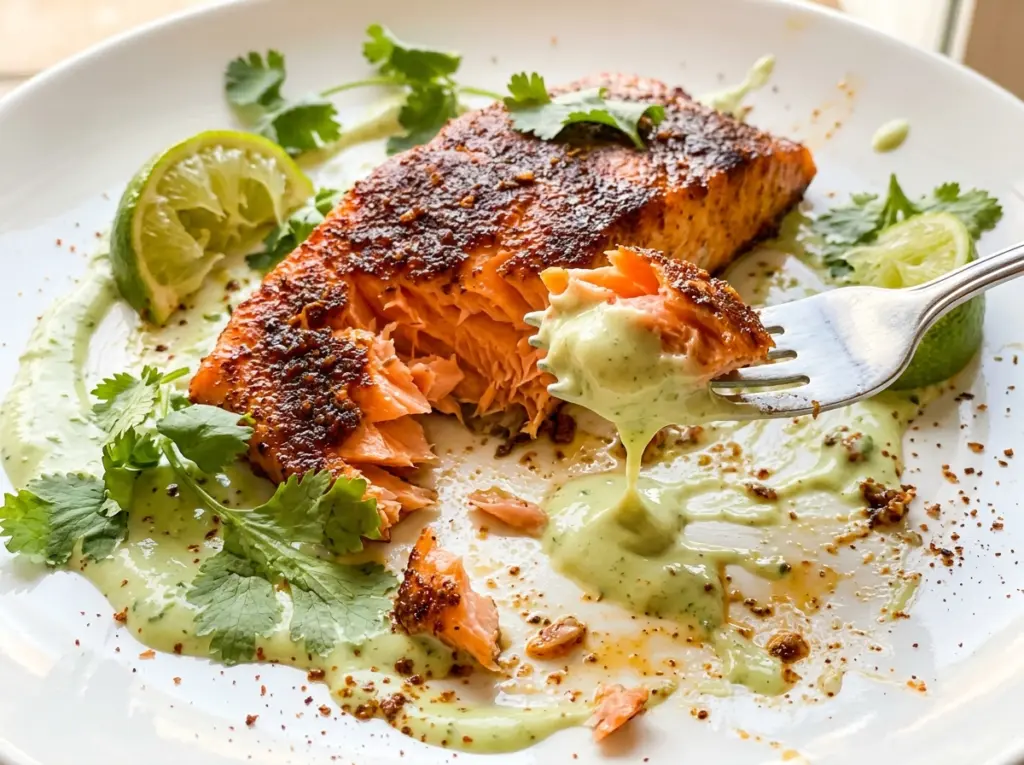
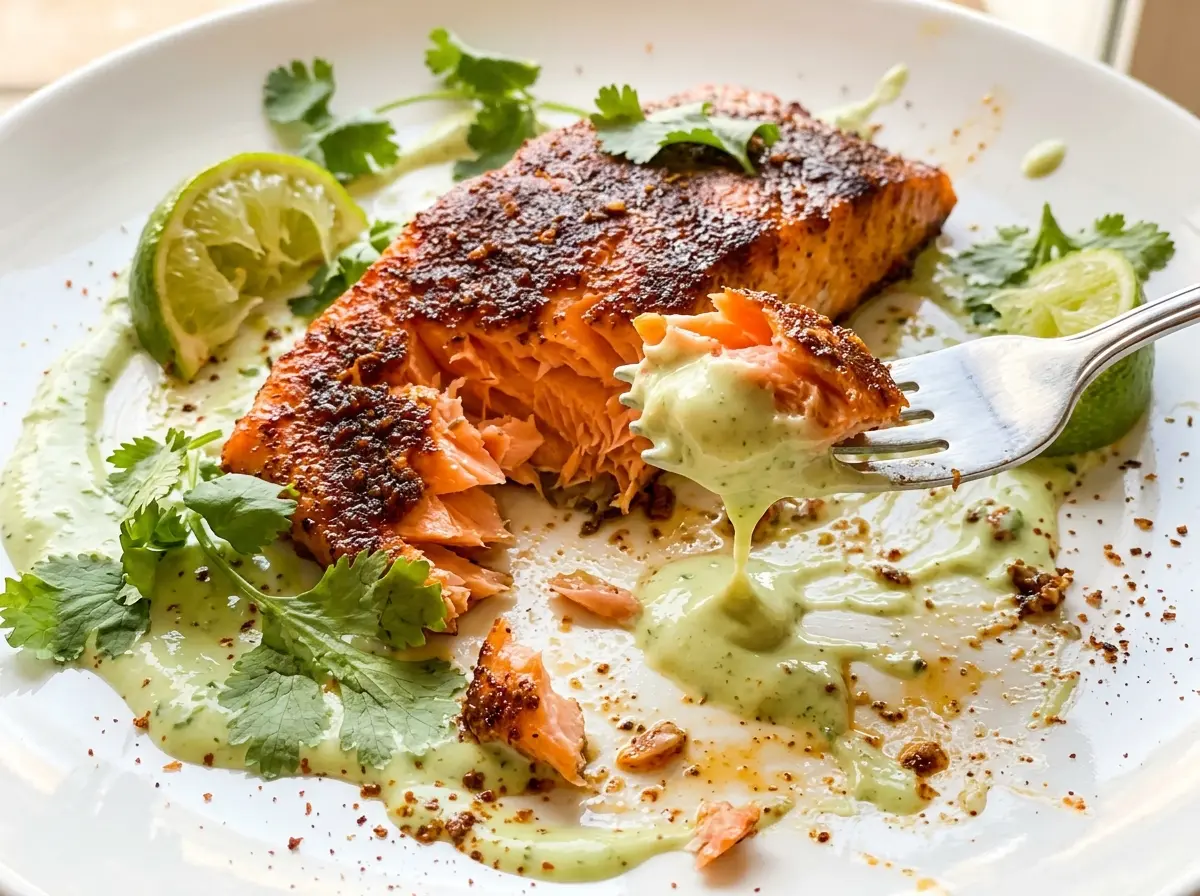
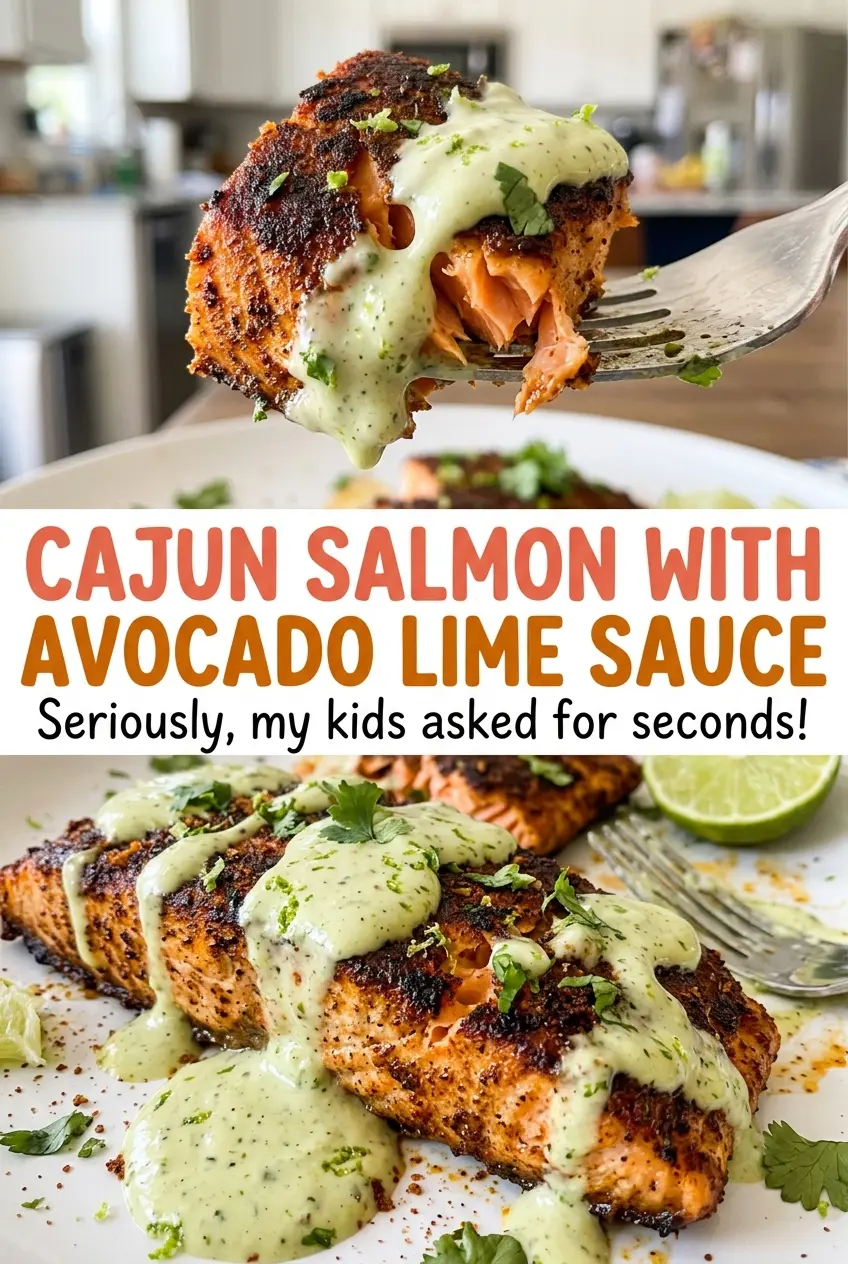
The spice rub darkens as the salmon hits the skillet, and the kitchen starts to smell like paprika and garlic before the first side is done. I like serving these Cajun salmon fillets with a cool avocado lime sauce; the creamy sauce softens the cayenne without covering up the seasoned fish.
The sauce comes together in a blender or food processor while the salmon stays simple: a quick spice blend, a hot skillet, and a turn halfway through. Skin-on fillets give you a clear visual cue as you cook, and checking the thickest part keeps you from guessing. Put a spoonful of the bright green sauce beside each piece, ready for the first flaky bite.
Kitchen Note
If the avocado sauce is too thick to spoon, blend in another tablespoon of water. Add it only as needed; the goal is a smooth sauce that falls easily from a spoon, not a thin dressing.
Save this Cajun salmon with avocado lime sauce for a skillet dinner with smoky spice and a cool, creamy finish.
Why the Cajun Heat Belongs on the Salmon, Not in the Sauce
The salmon gets its warmth from paprika, garlic, onion, oregano, thyme, and a measured pinch of cayenne. Keeping those spices on the fish gives each bite a clear savory edge. The avocado lime sauce has a different job: its richness and citrus bring contrast rather than piling on more seasoning.
That contrast is easy to lose if you mix the sauce into the spice blend or treat it like a marinade. The fish cooks quickly in the skillet, while the sauce stays cool and smooth until serving. I spoon it alongside the salmon so you can get a little with each bite, or more when you want the lime and cilantro to stand out. The result tastes layered instead of uniformly hot, and the sauce still looks fresh and green against the paprika-colored crust.
What the Avocado and Spice Blend Each Bring to the Plate
- Avocado — Choose one that yields gently when pressed but isn’t mushy; it gives the sauce its body and mild, buttery base. An underripe avocado won’t blend as smoothly, and there’s no close swap that keeps the same texture and flavor.
- Sour cream — It adds tang and softens the richness of the avocado. Plain Greek yogurt can stand in for the sour cream in the same amount, though the sauce will taste tangier and may be thicker.
- Lime juice — Fresh lime gives the sauce a clean citrus note that bottled juice tends to lack. Lemon juice works in the same amount if that’s what you have, with a slightly different, less distinctly lime-like finish.
- Cilantro — Fresh leaves and tender stems blend into the sauce and bring its herbaceous lift. Use fresh rather than dried here; dried cilantro won’t give the sauce the same bright flavor or smooth texture.
- Garlic and dried spices — Fresh garlic gives the sauce a sharper savory note, while the pantry spices build the salmon’s Cajun-style coating. Check that the dried herbs still smell fragrant; old, faded herbs can leave the rub tasting flat.
- Skin-on salmon — Ask for evenly sized fillets when possible so they finish at similar times. The skin helps identify which side goes down first and last in the skillet; if buying frozen fillets, thaw them completely before cooking.
- Olive oil — A standard olive oil works well for coating the hot skillet. There’s no need to use a specialty finishing oil, since the salmon is cooked in it rather than dressed with it afterward.
From Smooth Sauce to Salmon With a Deeply Seasoned Surface
Blend the Avocado Lime Sauce
Add the avocado, sour cream, lime juice, water, cilantro, garlic, and sauce salt to a blender or food processor. Blend until the mixture looks smooth, scraping down the sides if ingredients cling above the blades. It should be spoonable rather than stiff. The texture adjustment belongs here, before the sauce goes to the table.
Mix and Rub on the Cajun Seasoning
Stir the paprika, garlic powder, onion powder, oregano, thyme, cayenne, salt, and black pepper together in a small bowl. Mixing them first spreads the cayenne and salt through the rub instead of leaving strong pockets on a fillet. Rub the mixture evenly over the salmon so the seasoning covers the surfaces rather than sitting in one heavy patch. Keep the seasoned fillets close by while the skillet heats.
Give the Skillet Time to Heat
Set a 12-inch skillet over medium-high heat for 2 minutes before adding the olive oil. Pour in the oil and swirl to coat the pan. Starting with a properly heated skillet helps the seasoned surface begin cooking as soon as the salmon lands. If the pan is still warming, the fish can sit there without the immediate sear you’re after.
Sear, Turn, and Check the Thickest Part
Place the salmon in the skillet skin-side up and cook for 4 to 5 minutes. Turn the fillets skin-side down and cook for another 3 to 5 minutes, checking the thickest part with a thermometer; it should reach 145°F. Fillets vary in thickness, so use that center reading as your doneness cue rather than relying on the clock alone. Transfer the cooked salmon to plates and serve with the avocado lime sauce.
Three Simple Ways to Shift the Heat, Citrus, or Dairy
Make the Sauce Dairy-Free
Replace the sour cream with plain, unsweetened dairy-free yogurt. The sauce will keep its creamy, tangy role, though the exact thickness and flavor will depend on the yogurt you choose.
Dial Back the Cayenne
Leave out the cayenne if you prefer a milder rub. The paprika, garlic, onion, and dried herbs still season the salmon, but you’ll lose the peppery heat at the back of each bite.
Use Lemon in the Sauce
Swap the lime juice for the same amount of lemon juice. The sauce remains bright and creamy, but its citrus note will taste more like lemon than lime.
Storage and Reheating
- Refrigerator: Store cooked salmon and sauce in separate airtight containers. Keep leftovers refrigerated within 2 hours; the salmon keeps for 3 to 4 days at 40°F or below, while the sauce is best within a day because the avocado may darken.
- Freezer: Cooked salmon freezes well for up to 2 to 3 months when wrapped tightly or sealed in a freezer-safe container. Don’t freeze the avocado lime sauce; its texture can turn watery and separated.
- Reheating: Warm the salmon gently in a covered skillet over low heat or in the microwave at reduced power, stopping when heated through. Reheat leftovers to 165°F, and avoid high heat, which dries the fish quickly.
Questions That Come Up When Cooking Cajun Salmon
Cajun Salmon with Avocado Lime Sauce
Ingredients
Equipment
Method
- Blend the avocado, sour cream, lime juice, 2 tablespoons of water, cilantro, garlic, and salt in a blender or food processor until smooth, adding another tablespoon of water if needed to make it spoonable.
- Stir the paprika, garlic powder, onion powder, oregano, thyme, cayenne, salt, and black pepper together in a small bowl, then rub the mixture evenly over the salmon fillets.
- Heat a 12-inch skillet over medium-high heat for 2 minutes, then add the olive oil and swirl to coat the pan.
- Place the salmon skin-side up in the skillet and cook for 4 to 5 minutes, then turn and cook skin-side down for 3 to 5 minutes, until the thickest part reaches 145°F.
- Transfer the salmon to plates and serve with the avocado lime sauce.