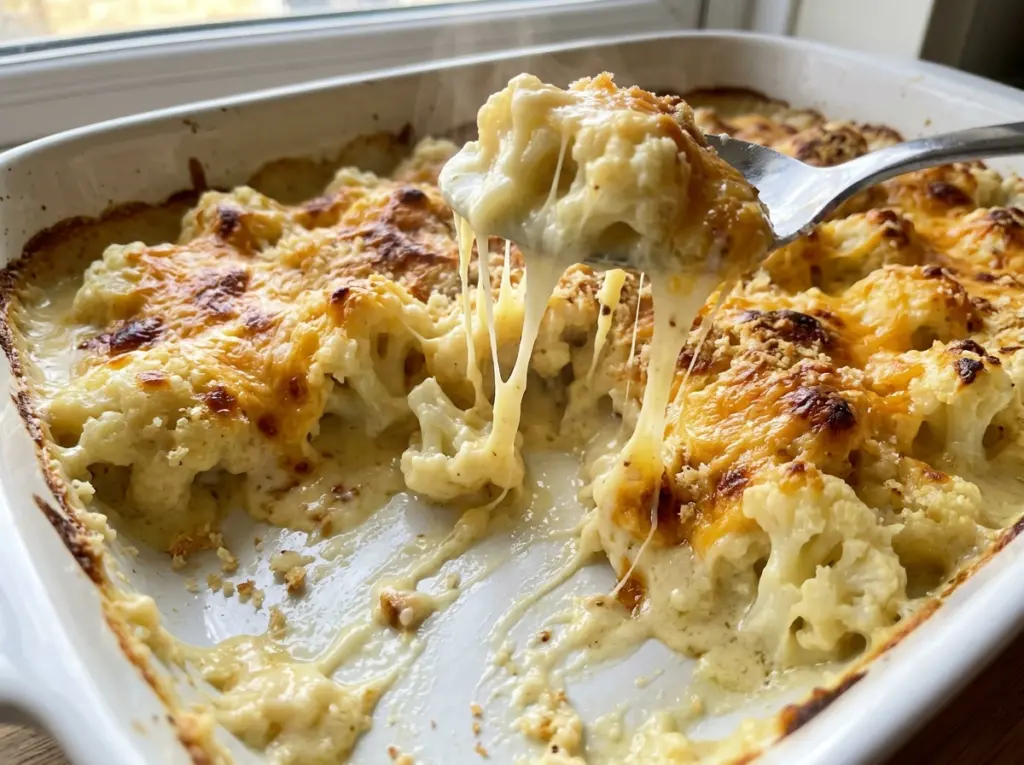
The sauce should cling to the cauliflower before the dish ever reaches the oven. If it runs straight to the bottom of the baking dish, the finished casserole can turn soupy instead of creamy, even with plenty of cheese on top. I cook the florets until just tender, then coat them in a smooth cheddar sauce that thickens on the stovetop.
For this cauliflower cheese, the sauce starts with a butter-and-flour roux, then warm milk goes in gradually. That gives the flour time to blend in without leaving lumps. Dijon mustard and freshly grated nutmeg round out the sharp cheddar without taking over, while panko tossed with olive oil adds a crisp top.
The timing is straightforward, but the small cues matter: a knife should meet only a little resistance in the cauliflower, and the sauce should coat a spoon before it’s poured. After baking, a short rest lets the bubbling sauce settle around tender florets under a golden, crunchy topping.
Kitchen Note
Give the cauliflower a chance to drain after boiling; water trapped between the florets can loosen the sauce in the oven. I spread it out in the baking dish rather than piling it into a mound, so the cheese sauce can reach the spaces between the pieces.
Save this cauliflower cheese for a bubbling cheddar sauce, tender florets, and a crisp panko topping that turns golden in the oven.
Why the Cheddar Goes Into the Sauce After the Heat Is Off
Cheddar gives this sauce its body and its bold, familiar flavor, but it doesn’t love being boiled. Add it while the saucepan is still over the burner and the cheese can turn grainy or oily instead of melting into a smooth sauce. Taking the pan off the heat first lets the residual warmth melt the shreds gently.
The order matters: thicken the milk with the roux, stir in the seasonings, then remove the saucepan from the heat before adding the cheese. I add the cheddar in portions and stir until each handful disappears. If a few shreds need a moment, keep stirring rather than putting the pan back over high heat. The sauce should look glossy and pourable, with enough body to coat a spoon. Once it’s over the cauliflower, the remaining cheddar goes on top with the panko, where it can brown during baking instead of being asked to melt into the sauce.
This approach also makes the sharp cheddar taste clear rather than greasy. It’s a useful distinction in a dish with only a few ingredients: a smooth sauce coats each floret, while a broken one tends to leave some pieces bare and pool at the bottom.
What Gives the Sauce Its Savory, Sharp-Cheddar Character

- Cauliflower — A large, fresh head gives the casserole sturdy florets that hold their shape beneath the sauce. Choose a head that feels firm and has compact florets; trimming away the leaves and core before cutting helps you get pieces that cook at a similar pace.
- Sharp cheddar — Its assertive, tangy flavor stands up to the mild cauliflower and rich milk. A block you shred yourself melts smoothly; pre-shredded cheese is convenient, though its coating can make the sauce a little less silky. For a milder casserole, swap in mild cheddar in the same amount and expect a gentler cheese flavor.
- Whole milk — Whole milk gives the sauce enough richness to balance the flour and sharp cheese. Warm it before adding it to the roux so it blends in more readily. Lower-fat milk works, but the sauce will taste less rich and may feel a little thinner.
- Dijon mustard and nutmeg — Dijon contributes a little tang that keeps the cheddar from tasting flat, while freshly grated nutmeg brings a quiet warmth. Neither should make the sauce taste strongly of mustard or spice. If you don’t have whole nutmeg, a small amount of ground nutmeg works in its place.
- Panko and olive oil — Panko’s larger, airy crumbs give the top more crunch than fine breadcrumbs, and the olive oil helps them toast. Regular breadcrumbs can stand in, but the crust will be finer and less crisp; keep the olive oil so the crumbs brown rather than dry out.
- All-purpose flour and butter — Together they form the roux that thickens the milk. All-purpose flour is the reliable choice for the smooth, spoon-coating sauce here. If you use a gluten-free version, choose a cup-for-cup gluten-free flour blend designed for baking rather than a single starch.
From Tender Florets to a Golden Panko Crust
Cook the Cauliflower Until Just Tender
Heat the oven to 400°F and coat a 2-quart baking dish with nonstick cooking spray. Bring the water to a boil in a 6-quart pot, add the florets, and cook for 5 to 7 minutes. Test a thicker piece with a knife; it should pierce easily but not collapse. Drain the cauliflower and spread it in the prepared dish, leaving the pieces in an even layer.
Whisk a Smooth, Spoon-Coating Cheese Sauce
Melt the butter in a 3-quart saucepan over medium heat, whisk in the flour, and cook for 1 minute while whisking constantly. Gradually add the warm milk, whisking as you pour so the flour mixture loosens without forming lumps. Cook for 4 to 6 minutes, whisking often, until the sauce is smooth and thick enough to coat a spoon. Whisk in the Dijon, nutmeg, salt, and pepper, then take the pan off the heat and stir in 8 ounces of cheddar until melted.
Layer the Cheese and Panko Before Baking
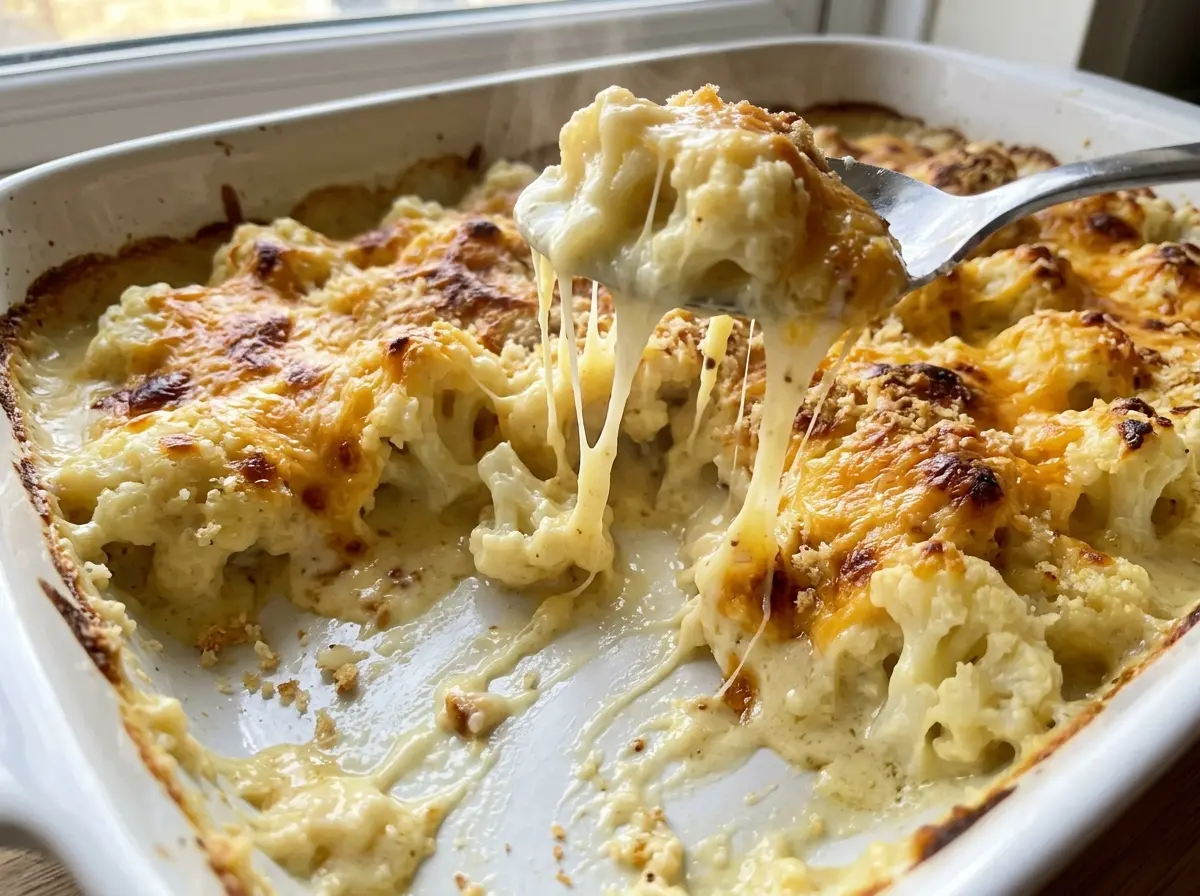
Pour the sauce evenly over the cauliflower so it reaches the spaces between the florets. Toss the panko with the olive oil, scatter it over the sauce, and finish with the remaining 2 ounces of cheddar. Bake for 20 to 25 minutes, until the sauce bubbles around the edges and the topping is golden brown. Let the dish rest for 5 minutes before serving; the sauce settles as it stands.
Two Smart Ways to Adapt This Cauliflower Cheese
Make the Crust Gluten-Free
Use a cup-for-cup gluten-free flour blend in place of the all-purpose flour, and use gluten-free panko for the topping. The sauce may thicken a little differently, so follow the spoon-coating cue rather than relying only on the clock. The crust keeps its crunch, though the exact crumb size depends on the brand of gluten-free panko.
Trade Sharp Cheddar for Gruyère
Replace the cheddar with the same amount of shredded Gruyère, keeping the same split between sauce and topping. It melts well and gives the casserole a nuttier, less tangy flavor. The dish will still have a crisp panko top, but it won’t taste as sharply cheesy as the original.
Storage and Reheating
- Refrigerator: Store leftovers covered for 3 to 4 days. The cauliflower softens and the panko loses some crunch as it sits.
- Freezer: Freezing isn’t ideal. The cauliflower can turn soft and watery, and the cheese sauce may separate when thawed.
- Reheating: Reheat covered in a 350°F oven until hot throughout, then uncover briefly if you’d like to crisp the top again. Reheat leftovers to 165°F; high heat for too long can dry the edges before the center is hot.
Questions That Come Up When Making Cauliflower Cheese
Cauliflower Cheese
Ingredients
Equipment
Method
- Heat the oven to 400°F.
- Coat a 2-quart baking dish with nonstick cooking spray.
- Bring the water to a boil in a 6-quart pot.
- Add the cauliflower and cook for 5 to 7 minutes, until just tender when pierced with a knife.
- Drain the cauliflower very well.
- Spread the cauliflower in the prepared baking dish.
- Melt the butter in a 3-quart saucepan over medium heat.
- Whisk in the flour and cook for 1 minute, whisking constantly.
- Gradually whisk in the warm milk and cook for 4 to 6 minutes, whisking often, until the sauce is smooth and thick enough to coat a spoon.
- Whisk in the Dijon mustard, nutmeg, salt, and pepper.
- Remove the pan from the heat.
- Stir in 8 ounces of the cheddar until melted.
- Pour the cheese sauce evenly over the cauliflower.
- Toss the panko with the olive oil.
- Sprinkle the panko over the dish.
- Top with the remaining 2 ounces cheddar.
- Bake for 20 to 25 minutes, until the sauce is bubbling around the edges and the topping is golden brown.
- Rest for 5 minutes before serving.