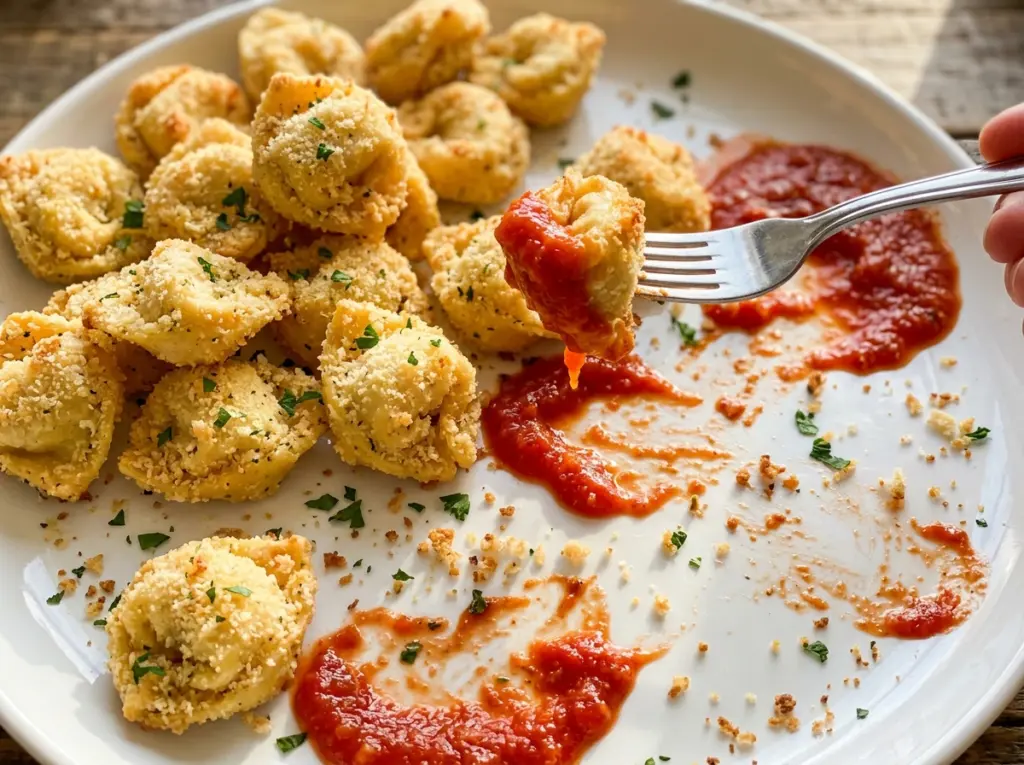
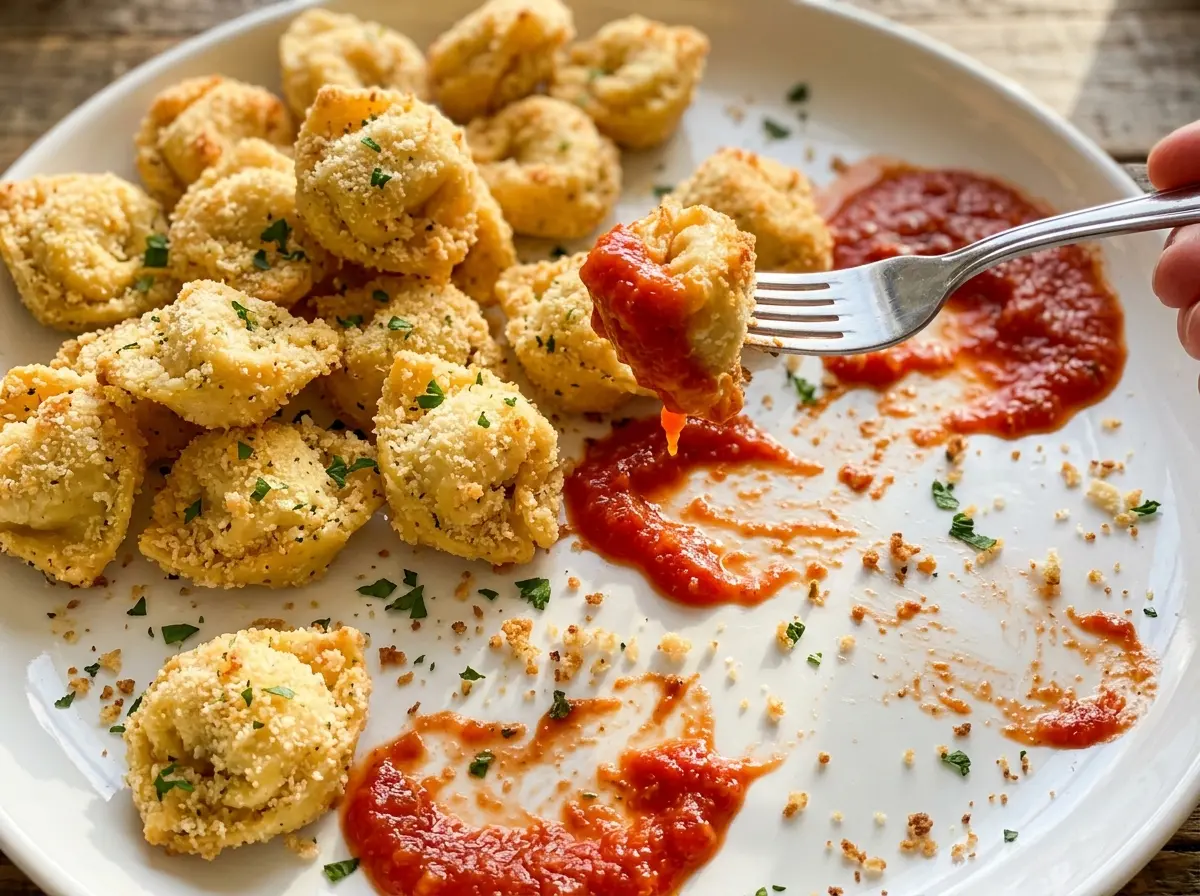
When the tortellini come out of the oil, the coating should crackle lightly under a fork while the pasta inside stays tender. The first time I made these, I rushed the cooling and drying; damp tortellini made the flour cling unevenly, and the crumb coating had bare spots. Letting them cool completely and patting them dry gives each layer a better chance to stick.
These cheese tortellini party snacks get their crisp crust from two kinds of breadcrumbs. Italian-seasoned crumbs bring savory flavor, while panko adds a looser, crunchier texture. A little finely grated Parmesan ties them together, and the warm marinara is ready for dipping by the time the last batch is fried.
They’re best served hot, straight from the skillet, so I set out the dip and a platter before I start frying. Each bite has a crisp outside, a soft cheese-filled center, and just enough marinara to make it feel like a proper party snack.
Kitchen Note
Use a thermometer to bring the oil to 350°F before frying. If the oil is cooler, the coating can absorb more oil before it turns golden; if it’s hotter, the crumbs brown before the tortellini have had time to heat through.
Save these cheese tortellini party snacks for a gathering when you want a crisp, Parmesan-flecked bite with warm marinara for dipping.
Why Two Breadcrumbs Make a Better Tortellini Crust
A single fine breadcrumb coating can turn dense and uniform around a small piece of pasta. Here, the Italian-seasoned breadcrumbs and panko have different jobs: the seasoned crumbs add flavor across the surface, and the larger, airy panko flakes create more crunchy edges. Parmesan in the crumb mixture adds a savory, toasty note as the coating fries.
The three-stage coating matters just as much as the crumb blend. Flour gives the egg something to cling to, and the egg helps the breadcrumb mixture hold around the curves and folds of each tortellini. Press the crumbs against the pasta rather than dropping it into the bowl and giving it a quick roll; the surface should look evenly covered, including around the edges.
There’s a practical payoff to keeping the tortellini’s shape intact, too. The folds provide little ledges for crumbs to catch on, which helps make these easier to pick up and dip than a loose handful of fried pasta pieces. Handle them gently after breading so the coating stays in place through the trip to the skillet.
What the Pasta, Crumb Blend, and Parmesan Each Bring

- Refrigerated cheese tortellini — Refrigerated pasta cooks quickly and holds its shape through boiling, breading, and frying. Choose a package with intact pasta rather than torn seams; exposed filling is more likely to leak during frying. Cook it only to al dente, since it will heat again in the oil.
- Italian-seasoned breadcrumbs and panko — The Italian crumbs supply seasoning, while panko keeps the crust lighter and more textured. Fresh, dry crumbs adhere better than stale crumbs that have clumped in a damp pantry. If you don’t have panko, an equal amount of Italian-seasoned breadcrumbs can stand in; the crust will be finer and more uniformly crisp, without the same craggy crunch.
- Finely grated Parmesan — Fine shreds distribute through the coating instead of falling off in big pieces, and they brown along with the crumbs. A wedge grated finely at home has a fresh, nutty taste, but packaged finely grated Parmesan is convenient here because it blends evenly. Coarse shreds aren’t a good swap for the fine texture.
- Egg and flour — Flour helps the egg mixture grip the pasta, and the egg binds the crumb layer. All-purpose flour is reliable and inexpensive; sifted specialty flour isn’t needed. The egg mixture should be whisked with water so it coats without becoming too thick.
- Vegetable oil and marinara — Neutral vegetable oil lets the crumb and Parmesan flavors come through. Use a skillet that gives the tortellini room to turn. A jarred marinara is a sensible choice for the dip; choose one you like the taste of on its own, since it’s served alongside rather than cooked into the coating.
Boil, Bread, and Fry Without Losing the Crisp Coating
Cook the Tortellini Until Just Al Dente
Bring the salted water to a boil in a large pot, add the refrigerated tortellini, and cook according to the package directions until al dente. Drain them, then spread them in one layer on a paper-towel-lined baking sheet. Let the pasta cool completely, about 15 minutes, and pat it dry; warm or wet pasta makes a slippery base for the flour and egg.
Build an Even Three-Part Coating
Set out three shallow bowls: flour in the first, eggs whisked with water in the second, and Italian breadcrumbs, panko, and Parmesan combined in the third. Coat each tortellini in flour, dip it in the egg, then press it into the crumb mixture until covered. Keep the bowls in that order so you can move from one coating to the next without carrying wet egg back into the flour. If the crumb mixture looks patchy on a fold, press that spot into the crumbs before setting the tortellini aside.
Warm the Marinara Before the First Batch
Transfer the marinara to a microwave-safe bowl and heat it for 2 to 3 minutes, stirring every minute, until steaming. Starting the dip before frying means it’s ready while the tortellini are hot. Stir between heating intervals so the sauce warms evenly rather than developing a hot spot around the edge of the bowl.
Fry in Batches Until Golden
Heat the vegetable oil in a 12-inch skillet over medium heat to 350°F, checking with a thermometer. Fry the tortellini in batches, turning once, for 1 to 2 minutes per side, until the coating is golden brown. Avoid crowding the skillet; the pieces need room to turn, and smaller batches are easier to handle without knocking off the crumb coating. Transfer each batch to a paper-towel-lined plate and serve hot with the marinara.
Easy Ways to Change the Coating or Serving Format
A Finer, More Even Crust
Replace the panko with the same amount of Italian-seasoned breadcrumbs. The crust will still turn crisp and stay savory, but it won’t have panko’s larger, airy flakes. This is a handy adjustment when panko isn’t in the pantry.
A Gluten-Free Batch
Use gluten-free refrigerated cheese tortellini, a gluten-free all-purpose flour blend, and gluten-free Italian-style breadcrumbs and panko in place of the wheat versions. Keep the egg coating and frying method the same. The crust may be a little more delicate, so press it on gently and turn each piece with care.
A Marinara-Coated Platter
For a saucier party platter, spoon some of the warmed marinara over the fried tortellini just before serving instead of keeping all of it on the side. The crumb coating softens sooner, but every piece is ready to eat without dipping.
Storage and Reheating
- Refrigerator: Store leftover fried tortellini in an airtight container for up to 3 days. The coating will soften in the refrigerator.
- Freezer: Freezing the fried bites isn’t recommended; thawing makes the crumb coating noticeably softer.
- Reheating: Arrange them in a single layer on a baking sheet and heat at 375°F for 8 to 10 minutes, until hot and crisp again. Don’t microwave them if you want to revive the crunch; the coating turns soft.
Questions That Come Up When Frying Tortellini
Cheese Tortellini Party Snacks
Ingredients
Equipment
Method
- Bring the water and salt to a boil in a large pot.
- Add the tortellini and cook according to the package directions until al dente.
- Drain the tortellini and spread it in a single layer on a paper-towel-lined baking sheet.
- Cool completely, about 15 minutes, then pat dry.
- Put the flour in a shallow bowl.
- Whisk the eggs with the water in a second bowl.
- Combine the breadcrumbs, panko, and Parmesan in a third bowl.
- Coat each tortellini in flour, dip it in the egg mixture, then press it into the breadcrumb mixture until covered.
- Transfer the marinara to a microwave-safe bowl and microwave for 2 to 3 minutes, stirring every minute, until steaming.
- Heat the vegetable oil in a 12-inch skillet over medium heat to 350°F, checking with a thermometer.
- Fry the tortellini in batches, turning once, for 1 to 2 minutes per side until golden brown.
- Transfer the tortellini to a paper-towel-lined plate and serve hot with the marinara.