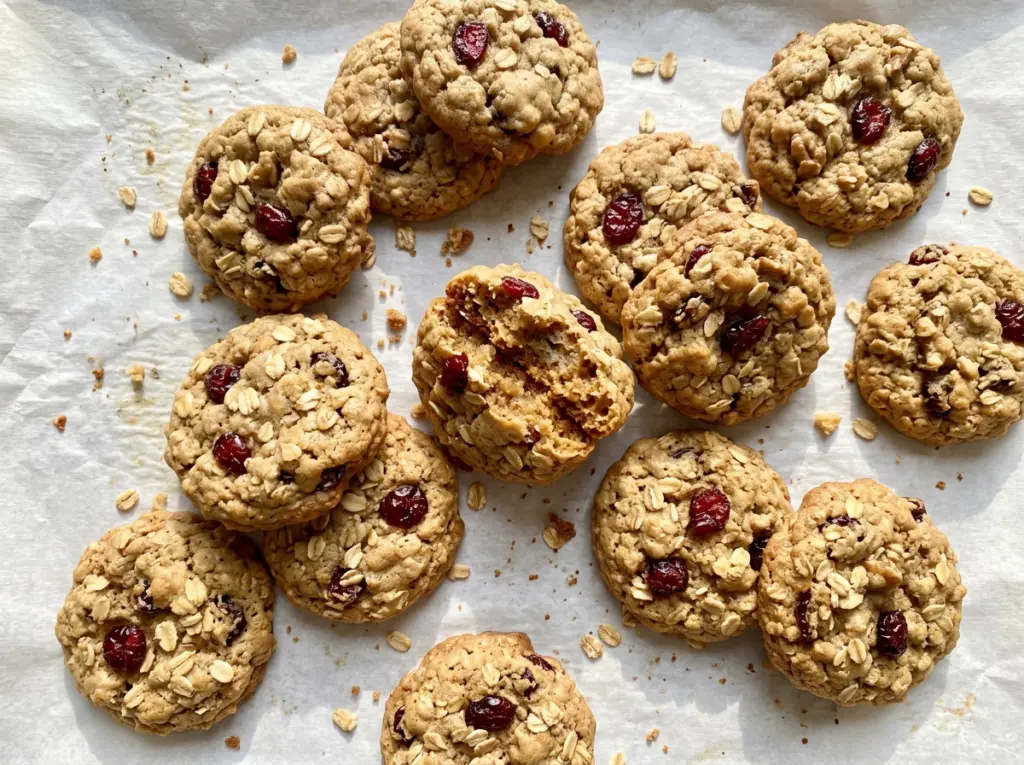
The dough gets thick and pleasantly nubby once the oats and cranberries are folded in, and that’s the first sign these cookies won’t bake up thin and crisp. I make Chewy Cranberry Oatmeal Cookies when I want a sturdy oatmeal cookie with a soft middle and little tart bites of fruit in every scoop. The cinnamon stays in the background, where it belongs, instead of competing with the cranberries.
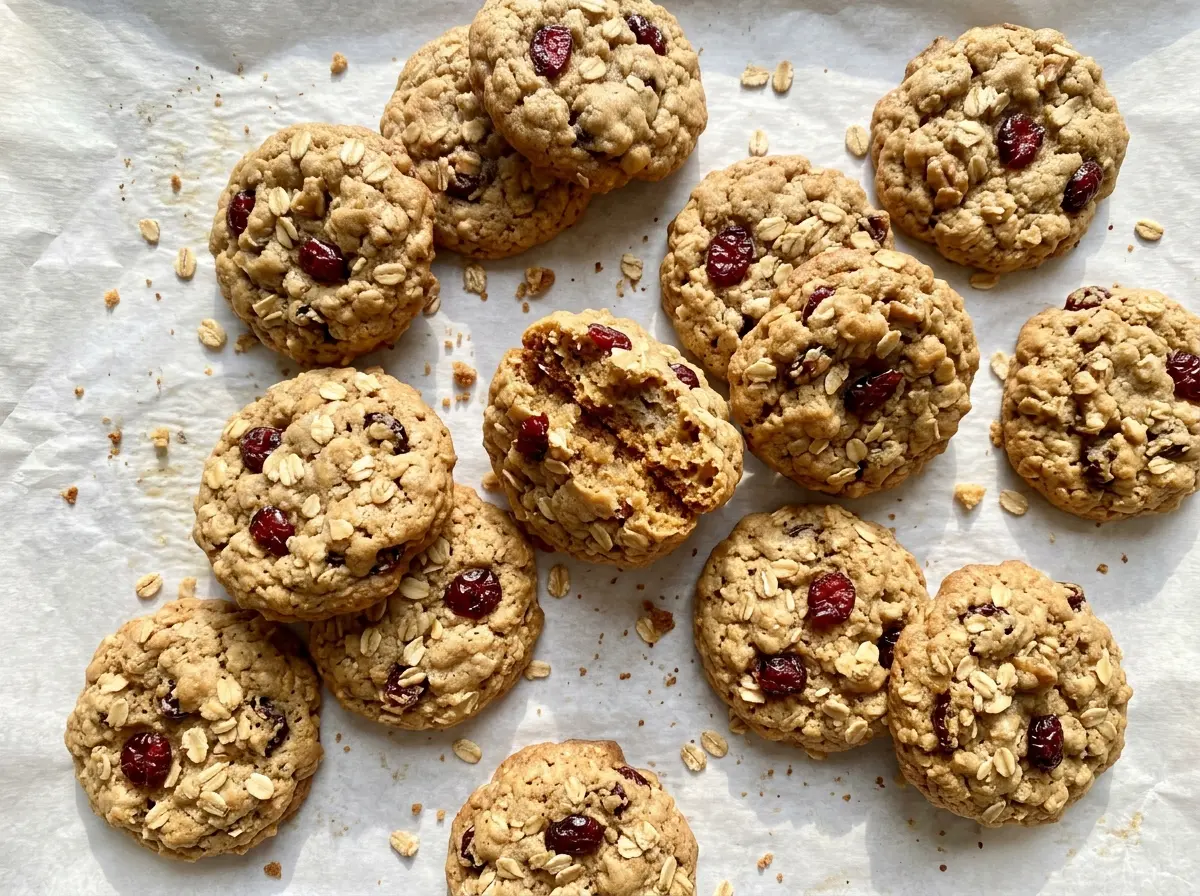
Softened butter creams smoothly with both sugars, while a short chill gives the oats time to settle into the dough. That combination makes the dough easier to portion and helps the cookies hold their shape in the oven. Keep the baking sheets lined with parchment, and give each scoop room; the cookies spread as they bake, but they shouldn’t run together. Once cooled, they have golden edges, a chewy center, and plenty of cranberry in every bite.
Kitchen Note
Give the dough the full 30-minute chill, even if it already looks firm enough to scoop. That short rest helps the oats take up moisture, so the cookies spread less and bake with a chewier middle.
Save these Chewy Cranberry Oatmeal Cookies for their soft centers, golden edges, and tart cranberry bites.
Why the Oats Make These Cookies Chewy, Not Cakey
Oatmeal cookies can go in two directions: soft and substantial, or cakey and more like a little muffin top. Here, the generous amount of old-fashioned oats compared with the flour gives the cookies their hearty chew without making the dough rely on flour for all its structure. The rolled oats keep their shape as they bake, so the finished cookies have something to bite into rather than a smooth, bready crumb.
The two sugars have different jobs, too. Brown sugar brings a deeper sweetness and helps keep the centers tender, while granulated sugar supports the familiar cookie texture and golden edges. Cutting back on either one changes more than sweetness; it shifts how the dough spreads and how the middle feels after cooling. The dried cranberries add tartness against that sweet, buttery base, so the cookies taste balanced rather than sugary all the way through. Keep the oats old-fashioned and the sugar proportions steady for the texture this batch is meant to have.
What Each Ingredient Brings to This Oatmeal Cookie Dough

- Butter — Softened unsalted butter creams evenly with the sugars and gives the cookies their rich, tender crumb. Standard grocery-store butter works well; it doesn’t need to be a specialty brand. For a dairy-free version, use a plant-based baking stick rather than soft tub spread.
- Brown and granulated sugars — Light brown sugar gives the dough its mellow, slightly molasses-like sweetness, while granulated sugar keeps the flavor from becoming too heavy. Pack the brown sugar when measuring. Dark brown sugar works in a pinch, but its stronger molasses note will come through more.
- Eggs and vanilla — The eggs bind the butter and dry ingredients into a cohesive dough, and vanilla rounds out the sweetness. Use large eggs as listed; smaller eggs can leave the mixture drier and harder to bring together.
- Flour and baking soda — All-purpose flour provides the structure, and baking soda helps the cookies spread and brown. A cup-for-cup gluten-free baking blend is the useful swap for the flour; baking powder isn’t a direct replacement for the soda.
- Old-fashioned rolled oats — Their broad flakes give these cookies their signature hearty texture. Quick oats soften more readily and make a less distinct chew, so they aren’t an equal swap here. Use a fresh package if your oats smell stale or dusty.
- Dried cranberries, cinnamon, and vanilla — Choose plump dried cranberries for a softer, fruitier bite; if yours feel quite dry, there’s no need to soak them before adding. Cinnamon adds a gentle warmth, and vanilla keeps the fruit and brown sugar from tasting one-note. Raisins are an easy fruit swap if you want a sweeter cookie.
Mixing and Baking the Dough Without Losing Its Chew
Cream the Butter and Sugars Until Smooth
Beat the softened butter with the brown and granulated sugars in a large bowl for about 2 minutes, until creamy. Scrape the bowl if butter is clinging to the sides instead of mixing in. The mixture should look smooth and cohesive, not oily or melted. If the butter is too warm, the dough will be softer than intended, so start with butter that yields when pressed but still holds its shape.
Add the Eggs, Then the Dry Ingredients
Beat in the eggs one at a time, then mix in the vanilla. In a separate bowl, whisk together the flour, baking soda, cinnamon, and salt so the leavening and seasoning are distributed before they meet the butter mixture. Add the dry mixture and mix only until it disappears into the dough. A few faint flour streaks are easier to fix while folding in the oats than an overworked, tough dough.
Fold in the Oats and Cranberries, Then Chill
Stir in the oats and dried cranberries until they’re spread throughout the dough. Scrape along the bottom of the bowl, where dry pockets can hide. Cover the bowl and chill the dough for 30 minutes. It should feel more manageable when you scoop it, rather than loose and sticky.
Scoop, Bake, and Let the Cookies Set
Heat the oven to 350°F and line two large baking sheets with parchment paper. Scoop the dough into 2-tablespoon portions, leaving about 2 inches between them, and bake one sheet at a time for 10 to 12 minutes. Look for golden edges while the centers still appear slightly soft; they’ll continue setting on the hot baking sheet. Leave the cookies there for 5 minutes before moving them to a wire rack to cool completely.
Three Simple Ways to Change the Cranberry Oatmeal Cookies
Swap the Cranberries for Raisins
Use raisins in place of the dried cranberries for a sweeter, less tangy cookie. Keep the rest of the dough and method unchanged; the oats and cinnamon still pair naturally with the fruit.
Make a Gluten-Free Batch
Replace the all-purpose flour with a cup-for-cup gluten-free baking blend and use oats labeled gluten-free. The cookies may be a little more delicate, so let them rest on the baking sheet before transferring them to the rack.
Make Them Dairy-Free
Use the same amount of unsalted plant-based baking sticks in place of the butter. Choose a firm stick-style product made for baking, not spreadable tub margarine; the cookies may spread a little differently, and the butter flavor will be less pronounced.
Storage and Reheating
- Refrigerator: Keep the cooled cookies in an airtight container for up to 5 days. The edges soften a little as they sit, but the centers stay chewy.
- Freezer: Freeze completely cooled cookies in an airtight freezer-safe container for up to 3 months. Thaw at room temperature before serving.
- Reheating: Warm a cookie in the microwave for about 5 to 8 seconds if you’d like it soft and warm. Longer heating can dry it out, so use a short burst.
Questions That Come Up While Baking These Cookies
Chewy Cranberry Oatmeal Cookies
Ingredients
Equipment
Method
- Heat the oven to 350°F.
- Line two large baking sheets with parchment paper.
- In a large bowl, beat the softened butter, brown sugar, and granulated sugar until creamy, about 2 minutes.
- Beat in the eggs one at a time.
- Mix in the vanilla extract.
- In a separate bowl, whisk together the flour, baking soda, cinnamon, and salt.
- Mix the dry ingredients into the butter mixture just until combined.
- Stir in the oats and dried cranberries.
- Cover and chill the dough for 30 minutes.
- Scoop the dough into 2-tablespoon portions, spacing them about 2 inches apart on the prepared baking sheets.
- Bake one sheet at a time for 10 to 12 minutes, until the edges are golden and the centers still look slightly soft.
- Cool the cookies on the baking sheet for 5 minutes.
- Transfer them to a wire rack to cool completely.