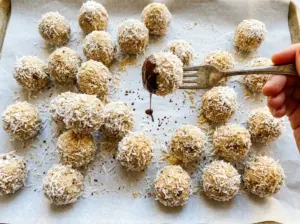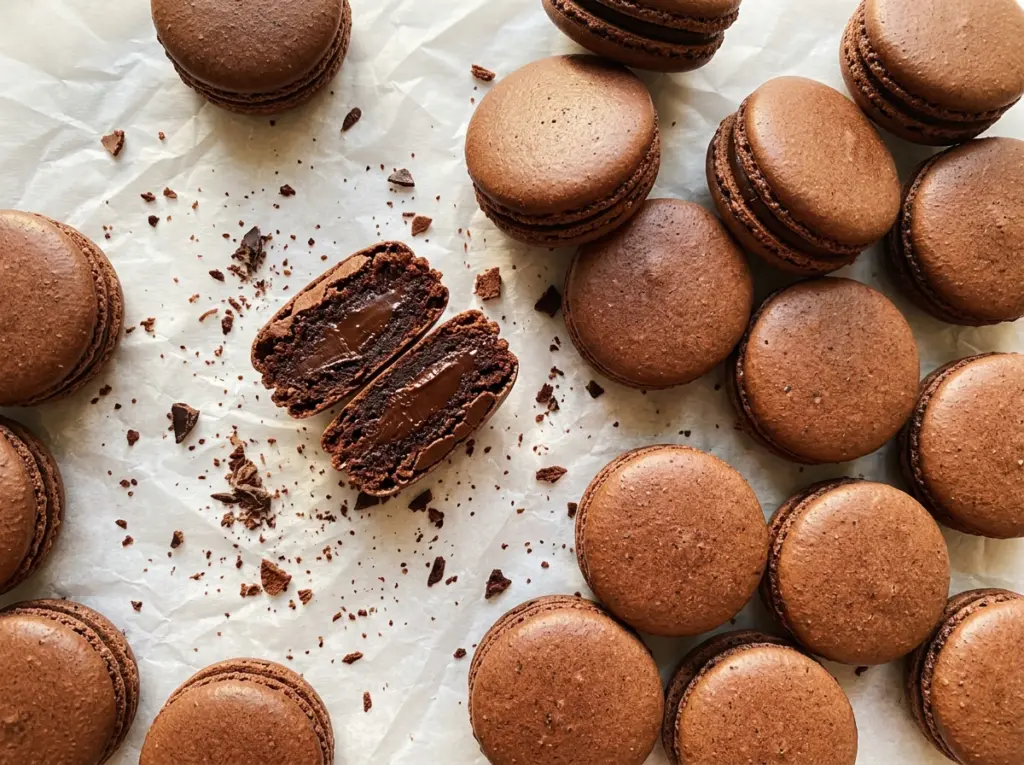
The piped rounds look a little too soft to touch at first, but that pause before baking is what helps chocolate macarons rise with their signature feet instead of spreading into flat cookies. I watch for a dry surface rather than relying on the clock alone; the shells need 30 to 60 minutes to get there, depending on the room.
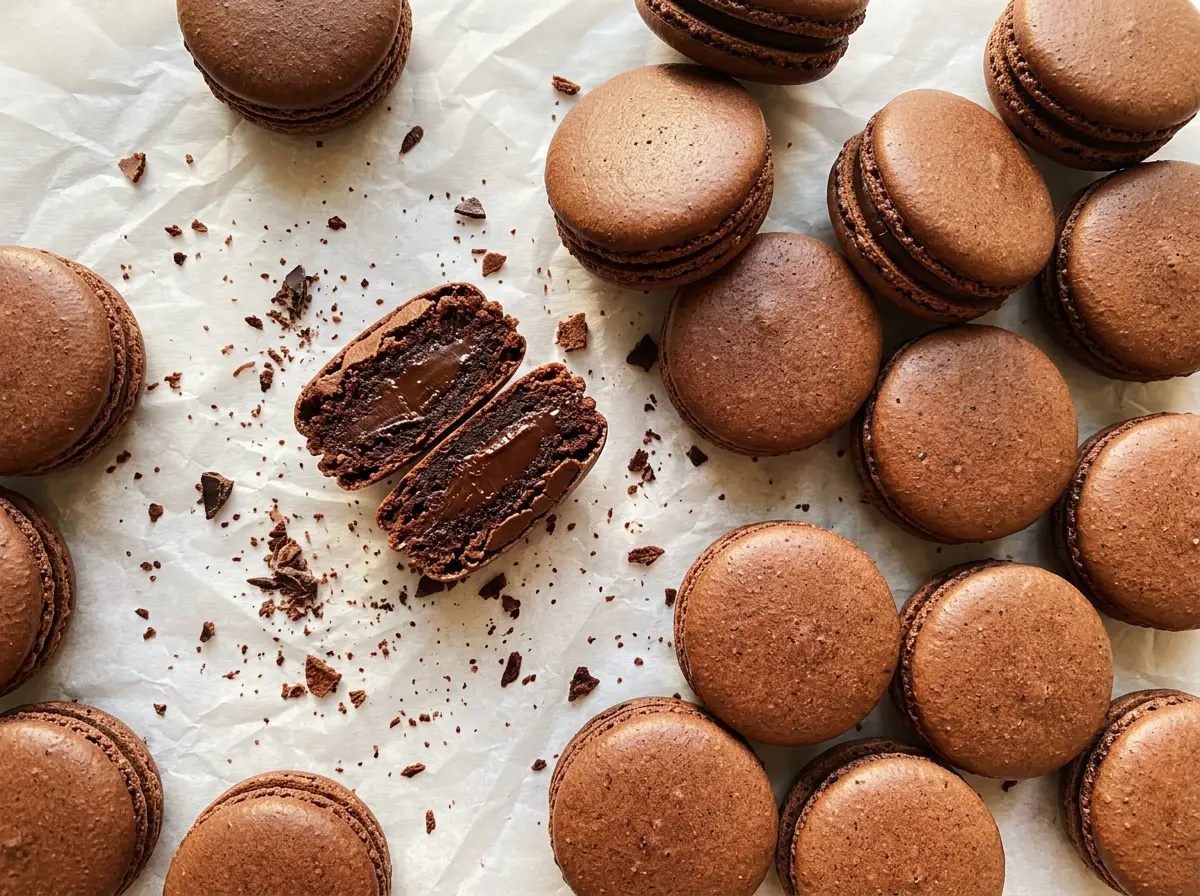
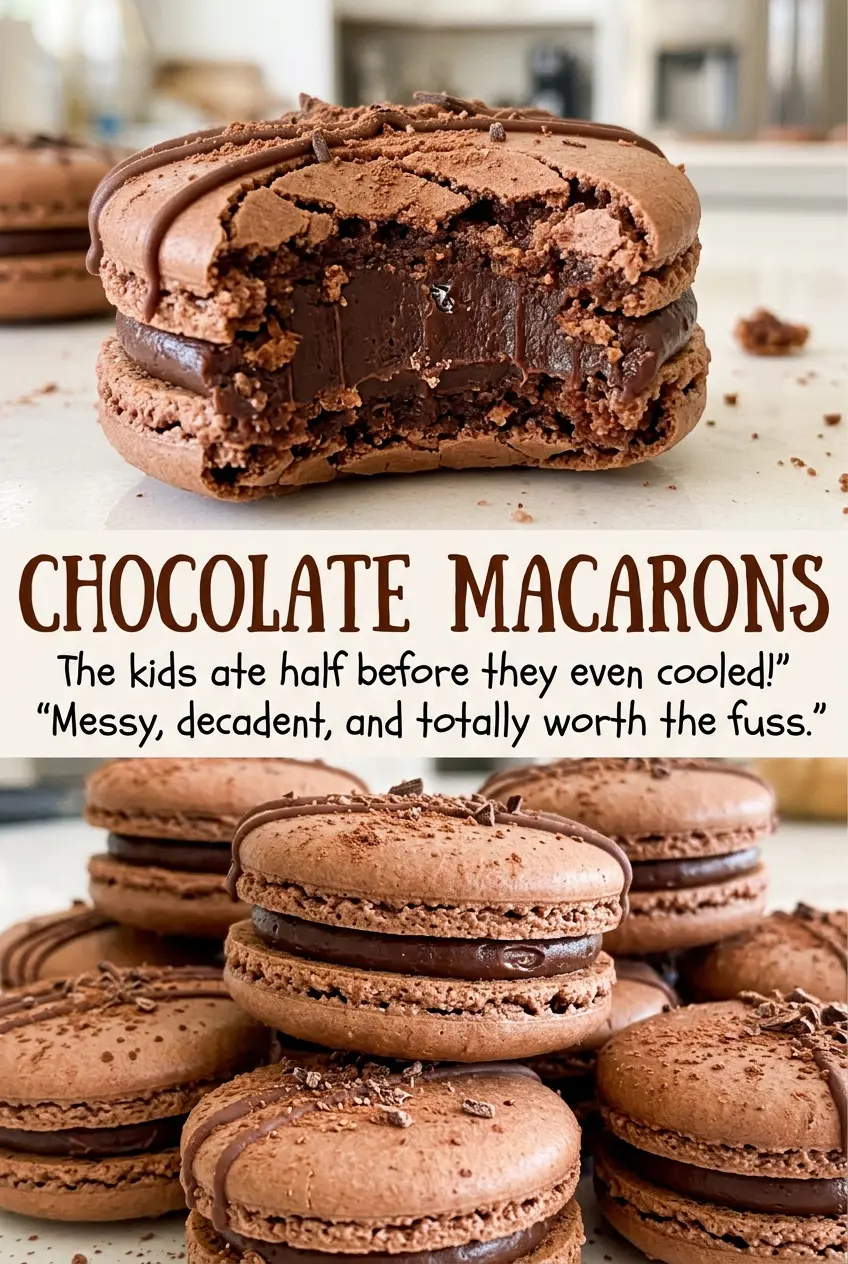
These chocolate macarons come together when the meringue is glossy, the folded batter falls in a thick ribbon, and the ganache is cool enough to pipe without running. I sift the dry ingredients well and take my time folding, because a few lumps or an overworked batter show up on the finished shells. Once filled, they rest in the refrigerator overnight, then soften slightly at room temperature into tender, chocolatey bites.
Kitchen Note
Don’t pipe the ganache while it’s still warm. Let it cool until it holds its shape on the spatula; if it slides off in a pour, give it more time before filling the shells.
Save these chocolate macarons for a baking day when you can give the shells time to dry and the ganache time to set.
Why a Dry Shell Top Matters More Than a Longer Bake
Macaron feet form at the base as the batter rises in the oven. Before that can happen neatly, the surface needs time to dry into a delicate skin. When you touch a shell lightly and your fingertip comes away clean, the top is ready; if it still feels tacky, leave the tray to stand longer. The 30-to-60-minute window is a guide, not a reason to put damp shells in the oven.
That drying pause also gives you a chance to deal with air bubbles while the batter is still exposed. Tap each sheet firmly on the counter a few times, then pop any bubbles you can see with a toothpick. Trapped air can leave pits or uneven tops, and once the shells have dried, those bubbles are harder to fix. Keep the rounds about the same size and leave space between them so they bake evenly. A dry surface and a careful tray prep do more for tidy shells than extending the bake to compensate for a rushed rest.
Almond Flour, Cocoa, and Chocolate: The Choices That Set the Texture
- Almond flour — It gives the shells their delicate structure and nutty undertone. A fine, fresh flour is worth choosing because coarse bits can interrupt the smooth tops; sifting catches the larger pieces. There isn’t a dependable one-for-one wheat flour swap for this batter. For a slightly less polished but workable alternative, use finely ground blanched almonds by weight and sift them carefully; discard pieces that won’t pass through.
- Unsweetened cocoa powder — Cocoa brings the chocolate flavor to the shells without adding melted chocolate, which would change the batter’s moisture and fat. Use unsweetened cocoa rather than a sweetened drink mix. Sift it with the almond flour and powdered sugar so it distributes evenly instead of leaving dark flecks or clumps.
- Egg whites — Room-temperature whites whip more readily into the glossy meringue this batter needs. Weigh them rather than guessing by egg count, since egg sizes vary. Keep the mixing bowl clean and free of grease; even a little fat can interfere with whipping.
- Semisweet chocolate and heavy cream — Finely chopped chocolate melts evenly when the steaming cream is poured over it. A baking bar is easy to chop consistently, though semisweet chips also work if that’s what you have; they may take a little more stirring to become smooth. Heavy cream gives the filling its smooth, pipeable body, so a lower-fat milk isn’t a like-for-like replacement.
From Glossy Meringue to Pipeable Ganache: The Cues That Matter
Sift the Cocoa Mixture Until It Looks Even
Heat the oven to 300°F and line two 18×13-inch baking sheets with parchment paper. Sift the almond flour, powdered sugar, and cocoa powder into a bowl, discarding any large pieces left behind. This takes an extra minute, but it keeps the dry mixture light and free of lumps. Set it aside while you whip the egg whites.
Whip Firm Peaks, Then Fold to the Ribbon Stage
Beat the room-temperature egg whites with the cream of tartar on medium speed until foamy. Gradually add the granulated sugar, then beat on medium-high for about 5 to 7 minutes, until the meringue is glossy and holds stiff peaks. Fold the sifted mixture in three additions, scraping around the bowl as you go. Stop when batter falls from the spatula in a thick ribbon and settles back into the bowl in about 10 to 15 seconds; too-stiff batter won’t settle, while loose batter can spread.
Pipe, Tap, Dry, and Bake One Sheet at a Time
Transfer the batter to a piping bag fitted with a 1/2-inch round tip and pipe 1 1/2-inch rounds, leaving about 1 inch between them. Tap each baking sheet firmly on the counter a few times, then pop visible bubbles with a toothpick. Let the tops dry to a light touch, which can take 30 to 60 minutes. Bake one sheet at a time for 14 to 17 minutes; the shells are ready when they’ve risen feet and their tops don’t shift when lightly touched.
Cool the Shells Before Filling
Let the baked shells cool completely on the sheet before carefully peeling them from the parchment. For the ganache, put the finely chopped chocolate in a heatproof bowl and heat the heavy cream in a small saucepan until steaming. Pour the cream over the chocolate and let it stand for 2 minutes, then stir until smooth. Cool the ganache until thick and pipeable, about 30 to 45 minutes, before filling the flat side of half the shells and sandwiching them with the rest.
Three Ways to Adapt Chocolate Macarons Without Losing Their Shape
A Dairy-Free Coconut Ganache
Use dairy-free semisweet chocolate and replace the heavy cream with the same amount of full-fat coconut milk. Warm it until steaming and use the same pour-and-stir method. The filling will have a gentle coconut note and may need extra cooling time to become firm enough to pipe.
A More Intense Chocolate Center
Swap bittersweet chocolate for the semisweet chocolate in the ganache, keeping the same weight. The filling tastes darker and less sweet, and it may set a little firmer, so check that it’s pipeable before assembling rather than forcing it through the bag.
Storage and Serving
- Refrigerator: Keep assembled macarons in an airtight container for up to 4 days. The shells soften as they sit with the filling, which is part of their tender texture.
- Freezer: Freeze assembled macarons in a single layer in an airtight container for up to 1 month. Thaw them in the refrigerator while still covered so condensation forms on the container rather than the shells.
- Serving: Bring refrigerated macarons to room temperature for about 20 minutes before serving. Don’t microwave them; heat can soften the ganache unevenly and make the shells fragile.
Questions That Come Up While Making Chocolate Macarons
Chocolate Macarons
Ingredients
Equipment
Method
- Heat the oven to 300°F and line two 18x13-inch baking sheets with parchment paper.
- Sift the almond flour, powdered sugar, and cocoa powder into a bowl, discarding any large pieces that remain in the sieve.
- In a clean bowl, beat the egg whites and cream of tartar with an electric mixer on medium speed until foamy.
- Gradually add the granulated sugar and beat on medium-high until the meringue is glossy and forms stiff peaks, about 5 to 7 minutes.
- Fold the sifted dry ingredients into the meringue in three additions, stopping when the batter falls from the spatula in a thick ribbon that settles back into the bowl within about 10 to 15 seconds.
- Transfer the batter to a piping bag fitted with a 1/2-inch round tip and pipe 1 1/2-inch rounds onto the prepared sheets, leaving about 1 inch between them.
- Tap each sheet firmly on the counter a few times to release air bubbles.
- Pop any visible bubbles with a toothpick.
- Let the shells stand until their tops feel dry to a light touch, 30 to 60 minutes.
- Bake one sheet at a time for 14 to 17 minutes, until the shells have risen feet and their tops do not shift when lightly touched.
- Cool completely on the sheet before carefully peeling off the parchment.
- Put the chopped chocolate in a heatproof bowl.
- Heat the heavy cream in a small saucepan until steaming, then pour it over the chocolate and let stand for 2 minutes.
- Stir the chocolate and cream until smooth.
- Let the ganache cool until thick and pipeable, about 30 to 45 minutes.
- Pipe or spread ganache onto the flat side of half the shells.
- Sandwich with the remaining shells.
- Refrigerate in an airtight container for at least 12 hours.
- Bring to room temperature for about 20 minutes before serving.