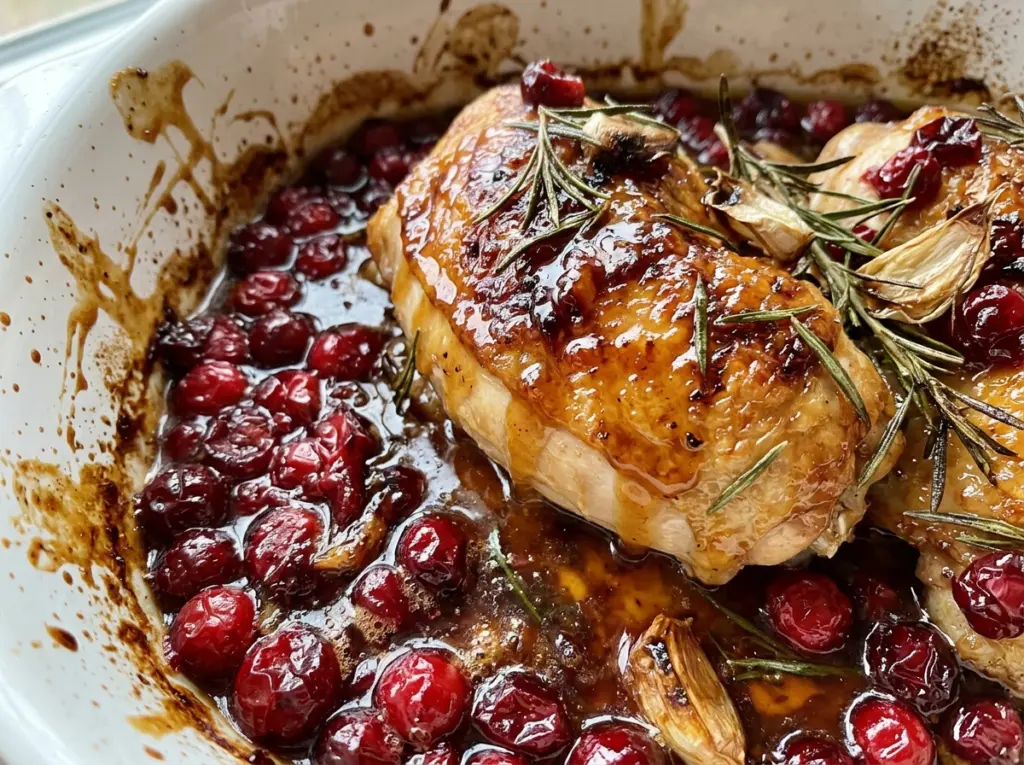
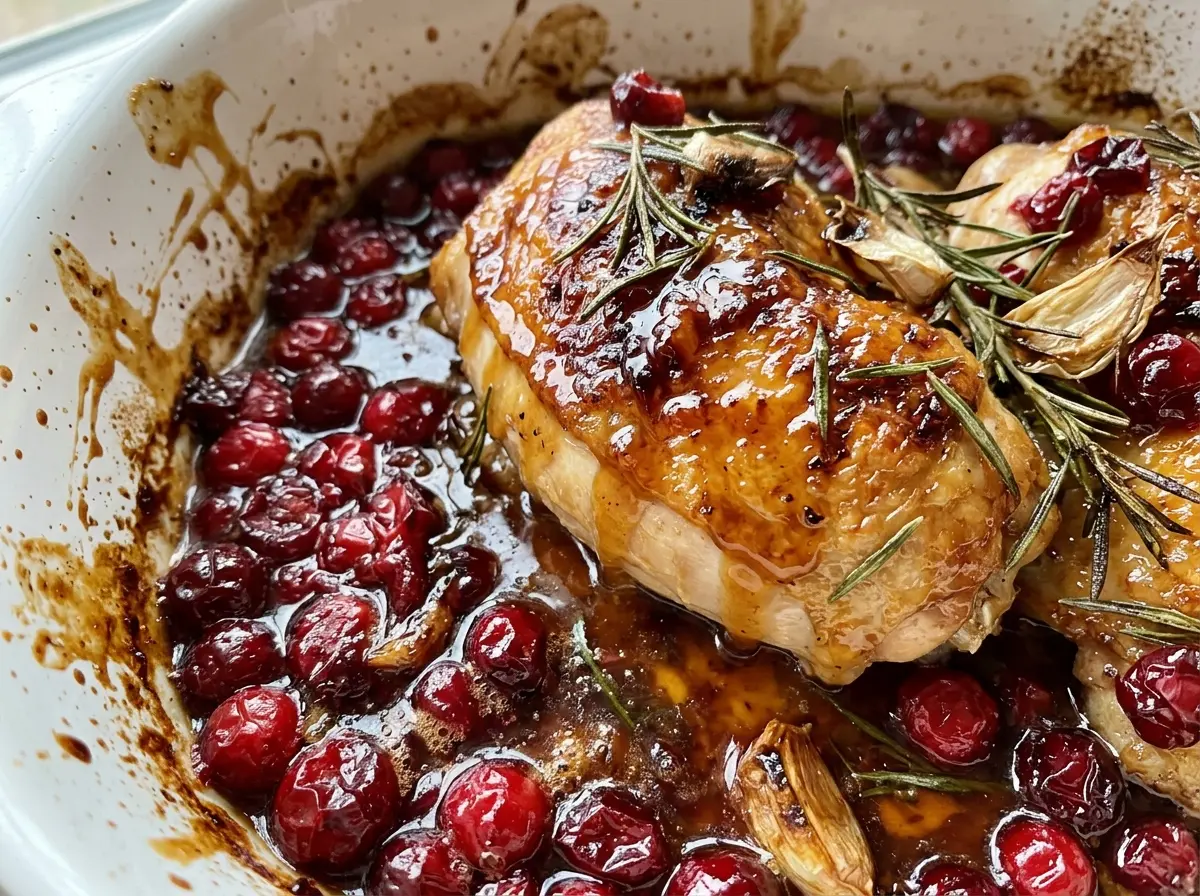
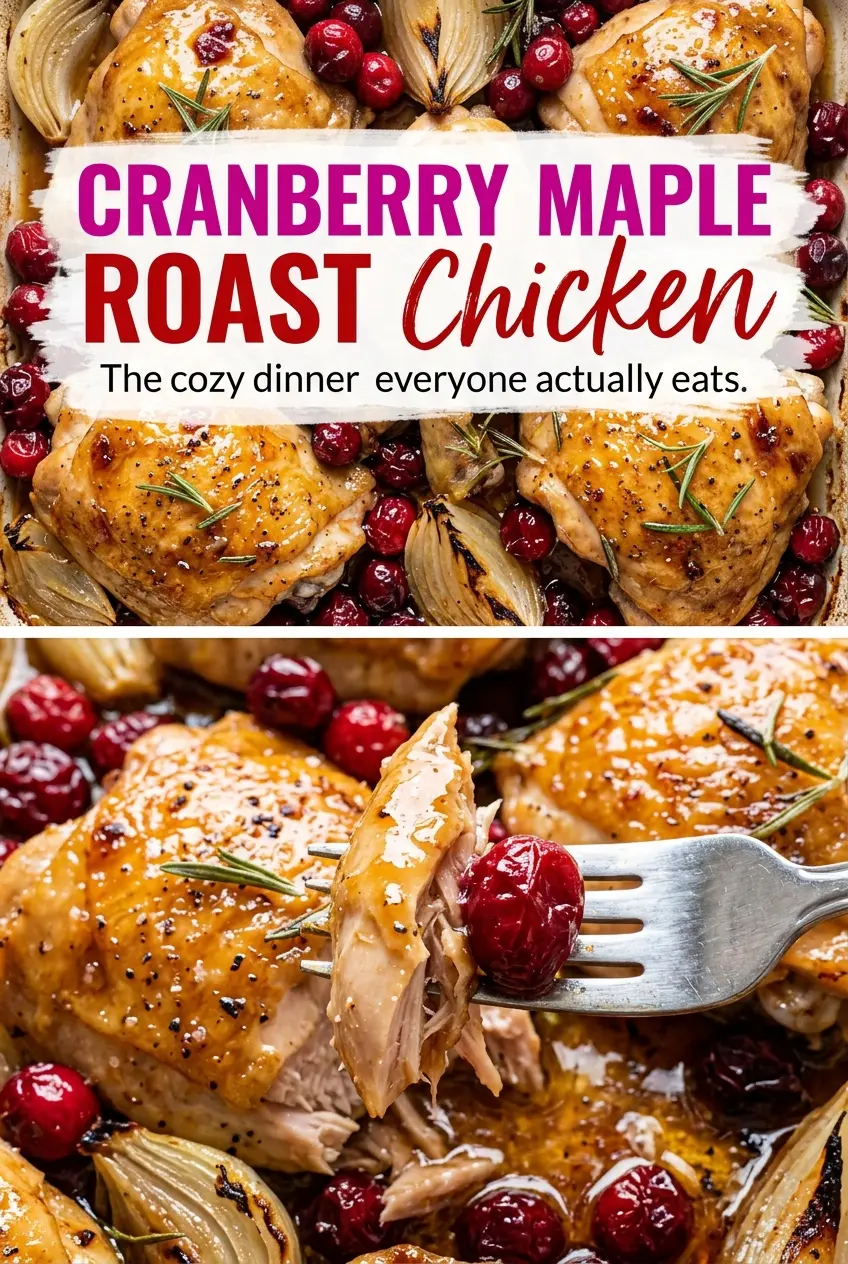
The cranberries start popping in the saucepan before the glaze looks anything like something you’d brush over a chicken. Give them a few minutes and they soften into a thick, tart-sweet sauce that clings to the skin instead of sliding into the pan. That’s what makes this Cranberry Maple Roast Chicken feel special without asking you to fuss over a complicated roast.
I roast the chicken plain for the first part of the cooking time, then brush on the glaze while it finishes. The maple gets a chance to caramelize on the skin, but it isn’t exposed to the oven for the entire roast. A lemon and fresh thyme tucked into the cavity add a light, fragrant note to the meat. At the table, the reserved glaze brings a brighter cranberry bite to each slice, alongside crisp skin and juicy chicken.
Kitchen Note
I set aside the portion of glaze for serving before I brush anything onto the chicken. Keeping it separate gives you a clean, fresh-tasting sauce to pass at the table.
Save this Cranberry Maple Roast Chicken for a roast with crisp skin and a tart, glossy maple-cranberry glaze.
Why the Cranberries Need to Burst Before the Glaze Can Cling
Maple syrup is thin on its own, and a few whole cranberries floating in it won’t turn it into a proper brush-on glaze. As the berries heat, their skins split and the fruit softens; the mixture thickens into a sauce that can coat the back of a spoon. That texture matters once the chicken goes into the oven. A glaze that’s still watery runs off the breast and collects below the bird instead of leaving a cranberry sheen on the skin.
I leave the berries in rather than straining the saucepan. Their soft pieces give the glaze a little body, and the maple keeps the cranberries’ sharp edge from taking over. The fruit also thickens the sauce naturally, so there’s no need for flour or cornstarch. Keep the simmer steady and stir now and then; a hard boil can make the syrupy mixture spit, while an occasional stir helps it cook evenly. When the berries have burst and the glaze has thickened, it’s ready for the chicken.
What the Maple, Mustard, and Butter Each Bring to the Glaze
- Whole chicken — Choose a bird in the specified size range so the roast timing fits. A conventional supermarket chicken works well; removing the giblets and patting the skin dry are more important than buying a specialty bird. The dry surface helps the skin brown rather than steam.
- Cranberries — Fresh berries give the glaze a clean tartness, and frozen berries work too. No special variety is needed. The useful prep detail is to keep them whole for the simmer so they burst in the saucepan and thicken the fruit mixture.
- Pure maple syrup — It brings a rounded maple taste and helps the glaze brown. Use pure maple syrup rather than pancake syrup, which can make the glaze taste sweeter and less distinctly maple. An everyday bottle is fine; there’s no need to seek out a rare grade.
- Dijon mustard — Dijon adds a gentle sharpness that keeps the glaze from tasting one-note sweet. A standard jar is perfectly suitable. It’s more than a background seasoning, so leaving it out changes the balance.
- Unsalted butter — Stirring it in after the saucepan comes off the heat gives the glaze a smoother, richer finish. Use unsalted butter so the seasoning stays predictable. For a dairy-free version, use the swap in the variations below.
- Lemon and fresh thyme — Quartered lemon and thyme sprigs perfume the chicken from inside the cavity. Fresh thyme is the right choice here; dried thyme won’t give the same bright, leafy aroma tucked into the bird.
Roast the Chicken First, Then Brush on the Cranberry Maple Glaze
Season the Bird and Set Up the Pan
Position an oven rack in the lower third and heat the oven to 400°F. Set a rack inside a 16×13-inch roasting pan so the chicken sits above the pan’s bottom. Rub the olive oil over the chicken, then season it inside and out with the kosher salt and black pepper. Put the lemon quarters and thyme in the cavity and place the chicken breast-side up on the rack.
Simmer the Cranberry Glaze
Combine the cranberries, maple syrup, orange juice, and Dijon mustard in a 2-quart saucepan. Bring the mixture to a simmer over medium heat, stirring occasionally. Cook for 8 to 10 minutes, until the cranberries have burst and the glaze has thickened. Take the pan off the heat, stir in the butter until it melts, then set aside 1/3 cup for serving.
Give the Chicken Its First Roast
Roast the chicken for 50 minutes before adding the glaze. Leaving the skin unglazed for this first stretch gives it time to roast without the maple coating darkening too early. Keep the oven at 400°F and leave the chicken breast-side up on the rack. The glaze is ready to go on after this initial roast.
Glaze, Finish, and Rest
Brush the remaining glaze over the chicken and return it to the oven for 20 to 35 minutes more. Insert a thermometer into the thickest part of the breast and the inner thigh; both readings should reach 165°F. If the skin darkens too quickly, tent the chicken loosely with foil while it finishes cooking. Transfer it to a cutting board and let it rest for 15 minutes before carving, then serve with the reserved glaze.
Two Simple Swaps That Change the Flavor or Make It Dairy-Free
Make the Glaze Dairy-Free
Replace the unsalted butter with an equal amount of plain, unsalted vegan butter and stir it in after the glaze comes off the heat. The glaze will still turn smooth, though the exact richness depends on the brand of vegan butter you use.
Trade Thyme for Rosemary
For a more woodsy herbal aroma, use two small fresh rosemary sprigs in place of the four thyme sprigs in the cavity. Rosemary is more assertive, so this version has a deeper, piney fragrance alongside the lemon.
Storage and Reheating
- Refrigerator: Store carved chicken in a covered container for 3 to 4 days. The skin softens as it sits, but the meat stays good for leftovers.
- Freezer: Freeze carved portions in an airtight freezer container for up to 3 months for best quality. Freeze the reserved glaze separately in a small airtight container.
- Reheating: Warm portions covered in the oven or microwave until hot throughout. Reheat only what you’ll eat; uncovered or repeated reheating dries out the breast meat.
Questions That Come Up While Roasting This Chicken
Cranberry Maple Roast Chicken
Ingredients
Equipment
Method
- Position a rack in the lower third of the oven.
- Heat the oven to 400°F.
- Set a rack inside a 16x13-inch roasting pan.
- Rub the chicken all over with the olive oil, then season it inside and out with the salt and pepper.
- Put the lemon and thyme in the cavity and place the chicken breast-side up on the rack.
- Combine the cranberries, maple syrup, orange juice, and Dijon mustard in a 2-quart saucepan.
- Bring the mixture to a simmer over medium heat.
- Cook for 8 to 10 minutes, stirring occasionally, until the cranberries have burst and the mixture is thickened.
- Remove the glaze from the heat and stir in the butter until melted.
- Set aside 1/3 cup glaze for serving.
- Roast the chicken for 50 minutes.
- Brush the remaining glaze over the chicken.
- Roast for 20 to 35 minutes more, until a thermometer inserted into the thickest part of the breast and the inner thigh reads 165°F.
- Tent loosely with foil if the skin darkens too quickly.
- Transfer the chicken to a cutting board.
- Let it rest for 15 minutes before carving.
- Serve with the reserved glaze.