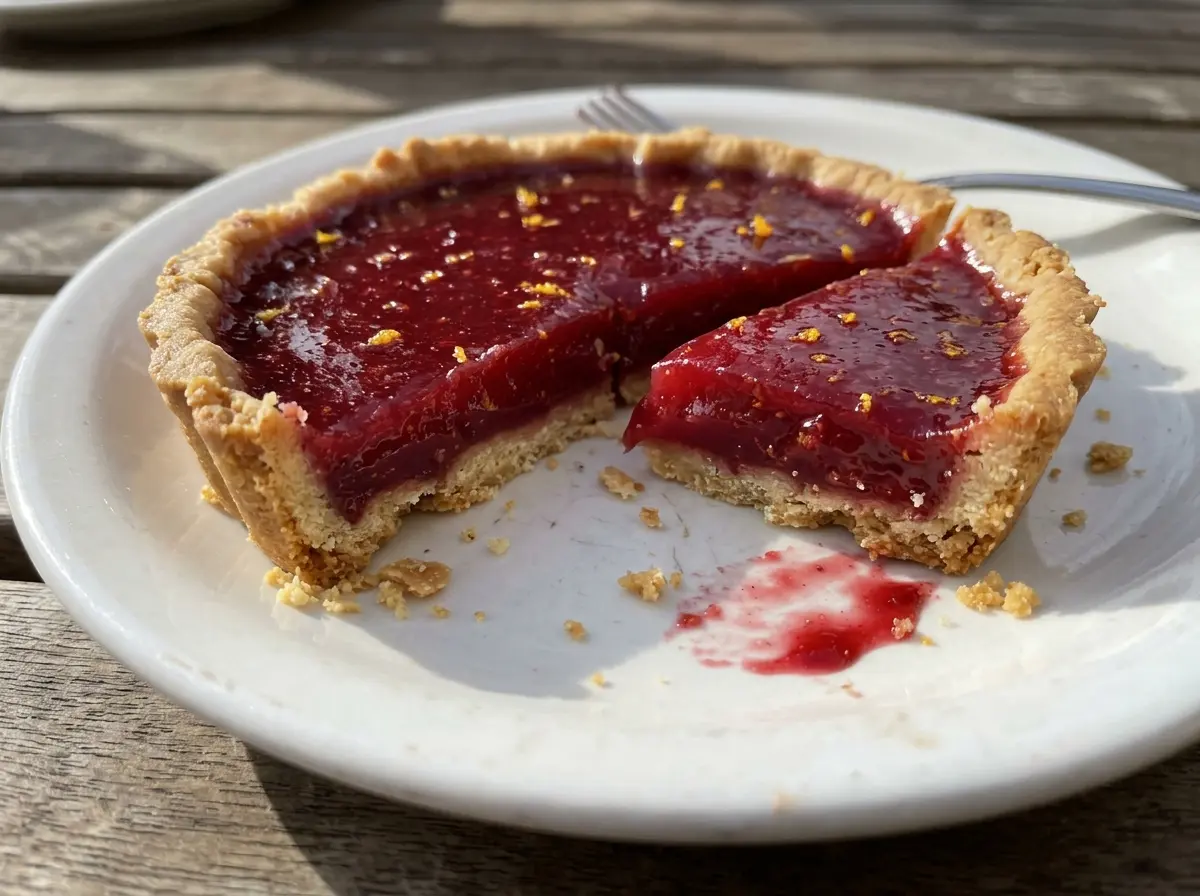
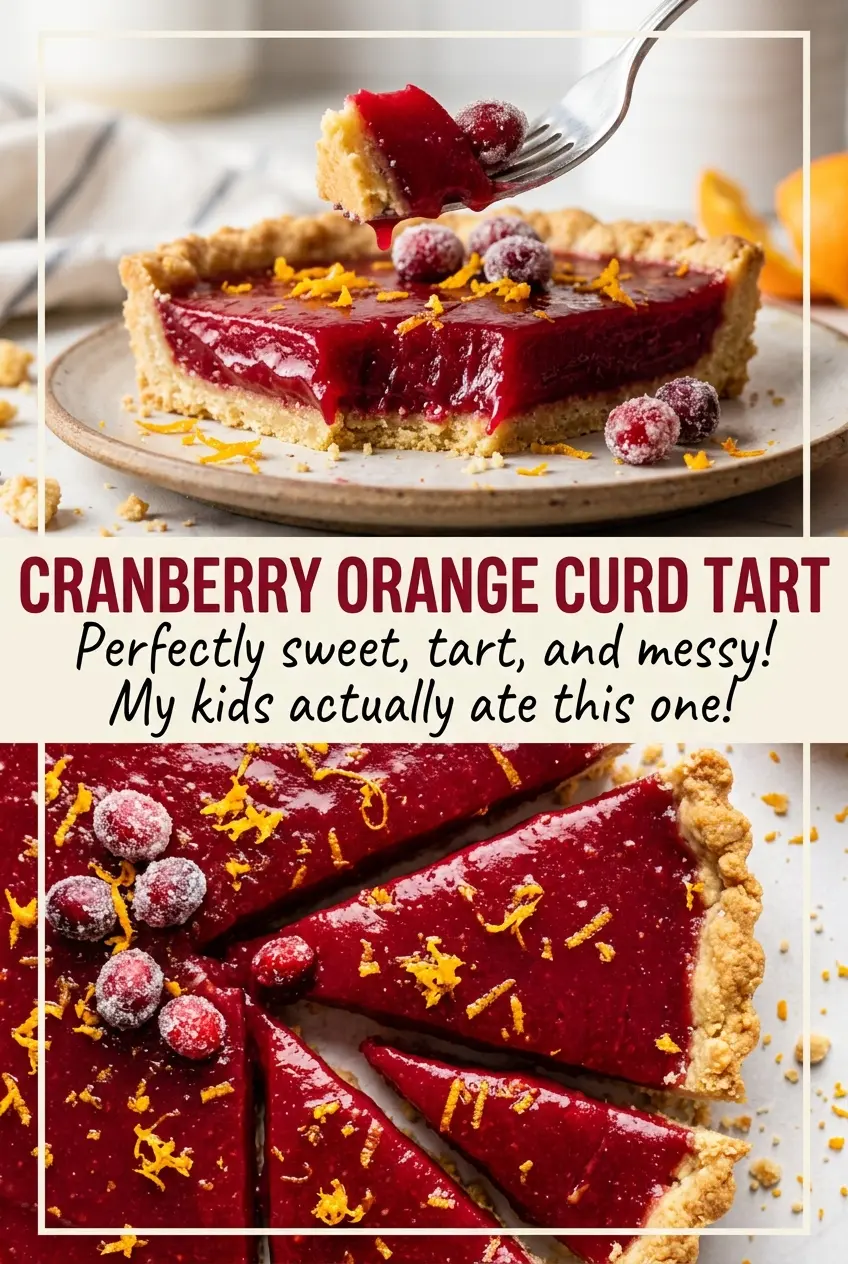
When the cranberries start popping against the sides of the saucepan, the whole mixture turns a deep ruby red, and the sharp berry smell softens under the orange. That’s the moment this cranberry orange curd tart starts to feel like more than a pie with a pretty filling. You get a crisp, buttery shell, a smooth curd with a lively tart edge, and enough orange to round out each bite without taking over.
I keep the pastry cold through its first chill, then give the fitted shell a short freeze before baking it with pie weights. That little pause helps the crust hold its shape and bake into a sturdy base for the curd. The filling gets blended and strained for a smooth finish, then poured into the cooled shell and chilled until it slices cleanly. The finished tart is bright, glossy, and pleasantly puckery.
Kitchen Note
When the dough first comes together, stop mixing as soon as it clumps. It should look a little rough, not smooth or stretchy; overworking it makes the baked shell tougher.
Save this cranberry orange curd tart for its crisp butter crust and smooth, tart-sweet cranberry filling.
Why This Cranberry Curd Gets Strained Twice
Cranberries bring plenty of flavor, but their skins and seeds can make a curd feel coarse if they stay in the filling. Blending the softened berries first breaks them down into a vivid puree; pressing that puree through a fine-mesh sieve separates out the bits that won’t turn silky. It takes a little time, but it’s what gives each slice that smooth, even texture.
There’s a second pass through the sieve after the eggs and sugar have cooked with the puree. That final strain catches any small cooked bits before the butter goes in, so the curd stays glossy instead of grainy. Don’t skip either pass if you want the filling to have the clean, soft texture that contrasts so nicely with the crisp pastry. The cranberry flavor still comes through clearly, with orange lifting the tartness rather than masking it.
What Makes the Tart Shell and Orange Curd Work Together
- Fresh cranberries — They bring the tart, berry-forward base and soften quickly in the orange juice. Choose firm berries without shriveled or damaged spots. Frozen cranberries can work in a pinch, though the cooking time may vary as they soften.
- Orange juice and finely grated zest — The juice helps the berries cook down, while the zest contributes fragrant citrus oils that juice alone can’t provide. Freshly grated zest has the clearest aroma; use plain 100% orange juice rather than a sweetened orange drink.
- Eggs and egg yolks — Whole eggs and extra yolks thicken the curd and give it its rich, spoonable body. They aren’t interchangeable with a simple egg-free substitute here; the tart depends on their structure to set.
- Unsalted butter — Cold butter gives the pastry its tender texture, and butter stirred into the finished curd softens its sharp edge and gives it a satin finish. Keep the crust portion cold and cubed; quality matters most in the curd, where the butter’s flavor comes through clearly.
- All-purpose flour — It provides the structure for a crust that can hold a generous layer of curd. Spoon it lightly into the measuring cup rather than packing it down, which can make the pastry dry and difficult to bring together.
From Cold Pastry to a Smooth, Set Cranberry Filling
Bring the Pastry Together and Chill It
Whisk the flour and salt, then cut in the cold, cubed crust butter until the pieces are about the size of peas. Stir in the egg yolk and cold water just until the dough clumps, then shape it into a disk, wrap it, and refrigerate for 30 minutes. If it crumbles while you press it together, keep mixing only until it holds; a smooth, heavily worked dough bakes up less tender.
Shape and Blind-Bake the Tart Shell
Heat the oven to 375°F, then roll the chilled dough on a lightly floured surface into a 12-inch round. Fit it into a 9-inch tart pan with a removable bottom, trim the edges, and prick the base with a fork. Freeze the shell for 15 minutes, line it with parchment, and fill it with pie weights; bake for 20 minutes, then remove the parchment and weights and bake for 10 to 14 minutes more. Look for an evenly golden crust, then let it cool completely before filling.
Cook and Strain the Cranberry Puree
Combine the cranberries and orange juice in a 2-quart saucepan and cook over medium heat for 8 to 10 minutes, stirring occasionally. The berries should burst and soften into a thick, brightly colored mixture. Carefully puree the hot mixture in a blender, then press it through a fine-mesh sieve into a bowl and discard the skins and seeds. Take care when blending hot fruit; it can release steam quickly.
Thicken the Curd Gently
Whisk the cranberry puree, sugar, eggs, egg yolks, and orange zest in the saucepan until combined. Cook over medium-low heat, whisking constantly, for 6 to 10 minutes, until the curd thickens and reaches 170°F. Keep the whisk moving across the bottom and corners of the pan so the eggs heat evenly instead of catching in one spot. Strain the curd into a heatproof bowl, then stir in the remaining cold butter until smooth.
Fill the Shell and Let It Set
Pour the finished curd into the completely cooled tart shell and smooth it to the edges. Refrigerate the tart for at least 4 hours, until the filling is set. The center should hold its shape when sliced rather than flowing into the cut. Keep the tart chilled until you’re ready to serve it.
Two Useful Ways to Adapt This Tart
Make the crust gluten-free
Replace the all-purpose flour with a cup-for-cup gluten-free baking blend, ideally one that contains xanthan gum, and keep the other crust ingredients and method the same. The dough may be more delicate to roll, so press small cracks together as you fit it into the pan. The crust will be a little more crumbly, but the cranberry curd remains unchanged.
Use dairy-free butter
For a dairy-free version, use firm, stick-style dairy-free butter in place of the unsalted butter, keeping the crust and curd portions separate as written. Choose a product that works for baking rather than a soft tub spread, which has a different texture. The eggs still set the curd, while the dairy-free butter makes its finish a little less rich.
Storage and Reheating
- Refrigerator: Keep the tart covered and refrigerated for 3 to 4 days. The crust gradually softens as it sits beneath the curd.
- Freezer: I don’t recommend freezing the assembled tart; the curd may turn watery as it thaws, and the pastry loses its crisp texture.
- Reheating: Don’t reheat this tart. Serve it chilled; warming can soften the butter-rich curd and make slices slump.
Questions That Come Up With Cranberry Orange Curd Tart
Cranberry Orange Curd Tart
Ingredients
Equipment
Method
- Whisk the flour and salt in a medium bowl, then cut in 8 tablespoons of the butter with a pastry blender until the pieces are about the size of peas.
- Stir in the egg yolk and cold water just until the dough clumps together.
- Press the dough into a disk, wrap, and refrigerate for 30 minutes.
- Heat the oven to 375°F.
- Roll the dough on a lightly floured surface into a 12-inch round, fit it into a 9-inch tart pan with a removable bottom, trim the edges, and prick the bottom with a fork.
- Freeze the crust for 15 minutes.
- Line the crust with parchment, fill with pie weights, and bake for 20 minutes.
- Remove the parchment and weights and bake for 10 to 14 minutes more, until golden brown.
- Cool the crust completely.
- Combine the cranberries and orange juice in a 2-quart saucepan and cook over medium heat for 8 to 10 minutes, stirring occasionally, until the berries burst and soften.
- Carefully puree the hot cranberry mixture in a blender.
- Press the puree through a fine-mesh sieve into a bowl and discard the skins and seeds.
- Whisk the cranberry puree, sugar, eggs, egg yolks, and orange zest in the saucepan.
- Cook over medium-low heat, whisking constantly, for 6 to 10 minutes until thickened and 170°F.
- Strain the curd through the sieve into a heatproof bowl.
- Stir in the remaining 6 tablespoons of butter until smooth.
- Pour the curd into the cooled tart shell.
- Refrigerate for at least 4 hours, until set.