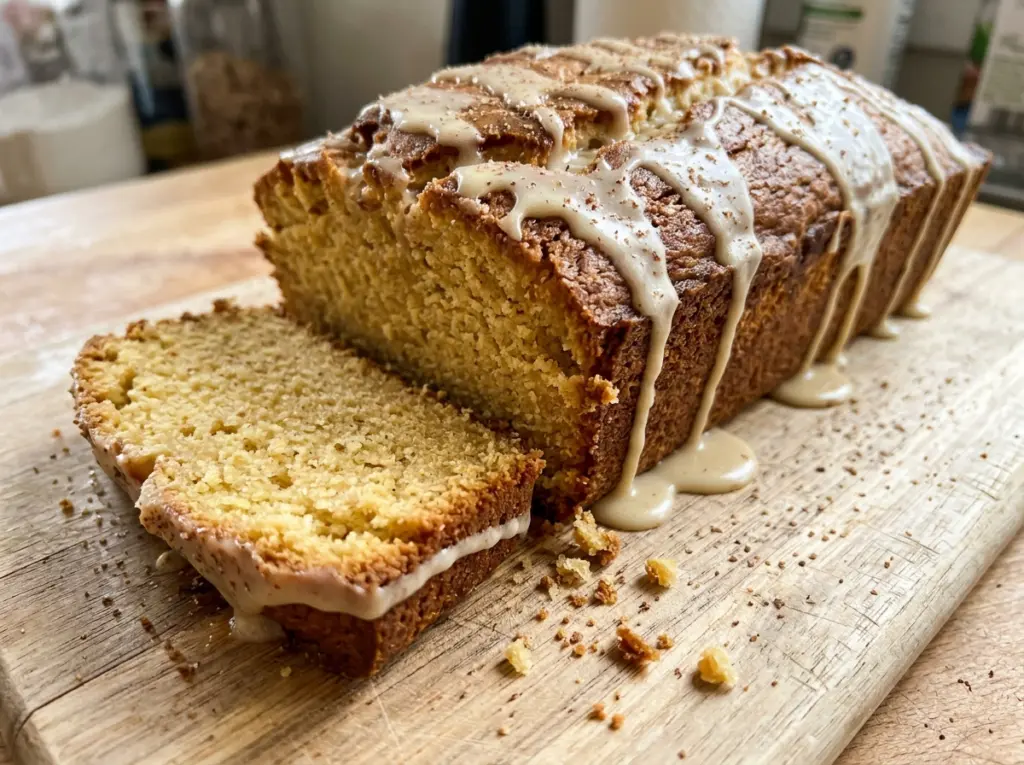
The moment this cake turns out of its Bundt pan, its ridges catch the light and the kitchen smells like warm nutmeg. Eggnog Pound Cake has the rich, close crumb I want from a pound cake, with a gentle eggnog flavor rather than the sweetness of a frosted layer cake. The simple milk glaze adds a thin finish without covering up the cake itself.
I cream the butter and sugar until they look pale and fluffy before adding anything else. That step gives the batter air, and adding the eggs one at a time helps the mixture stay smooth. Once the flour goes in, I keep the mixer on low and stop as soon as the last streak disappears.
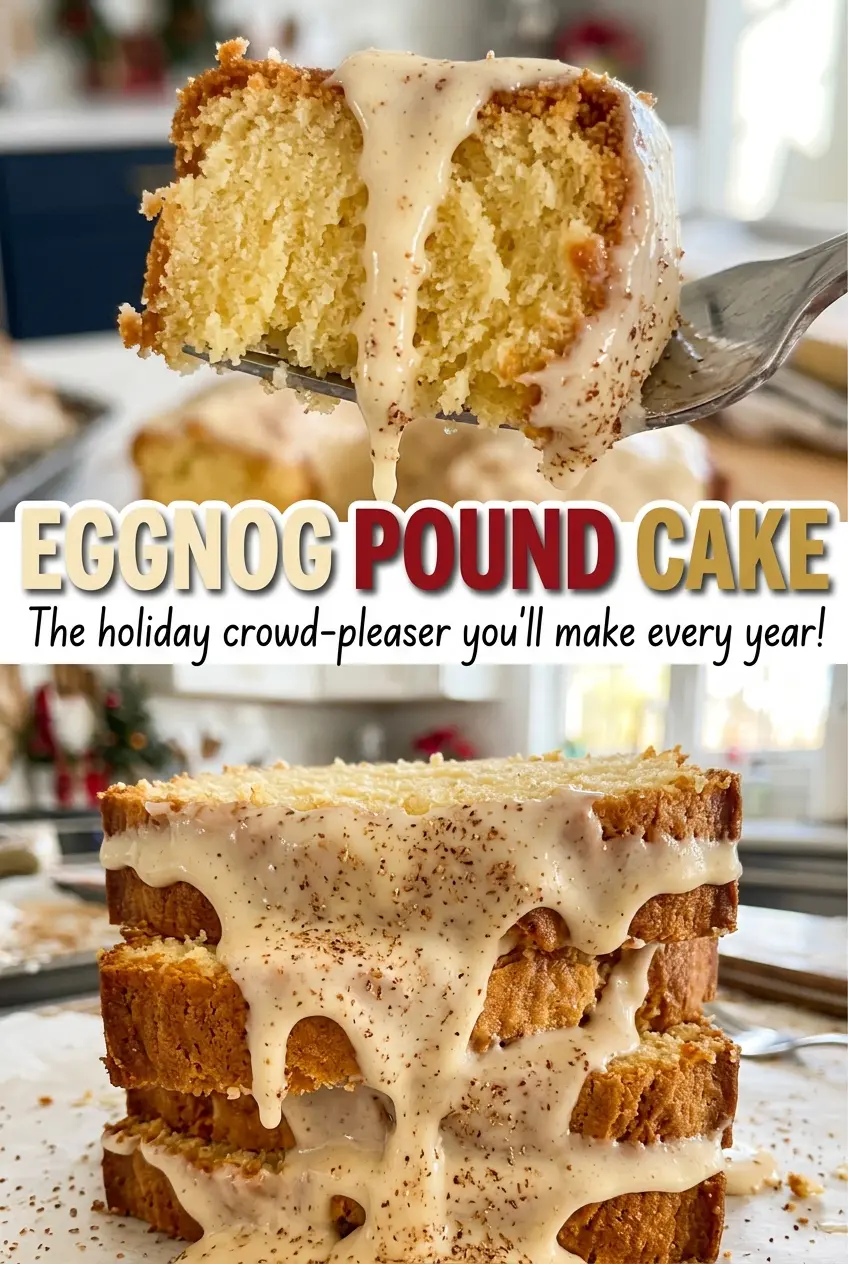
Room-temperature eggnog and a little nutmeg carry the familiar custardy flavor through every slice. The cake is golden outside, tender inside, and finished with just enough glaze to settle into the grooves.
Kitchen Note
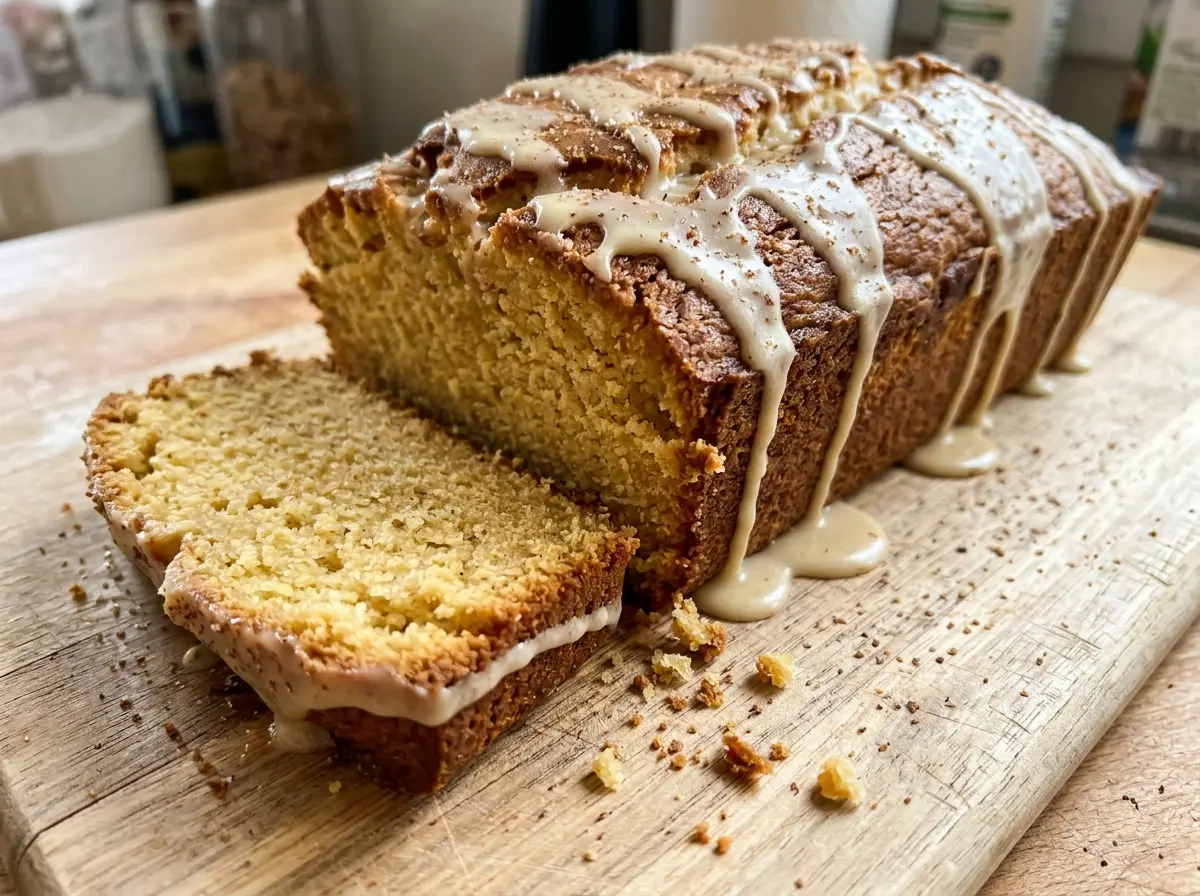
Give the cake its full 15 minutes in the pan before turning it out. Inverting too soon is when a Bundt cake is most likely to break along the ridges, so I set a timer and let the pan do its job.
Save this Eggnog Pound Cake for its tender nutmeg crumb, golden Bundt shape, and smooth milk glaze.
Why Cold Eggnog Can Leave a Pound Cake Batter Lumpy
Eggnog brings both liquid and richness to this batter, so its temperature affects how smoothly it blends with the creamed butter. When cold eggnog hits softened butter, the mixture can look curdled or separated. That uneven batter is harder to combine without extra mixing, and extra mixing after flour is added can make the cake tougher.
Bring the eggs and eggnog to room temperature before you start. Then add the eggnog mixture gradually, alternating it with the flour mixture rather than pouring all the liquid in at once. The batter may look slightly uneven as each addition goes in, but the alternating pattern helps the ingredients come together without asking the flour to take a long spin in the mixer. Stop as soon as everything is incorporated; a few seconds of restraint matter more than chasing a perfectly glossy batter.
What Gives This Eggnog Cake Its Custardy Flavor
- Eggnog — It supplies the cake’s signature gentle custard note and contributes richness as well as moisture. Choose an eggnog you like the taste of on its own; a basic carton works well here, and there’s no need to seek out a specialty brand. Room-temperature eggnog blends more readily into the butter mixture.
- Nutmeg — Ground nutmeg gives the cake its warm, familiar aroma without overwhelming the eggnog. Freshly ground nutmeg has a brighter scent, but pre-ground nutmeg is convenient and works perfectly well. Keep it measured rather than adding extra by eye, since too much can crowd out the subtler dairy flavor.
- Butter and sugar — Butter provides the pound cake’s rich texture, while sugar helps the creamed mixture turn light and fluffy. Use unsalted butter so the salt level stays predictable. Softened butter should give slightly when pressed but shouldn’t look oily or melted.
- Flour and baking powder — All-purpose flour gives the cake enough structure to hold its shape in the Bundt pan, and baking powder provides lift. Spoon the flour into the measuring cup and level it rather than packing it down; too much flour can make the crumb heavy. A standard, fresh container of baking powder is fine.
- Vanilla and glaze ingredients — Vanilla rounds out the eggnog and nutmeg, while powdered sugar and whole milk make a simple, smooth glaze. Imitation vanilla works if that’s what you keep on hand. For a more pronounced eggnog finish, the whole milk in the glaze can be replaced with the same amount of eggnog; the glaze will taste richer and more spiced.
The Mixing and Cooling Sequence for a Clean Bundt Slice
Prepare the Pan and Dry Mix
Heat the oven to 325°F and generously coat a 10-inch, 12-cup Bundt pan with baking spray that contains flour. Get the spray into the center tube and all the grooves, since those edges are where the cake can cling. Whisk the flour, baking powder, salt, and nutmeg together in a medium bowl. Break up any small lumps so the leavening and spice are spread through the flour.
Cream Until Pale, Then Add the Eggs Slowly
Beat the softened butter and granulated sugar in a large bowl with a mixer on medium speed for 3 to 4 minutes. The mixture should look paler and fluffy rather than dense and sandy. Add the eggs one at a time, mixing until each is incorporated before adding the next. If you add them all together, the butter mixture is more likely to lose its smooth texture.
Alternate the Eggnog and Flour Mixtures
Stir the eggnog and vanilla together in a measuring cup. With the mixer on low, add that liquid in three additions, alternating with the flour mixture in two additions; begin and finish with flour. Let each addition blend in before adding the next, and scrape the bowl if flour is clinging to the sides. Stop mixing as soon as no dry streaks remain, because continuing to beat the finished batter can tighten the crumb.
Bake Until the Pick Shows Moist Crumbs
Scrape the batter into the prepared Bundt pan and smooth it into an even layer. Bake for 65 to 75 minutes, until the cake is golden and a wooden pick inserted in the center comes out clean or with a few moist crumbs. A pick coated in wet batter means the center needs more time; don’t rely on the color of the ridges alone. Let the cake cool in the pan before inverting it onto a wire rack to cool completely.
Whisk and Drizzle the Glaze
Whisk the powdered sugar and whole milk in a small bowl until the glaze is smooth, thick, and still pourable. If it looks too loose, give it another moment of whisking before you drizzle; if it’s lumpy, keep whisking until the sugar dissolves into the milk. Pour it over the completely cooled cake so it stays on the surface instead of melting away. Let the glaze set for 15 minutes before serving.
Two Simple Ways to Change the Eggnog Finish
Make the Glaze Taste More Like Eggnog
Replace the whole milk in the glaze with the same amount of eggnog. The icing will have a fuller eggnog flavor and a slightly richer finish; whisk until smooth and pourable before drizzling it over the cooled cake.
Make It Vanilla-Forward
Leave the nutmeg out of the dry mixture for a milder, more vanilla-led cake. The crumb and mixing method stay the same, but the eggnog’s soft custard note comes through without the warm spice.
Storage and Reheating
- Refrigerator: Keep the covered cake for up to 5 days. The crumb will firm up and may feel a little drier when chilled.
- Freezer: Freeze slices or the whole unglazed cake, tightly wrapped, for up to 2 months. Thaw while still wrapped, then glaze once it has come to room temperature.
- Reheating: Warm an individual slice in the microwave for about 10 seconds if you like it slightly warm. Longer heating can dry the crumb and soften the glaze too much.
Questions About Baking Eggnog Pound Cake
Eggnog Pound Cake
Ingredients
Equipment
Method
- Heat the oven to 325°F.
- Generously coat a 10-inch (12-cup) Bundt pan with nonstick baking spray with flour.
- Whisk the flour, baking powder, salt, and nutmeg together in a medium bowl.
- Beat the butter and granulated sugar in a large bowl with a mixer on medium speed until pale and fluffy, 3 to 4 minutes.
- Beat in the eggs one at a time, mixing until incorporated after each addition.
- Stir the eggnog and vanilla together in a measuring cup.
- Add the eggnog mixture to the butter mixture in three additions, alternating with the flour mixture in two additions and beginning and ending with the flour mixture; mix on low just until combined.
- Scrape the batter into the prepared pan.
- Bake until golden and a wooden pick inserted in the center comes out clean or with a few moist crumbs, 65 to 75 minutes.
- Cool the cake in the pan for 15 minutes.
- Invert the cake onto a wire rack and cool completely.
- Whisk the powdered sugar and milk in a small bowl until smooth and thick but pourable.
- Drizzle the glaze over the cooled cake.
- Let the glaze set for 15 minutes before serving.