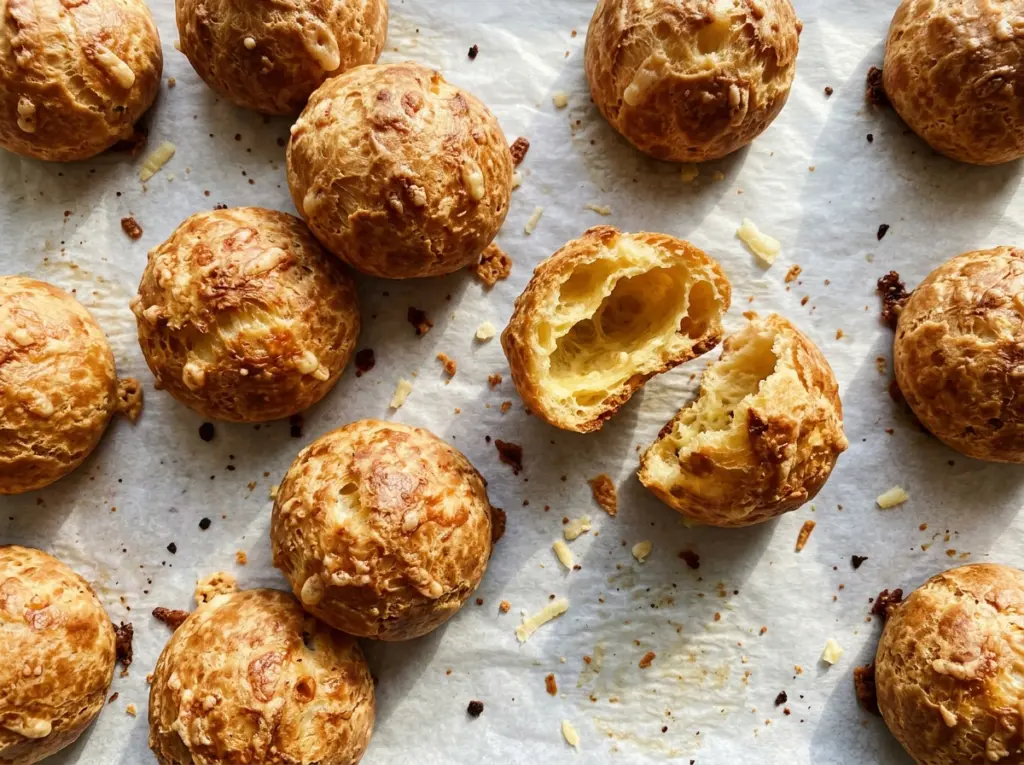
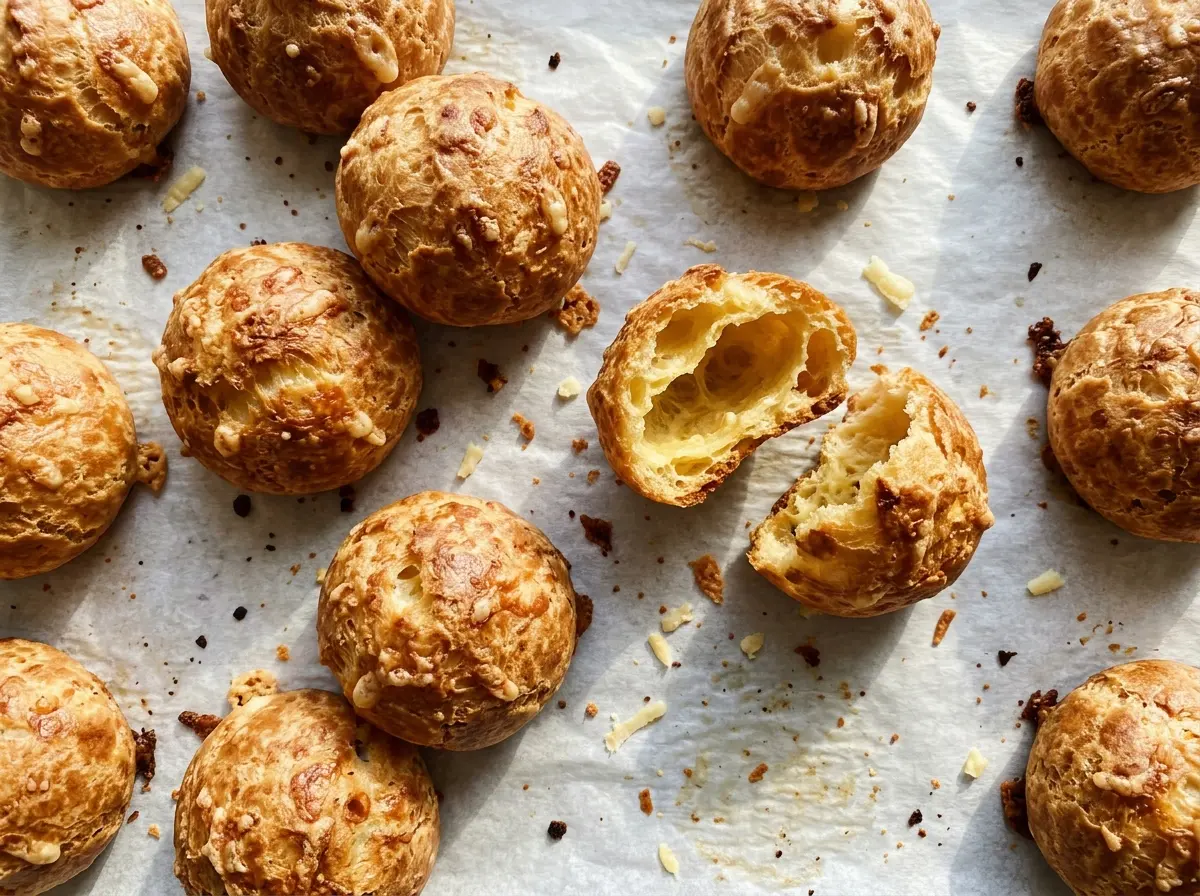
A spoonful of cheese-puff dough looks dense and a little lumpy on the baking sheet, which makes the oven transformation all the more satisfying. French cheese puffs rise into crisp, golden shells with a soft, airy middle, and the Gruyère gives them a savory, toasty smell as they bake. They’re best served warm, when the outside is still delicate and the centers feel light.
Finely grated Gruyère is the choice I come back to for these puffs. It disperses through the dough instead of forming heavy clumps, so you get cheese in every bite without weighing down the pastry. A block of cheese is worth the few extra minutes of grating here.
The dough comes together on the stovetop before it goes into the oven, and that short bit of hands-on work pays off in a tray of puffs that feel special without needing a complicated finish. Set them out warm and let the crisp shells and nutty cheese do the talking.
Kitchen Note
Keep the oven door closed through both baking stages. A sudden drop in heat can leave the puffs short and soft before their shells have had time to set.
Save these French cheese puffs for a warm, golden batch with airy centers and nutty Gruyère in every bite.
Why the Dough Needs a Minute on the Stove Before the Eggs Go In
That brief return to the burner after the flour goes in isn’t busywork. The flour absorbs the hot liquid and butter, forming a thick paste called a panade. Stirring it over medium heat for a minute or two lets extra moisture cook off, which gives the dough room to take in the eggs without turning loose and runny.
Watch for the dough to pull away from the sides of the saucepan and leave a thin film on the bottom. Those are clearer cues than waiting for it to look glossy or perfectly smooth. If the paste is still wet and clinging to the pan, it hasn’t reached the same consistency yet. Once it’s ready, transfer it to a bowl and let it cool for five minutes before adding the eggs.
Eggs go in one at a time because each addition needs to blend into the warm paste before the next one is added. The dough may look separated or slippery for a moment, then come together as you keep beating. That gradual mixing creates a cohesive batter that can hold its shape when spooned onto the baking sheet.
Why Finely Grated Gruyère Belongs in These Puffs

- Gruyère — Its savory, nutty character gives the puffs their defining cheese flavor. Grating it finely helps it distribute evenly through the dough; a block is a good buy when you want a clean melt and fresh-grated texture.
- All-purpose flour — This flour builds the structure that lets the dough puff and hold its shape. The everyday store-brand bag works well; a specialty flour isn’t needed for this dough.
- Eggs — They provide the moisture and structure that turn the cooked flour paste into a batter that can expand in the oven. Room-temperature eggs blend in more readily than cold ones.
- Unsalted butter — Butter brings richness to the dough, while using unsalted butter keeps the seasoning easier to control. Cut it into pieces so it melts evenly as the water comes to a boil.
- Black pepper and ground nutmeg — Both season the cheese without taking over. The nutmeg is only a pinch, but it adds a warm background note; ordinary ground nutmeg and ground black pepper work well here.
Building the Dough and Baking It Into Crisp Puffs
Boil the Butter, Water, and Salt
Heat the oven to 425°F and line a large rimmed baking sheet with parchment paper. In a medium saucepan, bring the water, butter, and kosher salt to a boil over medium-high heat, stirring until the butter has melted. Keep an eye on the pan so the butter is fully melted as the liquid reaches a boil. The hot liquid is ready for the flour as soon as it boils.
Cook the Panade Until It Pulls Away
Take the saucepan off the heat and add all the flour at once. Stir vigorously until a smooth dough forms, then return the pan to medium heat and stir for 1 to 2 minutes. It should pull away from the sides and leave a film on the bottom of the pan. If it still looks wet and sticks to the sides, keep stirring through the full stovetop stage until those cues appear.
Mix in the Eggs and Cheese
Transfer the dough to a large bowl and let it cool for 5 minutes. Beat in the room-temperature eggs one at a time, waiting until each one is incorporated before adding the next. Stir in the finely grated Gruyère, black pepper, and nutmeg until the cheese and seasonings are evenly distributed. Drop rounded tablespoons onto the prepared baking sheet, spacing them about 2 inches apart so the puffs have room to expand.
Let the Puffs Turn Deeply Golden
Bake for 10 minutes at 425°F, then reduce the oven to 375°F and bake for 15 to 20 minutes more, without opening the door. Look for puffs that are risen and deeply golden rather than pale; color helps tell you their shells have had time to set. Turn off the oven, prick each puff on the side with a small knife, and leave them inside with the door ajar for 5 minutes. Serve warm.
Two Useful Ways to Adapt French Cheese Puffs
Use Aged Cheddar for a Sharper Cheese Note
Replace the Gruyère with the same volume of finely grated aged white cheddar. It gives the puffs a more direct, tangy cheese flavor and less of Gruyère’s nutty sweetness; grate it finely so it mixes through the dough evenly.
Make a Gluten-Free Batch
Replace the all-purpose flour with a cup-for-cup gluten-free baking blend that contains xanthan gum. The dough may feel a little different as it cooks, and the finished puffs can be more delicate, but the blend provides structure without wheat.
Storage and Reheating
- Refrigerator: Store cooled leftovers in an airtight container for up to 3 days; the shells will soften.
- Freezer: Freeze cooled puffs in an airtight container for up to 1 month for the best texture. Thaw them in the refrigerator before reheating.
- Reheating: Warm them in a 375°F oven until hot and crisp again. Skip the microwave, which softens the shells instead of restoring their crisp edges.
Questions That Come Up When Making French Cheese Puffs
French Cheese Puffs
Ingredients
Equipment
Method
- Heat the oven to 425°F and line a large rimmed baking sheet with parchment paper.
- Combine the water, butter, and salt in a medium saucepan and bring to a boil over medium-high heat, stirring until the butter melts.
- Remove the pan from the heat and add the flour all at once.
- Stir vigorously until a smooth dough forms.
- Return the pan to medium heat and stir for 1 to 2 minutes, until the dough pulls away from the sides and leaves a film on the bottom.
- Transfer the dough to a large bowl and let it cool for 5 minutes.
- Beat in the eggs one at a time, making sure each is incorporated before adding the next.
- Stir in the Gruyère, black pepper, and nutmeg until evenly combined.
- Drop rounded tablespoons of dough onto the prepared baking sheet, spacing them about 2 inches apart.
- Bake for 10 minutes at 425°F, then reduce the oven to 375°F and bake for 15 to 20 minutes without opening the door, until puffed and deeply golden.
- Turn off the oven and prick each puff on the side with a small knife.
- Leave the puffs in the oven with the door ajar for 5 minutes.
- Serve warm.