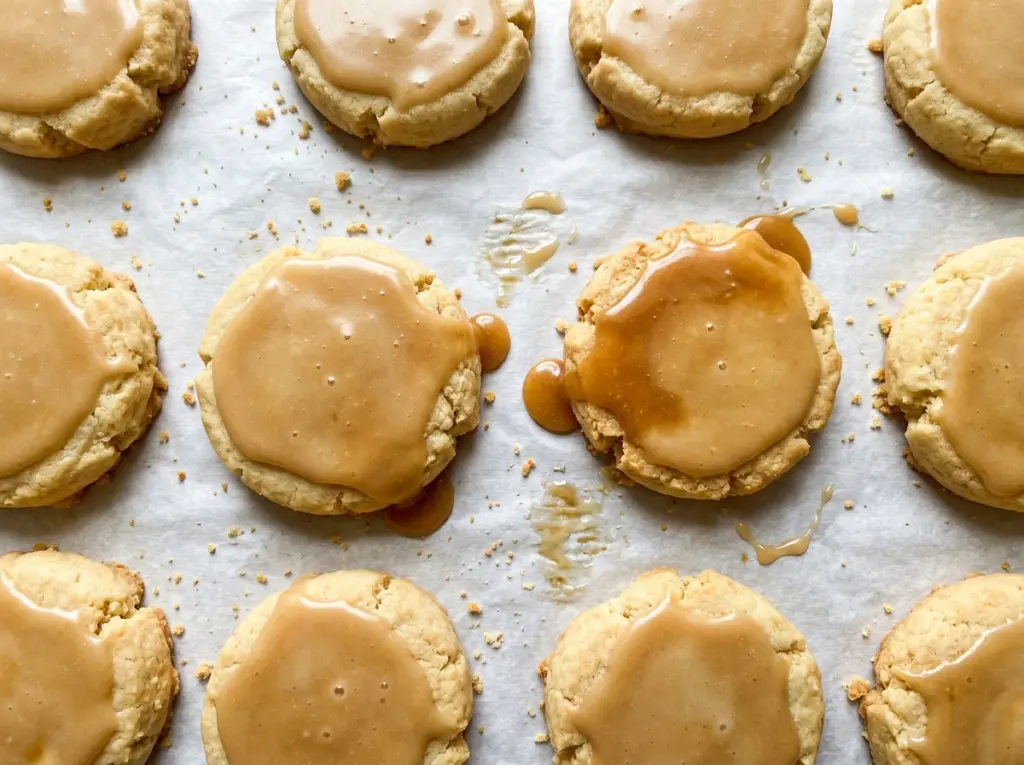
The edges turn faintly gold while the centers stay pale, and the maple aroma is already coming through the kitchen before the glaze goes on. These glazed maple shortbread cookies bake into neat little rounds with a delicate, buttery crumb, not the chewy texture of a drop cookie.
I like that the dough is easy to portion once it’s shaped into logs, and the thin glaze gives each cookie a clean maple finish without making it heavy. The dough needs a proper chill before slicing, but after that, the cookies bake on two sheets and cool right on the counter. You get tender shortbread with just enough sweetness and a smooth maple glaze that sets on top.
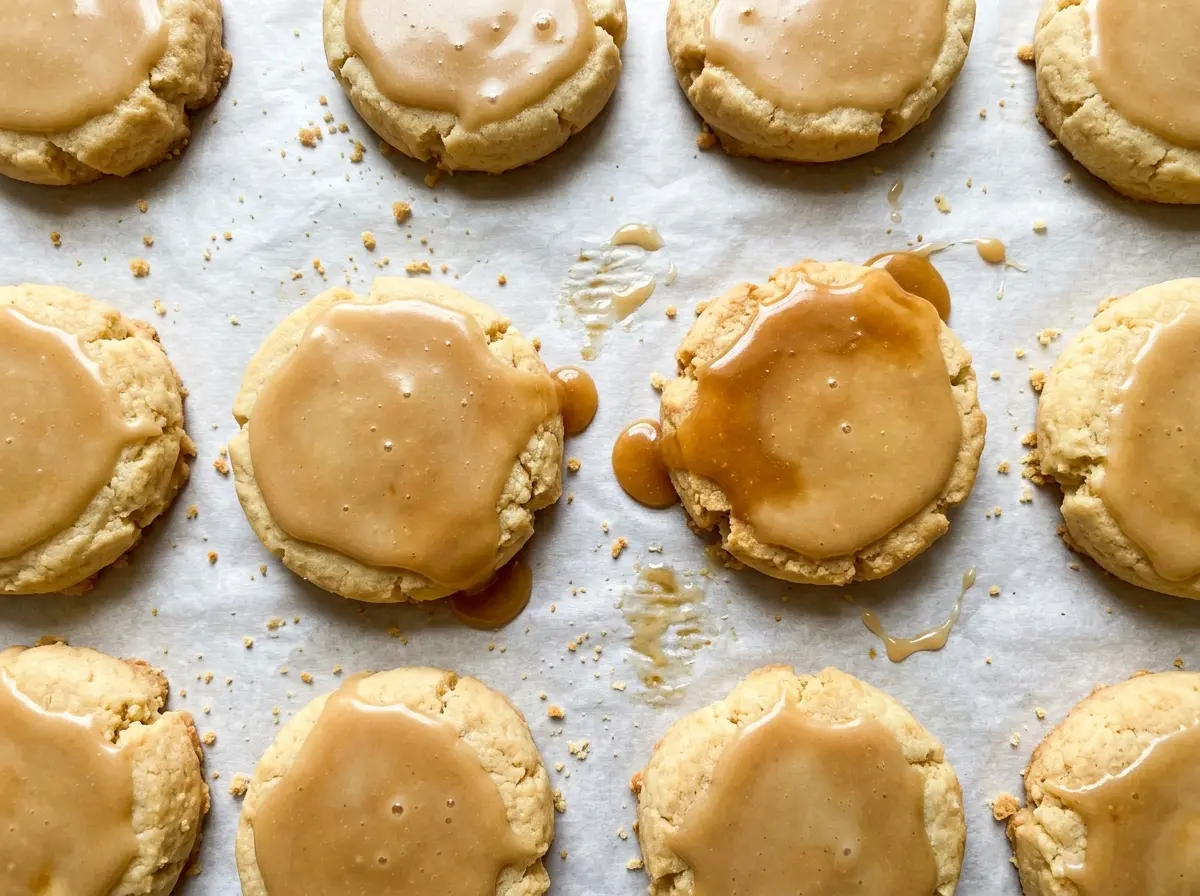
Kitchen Note
The logs should feel firm before I slice them; if the knife presses the sides out of shape, they need more chill time. I use a sharp knife and cut straight through rather than sawing, so the rounds keep their clean edges.
Save these glazed maple shortbread cookies for a bake when you want buttery rounds with a smooth maple finish.
Why Maple Belongs in Both the Dough and the Glaze
Maple extract and maple syrup do different jobs here. The extract brings concentrated maple flavor to the dough without adding the extra liquid that syrup would contribute. That matters in a shortbread dough you’ll shape into logs and slice; it needs to stay firm enough to hold its shape.
The syrup goes into the glaze, where a little moisture is useful. Whisked with powdered sugar and milk, it adds a clear maple note to the surface instead of making the cookie dough softer. Using syrup in both places would change the dough’s texture, while relying on extract alone would miss the mellow, rounded taste of real maple syrup in the icing. The finished cookie has maple in the crumb and a second, brighter hit on top.
This balance also keeps the glaze thin rather than turning the cookies into frosted, sugary bites. Shortbread is rich already, so a delicate coat lets the butter and maple come through together.
What the Maple Extract and Pure Syrup Each Bring

- Unsalted butter — It gives shortbread its rich, tender bite, so use butter rather than a liquid oil. Store-brand butter works well; the useful detail is having it softened enough to beat smoothly, not melted. If salted butter is what you have, omit the salt from the cookie dough and keep the small amount of salt in the glaze.
- Powdered sugar — Its fine texture blends smoothly into the butter and makes a delicate cookie crumb. It’s also what gives the glaze its body. Granulated sugar isn’t a direct swap here; it won’t dissolve the same way in the dough.
- Maple extract — Choose an extract with a maple aroma you enjoy, since it provides the cookie’s maple flavor without adding liquid. Vanilla extract works in its place, but the cookies will taste more like vanilla shortbread than maple shortbread.
- All-purpose flour — It gives the dough enough structure to form sliceable logs. A standard store-brand flour is fine; the important thing is to mix it in only until the dough comes together, so the cookies don’t turn dense.
- Pure maple syrup and milk — Pure syrup gives the glaze its recognizable maple taste, while milk loosens it to a spreadable consistency. Pancake syrup won’t taste the same. For a dairy-free glaze, unsweetened oat milk is a practical replacement for the milk.
From Soft Dough to Clean, Glazed Rounds
Cream the Butter Before Adding the Flour
Beat the softened butter and powdered sugar with an electric mixer on medium speed until the mixture looks smooth and creamy, about 2 minutes. If the butter is too cold, it stays in firm pieces instead of blending evenly. Beat in the maple extract next. Add the flour and salt on low speed, stopping as soon as a soft dough forms.
Shape Logs That Chill Firm
Divide the dough in half and shape each portion into a log about 1 1/2 inches in diameter. Keep the logs close to the same thickness so the cookies bake evenly. Wrap them and refrigerate until firm, 45 to 60 minutes. If the dough still feels soft when you press the log gently, give it more time in the refrigerator before slicing.
Slice and Bake Until the Edges Turn Gold
Heat the oven to 325°F and line two 18×13-inch baking sheets with parchment paper. Slice the chilled logs into 1/4-inch-thick rounds and arrange them about 1 inch apart. Bake the sheets on the upper and lower oven racks for 16 to 20 minutes, switching and rotating them halfway through. Look for lightly golden edges; the tops and centers will stay much paler.
Cool Completely Before Adding the Glaze
Let the cookies cool on the baking sheets for 5 minutes, then move them to a wire rack and wait until they’re completely cool. Whisk the powdered sugar, pure maple syrup, milk, and salt in a small bowl until smooth. Spread a thin layer over each cookie rather than piling the glaze in the center. Give it 20 to 30 minutes to set before serving.
Easy Ways to Change the Maple Shortbread
Add a Little Orange
Work finely grated orange zest into the butter and powdered sugar before adding the extract. The citrus lifts the maple and gives the cookies a fresher aroma without changing the slice-and-bake method.
Make Them Gluten-Free
Replace the all-purpose flour with the same volume of a measure-for-measure gluten-free baking blend that contains xanthan gum. The dough may be a little more delicate to handle, so wait until the logs are firm before slicing and transfer the rounds carefully.
Make a Dairy-Free Batch
Use unsalted plant-based baking sticks in place of the butter and unsweetened oat milk in the glaze. Choose baking sticks rather than soft tub spread, which can make the dough too loose. The cookies will be a little less buttery, but they’ll still have the same maple-glazed shortbread shape.
Storage and Reheating
- Refrigerator: Refrigeration isn’t needed. Keep the set cookies in an airtight container at room temperature for up to 5 days; chilling makes the shortbread firmer.
- Freezer: Freeze the cooled, unglazed cookies in a single layer, then pack them with parchment between layers in an airtight container for up to 2 months. Thaw at room temperature and glaze once thawed.
- Reheating: These cookies don’t need reheating. Warming glazed cookies can soften the icing, so let chilled cookies come to room temperature before serving.
Questions That Come Up While Making These Cookies
Glazed Maple Shortbread Cookies
Ingredients
Equipment
Method
- Heat the oven to 325°F.
- Line two 18x13-inch baking sheets with parchment paper.
- In a large bowl, beat the butter and powdered sugar with an electric mixer on medium speed until smooth and creamy, about 2 minutes.
- Beat in the maple extract, then mix in the flour and salt on low speed just until a soft dough forms.
- Divide the dough in half and shape each portion into a log about 1 1/2 inches in diameter; wrap and refrigerate until firm, 45 to 60 minutes.
- Slice the logs into 1/4-inch-thick rounds and arrange them about 1 inch apart on the prepared sheets.
- Bake on the upper and lower oven racks for 16 to 20 minutes, switching and rotating the sheets halfway through, until the edges are lightly golden.
- Let the cookies cool on the sheets for 5 minutes, then transfer them to a wire rack and cool completely.
- Whisk the powdered sugar, maple syrup, milk, and salt in a small bowl until smooth.
- Spread a thin layer of glaze over each cooled cookie and let it set for 20 to 30 minutes before serving.